 Anacortes Siding
 Building on Fidalgo Island: A Different Kind of Weather Test
Fidalgo Island sits where the Salish Sea meets the forested hills of Skagit County, and that setting cuts both ways. The water views and marine breeze that make the island desirable are the same forces working against every exterior surface on a home here. Salt-laden air off Rosario Strait and the surrounding waterways, wind-driven rain that comes in sideways during winter storms, and a long, damp shoulder season that keeps north-facing walls shaded and wet for weeks at a time all add up to conditions that punish ordinary siding faster than homeowners expect.
We work on homes across Anacortes and the island regularly enough to see the pattern repeat: siding that would hold up fine in a drier inland climate starts showing stress on Fidalgo Island years ahead of schedule. That's not a knock on any one product so much as a fact about this specific stretch of Washington coastline. It's also why the material and installation choices we make here matter more than they would somewhere less exposed.
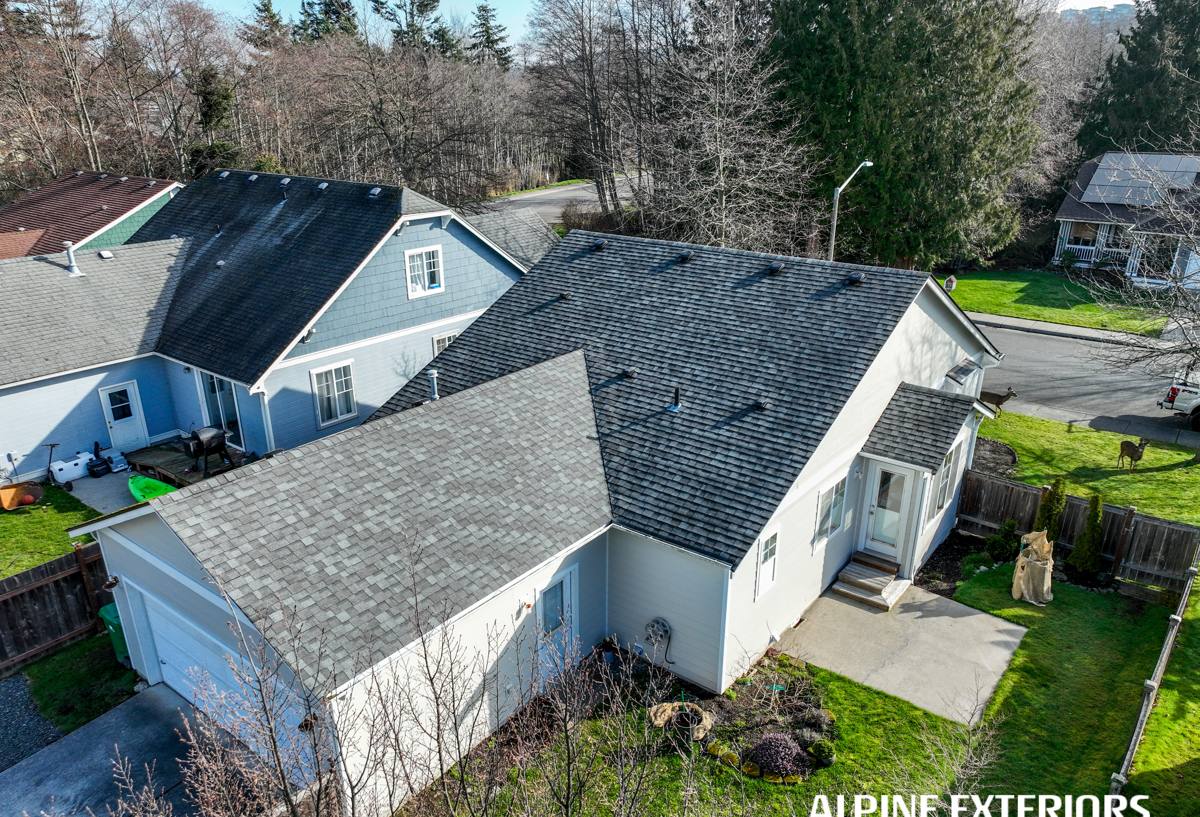
What Salt Air and Moisture Actually Do to a House
Salt Exposure
Airborne salt doesn't just sit on the surface — it works into seams, fastener heads, and any place moisture can linger. On metal fasteners and trim, that means accelerated corrosion. On painted wood and some engineered wood products, salt residue holds moisture against the surface longer than it would inland, which speeds up paint failure and softens the substrate underneath over time.
Driving Rain
Anacortes and the island get plenty of rain that arrives at an angle, not straight down, pushed by wind off the water. That kind of weather finds every gap in a siding system — lap joints, corner boards, window and door trim — and forces water behind the surface rather than letting it run off. Siding that isn't dimensionally stable, or that relies on paint film alone to keep water out, is where this shows up first: swelling at the bottom edge of boards, soft spots near trim, and paint that blisters and peels from the inside out.
Moss and Prolonged Dampness
Shaded, north- and west-facing walls on wooded lots stay damp longer here than most of the year would suggest. That extended dampness is exactly what moss, algae, and mildew need to establish themselves on a wall surface. Beyond looking bad, sustained moss growth holds moisture directly against the siding, which is a slow but steady path toward rot in anything wood-based.
Why We Only Install James Hardie Fiber Cement Siding
We made a decision as a company to install one siding product system on every job: James Hardie fiber cement. We don't install vinyl, LP SmartSide, Cemplank, Allura, primed spruce, or cedar, even though we could. That's a deliberate standard, not a lack of options, and it comes directly from what we see happen to exteriors in exactly this kind of climate.
Fiber cement is made from cement, sand, and cellulose fibers, which makes it non-combustible and dimensionally stable in a way that wood-based and wood-fiber products aren't. It doesn't swell and contract with moisture the way engineered wood or solid wood siding does, and it isn't a fuel source, which matters given Washington's wildfire seasons even on a marine-influenced island like Fidalgo. James Hardie's ColorPlus factory-applied finish is baked on under controlled conditions rather than field-painted, which gives it better adhesion and UV resistance than a job-site paint job can match, and that finish is backed by a real transferable warranty.
None of this means other products are without merit. Vinyl is inexpensive and low-maintenance in mild climates. Engineered wood has a warmer, more traditional look and is easier to work with on-site. Cedar has genuine curb appeal. But in a marine environment with driving rain and long damp stretches, the trade-offs on moisture sensitivity, seam performance, and long-term maintenance are real, and we'd rather stand behind one product we trust fully than offer several we have reservations about.
James Hardie Product Lines We Work With
- HardiePlank lap siding — the standard horizontal siding profile, available in several textures and exposures
- HardiePanel vertical siding — for board-and-batten and modern vertical looks
- HardieShingle — a shingle profile without the moisture concerns of real wood shingles
- HardieTrim — matching trim boards for a consistent, integrated exterior system
Hardie's HZ5 product formulation is engineered specifically for climates like ours — freeze-thaw cycles, sustained moisture, and coastal exposure — rather than a generic national product.
How This Plays Out for Fidalgo Island Homes Specifically
Homes on the island tend to fall into a few categories: waterfront or near-waterfront properties with direct salt exposure, wooded interior lots with heavy shade and moss pressure, and everything in between along the roads connecting Anacortes to the rest of the island. Each has a slightly different exposure profile, but the underlying climate stressors are the same, just in different proportions.
For a waterfront-adjacent home, we pay close attention to fastener selection, flashing details around windows and doors, and how the siding system handles wind-driven rain at corners and penetrations. For a shaded, wooded lot, the bigger concern is often ventilation behind the siding and making sure moisture has a way to escape rather than being trapped against the wall assembly. Either way, correct installation — proper flashing, correct nailing patterns, appropriate clearances at grade and roof lines — matters as much as the material itself. A great product installed poorly will still fail in this climate.
Beyond Siding: Roofing, Windows, and Decks
Siding is only one piece of how a home sheds water and stands up to salt air. We also handle roofing, window replacement, and deck construction, and on the island those all intersect with the same climate pressures.
A roof in poor condition sends water down behind siding at the roofline before it ever reaches the ground. Old or failing windows create the same problem at every opening in the wall. Decks exposed to driving rain and salt spray need materials and fastening details that account for both. When we look at a home's exterior, we look at how these systems work together rather than treating siding as an isolated repair, because water intrusion problems on Fidalgo Island rarely have just one cause.
Comparing Siding Options for This Climate
| Material | Moisture Behavior in Marine Climate | Maintenance | Our Position |
|---|---|---|---|
| Vinyl | Doesn't rot, but can warp/crack in temperature swings; seams can allow water behind panels | Low, but limited repair options if damaged | Not installed |
| LP SmartSide / engineered wood | Wood-fiber core is moisture-sensitive at cut edges and seams | Moderate; edge sealing and paint upkeep matter | Not installed |
| Cedar | Natural material, absorbs and releases moisture; prone to swelling, checking | High; refinishing and moisture monitoring needed | Not installed |
| James Hardie fiber cement | Dimensionally stable, non-combustible, engineered for marine/coastal conditions (HZ5) | Low; factory finish holds up without field repainting for years | What we install |
What a Siding Project Involves
Assessment
We start by looking at the existing siding's condition, the home's exposure to prevailing wind and rain direction, and any signs of moisture already working its way into the wall assembly — soft spots, staining, or visible moss buildup.
Prep and Moisture Barrier
Correct installation depends on what's underneath the siding as much as the siding itself: proper weather-resistant barrier, flashing at every penetration, and attention to how water is directed away from the wall rather than trapped behind it.
Installation
Hardie siding is heavier and cut differently than wood or vinyl, and it has its own fastening and joint requirements. Following the manufacturer's installation instructions isn't optional if you want the warranty to be worth anything — it's the difference between a system that performs for decades and one that fails early despite using a good product.
Finish Details
Trim, caulking at appropriate joints (not everywhere — over-caulking can trap moisture), and touch-up work at cut edges using manufacturer-approved products round out a job that's built to last, not just look finished on day one.
Signs Fidalgo Island Homeowners Should Watch For
- Paint that's peeling, bubbling, or flaking, especially on shaded or water-facing walls
- Soft or spongy spots when pressed near the bottom of siding boards or around trim
- Persistent moss or algae growth that keeps coming back after cleaning
- Visible gaps, warping, or separation at seams and corners
- Staining or discoloration that tracks down from window sills or rooflines
- A musty smell or visible moisture inside near exterior walls
Any one of these is worth a look before it becomes a larger repair. Catching moisture problems early is almost always cheaper than dealing with them after they've reached the wall sheathing.
Why a Local Crew Matters Here
Fidalgo Island's exposure isn't uniform, and neither is Skagit County's weather from one side of the island to the other. A crew that works in this specific area regularly understands which walls take the worst of the driving rain, where moss pressure tends to be heaviest, and how local permitting and building department expectations apply to exterior work in Anacortes. That local knowledge shapes real decisions — flashing details, ventilation choices, product selection — not just talking points.
If your home on Fidalgo Island is showing wear from salt air, moisture, or moss, we're happy to take a look and talk through what we're seeing, with no pressure to move forward. Reach out for a free estimate using the form below.