 Anacortes Siding
 Cemplank Is a Real Fiber Cement Product — Here's the Honest Version
Cemplank is a genuine fiber cement lap and panel siding, manufactured by a large building-products company that also owns other well-known cement board lines. It's not a knockoff or a vinyl-pretending-to-be-something-else. The core material — Portland cement, sand, and cellulose fiber pressed and cured into a rigid board — is the same basic chemistry that makes fiber cement siding a solid, fire-resistant, rot-proof choice for homes anywhere in Skagit County. If a supplier quoted you Cemplank, they weren't trying to pull one over on you.
So this isn't a page about a "bad product." It's a page about why, as a company that installs a lot of siding in wet, salty, moss-prone coastal conditions, we made a decision years ago to install one fiber cement system — James Hardie — and stick with it. That decision came down to factory finish quality, warranty structure, product engineering for our specific climate, and how consistently we can back what we install. Here's the reasoning, laid out plainly.
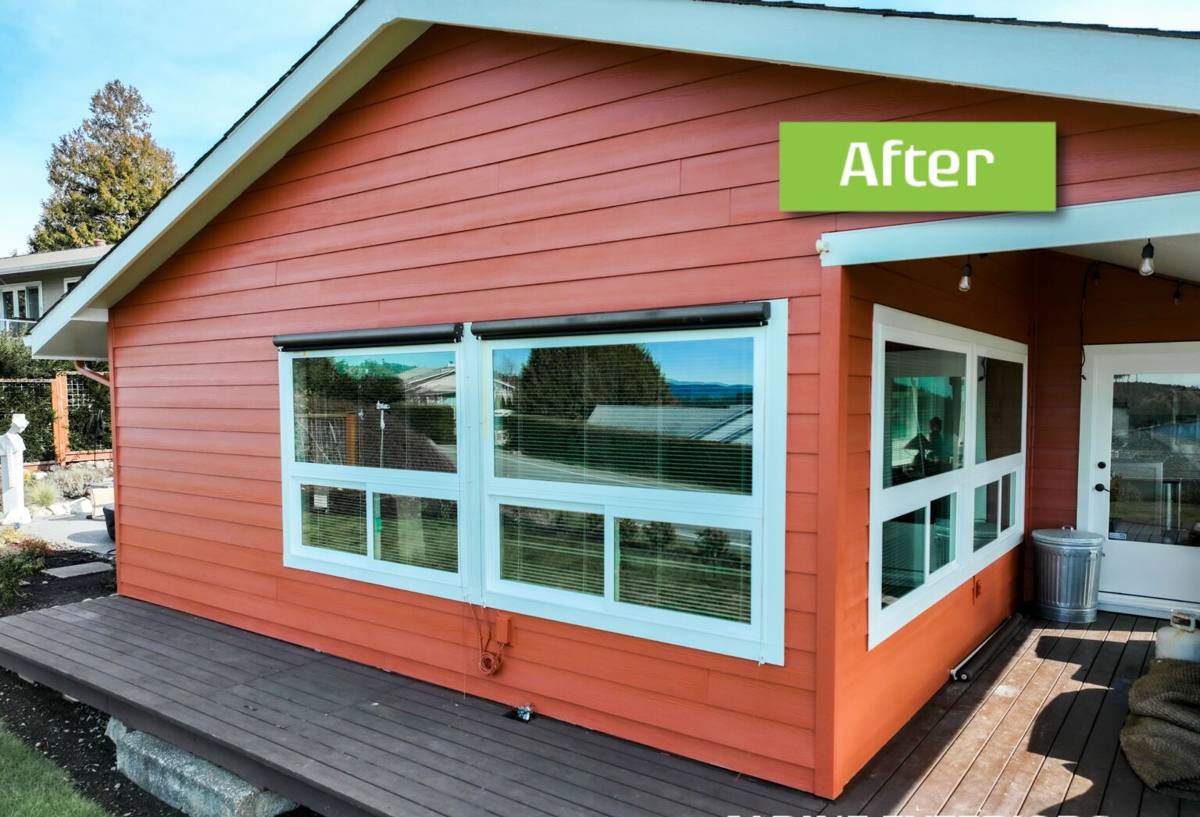
What All Fiber Cement Siding Gets Right
Before getting into differences, it's worth being clear about what fiber cement as a category does well, because this applies whether it's Cemplank, Hardie, or another brand:
- It doesn't burn — fiber cement is non-combustible, which matters more every wildfire season in the Pacific Northwest.
- It doesn't rot, delaminate, or feed insects the way wood-based siding can.
- It holds paint and factory finishes far longer than wood or engineered wood products.
- It stands up to driving rain and wind-driven moisture better than vinyl, which can warp, crack, or blow off in a real windstorm off the Sound.
Any homeowner choosing fiber cement over vinyl, LP SmartSide, or bare wood siding is making a sound call. The differences that matter to us show up one level deeper — in how the specific product is engineered, finished, and supported.
Where the Differences Actually Show Up
Factory Finish Consistency
Fiber cement siding lives or dies by its finish. The board itself is nearly indestructible; the paint or coating on top of it is what determines whether the siding looks good in year one and still looks good in year fifteen. James Hardie's ColorPlus finish is a baked-on, multi-coat factory process with a dedicated warranty specifically covering finish performance — fading, chipping, and cracking — separate from the substrate warranty. Not every fiber cement brand backs its factory finish with the same coverage or the same track record of consistent color batches, and color-match availability for repairs and additions down the road is something we've found varies a lot by brand and by region.
Warranty Structure
A 30-year non-prorated warranty sounds similar across brands until you read what's actually covered, whether it's transferable if you sell the house, and whether the manufacturer has a track record of actually honoring claims without a fight. We install what we can stand behind for the life of that warranty, which means we care as much about how a manufacturer handles year-12 claims as what the brochure promises on day one.
Climate-Engineered Product Lines
This is the one that matters most here in Anacortes. James Hardie makes region-specific "HZ" (HardieZone) formulations engineered for different moisture and temperature profiles across the country — including a version built for our wet Pacific Northwest climate specifically. Not every fiber cement manufacturer offers that level of climate-specific engineering. When a product is formulated with Skagit County's rain totals, humidity, and moss pressure in mind, that's not a marketing detail — it affects how the board handles moisture cycling over 20+ years.
Local Supply Chain and Support
When we need a matching trim piece, a specific profile, or a warranty claim resolved, having a manufacturer with deep, reliable distribution and installer support in Western Washington saves our customers real headaches. We've found that consistency less predictable with some of the lower-volume or regionally thinner fiber cement lines.
Fiber Cement Brand Comparison
| Factor | Cemplank | James Hardie |
|---|---|---|
| Core material | Portland cement, sand, cellulose fiber | Portland cement, sand, cellulose fiber |
| Factory finish system | Factory primed/finished options vary by product line | ColorPlus baked-on finish with dedicated finish warranty |
| Climate-specific engineering | General product formulation | HardieZone (HZ5/HZ10) formulations by region |
| PNW distribution depth | Available through select suppliers | Widely stocked, deep regional installer network |
| Non-combustible | Yes | Yes |
| Resists rot/insects | Yes | Yes |
Installation Sensitivity Isn't Brand-Specific — But It's Non-Negotiable
Every fiber cement product, Cemplank included, is only as good as its installation. Fastener placement, clearances off the ground and roofline, caulking and flashing details at penetrations, and proper gapping at butt joints all determine whether the siding performs for 30 years or starts showing moisture problems in five. This is true regardless of brand. Part of why we standardized on one system is that it lets our crews master one set of installation specs, fastening patterns, and manufacturer requirements in depth, rather than switching between products and specs on a rotating basis. Fewer variables means fewer installation mistakes.
Why Anacortes and Skagit County Conditions Push This Decision
Anacortes sits right where salt air off Rosario Strait and the Guemes Channel meets a genuinely wet marine climate. That combination — salt-laden air, long stretches of driving rain, and a moss season that can run most of the year on north-facing and shaded elevations — is hard on exterior building materials in ways that inland siding jobs never have to deal with. Salt air accelerates corrosion on fasteners and trim, driving rain tests every joint and flashing detail, and moss holds moisture against the siding surface longer than most homeowners realize. We want a siding system engineered with exactly this kind of climate in mind, backed by a factory finish that won't chalk or fade prematurely under UV reflected off the water, and supported by a manufacturer with real depth in the Pacific Northwest market. That's the practical reason a climate-specific product line matters more here than it might in a drier region.
What We Install Instead
We install James Hardie fiber cement siding exclusively — lap siding, panel siding, and trim, in the HZ formulation built for our climate zone. That means:
- A single, well-understood installation spec our crews follow on every job, reducing the chance of a detail getting missed.
- A factory ColorPlus finish backed by its own finish warranty, so color and coating performance aren't left to field-applied paint.
- A product line engineered for wet, moss-prone, salt-air climates like ours rather than a general-purpose formulation.
- A manufacturer with strong regional distribution, so color-matched materials are available for repairs, additions, or partial replacements years down the road.
- A transferable warranty that holds real value if you sell the home before the siding's functional life is up.
Questions Worth Asking Any Siding Contractor
Whether you go with us or someone else, these are worth asking before you sign a contract for fiber cement siding:
- Which specific fiber cement brand and product line are you quoting, and is it climate-rated for this region?
- Is the factory finish covered by its own warranty, separate from the substrate warranty?
- What are the manufacturer's minimum clearances off grade, decks, and roofing, and how will you verify them on my house?
- How is color-matched material sourced if I need a repair or addition in ten years?
- Is your crew factory-trained or certified on the specific product you're installing?
- What does the manufacturer's warranty actually require from the installer to stay valid?
The Bottom Line
Cemplank is a legitimate fiber cement product, and a homeowner who has it on their house isn't dealing with a defective material. We simply made a business decision to install one system, understand it completely, and back it with a finish, warranty, and regional support structure built for exactly the kind of weather Skagit County throws at a house — salt air, sideways rain, and moss that doesn't take a season off. That's why every siding job we take on in Anacortes goes on with James Hardie, not because the alternative is bad, but because we'd rather do one thing at a high standard than several things at an average one.
If you're weighing siding options for a home in Anacortes or anywhere in Skagit County, we're happy to walk your house, look at your exposure to weather and moss, and give you a straightforward, no-pressure estimate on what a James Hardie install would look like and cost. Use the form below to get started.