 Anacortes Siding
 Why Siding Failure Often Goes Unnoticed Until It's Expensive
Siding is the one part of your house that's designed to take a beating so the framing behind it doesn't have to. In Anacortes, that job is harder than in most inland towns. You've got salt-laden air rolling off Rosario Strait and Guemes Channel, driving rain that comes in sideways off the water for days at a time, and a long, damp moss season that runs from fall through spring. All three work on your siding at once, and the damage they cause is usually slow and quiet. By the time paint is visibly peeling or a board is obviously warped, moisture has often been getting behind the siding for a year or more.
The good news is that failing siding gives off warning signs well before it becomes a structural problem. Knowing what to look for — and what those signs mean about what's happening behind the surface — can save you from a much bigger repair bill down the road.
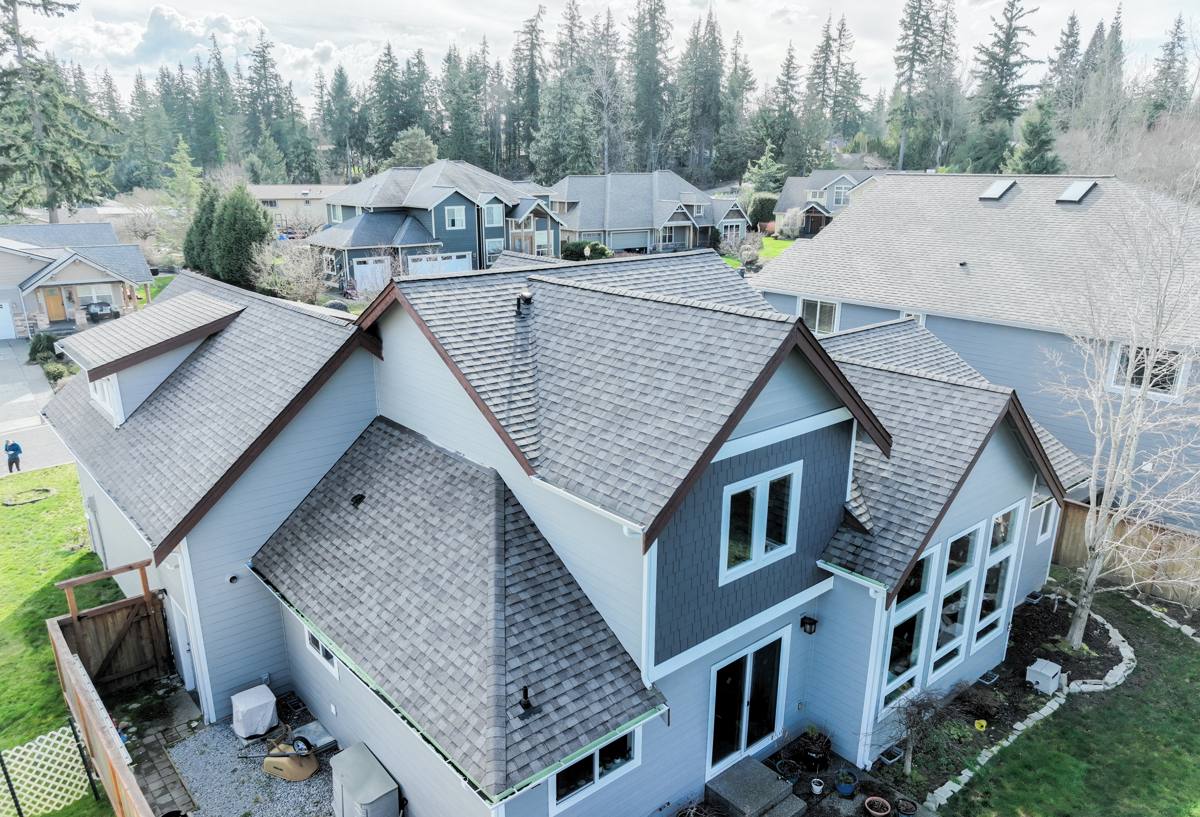
Visual Signs You Can Spot From the Ground
Bubbling, Blistering, or Peeling Paint
Paint that's bubbling or peeling in patches, rather than just dulling evenly across the whole house, usually means moisture is trapped underneath it and pushing outward. This is different from ordinary weathering — it's a sign the substrate itself is wet.
Warping, Buckling, or Rippling
Wood-based and composite sidings absorb moisture and swell. When they dry unevenly, or when they're fastened too tightly to allow for normal expansion, you get visible waves or buckling in the panel. Once a board has warped, it doesn't flatten back out on its own.
Cracking and Splitting
Hairline cracks that run with the grain, or splits at panel edges and seams, are common failure points for wood and engineered wood products. Cracks are entry points — once one opens up, every rainstorm after that pushes more water behind the siding.
Soft or Spongy Spots
If you can press a screwdriver handle into a section of siding and it gives way, or feels soft compared to the surrounding area, that's usually rot, not just surface wear. This is one of the most reliable "act now" signs there is.
Moisture and Moss-Related Signs Specific to This Climate
Skagit County's marine climate creates conditions that are harder on siding than a drier inland region would be. A few signs are worth watching for specifically because of where we live:
- Moss and algae streaking on north-facing walls and under eaves, especially through the wet season — a sign the siding surface is staying damp long enough for organic growth to take hold, which speeds up deterioration underneath.
- Persistent dark staining at seams, corners, and butt joints, which usually means water is wicking into the material at a joint rather than shedding off the surface.
- Salt haze or a chalky white residue on siding facing the water, which by itself is cosmetic, but on siding with already-failing paint or sealant it signals the finish is no longer protecting the substrate.
- Swelling at the bottom edge of boards, since the lowest courses take the most splash-back from driving rain and are often the first place moisture damage starts.
None of these are unique to any one brand of siding, but how a product responds to sustained dampness varies enormously — and it's a big part of why product choice matters as much as installation quality.
Signs That Point to Problems Behind the Siding
Some of the most serious siding failures aren't visible on the siding itself at all.
- Interior drywall staining, bubbling paint, or a musty smell along exterior walls
- Visible daylight or drafts around window and door trim
- Rot at trim boards, corner boards, or the bottom plate where siding meets the foundation
- Insect activity (carpenter ants, in particular, are drawn to damp wood) near exterior walls
- Rising utility bills with no other explanation, which can point to a compromised weather barrier letting conditioned air escape
Any of these warrants pulling a section of siding, or having a contractor do it, to check the condition of the house wrap and sheathing underneath. Surface repairs on siding that looks fine won't fix a problem that's already moved past it.
How Long Siding Signs Take to Show Up, By Material
Different siding materials fail in different ways and on different timelines. This matters when you're trying to judge whether what you're seeing is normal wear or a sign of a bigger problem.
| Material | Common Early Failure Signs | Typical Vulnerable Point |
|---|---|---|
| Vinyl | Cracking in cold weather, warping/melting near heat sources, fading | Seams and fastening points; brittle with age |
| Primed spruce / cedar | Checking, cupping, peeling paint, visible grain raise | End grain, butt joints, anywhere paint film breaks |
| LP SmartSide (engineered wood) | Edge swelling, delamination at cut ends, flaking finish | Unsealed factory cuts and panel edges |
| Fiber cement (uncoated / field-painted) | Paint failure sooner than the substrate itself | Finish quality depends entirely on installer's paint job |
| Fiber cement with factory finish (e.g. ColorPlus) | Gradual, even fading over many years — rarely peels or blisters | Cut edges left unsealed during installation |
The common thread across the wood-based and engineered-wood products is that their failure points are tied to moisture absorption at edges, seams, and cuts — exactly the spots that take the worst of Anacortes's driving rain. It's a large part of why we standardized on James Hardie fiber cement with a factory-applied ColorPlus finish: the material itself doesn't absorb water the way wood fiber products do, and the finish isn't dependent on a field paint job holding up over decades.
A Simple Self-Inspection Checklist
Twice a year — once after the wet season and once before it — walk the exterior of your home and check for the following:
- Peeling, bubbling, or chalking paint, especially on south and west walls that take direct weather
- Soft spots when pressed firmly with a gloved hand or screwdriver handle
- Visible gaps, cracks, or separation at seams, corners, and trim joints
- Moss, algae, or persistent dark staining, particularly under eaves and on shaded walls
- Warping, buckling, or waviness when viewed at a low angle along the wall
- Loose, missing, or popped fasteners
- Interior signs: musty smell, stained drywall, or peeling interior paint on exterior walls
- Increased pest activity near the base of exterior walls
Keep a photo record from year to year if you can. Slow-developing problems are much easier to catch when you can compare this year's photo to last year's.
Repair or Replace? How to Tell the Difference
Not every sign of aging siding means a full replacement. A single damaged board, isolated caulk failure at a trim joint, or localized paint peeling on one wall can often be repaired if the rest of the siding and the sheathing behind it are sound. What tips the scale toward full replacement is usually:
- Damage showing up in multiple, unrelated areas of the house rather than one isolated spot
- Confirmed rot or moisture damage in the sheathing, not just the siding surface
- A siding product that's reaching the end of its realistic service life across the board, even if individual boards still look okay
- Repeated repairs to the same areas that keep recurring within a few years
A contractor who pulls a few boards to check the condition underneath, rather than quoting off a windshield survey, is going to give you a far more honest answer about which category your house falls into.
Why We Only Install James Hardie Going Forward
When we're called out to look at failing siding, the underlying material is almost always part of the story — not because any of these products are junk, but because wood-fiber-based sidings are fundamentally sensitive to sustained moisture exposure, and Anacortes gives them plenty of it. We made the decision to install only James Hardie fiber cement because it's engineered specifically to resist moisture, freeze-thaw cycling, and the kind of prolonged dampness this region produces every winter. It's non-combustible, it holds a factory finish far longer than a field-applied paint job on wood products, and it comes with a strong transferable warranty backed by decades of real-world performance in wet coastal climates like ours. When correctly installed — proper flashing, sealed cut edges, correct fastening — it's the product we're most confident won't bring us back out to the same house in five years for the same problem.
If you're seeing any of the signs above, or you just want an honest read on where your siding stands, we're happy to take a look. A free, no-pressure estimate through the form below is the easiest way to get a straight answer.