 Anacortes Siding
 Serving Burlington Homes From an Anacortes-Based Crew
Burlington sits inland from Anacortes in Skagit County, but the exterior of a Burlington home deals with a lot of the same weather our Anacortes customers fight every year. Salt-tinged air drifts in off the Sound, winter storms bring driving rain that hits siding sideways for days at a time, and the shaded, damp stretches of spring and fall turn into a long moss season on roofs, decks, and north-facing walls. We work throughout Skagit County, and Burlington is part of our regular service area — not a stretch job we tack onto a schedule when it's convenient.
Being based nearby means we're familiar with how homes in this part of the county are built, what typically fails first, and how long a job actually takes once you factor in our real weather windows. That matters more than it sounds like it should. A crew that only shows up once and disappears has no incentive to get the details right. A local crew has to live with its own work.
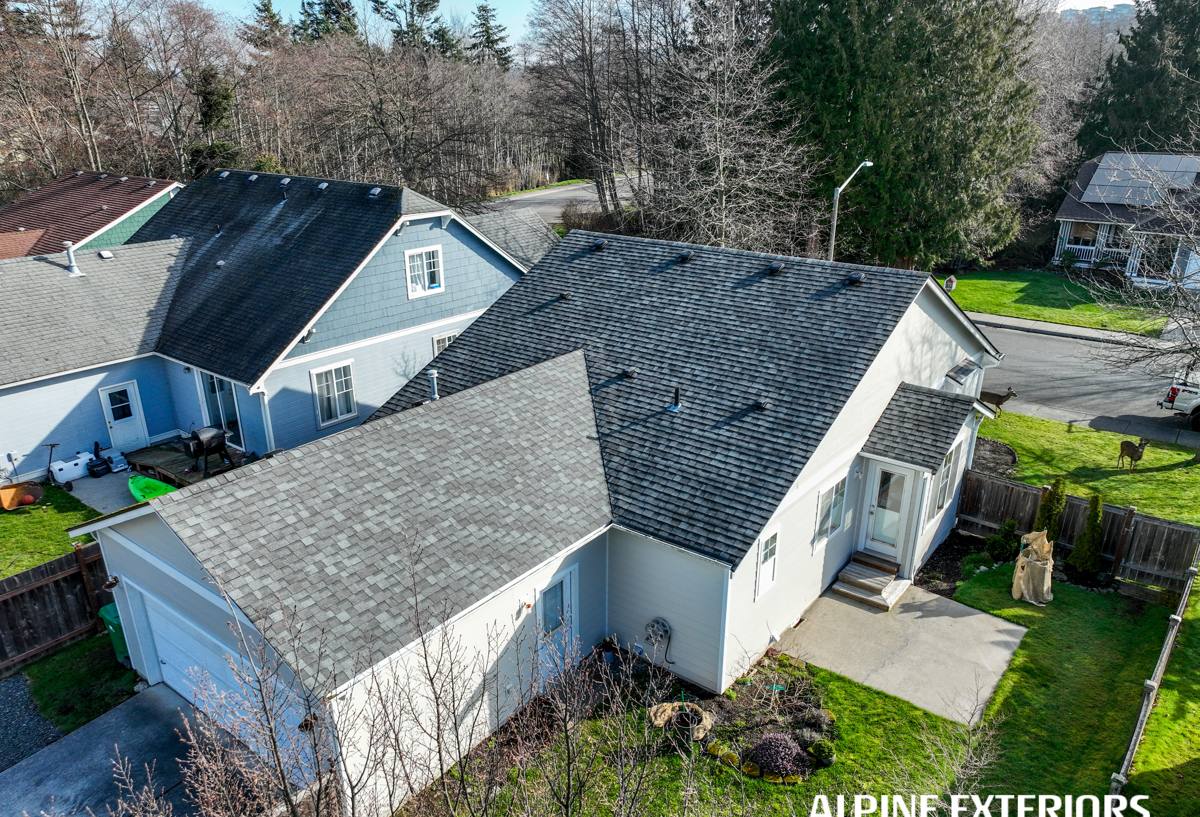
What Burlington's Climate Does to a House Over Time
Moisture Is the Real Enemy
Skagit County doesn't get the extreme cold or heat that stresses building materials in other parts of the country. What it gets instead is moisture — persistent, low-grade, and constant. Rain doesn't just fall here, it blows sideways during winter storms, driving water into seams, laps, and fastener points that were never designed to be exposed to standing moisture. Add the humidity that lingers under tree cover or in low-lying yards, and you have ideal conditions for wood rot, paint failure, and moss growth.
Salt Air and UV Cycling
Even set back from the water, homes in this part of the county pick up salt-laden air carried in from the Sound, especially during winter wind events. Salt air accelerates the breakdown of caulking, fasteners, and paint film. Combine that with the UV exposure of long summer days and you get a slow but steady cycle of expansion, contraction, and surface degradation that most exterior materials aren't built to handle indefinitely.
Moss Season Isn't Just Cosmetic
Moss on a roof or on the north side of a house isn't just an eyesore. It holds moisture against the surface underneath it, which is exactly the wrong thing for wood, some composite products, and aging paint. Left alone through a few wet seasons, moss buildup can contribute to trapped moisture, granule loss on roofing, and softened trim.
Full Exterior Services for Burlington Properties
We handle the whole exterior envelope, not just siding. Most homes need these systems to work together — a roof that's shedding water properly, siding that's actually sealed and flashed correctly, windows that aren't leaking at the frame, and decks built to handle standing water and freeze-thaw cycling.
- Siding: Installation and replacement using James Hardie fiber cement exclusively — no vinyl, no LP SmartSide, no engineered wood alternatives.
- Roofing: Replacement and repair, with attention to moss prevention and proper drainage details around valleys and penetrations.
- Windows: Replacement with correct flashing and sealing, which matters as much as the window unit itself in this climate.
- Decks: Built and maintained with materials and fastening details that account for constant moisture exposure.
Why We Install Only James Hardie Fiber Cement Siding
We made a deliberate decision years ago to standardize on one siding system rather than offer whatever a homeowner happened to ask for. That decision was based on watching how different products actually perform over a decade or more of Pacific Northwest weather, not on marketing claims.
What We Ruled Out, and Why
Vinyl siding is inexpensive and easy to install, which is exactly why it's everywhere. But it's a thin plastic product that expands and contracts significantly with temperature swings, can crack in impacts, and fades over time under UV exposure — and once it fades, there's no refinishing it, only replacing it. In an area with this much wind-driven rain, vinyl's lap-and-gap installation style also gives water more opportunities to get behind the cladding than a properly sealed fiber cement system does.
Engineered wood products like LP SmartSide use treated wood strand technology and can look good going on, but they're still wood-based, which means they're more sensitive to sustained moisture exposure than fiber cement. In a climate where siding stays damp for extended stretches during the wet season, that's a meaningful long-term liability, not a hypothetical one.
Primed spruce, cedar, and other traditional wood sidings require the most ongoing maintenance of any option — regular repainting or restaining, careful caulk maintenance, and vigilance against rot at every joint. They can look beautiful, but they demand a level of upkeep that most homeowners underestimate until they're a few years in.
Why We Standardized on Hardie
James Hardie fiber cement is cement-based, not wood-based, which means it doesn't rot, doesn't attract insects, and holds up to sustained moisture exposure far better than wood or engineered wood alternatives. It's also non-combustible, which matters increasingly in this region. The ColorPlus factory finish is baked on under controlled conditions rather than field-applied, which gives it more consistent, longer-lasting color performance than site-painted siding. And Hardie's HZ5 product line is specifically engineered for climates like ours, with freeze-thaw and moisture cycling in mind.
None of this means Hardie is maintenance-free — it still needs proper caulking, occasional repainting eventually, and correct installation to perform as designed. But it starts from a much stronger baseline, and that baseline is what we're willing to put our name behind.
Comparing Siding Options for Skagit County Homes
| Material | Moisture Resistance | Maintenance | Typical Lifespan |
|---|---|---|---|
| James Hardie Fiber Cement | Excellent — cement-based, doesn't rot | Low; occasional caulk checks | 30-50+ years with proper install |
| Vinyl | Fair — prone to water intrusion at seams | Low, but not repairable if faded/cracked | 20-30 years |
| Engineered Wood (LP SmartSide) | Fair — wood-based core | Moderate; watch cut edges and seams | 20-30 years |
| Cedar / Primed Wood | Poor to fair without upkeep | High; regular refinishing required | 15-30 years, upkeep-dependent |
These are general ranges, not guarantees for any specific product or installation. Actual performance depends heavily on installation quality, exposure, and maintenance — which is why installation detail matters as much as the product choice itself.
Signs a Burlington Home's Siding Needs Attention
- Visible warping, buckling, or separation at panel seams
- Soft spots when pressed, especially near the bottom courses or window trim
- Peeling or bubbling paint that keeps returning after repainting
- Moss or persistent green staining on north-facing or shaded walls
- Rising energy bills that can't be explained by usage changes, which can point to gaps behind failing siding
- Visible gaps or cracked caulk at joints, corners, and trim
Any one of these on its own isn't necessarily an emergency. Several at once, especially combined with an aging roof or older windows, usually means it's time for a real assessment rather than another round of patching.
How Cost Factors Break Down
Every home is different, and we won't quote a number without seeing the property, but a few things consistently drive cost on Burlington and Skagit County jobs:
| Factor | Why It Matters |
|---|---|
| Home size and wall complexity | More corners, gables, and trim details mean more labor and material cuts |
| Existing siding removal | Tear-off of old wood or vinyl adds time versus a straightforward install |
| Underlying sheathing condition | Rot or water damage found during removal needs repair before new siding goes on |
| Trim and color package | ColorPlus finishes and trim details vary in price by product line |
| Access and site conditions | Tight lots, slopes, or landscaping can add setup time |
What Working With Us Looks Like
We start with an on-site look at the home, not a phone estimate. That's the only way to catch things like soft sheathing, flashing issues, or drainage problems that a quick guess would miss. From there we walk through the Hardie product lines and colors that fit the home, give you a straightforward written estimate, and lay out a realistic timeline that accounts for our actual weather patterns rather than an optimistic best case.
Because we handle roofing, windows, and decks alongside siding, we can also flag related issues while we're already on-site — a roof that's shedding water badly onto the siding below, or window flashing that's letting moisture in behind the wall, are both things that undermine even a perfect siding job if they go unaddressed.
Ready for a Straight Answer on Your Siding?
If you're in Burlington and dealing with siding that's showing its age, or you're planning ahead before the next wet season sets in, we're happy to take a look and give you an honest assessment — no pressure, no obligation. Use the form below to request a free estimate and we'll get in touch to schedule a time to come out.