 Anacortes Siding
 Mount Vernon Sits in a Climate That's Harder on Siding Than It Looks
Mount Vernon doesn't feel like a coastal town. It sits inland along the Skagit River, surrounded by farmland, with the Cascade foothills to the east and Puget Sound a short drive west. But weather doesn't respect that distinction. Marine air moves up the Skagit Valley off the Sound and the Strait, carrying salt-laden moisture with it, and the valley's flat, low-lying geography traps humidity instead of letting it drain away the way it would on a hillside or a more exposed coastal bluff. The result is a climate that combines coastal dampness with valley stillness — a combination that's genuinely tough on exterior building materials.
Add to that the driving rain that comes through in fall and winter storms, often blown sideways by wind funneling down the valley, and you get siding, trim, and roofing that take on water from angles builders in drier climates rarely have to plan for. Homes here don't fail because of one dramatic event. They fail slowly, from years of moisture finding its way into seams, fastener holes, and butt joints that weren't detailed to shed water in the first place.
The Moss Problem Is a Moisture Problem
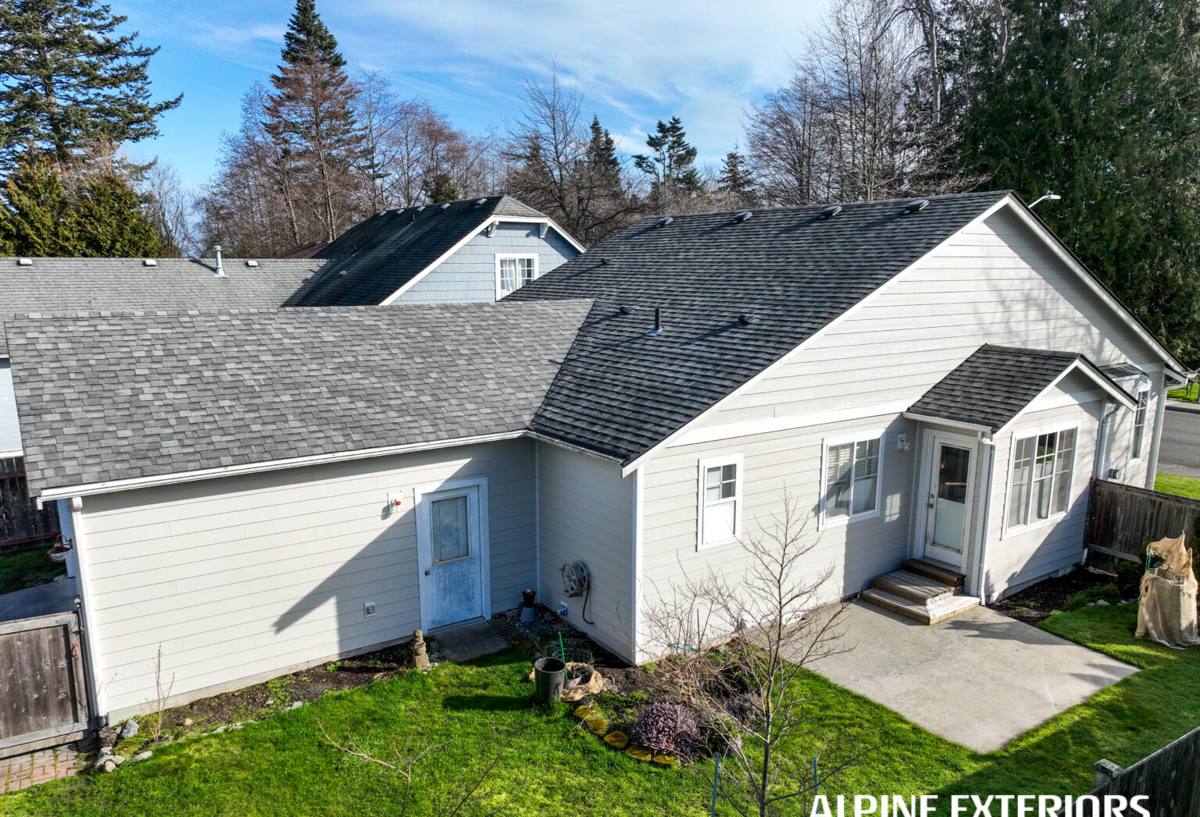
Ask almost any homeowner in Skagit County what the biggest nuisance is on their roof and siding, and moss comes up fast. Western Washington's long, mild, wet stretches — often extending from October well into spring — create ideal conditions for moss and algae growth on any surface that stays damp and shaded. North-facing walls, areas under eaves with poor airflow, and siding tucked behind mature landscaping are the first places it shows up.
Moss itself isn't just cosmetic. It holds moisture against the surface it's growing on, which is exactly the wrong thing for wood-based siding products or any material with a vulnerable core. Over years, that trapped moisture is what leads to soft spots, swelling, and eventually rot underneath paint or coating that still looks fine from the ground. A siding material's ability to resist moss growth — and to shrug off the moisture moss traps — matters more here than in most parts of the country.
Why This Matters More in a River Valley
Because Mount Vernon sits in a valley rather than on open coastline, air movement tends to be gentler and more stagnant on calm days, which means damp conditions can linger on a home's exterior longer after a storm passes. Homes with good sun exposure and airflow dry out faster; homes tucked among trees or facing north often don't get that advantage, and it shows in how their siding ages.
Why We Standardized on One Siding Product
We install James Hardie fiber cement siding, exclusively. We don't offer vinyl, LP SmartSide, Cemplank, Allura, primed spruce, or cedar as options, and that's a deliberate business decision, not a limitation of what we know how to install. After years of servicing homes throughout Skagit County, we found the same failure patterns showing up again and again in the same climate conditions described above — moisture intrusion at seams, moss-driven rot, paint failure, and warping — on products that perform perfectly well in drier regions but struggle here.
James Hardie fiber cement is a cement-and-cellulose composite. It doesn't have the organic wood content that moss and rot need to take hold, it doesn't swell and contract with moisture the way wood-based products do, and it carries a factory-applied ColorPlus finish that's baked on and warranted against fading rather than relying on a field-applied coat of paint. It's also non-combustible, which matters increasingly to insurers and to homeowners thinking about wildfire exposure even in a valley setting.
What We Get Right by Saying No to Other Products
Being honest about trade-offs is part of doing this right. Vinyl siding is inexpensive and low-maintenance in mild climates, but it can warp in temperature swings and its seams are a known weak point for wind-driven rain intrusion — a real concern given how storms move through this valley. LP SmartSide and similar engineered wood products have improved significantly over the years and carry real warranties, but they still have a wood-strand core, and a wood-strand core plus a long wet season plus imperfect field installation is a combination we've seen go wrong too often to keep offering it. Cedar is beautiful and has real fans, but it demands a maintenance commitment — refinishing, caulking, vigilance about moss — that most homeowners underestimate when they choose it.
| Factor | James Hardie Fiber Cement | Vinyl / Wood-Based Alternatives |
|---|---|---|
| Moisture behavior | Cement-based core, doesn't swell or rot | Wood-based products can absorb moisture at cut edges and seams |
| Moss/algae resistance | No organic material for moss to feed on | Organic content can support moss growth over time |
| Finish durability | Factory-baked ColorPlus finish, warranted | Field-applied paint/coating wears and needs recoating |
| Fire resistance | Non-combustible | Combustible (wood-based); vinyl can deform under heat |
| Installation sensitivity | Requires correct fastening/flashing detail to perform as designed | Varies by product; seams are often the failure point |
How This Plays Out on a Real Skagit Valley Home
Picture a typical Mount Vernon house: a couple of decades old, wood or vinyl siding, maybe some visible streaking or dark patches on the north side, trim starting to separate at the corners, and a roofline that collects moss every winter no matter how often it's cleaned off. None of that is unusual for this area — it's what this climate does to exterior surfaces over time. The question isn't whether a home here will face moisture and moss pressure. It's whether the materials on it are built to handle that pressure or just to survive until the next issue shows up.
When we assess a home for siding replacement, we're looking at more than the siding itself. Flashing details around windows and doors, the condition of the water-resistive barrier underneath, how the eaves are venting, and whether previous repairs actually addressed moisture paths or just patched over them. Fiber cement performs best when the whole assembly behind it is done correctly — that's true of any siding, but the margin for error is smaller in a climate this consistently wet.
More Than Siding: The Whole Exterior Has to Work Together
We handle roofing, windows, and decks alongside siding, because in a climate like this, these systems aren't independent — they're one connected envelope protecting the house. A roof that's shedding water properly but dumping it onto siding that can't handle sustained moisture just moves the problem downstream. Windows that aren't flashed correctly become the entry point moisture finds even behind good siding. Decks, especially those attached to the house, need the same water-management thinking or they become a chronic source of rot at the ledger board.
Approaching a home's exterior as one system, rather than a series of separate trades, is how you actually solve moisture problems instead of relocating them.
Signs a Mount Vernon Home Should Get a Closer Look
- Persistent moss or dark streaking on north-facing or shaded walls, even after cleaning
- Paint that's peeling, bubbling, or chalking faster than expected
- Soft spots, especially near the bottom courses of siding or around window trim
- Visible gaps or separation at seams, corners, or butt joints
- Musty smell or discoloration on interior walls that back up to exterior siding
- Siding that's more than 20-25 years old and hasn't been fully inspected recently
Why a Local Crew Matters
A lot of exterior problems in this valley come down to installation detail, not the product itself. Correct fastener placement, proper overlap and clearances, flashing at every penetration, and starter strip detail all matter more in a climate that gives moisture this many chances to find a way in. A crew that works throughout Skagit County day in and day out knows which parts of a house typically show wear first, how local wind and rain patterns actually behave against a wall, and what it takes to get a James Hardie installation to perform the way it's engineered to. That local, repeated experience is worth more here than it would be in a drier, more forgiving climate.
What the Process Typically Looks Like
For most Mount Vernon homes, a siding project starts with an on-site assessment — walking the exterior, checking for existing moisture damage, and looking at trim, flashing, and roofline conditions, not just the siding surface itself. From there we talk through product lines, color options, and trim details, then handle removal of the old siding, repair of any sheathing or framing issues found underneath, installation of a proper water-resistive barrier, and correct installation of the new fiber cement siding and trim. Timelines vary with home size and weather windows, since siding work goes faster and holds up better when it's not fighting active rain.
Cost Factors Homeowners Should Understand
| Factor | Why It Affects Cost |
|---|---|
| Home size and complexity | More corners, gables, and trim detail mean more labor and material |
| Condition of the sheathing underneath | Hidden rot or moisture damage found during tear-off requires repair before new siding goes on |
| Siding profile and trim selection | Lap width, trim style, and accessory choices affect material cost |
| Access and site conditions | Landscaping, multiple stories, or tight lot lines can affect labor time |
| Scope beyond siding | Bundling roofing, window, or deck work can affect scheduling and overall project cost |
Any honest estimate for a home in this area should account for the possibility of moisture-related repairs turning up once old siding comes off — it's common enough in a climate like this that it shouldn't be a surprise, only a documented part of the quote if it happens.
If you're weighing a siding, roofing, window, or deck project for a home in Mount Vernon or elsewhere in Skagit County, we're glad to take a look and walk you through what we see, with no pressure to act on it right away. A free estimate is a good first step toward understanding what your home actually needs.