 Anacortes Siding
 La Conner sits low along the Swinomish Channel, close enough to Puget Sound that salt-laden air is simply part of daily life. Add Skagit County's long wet season, frequent driving rain off the water, and the shade and moisture that keep moss going strong for much of the year, and you have a climate that is genuinely hard on the outside of a house. We work throughout the Anacortes and Skagit County area, and La Conner is one of the communities where we see, again and again, what happens when exterior materials aren't matched to local conditions.
This page walks through what La Conner homes tend to face, how our siding, roofing, window, and deck work is built around that reality, and why we've standardized on one siding system rather than offering everything on the market.
What La Conner's Climate Does to a House
Waterfront and near-waterfront towns like La Conner deal with a specific combination of stressors that inland neighborhoods don't see nearly as much:
- Salt air corrosion — airborne salt from the Sound and channel accelerates the breakdown of fasteners, trim, and cheaper siding surfaces, and it eats away at unprotected metal faster than most homeowners expect.
- Driving, wind-blown rain — storms off the water don't just fall straight down; they push moisture sideways into wall assemblies, joints, and anywhere a seam isn't sealed correctly.
- Extended moss and algae season — shaded lots, marine humidity, and mild temperatures mean moss and algae can gain a foothold on roofs and siding almost year-round, not just in winter.
- Persistent dampness — even on days without rain, morning fog and high humidity keep exterior surfaces wet longer than they would be even twenty miles inland.
None of this is unique to any one house — it's the baseline for the area. The question is whether a home's siding, roof, windows, and decking were chosen and installed with that baseline in mind, or whether they were installed the same way they'd be installed in a dry climate three states away.
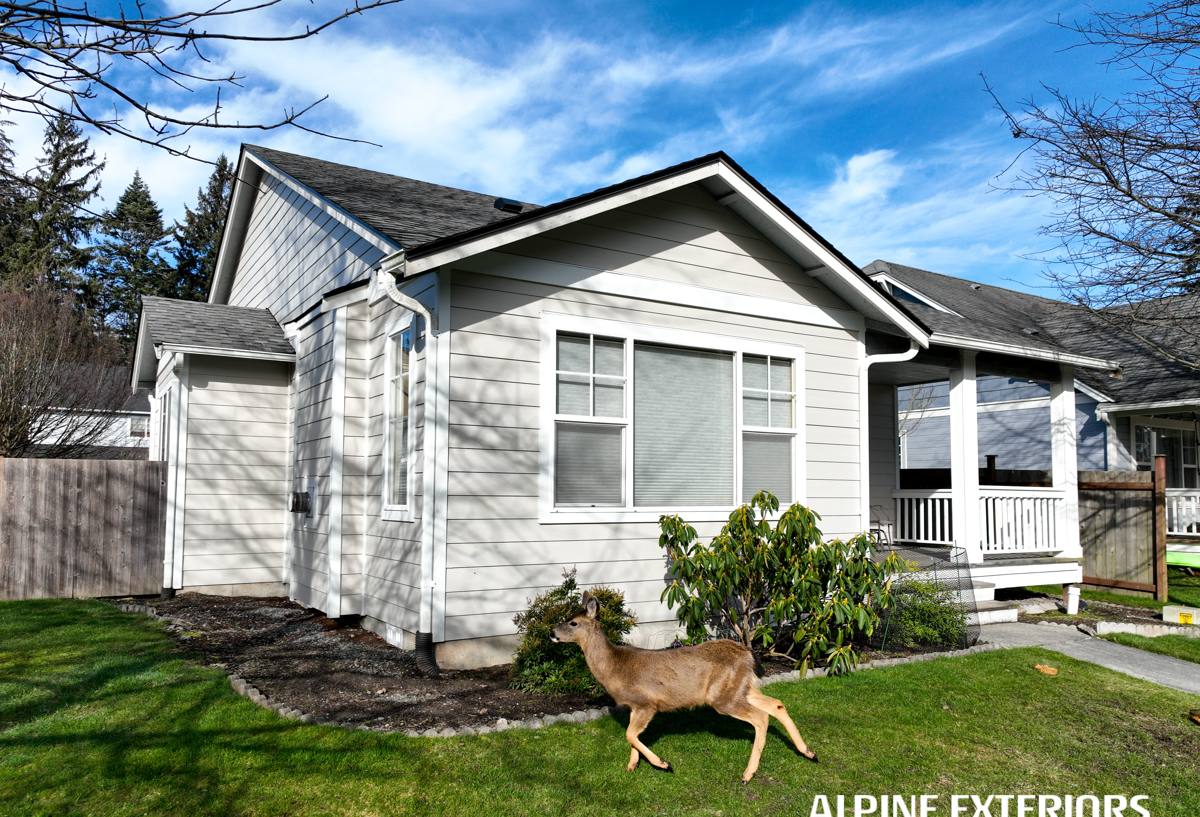
Why We Only Install James Hardie Fiber Cement Siding
We get asked fairly often why we don't offer vinyl, LP SmartSide, or other fiber cement brands like Cemplank or Allura. It's a fair question, and the honest answer is that we made a standardization decision based on what holds up in exactly the kind of climate La Conner sits in.
What We Ruled Out, and Why
| Material | Trade-off in this climate |
|---|---|
| Vinyl siding | Can warp or become brittle with temperature swings and UV exposure over time, and seams are more vulnerable to wind-driven rain intrusion than a properly caulked fiber cement joint. |
| LP SmartSide (engineered wood) | Wood-based core means it's more sensitive to sustained moisture exposure than fiber cement; performance depends heavily on flawless caulking and paint maintenance, which is a harder standard to hold in a persistently damp marine climate. |
| Other fiber cement brands (Cemplank, Allura) | Can be reasonable products, but we don't have the volume relationship, factory-finish system, or warranty backing with them that we have with Hardie, so we don't stock or install them. |
| Primed spruce / cedar | Natural wood requires the most ongoing maintenance of any option here — repainting, caulking, and moisture monitoring — which is a tough ask given how many wet months this area gets. |
None of these are "bad" products in every situation. But we install siding for a living in a marine climate, and we'd rather stand behind one system we trust completely than offer a menu of products with different failure modes.
Why James Hardie
James Hardie fiber cement is non-combustible, which matters increasingly across Washington. It holds a factory-applied ColorPlus finish that's baked on and warranted against fading, so it isn't relying on a field-applied paint job to survive salt air and UV. Hardie also engineers regional product lines (its HZ5 line, for example) specifically for wetter, harsher climates — which is directly relevant to a channel-front town like La Conner. And it carries a genuinely strong, transferable product warranty, backed by a large, established manufacturer, not a smaller regional mill.
Siding Installation and Replacement in La Conner
Fiber cement siding is only as good as its installation. In a high-moisture, salt-air environment, the details most contractors treat as an afterthought are the details that determine whether siding lasts fifteen years or fifty:
- Proper flashing at windows, doors, and any horizontal trim so wind-driven rain can't get behind the siding plane
- Correct fastener spacing and type — using fasteners rated to resist the corrosive effects of salt air, not generic hardware
- Rainscreen or drainage gap detailing where the wall assembly calls for it, so any moisture that does get behind the cladding has somewhere to go
- Caulking and joint treatment that matches Hardie's own installation specifications, not shortcuts
We install to those specs on every job, whether it's a full re-side after storm or moisture damage or new construction siding on a home being built near the channel.
Roofing for a Wet, Mossy Climate
Roofs in La Conner do double duty: they have to shed a lot of rain efficiently, and they have to resist moss and algae growth in shaded, north-facing sections that rarely dry out fully. We look at ventilation, underlayment quality, flashing details around any roof penetrations, and — where it makes sense — algae-resistant roofing materials, because a roof that's constantly damp underneath is a roof that ages faster than its warranty assumes.
Moss removal and prevention is worth taking seriously here rather than treating it as cosmetic. Left unchecked, moss holds moisture against roofing material and can work its way under shingle edges, shortening the life of an otherwise sound roof.
Windows That Hold Up to Salt Air and Driving Rain
Windows near the water take a beating from two directions: wind-driven rain pushing against the frame and glass, and salt air working on hardware, seals, and frame finishes over time. We pay close attention to flashing and sealing around every window opening, since a poorly flashed window is one of the most common sources of hidden water intrusion in coastal homes — often showing up as damage well before anyone notices a leak.
Decks Built for Marine Exposure
Decks in La Conner face constant dampness, shade-driven mold and mildew, and, for decks with any water view or proximity, salt exposure on fasteners and railings. We build and repair decks with attention to proper drainage under the decking boards, corrosion-resistant fasteners and hardware, and material choices suited to a climate where "dry season" is a relative term.
Why a Local Crew Matters
A crew that works across Skagit County and the greater Anacortes area sees the same moisture patterns, the same moss growth, and the same salt-air wear repeatedly — on siding, roofs, windows, and decks alike. That repetition matters. It's the difference between a contractor who installs generically and one who installs knowing exactly which details fail first in a place like La Conner, and builds every job around avoiding those failure points from day one.
A Simple Homeowner Checklist for This Climate
- Check painted or engineered wood siding annually for cracking, swelling, or peeling, especially on the sides of the house facing prevailing weather
- Look for moss or algae buildup on north-facing roof slopes and shaded siding sections at least twice a year
- Inspect caulking around windows and doors for gaps or cracking, since this is a common entry point for wind-driven rain
- Watch for corrosion on exterior fasteners, hinges, and railings, particularly on decks and anything close to the water
- Have gutters cleared regularly — clogged gutters near a wet climate like this one send water exactly where siding and trim are least able to handle it
What to Expect When You Work With Us
We'll walk your property, look at how your home is currently handling moisture and salt exposure, and give you a straightforward assessment — not a sales pitch. If siding replacement makes sense, we'll explain why James Hardie is the system we're recommending for your specific exposure, and what installation details matter most for your home's location and orientation. If your roof, windows, or deck need attention instead of or alongside siding work, we'll say so plainly.
If you're in La Conner and dealing with moss, moisture, salt-air wear, or simply want a straight answer about what your home's exterior needs, we're happy to take a look. Reach out for a free, no-pressure estimate using the form below.