 Anacortes Siding
 Custom Decks Built for La Conner's Waterfront Climate
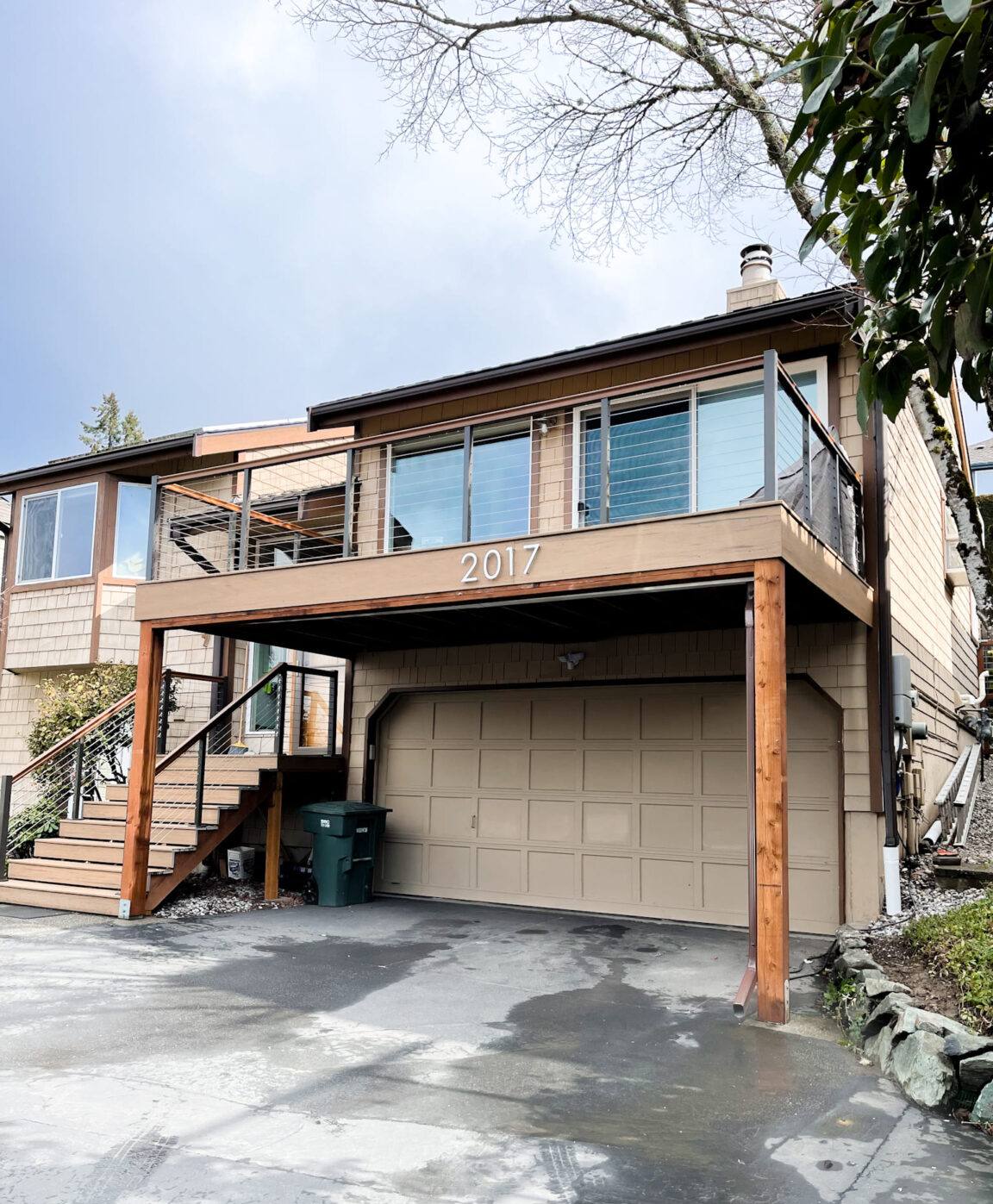
La Conner sits right on the Swinomish Channel, and that location shapes almost every decision that goes into a deck here. Homes in this part of Skagit County deal with a mix of conditions that inland decks never see: salt-laden air off the water, long stretches of driving rain through fall and winter, and a moss season that can run most of the year in shaded, north-facing yards. A deck built the same way you'd build one in a dry inland town will show problems here faster — corroding fasteners, soft spots at the ledger, slick boards, and finishes that fail early. A deck built for this specific environment holds up the way it should.
This page is about what that actually looks like: the materials, the construction details, and the process we use when we build a custom deck for a La Conner property.
What Makes This Climate Hard on Decks
Salt Air and Corrosion
Homes near the channel get airborne salt even without a direct waterfront view. Salt air accelerates corrosion on anything metal — fasteners, brackets, railing hardware, and framing connectors. Standard galvanized hardware that's fine 20 miles inland can start rusting and staining a deck within a few seasons out here. Once a fastener starts to corrode, it loses holding strength long before it looks obviously bad, which is part of what makes this issue easy to miss until it's a structural problem.
Driving Rain
Skagit County gets a lot of rain, but the specific issue for decks isn't just volume — it's wind-driven rain that gets pushed sideways into ledger connections, under railings, and into any gap in the decking. Water that's driven horizontally finds its way into places gravity-only drainage design doesn't account for. That's why flashing detail and gap spacing matter more here than in calmer climates.
Moss and Shade
Between the marine moisture and the tree cover common around La Conner properties, moss growth on deck surfaces is a near-constant maintenance issue rather than an occasional one. Moss holds moisture against the decking surface, feeds rot in wood products, and turns into a slip hazard on stairs and walking surfaces — often before it's visually obvious as a problem.
Choosing Materials That Actually Hold Up Here
There's no single "correct" decking material for every La Conner project — it depends on budget, how much upkeep you want to do, and how exposed the deck is to weather. Here's how the common options actually perform in this climate, based on how they behave with moisture and salt exposure over time.
| Material | Moisture Behavior | Maintenance | Notes for This Climate |
|---|---|---|---|
| Cedar | Naturally rot-resistant but still absorbs and releases moisture with the seasons | Needs periodic sealing/staining to hold up long-term | Good look, but exposed cedar in constant damp/shade grows moss faster without upkeep |
| Pressure-treated lumber | Treated for rot resistance but framing-grade, not always finish-grade | Moderate — sealing extends life | Solid, economical choice for structure; fastener corrosion resistance still matters |
| Composite decking | Doesn't absorb water into the board itself | Low — no staining/sealing | Surface can still grow moss/algae film in shaded, damp spots; needs periodic cleaning |
| PVC decking | Fully moisture-resistant material | Lowest maintenance of the group | Higher upfront cost; good option for heavily shaded or waterfront-exposed decks |
Whatever surface material you choose, the hardware underneath it matters just as much. We use corrosion-rated fasteners and connectors rated for coastal/marine exposure rather than standard galvanized hardware — it costs a bit more up front and it's the detail that determines whether a deck is still solid in 15 years or starting to fail in five.
The Structural Details That Actually Prevent Failures
Most deck problems we see in this area don't start with the decking boards — they start with details that are invisible once the deck is finished. These are the ones we treat as non-negotiable on every custom deck build:
- Proper ledger board flashing where the deck attaches to the house, so driven rain can't work its way behind the siding
- Footings set to the depth required for our soil and frost conditions, not just poured to a shallow, convenient depth
- Joist tape or equivalent protection on top of framing lumber, so water sitting on a joist doesn't rot it from the inside out
- Corrosion-resistant fasteners and structural connectors rated for coastal exposure
- Deck board spacing that allows airflow and drainage, rather than tight gaps that trap moisture and debris
- Railing posts and hardware installed so water can't pool at the base connection
None of these are visible in a finished photo. They're the reason one deck is still tight and solid after a decade of La Conner winters and another one starts to feel spongy at the stairs after five years.
Dealing With Moss Before It Becomes a Problem
You can't eliminate moss risk on a shaded, damp property near the water — but you can build a deck that doesn't invite it. Proper board spacing and airflow underneath the deck (rather than a low, boxed-in deck with no ventilation) go a long way toward keeping surfaces dry enough that moss has a harder time taking hold. Surface material choice matters too — smoother composite and PVC boards tend to hold moss film less aggressively than heavily grained wood, and they're easier to clean when it does show up. For wood decks, staying on top of sealing keeps the wood surface less hospitable to moss and algae growth between coats.
How We Build a Custom Deck
- On-site assessment — we look at sun/shade exposure, drainage patterns, soil, and how the site takes wind-driven rain off the channel or open water before we design anything.
- Design and material selection — we walk through decking material, railing style, and layout based on your budget and how you actually plan to use the space.
- Permitting — we handle the permit process for the jurisdiction the property falls under, whether that's the Town of La Conner or Skagit County, and build to the structural requirements that apply.
- Framing and structural work — footings, ledger flashing, framing, and joist protection go in first, with all the corrosion-resistant hardware described above.
- Decking, railing, and finish work — surface material and railings go in last, with attention to board spacing and drainage.
- Final walkthrough — we go over the finished deck with you, including what maintenance to expect given your specific site conditions.
Permitting in La Conner and Skagit County
Deck construction typically requires a permit, and requirements can vary depending on the deck's size, height, and whether it falls under Town of La Conner jurisdiction or unincorporated Skagit County. Waterfront and shoreline-adjacent properties can also have additional review depending on proximity to the channel. We handle this process as part of the build rather than leaving it for the homeowner to sort out, and we build to the structural code that applies to your specific property.
What Ongoing Maintenance Looks Like Here
Every deck needs some upkeep, but the schedule in La Conner runs a bit tighter than it would in a drier, inland climate because of the moisture and moss pressure. A realistic maintenance routine looks like this:
- Sweep debris and standing leaves off the deck surface regularly, especially in fall
- Clean moss and algae film off the surface at least once or twice a year, more often in heavy shade
- Inspect and reseal wood decking on the manufacturer's recommended cycle, typically every one to three years
- Check railing hardware and fasteners periodically for early signs of corrosion or looseness
- Confirm gaps between boards stay clear so water and debris keep draining properly
- Look under the deck occasionally for standing water or drainage issues near the footings
Composite and PVC decking cut down on the sealing step, but the moss-cleaning and hardware-inspection items still apply regardless of material.
Why It Matters to Hire a Crew That Already Works in La Conner
A lot of what separates a deck that lasts from one that doesn't isn't visible until years later — the flashing behind the ledger, the fastener grade, the footing depth, the drainage under the boards. A crew that builds decks across Skagit County's marine climate on a regular basis makes those calls automatically, because they've seen what happens when they're skipped. That's the difference between a deck that's still tight and solid after a decade of channel weather and one that needs early repairs.
If you're planning a custom deck for a La Conner property, we're happy to walk the site with you and put together a straightforward, no-pressure estimate — just fill out the form below.