 Anacortes Siding
 Deck Repair Built for Mount Vernon's Climate
Mount Vernon sits in the Skagit Valley, close enough to Puget Sound to catch salt-laden air on top of the Pacific Northwest's long, wet winters. That combination is hard on decks. Fasteners corrode faster near the water, wood surfaces stay damp for weeks at a time during the rainy season, and shaded or low-airflow areas of a deck grow moss and algae almost year-round. A deck that would hold up fine in a dry climate can develop soft boards, loose railings, and slick, discolored surfaces here within a few seasons if it isn't maintained or repaired correctly.
We work on decks throughout Mount Vernon and the surrounding Skagit County area, and we see the same failure patterns repeatedly: fastener corrosion, ledger board rot where the deck meets the house, moss buildup on shaded boards, and railing posts that have loosened from years of moisture cycling through the wood. Understanding those patterns is what separates a repair that actually lasts from one that just covers up a problem for a season.
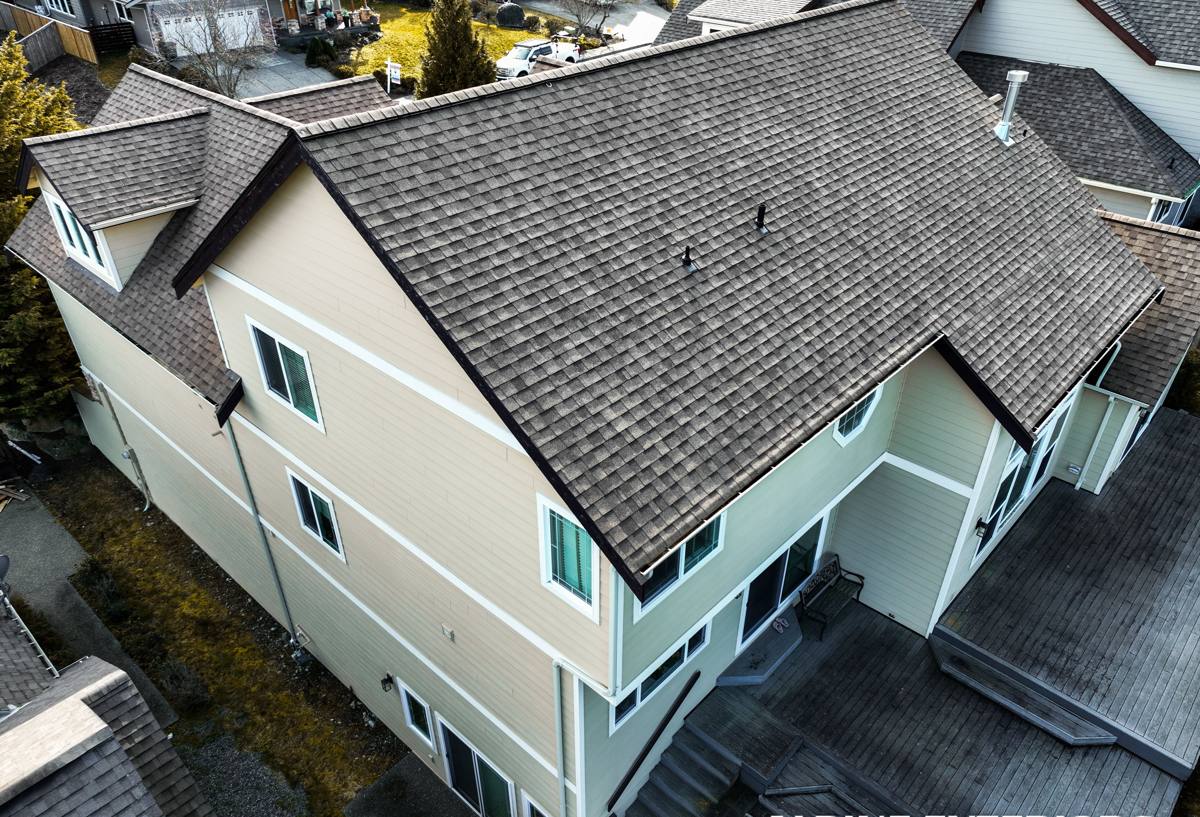
What Local Decks Actually Need
Moisture Is the Root of Almost Every Problem
Wood and composite decking both react to sustained moisture exposure, just in different ways. Wood absorbs water, swells, and eventually rots if it can't dry out between rain events. Composite decking doesn't rot, but moisture trapped underneath or around fasteners can still cause staining, mold growth, and, in older or lower-quality composite products, swelling at the board edges. In a climate where it can rain steadily for days and skies stay overcast for weeks, "drying out between rain events" doesn't happen the way it would in a drier region. That's why drainage, airflow underneath the deck, and proper flashing at the ledger board matter more here than in most parts of the country.
Moss and Algae Aren't Just Cosmetic
Moss holds moisture directly against the deck surface, which accelerates wood decay underneath it and makes boards dangerously slick. A green, fuzzy patch on a shaded corner of a deck isn't just an eyesore — it's actively shortening the life of the boards beneath it and creating a fall hazard. Any real repair plan for a Skagit County deck has to address moss and algae, not just patch the boards that have already failed.
Salt Air Accelerates Hardware Failure
Even at Mount Vernon's distance from open saltwater, the marine influence in this region's air speeds up corrosion in exposed fasteners, brackets, and hardware compared to inland climates. Rusted or corroding fasteners are one of the most common reasons a deck that "looks fine" is actually unsafe — the boards can appear solid while the nails or screws holding them down have lost most of their grip.
Signs Your Deck Needs Repair, Not Just Cleaning
- Boards that flex, bounce, or feel soft when you walk on them
- Railings or posts that wiggle or have visible gaps where they meet the deck frame
- Dark staining or a spongy feel around the ledger board where the deck attaches to the house
- Rust streaks running down from screws or nail heads
- Persistent moss or algae that comes back within weeks of cleaning
- Cracked, splintering, or cupped boards, especially on the shaded side of the deck
- Stairs that feel less solid than the rest of the deck
- Gaps or separation between decking boards and the frame underneath
If you're only seeing surface discoloration and the structure underneath still feels solid, a cleaning and re-sealing may be all that's needed. Once you start seeing soft spots, movement, or hardware failure, that's a repair issue, not a maintenance one.
What a Correct Repair Involves
A proper deck repair starts with an inspection of the whole structure, not just the visible problem. We check the ledger board connection, the support posts and footings, the joists underneath the decking, and the condition of the fasteners, along with the surface boards and railings. In this climate, a soft board is often a symptom of a moisture problem happening below the surface — replacing the board without addressing why it got wet in the first place just means the repair fails again.
Typical Repair Scope
| Issue Found | What the Repair Involves |
|---|---|
| Rotted or soft decking boards | Remove and replace affected boards; check joists underneath for hidden rot before reinstalling |
| Corroded fasteners | Replace with corrosion-resistant, code-rated hardware appropriate for coastal/marine exposure |
| Loose railings or posts | Re-secure or rebuild post connections to meet current structural and code requirements |
| Ledger board moisture damage | Repair or replace the ledger, correct flashing so water sheds away from the house |
| Moss and algae buildup | Clean the surface, address drainage/airflow causes, apply appropriate sealer or finish |
| Undersized or aging footings | Evaluate and reinforce to current structural standards where needed |
Cost for deck repair varies widely depending on how much of the structure is affected — a handful of board replacements and hardware upgrades is a modest job, while ledger board or footing repairs involve more labor and materials. We give an honest, itemized estimate after seeing the deck in person rather than guessing over the phone.
Repair Versus Replacement
Not every deck problem calls for a full rebuild, but sometimes repair isn't the responsible recommendation. We'll tell you honestly which situation you're in.
When Repair Makes Sense
If the framing, ledger connection, and footings are structurally sound and the problems are limited to surface boards, railings, or hardware, targeted repair is usually the right call. It costs less and gets you back to a safe, usable deck without tearing everything out.
When Replacement Is the Honest Answer
If rot has spread through the joists or ledger board, if footings are undersized or failing, or if the deck is old enough that repeated repairs are becoming a pattern rather than a one-time fix, replacement is often the more cost-effective and safer long-term choice. We won't recommend a full rebuild just to increase the job size — but we also won't patch a structural problem just to avoid the harder conversation.
Our Process for Mount Vernon Deck Repairs
- Inspection: We walk the full deck structure — surface, railings, framing, ledger, and footings where accessible — and identify every issue, not just the obvious one.
- Written estimate: You get a clear breakdown of what needs to be repaired, what materials and hardware we'll use, and why, before any work starts.
- Repair work: We replace damaged material, correct the underlying moisture or drainage issue where relevant, and use fasteners and hardware rated for our region's conditions.
- Finish and protection: Where appropriate, we clean, treat, or seal the deck so it's protected against the next wet season rather than just repaired for now.
- Walkthrough: We go over the finished work with you so you know exactly what was done and what to watch for going forward.
Simple Habits That Extend a Deck's Life Here
- Sweep debris and standing leaves off the deck regularly, especially in fall
- Keep gutters and downspouts clear so water isn't dumping directly onto or near the deck
- Clean moss and algae off shaded areas before it spreads, rather than after
- Check railings and stair connections for movement once or twice a year
- Re-seal or re-stain wood decking on the manufacturer's recommended schedule, not just when it looks faded
Why It Matters to Hire a Crew That Works This Area
A deck repair contractor who mostly works in drier inland climates may not think twice about moisture management, drainage detailing, or corrosion-resistant hardware, because their local conditions don't demand it. In Skagit County, those details aren't optional extras — they're the difference between a repair that lasts and one you're paying for again in two years. We work on decks across Anacortes, Mount Vernon, and the surrounding area, so we're familiar with how the region's rain patterns, humidity, and seasonal moss growth actually affect a deck over time, not just in theory.
We also know that Mount Vernon homeowners want a straight answer, not an upsell. If your deck needs a few boards and some hardware, that's what we'll quote. If it needs more, we'll explain exactly why before you commit to anything.
Get a Free, No-Pressure Estimate
If your deck has soft spots, loose railings, persistent moss, or you're just not sure whether it needs repair or replacement, we're happy to take a look. Fill out the form below for a free estimate — no pressure, no obligation, just an honest assessment of what your deck actually needs.