 Anacortes Siding
 West Anacortes sits close enough to the water that salt air is part of daily life, and that changes what a roof has to deal with year after year. Between the marine exposure, the driving rain that comes off Rosario Strait and Guemes Channel in the fall and winter, and a moss season that seems to stretch longer every year, roofs out here work harder than roofs twenty miles inland. When it's time for a full roof replacement, the details that matter most are the ones that address these specific conditions, not just a generic tear-off-and-reshingle job.
Why West Anacortes Roofs Wear Differently
Anacortes is a peninsula town, and West Anacortes in particular catches wind and moisture coming straight off the water. That combination of salt-laden air and near-constant humidity accelerates the breakdown of fasteners, flashing, and lower-grade shingle products faster than you'd see in a drier climate. Add in the tree cover common to many Skagit County neighborhoods, and you get a steady supply of shade and organic debris that keeps roof surfaces damp long after a storm has passed.
That dampness is what drives moss and algae growth. Once moss gets a foothold in a shingle's granule layer, it holds water against the roof deck, works itself under shingle tabs, and can lift material enough for wind-driven rain to find a way in. A roof that might get a light moss dusting in a drier part of the state can develop real moss mats here within a few seasons if it isn't built and maintained with that reality in mind.
What This Means for Materials and Design
It means we don't treat "roof replacement" as a one-size-fits-all product pick. Fastener corrosion resistance, underlayment quality, ventilation design, and moss-resistant shingle options all get weighed differently for a West Anacortes home than they would for a house in a dry inland climate. Skipping this step is how homeowners end up with a roof that looks fine on installation day and starts showing algae streaking or granule loss within three or four years.
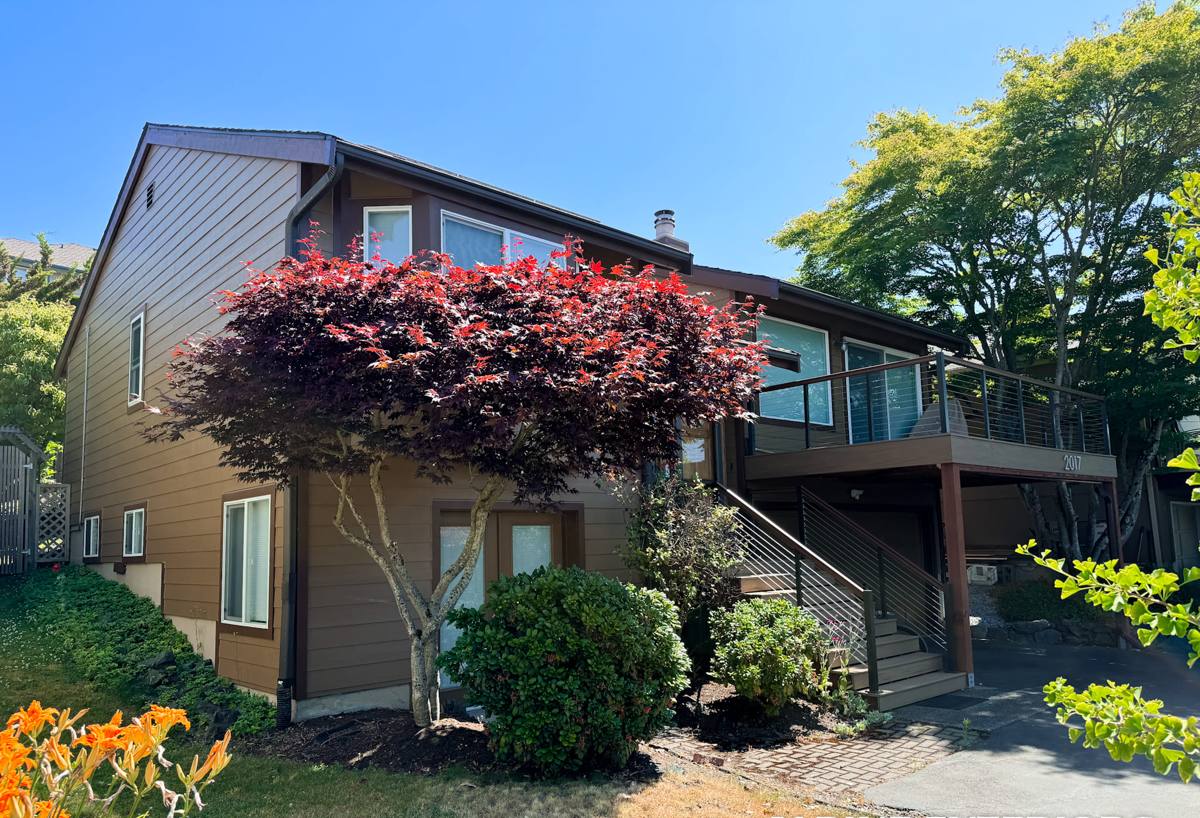
Signs a West Anacortes Roof Needs Full Replacement
Not every roof problem calls for a full tear-off. But there are signs that repair is no longer the honest answer, and homeowners in this area should know what to watch for given the local wear pattern:
- Shingles that are cupping, curling, or losing granules in patches, especially on north-facing or shaded slopes
- Moss growth that keeps returning within a year or two of cleaning, even after treatment
- Dark streaking or algae staining across large sections of the roof surface
- Soft spots in the decking when walked, which usually means water has been getting through for a while
- Flashing around chimneys, vents, or skylights that's rusted, lifted, or was never properly step-flashed to begin with
- Interior signs like water stains on ceilings, especially after a heavy driving rain event
- A roof that's simply reaching the end of its rated service life, typically 20-30 years depending on the original material
If a roof is showing two or three of these at once, patch repairs tend to become a cycle of chasing new leaks every wet season rather than solving the underlying problem.
What Correct Roof Installation Looks Like Here
Tear-Off and Deck Inspection
A proper replacement starts with a full tear-off, not a layover. Layering new shingles over old ones traps moisture and hides deck damage, which is a bad combination in a climate that already pushes moisture into every seam it can find. Once the old roofing is off, we inspect the decking itself for soft or delaminated plywood, particularly around valleys, eaves, and any spot where moss or debris had been sitting. Any compromised decking gets replaced before anything new goes down, because a new roof over a weak deck is a short-term fix wearing a long-term price tag.
Underlayment Built for Wind-Driven Rain
Anacortes weather doesn't always send rain straight down. Coastal wind pushes it sideways and up under shingle tabs, which is exactly the scenario a synthetic underlayment and properly installed ice-and-water barrier are meant to handle. We pay particular attention to eaves, valleys, and any low-slope transitions, since those are the spots where wind-driven rain finds gaps first.
Flashing Done Right
Flashing failures are one of the most common causes of roof leaks in this region, and most of them trace back to flashing that was reused, caulked instead of properly integrated, or installed with the wrong metal for a salt-air environment. We install new step flashing, counter-flashing, and valley metal as part of every full replacement, using materials chosen to hold up against coastal corrosion rather than just meeting a minimum spec.
Ventilation That Fights Moss and Moisture
A roof that can't breathe traps heat and moisture in the attic, which speeds up shingle aging from underneath and creates the damp conditions moss thrives in. We check intake and exhaust ventilation balance as part of every roof installation and correct it when the existing setup is undersized or blocked, which is common on older Skagit County homes that were built before current ventilation standards.
Shingle Selection for Moss and Algae Resistance
Many manufacturers now offer shingles with copper or zinc granules blended in specifically to resist algae and moss growth. Given how much West Anacortes homes deal with organic growth, we walk homeowners through these options honestly, including the trade-off that algae-resistant granules typically add a modest cost up front in exchange for meaningfully less moss maintenance over the life of the roof.
Our Installation Process, Step by Step
| Step | What Happens | Why It Matters Here |
|---|---|---|
| 1. On-site assessment | Inspect existing roof, attic ventilation, decking access points, and moss/algae condition | Identifies moisture and ventilation issues specific to the property before work starts |
| 2. Material selection | Review shingle options including algae-resistant lines, discuss underlayment and flashing plan | Matches the roof system to salt air and moss exposure rather than a generic package |
| 3. Tear-off | Full removal of old roofing down to the deck | Exposes hidden moisture damage that a layover would conceal |
| 4. Deck repair | Replace any soft, delaminated, or rotted decking sections | Prevents a new roof from being installed over a compromised base |
| 5. Underlayment and flashing | Install synthetic underlayment, ice-and-water barrier at vulnerable points, new flashing throughout | Handles wind-driven rain and eliminates the most common leak points |
| 6. Shingle installation | Install roofing per manufacturer specs to preserve warranty coverage | Improper installation is the most common reason warranty claims get denied |
| 7. Ventilation check | Confirm intake/exhaust balance, add or correct venting as needed | Reduces attic moisture buildup that feeds moss and shortens shingle life |
| 8. Final walkthrough | Site cleanup, magnetic sweep for debris, walkthrough with homeowner | Leaves the property clean and gives the homeowner a clear picture of what was done |
Cost Factors for a West Anacortes Roof Replacement
Every roof is different, but the main variables that move the price of a replacement in this area are fairly consistent. Rather than quote a number that won't hold up house to house, here's what actually drives cost:
| Factor | Why It Affects Cost |
|---|---|
| Roof size and pitch | More surface area and steeper pitches mean more material and labor time |
| Number of layers to remove | Tearing off multiple old layers costs more than a single-layer tear-off |
| Deck condition | Rotted or delaminated plywood found during tear-off adds replacement cost |
| Shingle grade chosen | Algae-resistant and higher-tier shingles cost more upfront but reduce moss-related maintenance |
| Flashing and penetrations | Homes with more chimneys, skylights, or vents need more custom flashing work |
| Ventilation upgrades | Older homes may need added intake or exhaust venting, which is extra scope |
| Access and site conditions | Steep lots, tree cover, or limited driveway access can affect labor and disposal logistics |
As a general guide, most full asphalt shingle roof replacements in this region land somewhere in the mid-to-high five figures for an average-size single-family home, with the range moving up or down based on the factors above. We give firm numbers only after seeing the actual roof.
Maintenance That Protects the Investment
A well-installed roof still needs some seasonal attention in this climate. A short annual routine goes a long way toward protecting a new roof and catching small issues before they become expensive ones:
- Clear gutters and valleys of needles and debris at least twice a year, more often under heavy tree cover
- Have moss growth treated or removed before it establishes a thick mat, rather than after
- Check attic ventilation isn't blocked by insulation or storage that's crept over vents
- After major windstorms, do a visual check for lifted or missing shingles from the ground
- Schedule a professional inspection every few years, even without visible problems
Why Local Experience Matters for This Job
Roof installation isn't a job where general contracting experience automatically translates to a good outcome. A crew that mostly works drier inland climates may not think twice about ventilation balance or flashing metal choice, because in their normal working environment those shortcuts don't show up as failures for years. In West Anacortes, they show up fast. Working roofs across Skagit County and the greater Anacortes area consistently means seeing the same moss patterns, the same wind-driven leak points, and the same flashing failures repeat house after house, which is exactly the kind of pattern recognition that leads to a roof built right the first time.
It also means understanding the practical side of working near the water, including how weather windows affect scheduling and how to sequence a tear-off so a home isn't left exposed if conditions turn.
Get a Straight Answer About Your Roof
If your West Anacortes roof is showing moss that won't quit, granule loss, or signs of age, it's worth getting an honest, no-pressure look before deciding what to do next. Use the form below to request a free estimate, and we'll walk the roof, explain what we find, and lay out real options without pushing you toward the most expensive one.