 Anacortes Siding
 Old Town Anacortes and What the Climate Actually Does to a House
Old Town Anacortes sits close to the water, with the kind of mixed tree cover, older lot layouts, and mature landscaping that give the neighborhood its character. That same setting is hard on exterior materials. Homes here sit in a pocket of Skagit County that gets a steady dose of marine moisture off the surrounding channels, long stretches of overcast and drizzle through fall and winter, and enough shade from mature evergreens and street trees to keep siding damp longer than it would stay in a more open, sun-exposed lot.
None of that is unusual for the Pacific Northwest coast, but it adds up differently on an older, established street than it does on a new subdivision. Homes in Old Town tend to have more shade, tighter setbacks between houses, and siding that's already been through a few decades of salt air, driving rain, and moss season. By the time a homeowner calls us, the siding is often past the point where a fresh coat of paint solves the problem.
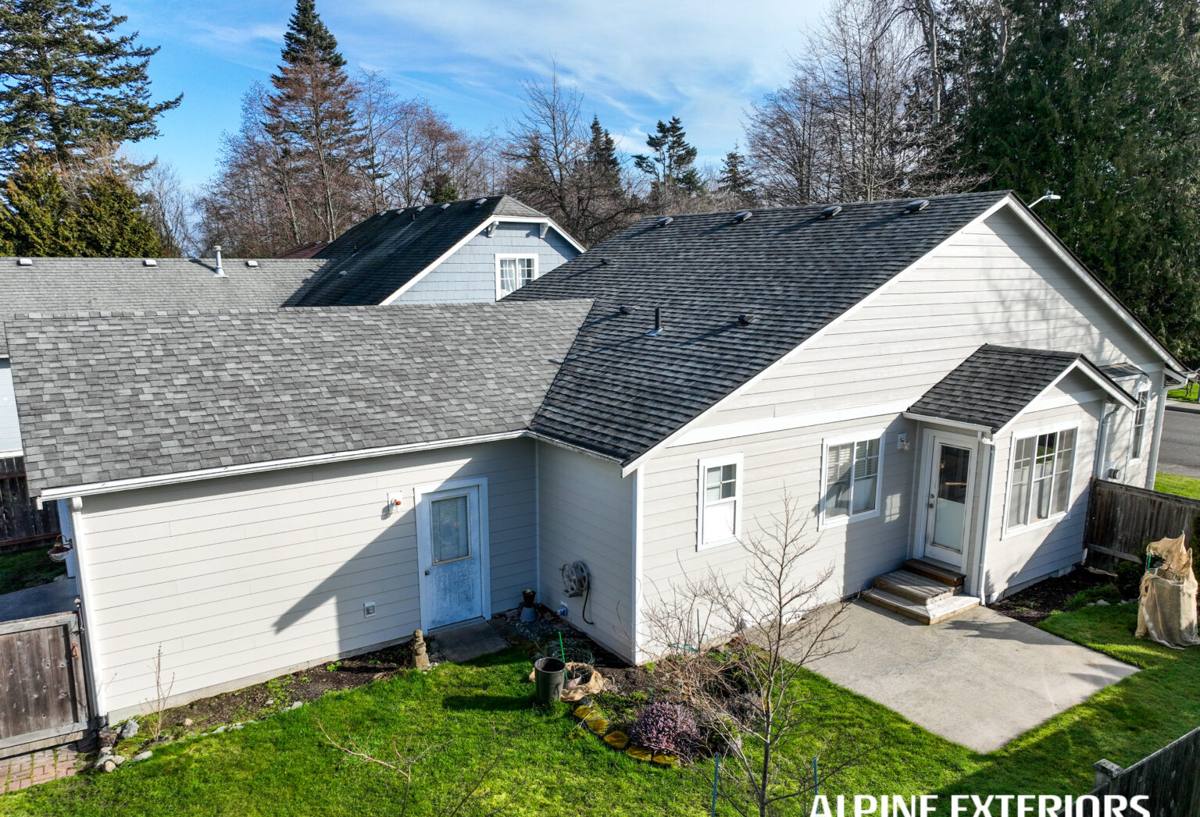
Common Siding Problems We See in This Neighborhood
Walking a block in Old Town, the pattern repeats house after house. It's rarely one catastrophic failure — it's a slow accumulation of moisture-related wear that eventually forces a decision.
- Moss and algae staining on north-facing and shaded walls, especially under tree canopy or close to neighboring structures that block sun and airflow
- Paint failure — peeling, alligatoring, or chalking on wood siding that's been repainted multiple times and is holding less adhesion each cycle
- Soft or delaminating trim around windows and at corner boards, where water tends to collect and wick into end grain
- Swelling and buckling on older engineered wood or hardboard siding products that were common in past decades of remodeling
- Caulking failure at seams and penetrations, letting moisture behind the siding plane where it can sit unseen
The common thread is moisture that doesn't dry out fast enough between rain events. Skagit County's driving rain typically comes with wind off the water, which pushes moisture sideways into wall assemblies rather than just running straight down — a detail that matters when we're evaluating flashing, trim, and siding laps during an inspection.
Why Older Siding Struggles More Here Than Elsewhere
A lot of Old Town homes were built or last re-sided before today's moisture-management details were standard practice — proper rainscreen gaps, correctly lapped house wrap, and factory-cured finishes that resist moisture absorption. Older wood and composite sidings depend heavily on the paint film to keep water out. Once that film starts failing, the substrate underneath is exposed to exactly the kind of damp, low-sun conditions this neighborhood provides in abundance.
Why We Install Only James Hardie Fiber Cement
We standardized on James Hardie siding across every job we do, including here in Anacortes, and we don't install vinyl, LP SmartSide, cedar, primed spruce, or other fiber cement brands. That's a deliberate choice, not a default.
Fiber cement is cement, sand, and cellulose fiber — it doesn't rot, it isn't a food source for moss the way wood is, and it's non-combustible. James Hardie's ColorPlus finish is baked on at the factory under controlled conditions rather than field-painted, which gives it a more durable, consistent finish than site-applied paint can match, and it comes with its own finish warranty separate from the product warranty. For a climate that keeps siding damp for long stretches, that combination — a material that doesn't feed moss growth and a finish that isn't relying on field paint adhesion — is exactly what holds up.
James Hardie also engineers specific product lines (their HZ5 formulation) for regions with more moisture exposure, which is the version we use in this climate zone. It's a small distinction most homeowners never hear about, but it's part of why we don't treat "fiber cement" as a single interchangeable category — the product needs to match the region.
We're not going to tell you every other siding material is worthless — vinyl, wood, and other composites all have legitimate uses and plenty of homes wear them fine. But once we're standing in front of the moss, the driving rain, and the shade patterns typical of a neighborhood like Old Town, we've made our call on what we're willing to put our name behind, and it's Hardie.
What a Siding Project Looks Like on an Older Home
Older homes complicate a re-side in ways new construction doesn't. Original wall framing may not be perfectly square, there's often layered trim and multiple past patch jobs, and in some cases there's older material underneath that needs to be dealt with rather than just covered over.
Our general process
- On-site inspection — checking siding, trim, flashing, and any soft spots or moisture intrusion before we quote anything
- Tear-off of failing material down to the sheathing, with a look at what condition the wall assembly is actually in
- Repair or replacement of any damaged sheathing or framing found underneath — this gets called out and priced separately, not buried in a lump sum
- Proper weather-resistive barrier and, where the wall assembly calls for it, a rainscreen gap so water that gets behind the siding plane can actually drain and dry
- James Hardie installation to manufacturer specification — correct fastening, clearances, and caulking at penetrations
- Final walkthrough and cleanup
On a street with mature trees and tighter lot spacing, we also pay attention to how the new siding interacts with shaded, low-airflow sections of the house — those are the walls most likely to see moss return if the install isn't detailed correctly.
Roofing, Windows, and Decks — Treating the Exterior as One System
Siding doesn't fail in isolation. A roof that's shedding water onto a wall, a window that's no longer sealing correctly, or a deck ledger board tied into the wall assembly all affect how the siding around them performs. We handle roofing, window replacement, and deck construction in addition to siding, which means when we're on an Old Town property we're looking at the whole envelope, not just the wall cladding.
That matters most at transitions — where a roof edge meets a wall, where a deck attaches to the house, where old window flashing was never properly integrated with the siding around it. Those are the spots most likely to leak, and they're easy to miss if the person doing the siding isn't also thinking about the roof and windows tied into it.
What Drives the Cost of a Siding Project
Every home is different, but a few factors consistently move the price on an Old Town job:
| Factor | Why It Matters |
|---|---|
| Condition of the existing wall assembly | Hidden rot or damaged sheathing found during tear-off adds repair scope |
| Home size and wall complexity | More corners, gables, and trim detail means more labor and material cuts |
| Access and lot constraints | Tighter setbacks between houses, narrow side yards, and mature landscaping can slow staging and scaffolding |
| Trim and architectural detail | Older homes often have more trim profile to match or replace than a simple modern elevation |
| Siding profile and color | Lap width, shingle-style accents, and ColorPlus color selection affect material cost |
| Scope of related repairs | Bundling window, roof, or deck work into the same project can save on mobilization but adds to total cost |
We give a written, itemized estimate before any work starts, and we flag likely problem areas — like suspected water damage around old trim — during the initial inspection so there are no surprise numbers mid-project.
What to Look For When Hiring a Siding Contractor Here
Anacortes and the surrounding Skagit County waterfront draw contractors from all over the region, and not all of them are set up to deal with the moisture conditions specific to this coastline. A few things worth checking before you sign anything:
- Washington state contractor license and current liability insurance — ask for the license number and verify it independently
- Manufacturer training or certification specific to the siding product being installed, not just general carpentry experience
- A written estimate that itemizes tear-off, repair contingencies, materials, and labor separately
- A clear explanation of how they'll handle rainscreen/drainage detailing, not just "we'll put new siding up"
- References or completed local work you can actually go look at
- A real plan for weather delays — this is a rainy corner of the state, and a contractor who doesn't account for that in scheduling is setting you up for a stalled project
Caring for Hardie Siding After Installation
One of the practical advantages of fiber cement in a climate like this is how little upkeep it needs compared to wood or older composite siding. It still benefits from basic care:
- An occasional gentle rinse to keep organic buildup from accumulating on shaded walls
- Keeping gutters clear so overflow isn't running down the siding face
- Trimming back landscaping that's crowding the wall and blocking airflow
- A visual check of caulking at trim joints and penetrations every year or two
That's a much shorter list than what wood siding demands, and it's a big part of why we lead with Hardie for homes in moisture-heavy neighborhoods like this one.
If your Old Town Anacortes home is dealing with moss buildup, failing paint, or siding that's simply reached the end of its service life, we're happy to take a look and walk you through what we're seeing — no pressure, no obligation. Reach out using the form below to schedule a free estimate.