 Anacortes Siding
 Siding Built for Edison's Weather, Not Against It
Edison sits in one of the more exposed pockets of Skagit County — close enough to tidal flats and open farmland that wind-driven rain and salt-laden air reach a home's siding with almost nothing to slow them down. Add in the long gray stretch from November through April, when moss and algae get a head start on anything that stays damp, and you have a climate that is genuinely hard on exterior materials. We've worked on homes throughout this stretch of the county, and the pattern is consistent: whatever's on the walls either sheds that moisture and keeps its shape, or it doesn't, and the difference shows up within a handful of years, not decades.
This page is about what that climate does to siding specifically, and how we approach siding, roofing, windows, and decks for homes in and around Edison as a company that installs only James Hardie fiber cement — not vinyl, not LP SmartSide, not primed wood, not other fiber cement brands. That's a deliberate standard, and it's worth explaining why.
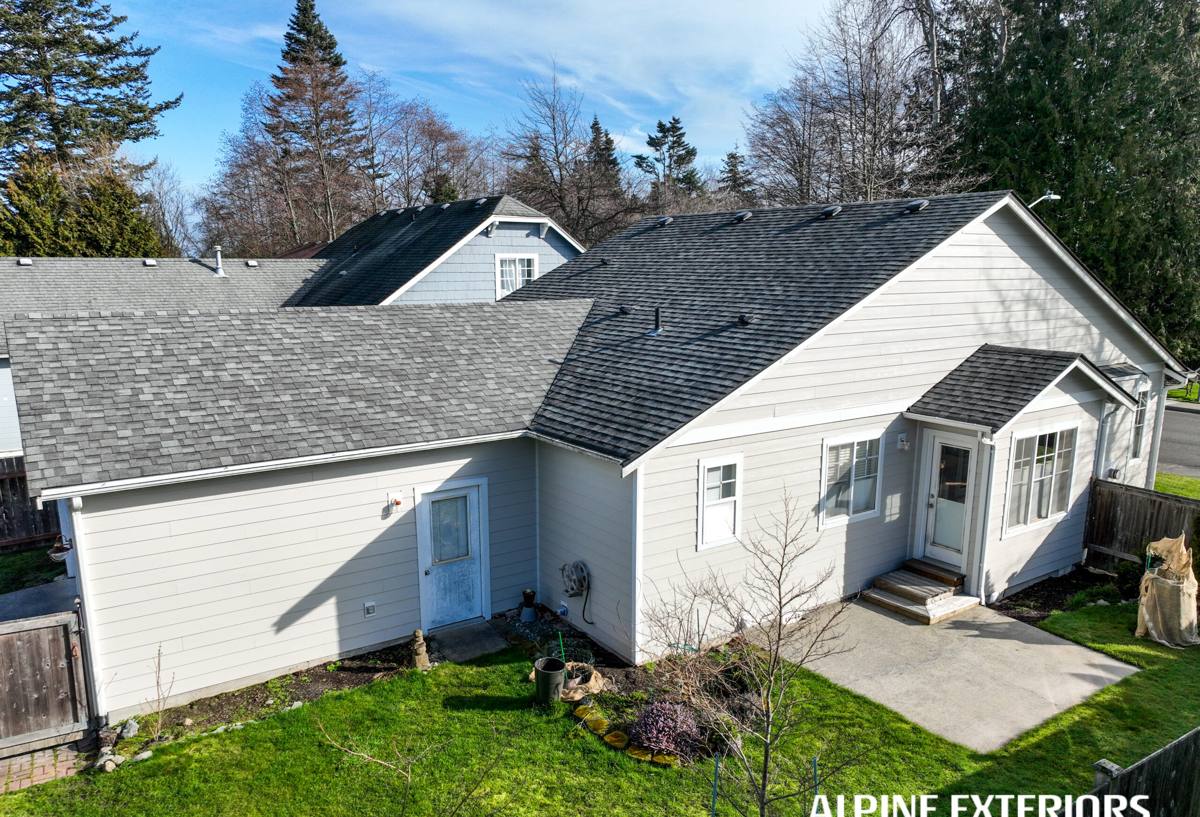
What Edison's Climate Actually Does to a House
Salt Air and Corrosion
Proximity to Padilla Bay and the surrounding sloughs means airborne salt is a real factor here, more than most homeowners realize until they see it. Salt accelerates corrosion on fasteners, flashing, and any metal trim that isn't rated for coastal exposure. It also interacts with certain paint films and coatings over time, breaking down adhesion faster than it would inland. Siding systems that depend on a thin factory coating or field-applied paint are the first to show it — chalking, fading, and eventually cracking at the surface.
Driving Rain
Edison doesn't get afternoon showers so much as sideways rain pushed by wind off the open flats. That matters because siding isn't just judged on how it handles water hitting it straight-on — it's judged on how it handles water hitting it at an angle, working into laps, joints, and butt seams. Poorly detailed siding, or siding installed with tight caulked joints instead of proper drainage planes, traps that moisture instead of shedding it. Once water gets behind a panel, the clock starts on rot, delamination, or mold, largely out of sight until the damage is done.
Moss and Algae Season
The long wet season here isn't just an inconvenience — it's a growing season for anything organic. North-facing walls, shaded elevations under tree cover, and any siding that holds surface moisture will grow moss and algae faster in Edison than in a drier part of the state. This isn't cosmetic only. Moss holds water against the surface, and over years that constant dampness is what breaks down wood-based products and stresses coatings on lesser materials.
Why We Standardized on James Hardie
We used to install a broader range of siding products. Over enough projects in Skagit County's climate, a clear pattern emerged: fiber cement performs, and specifically James Hardie's engineered fiber cement — with factory-applied ColorPlus finish and HardieZone-matched product lines — performs more consistently than the alternatives we'd used. So we made a decision: one product line, installed correctly, every time. That means we turn down some jobs where a homeowner wants something else, but it also means we stand fully behind everything we do install.
Non-Combustible Core
Hardie's fiber cement is primarily sand, cement, and cellulose fiber — it doesn't burn, doesn't support flame spread the way wood-based sidings can, and doesn't soften or off-gas under heat exposure. That's a meaningful difference from wood siding products, particularly for homes near dry brush or with wildfire smoke seasons.
Factory-Applied Finish
ColorPlus finish is baked on in a controlled factory environment, not brushed or sprayed on-site. That gives it more uniform coverage and better long-term adhesion than field-applied paint, which matters directly in a salt-air, high-UV, high-moisture environment like Edison's. It also means color consistency panel to panel, without the batch variation you sometimes see with site-applied coatings.
Climate-Engineered Product Lines
Hardie manufactures different formulations for different climate zones — HZ5 for colder, wetter regions and HZ10 for milder, more humid ones. Western Washington sits solidly in territory where the HZ5 formulation is the right call, engineered for the freeze-thaw and moisture cycling this region actually sees rather than a one-size-fits-all product.
Why We Don't Install Vinyl, LP SmartSide, or Other Fiber Cement Brands
None of these are bad products in every situation — they're just not what we're willing to warranty in this climate, for specific reasons.
Vinyl Siding
Vinyl is affordable and low-maintenance in mild, dry climates, but it flexes and contracts with temperature swings, and its seams and J-channels rely on overlap rather than a sealed system. In sustained wind-driven rain, water can work behind vinyl panels more easily than behind a properly lapped fiber cement system. It also has a lower heat tolerance and can warp near reflective surfaces or heat sources.
LP SmartSide
LP SmartSide is an engineered wood product — strand-based, resin-treated, and better than old-school hardboard siding. But it's still wood at its core, meaning it's more sensitive to sustained moisture exposure than fiber cement, particularly at cut edges and fastener penetrations if field-sealing isn't done meticulously. In a climate with Edison's rain totals and humidity, that installation sensitivity is a real risk factor we're not willing to take on.
Other Fiber Cement Brands
Products like Cemplank or Allura are fiber cement too, and the raw material category performs reasonably well. Where we've seen the difference is in finish quality, dimensional consistency, and — critically — warranty structure and manufacturer track record. Hardie's transferable warranty and its installation network standards give us and the homeowner more to stand on if something does go wrong years down the line.
How a Siding Project Works for an Edison Home
Assessment
We start by walking the exterior and identifying what's actually happening: which elevations take the worst weather, where moisture has already gotten in, where trim and flashing need attention beyond just the field siding. In Edison specifically, we pay close attention to west and south-facing walls that catch the prevailing wind-driven rain, and any north-facing or shaded sections showing moss growth.
Moisture and Structural Check
Before new siding goes on, we check the sheathing and framing underneath wherever old siding is coming off. Catching hidden rot now is far cheaper than discovering it after new siding is already installed over it.
Weather Barrier and Drainage Plane
Correct installation means a properly lapped weather-resistant barrier and, where appropriate, a drainage gap behind the siding so any moisture that does get past the surface has somewhere to go besides the sheathing.
Installation to Manufacturer Spec
Hardie siding has specific fastening patterns, clearances, and caulking requirements. Skipping these is how a good product ends up performing poorly. We install to spec, including proper clearance from grade, decks, and roof lines — all areas where standing water and splashback are common culprits behind premature failure.
Trim, Flashing, and Detailing
The siding field is only part of the system. Corner boards, window and door trim, and flashing at every horizontal transition are where water intrusion actually starts if they're done wrong. We treat these details as equally important as the panels themselves.
Comparing the Options
| Material | Moisture Resistance | Fire Resistance | Typical Lifespan | Maintenance |
|---|---|---|---|---|
| James Hardie Fiber Cement | Strong when installed to spec | Non-combustible | 30+ years | Occasional wash, no repainting for years with ColorPlus |
| Vinyl | Moderate; seam-dependent | Combustible, can melt/warp | 15-25 years | Low, but prone to cracking and fading |
| LP SmartSide | Moderate; sensitive to cut edges | Combustible | 20-30 years with diligent upkeep | Requires periodic repainting and edge sealing |
| Cedar / Primed Wood | Weak in sustained wet climates | Combustible | 15-25 years | High — regular repainting, staining, and moisture checks |
Roofing, Windows, and Decks in the Same Climate
Siding rarely fails in isolation — it fails alongside roofing, windows, or decking that aren't managing the same water and salt exposure. We handle all four because they're one connected exterior system in a climate like this one.
Roofing
A roof that's shedding water properly, with flashing that ties correctly into the siding at wall intersections, keeps water from ever reaching the field siding in the first place. Moss on a roof is the same problem as moss on siding — sustained moisture with nowhere to drain.
Windows
Window flashing and integration with the siding plane is one of the most common failure points we find on older Edison-area homes. Even excellent siding can't compensate for a poorly flashed window opening behind it.
Decks
Decks that butt directly against a home's siding without proper clearance or flashing create a moisture trap right at the wall. We build and repair decks with that clearance in mind, protecting the siding above and around them.
What to Check Before Hiring Anyone for Exterior Work
- Ask what siding material they're proposing and why — a contractor who installs everything has less reason to steer you toward what actually performs best in this climate.
- Ask about drainage plane and weather barrier details, not just the visible siding brand.
- Confirm they're a manufacturer-recognized installer if the material has installation requirements tied to its warranty.
- Ask how they handle flashing at windows, doors, and roof-to-wall transitions — this is where most real-world failures start.
- Get a written scope that separates siding, trim, flashing, and any structural repair, so you know exactly what's included.
- Ask about local experience — a crew that's worked this specific stretch of Skagit County has already seen how salt air and driving rain behave here.
Why a Local Crew Matters in Edison
A lot of exterior problems in this area aren't exotic — they're the predictable result of generic installation methods meeting a specific coastal-influenced climate. A crew that's used to installing in drier, calmer regions can do everything "by the book" for that book and still leave gaps that Edison's wind-driven rain and salt air will find within a few winters. Local experience means knowing which elevations need extra attention, which detailing shortcuts don't hold up here, and which products are actually worth standing behind with a real warranty.
Get a Straightforward Estimate
If you're dealing with siding, roofing, windows, or a deck on a home in the Edison area and want a straightforward look at what your home actually needs, we're happy to come take a look. There's no pressure and no sales script — just an honest assessment and a clear estimate using the form below.