 Anacortes Siding
 Siding Built for Ship Harbor's Marine Exposure
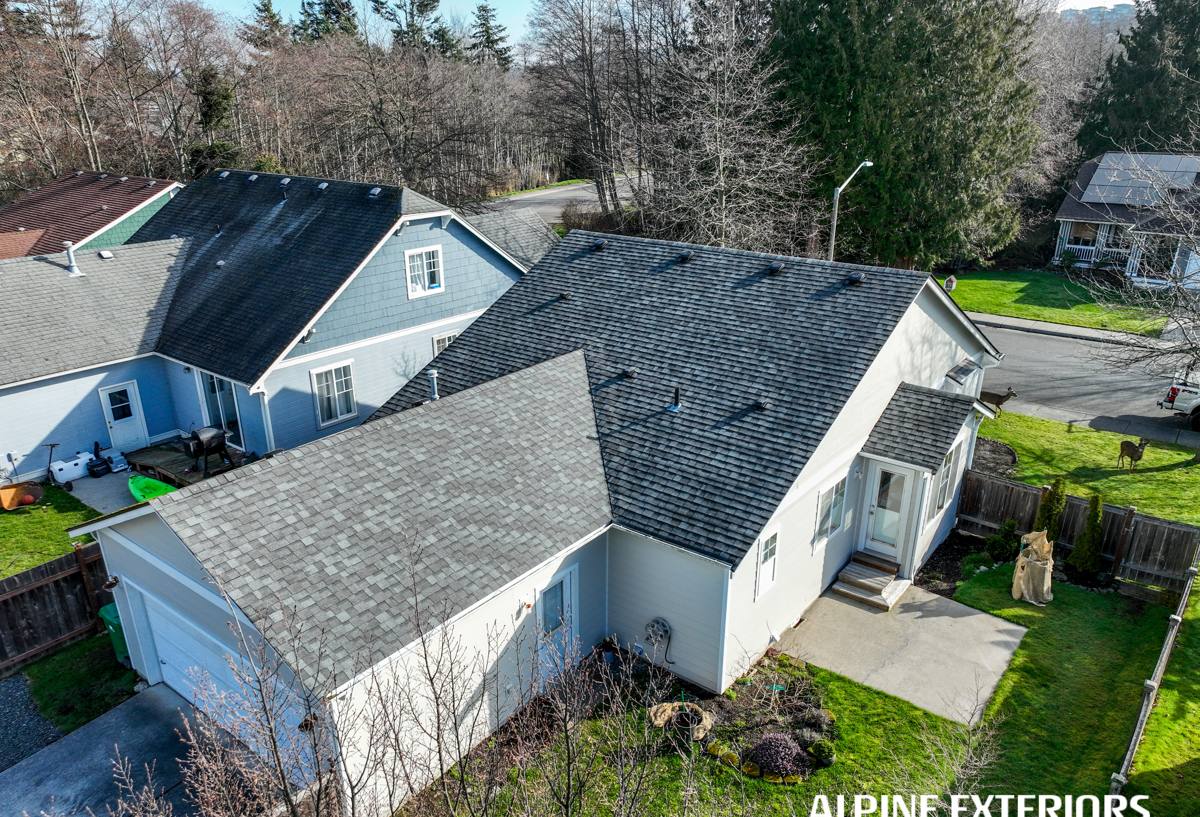
Ship Harbor sits right where the Guemes Channel and Rosario Strait weather starts working on a house before it ever reaches downtown Anacortes. Homes here take a different kind of beating than a house tucked inland in Skagit County: salt-laden wind off the water, driving rain that hits siding sideways instead of straight down, and a moss season that can run from October clear through April. We're a local exterior contractor, and Ship Harbor is one of the neighborhoods where we see the clearest difference between siding that was chosen for looks and siding that was chosen to actually survive the site conditions.
This page covers what we look for on a Ship Harbor home, how our siding, roofing, window, and deck work fits together out here, and why we install James Hardie fiber cement exclusively — not as a sales pitch, but as an honest explanation of what holds up in this specific pocket of the county.
What the Climate Actually Does to a House Here
Salt Air and Corrosion
Proximity to open water means airborne salt settles on every exterior surface — siding, trim, fasteners, flashing. Salt is hygroscopic, meaning it pulls moisture out of the air and holds it against whatever it lands on. On wood-based siding products, that translates to accelerated swelling, checking, and paint failure at a faster rate than the same product would see even a few miles inland. On fasteners and trim hardware, it accelerates corrosion if the wrong metals were used.
Wind-Driven Rain
Ship Harbor's exposure means rain frequently arrives at an angle, not straight down. That matters more than most homeowners expect — horizontal rain finds every gap in lap siding, every under-caulked seam, and every place where flashing was skipped to save time. A siding system that's only rated for typical vertical rainfall exposure is being asked to do a job it wasn't built for.
Long Moss and Mildew Season
The combination of marine humidity, shade from mature trees common in this area, and mild Pacific Northwest winters means moss, algae, and mildew have a long runway to establish themselves on north-facing walls and anywhere siding doesn't get direct sun. Porous or absorbent siding materials give organic growth something to hold onto; dense, factory-sealed material gives it much less to work with.
Why We Install Only James Hardie Fiber Cement
We don't carry vinyl, LP SmartSide, Cemplank, Allura, primed spruce, or cedar. That's a deliberate standard, not a limitation of what we're capable of installing. Fiber cement from James Hardie is engineered specifically to resist the failure modes that marine-exposed siding in places like Ship Harbor actually experiences:
- Non-combustible core — fiber cement doesn't feed a fire the way wood-based products can.
- Moisture-stable composition — it doesn't swell, rot, or delaminate the way engineered wood or untreated cedar can when it stays damp for extended stretches.
- Factory-applied ColorPlus finish — baked-on color that resists fading and chalking better than field-applied paint, and doesn't require repainting on the same cycle as wood siding.
- HZ5 and HZ10 product engineering — Hardie builds specific formulations rated for high-moisture, freeze-thaw, and marine-adjacent climate zones, which is exactly the category the Anacortes area falls into.
- Strong transferable warranty — backed by a manufacturer with decades of field performance data, not a shorter warranty structure built around a product still proving itself.
We're not saying every alternative product is unusable everywhere. We're saying that on a marine-exposed lot in Skagit County, the trade-offs of the alternatives — moisture sensitivity, shorter repaint cycles, more installation-sensitive detailing — aren't ones we're willing to put our name behind. Hardie is what we've standardized on because it's what we've seen perform.
How a Siding Project Works Out Here
Site Assessment
Every Ship Harbor estimate starts with a walk-around that pays specific attention to wall orientation relative to prevailing wind and rain, existing moisture damage at trim and window returns, moss and algae staining patterns, and the condition of flashing at rooflines, decks, and window heads. Marine exposure means we're often finding problems at penetrations before they're visible as interior damage.
Removal and What's Underneath
Once old siding comes off, we inspect sheathing and weather-resistive barrier condition. This is where hidden moisture damage from years of wind-driven rain finding its way behind old siding often shows up. We address what we find rather than covering it back up.
Water Management Details
Correct fiber cement installation is not just nailing boards to a wall. Proper installation includes:
- Correct weather-resistive barrier lapped shingle-style, working top to bottom
- Rainscreen or drainage gap where conditions call for it, so any moisture that does get behind the cladding can drain and dry
- Flashing integrated at every window, door, and roofline intersection — not just caulk covering a gap
- Manufacturer-specified fastener spacing, clearance from grade, and joint treatment
- Field-cut edges sealed per Hardie's install specifications, since an unsealed cut edge is one of the few places fiber cement can take on moisture
Finishing and Trim
ColorPlus prefinished panels reduce on-site painting, but trim, corners, and any field-touched areas still need to be handled correctly to keep the whole system performing as one assembly rather than a patchwork of materials aging at different rates.
Roofing, Windows, and Decks — Why It's One Conversation
Siding doesn't work in isolation. On a Ship Harbor home, the roof edge, gutter system, window flashing, and deck ledger connections all interact with how water moves across the exterior. We handle roofing, windows, and decks alongside siding because a wind-driven rain event doesn't care which trade installed which component — it finds whatever gap exists. A window that wasn't flashed correctly during a past remodel can undermine even a brand-new siding installation around it. Coordinating these systems as one crew, rather than four separate contractors who never talk to each other, is how those failure points actually get closed instead of just relocated.
Roofing Considerations Specific to This Area
Moss growth on roofing is often the first visible sign of the same conditions affecting siding — shade, humidity, and limited direct sun on certain slopes. Roof edge and valley flashing take the same wind-driven rain exposure as wall flashing, and a compromised roof edge is a common source of water finding its way down behind siding at the top of a wall.
Windows and Decks
Window replacement on a marine-exposed home is a chance to correct flashing details that may have been inadequate the first time around. Decks facing the water side of a property see the harshest combination of sun, salt, and rain cycling, which affects both the decking material and how the ledger board connection to the house is flashed and maintained.
Cost Factors for a Ship Harbor Exterior Project
| Factor | Why It Matters Here |
|---|---|
| Wall exposure to wind/water | Water-facing elevations often need more robust flashing and drainage detailing than sheltered walls |
| Existing moisture damage | Hidden sheathing damage from prior water intrusion adds repair scope before new siding goes on |
| Trim and detail complexity | Window returns, corner boards, and multiple rooflines all add labor and material |
| Access and staging | Lot size, driveway access, and proximity to neighboring structures affect scaffolding and material staging |
| Scope bundling | Combining siding with roofing, window, or deck work on the same visit can reduce redundant setup and disruption |
We don't quote from a distance for this kind of work — too much depends on what we find on the actual wall assembly, which is why every estimate includes an in-person walk-around.
A Local Crew Matters More Than It Sounds Like
Marine-exposed siding work rewards contractors who've actually worked this coastline, not just this general climate. Knowing that a north-facing wall near the water will need different moisture handling than the same wall a few miles inland, or that a particular flashing detail tends to fail faster on water-facing elevations, comes from doing the work here repeatedly — not from a general knowledge of Pacific Northwest weather. A crew based in Anacortes is also back quickly if a warranty question or a storm-related concern comes up, rather than being a regional outfit that passes through once.
A Simple Maintenance Checklist for Ship Harbor Homes
- Rinse salt residue off siding and trim periodically, especially on water-facing walls
- Check and clear gutters before the fall rain season starts
- Inspect caulking at window and door trim yearly for cracking or separation
- Watch north-facing and shaded walls for early moss or algae growth
- Have flashing at rooflines and deck ledgers checked if you notice any interior staining
- Address small trim or caulk failures promptly — they're cheap to fix small and expensive to fix after they've let water in
Get a Free, No-Pressure Estimate
If you're in Ship Harbor and dealing with siding that's showing its age, moss that keeps coming back, or you're just planning ahead for a home that's built to handle what this stretch of Skagit County throws at it, we're happy to come take a look. The estimate is free, there's no pressure, and you'll get a straight answer about what your home actually needs.