 Anacortes Siding
 Exterior Work Built for March Point's Peninsula Climate
March Point sits out on its own finger of land between Fidalgo Bay and Padilla Bay, which means homes here get weather from more directions than most of Anacortes. It's a low-lying, water-surrounded setting, and that geography shapes everything about how a house's exterior ages. Wind off the water carries salt spray onto siding and trim, driving rain finds its way into every gap and seam a house has, and the shaded, damp stretches of the property grow moss faster than homeowners expect. None of this is unusual for Skagit County's coastline, but March Point gets a concentrated version of it because there's so little land between the house and open water in multiple directions.
We've worked on homes throughout this area and the pattern repeats: whichever side of the house faces the water or the prevailing wind shows wear first. Paint fades and chalks, caulk joints open up, and untreated wood trim starts to soften at the bottom edges long before the rest of the house looks tired. Good exterior work out here isn't about picking a product off a shelf — it's about understanding which sides of a specific house take the worst of the exposure and building the assembly to handle it.
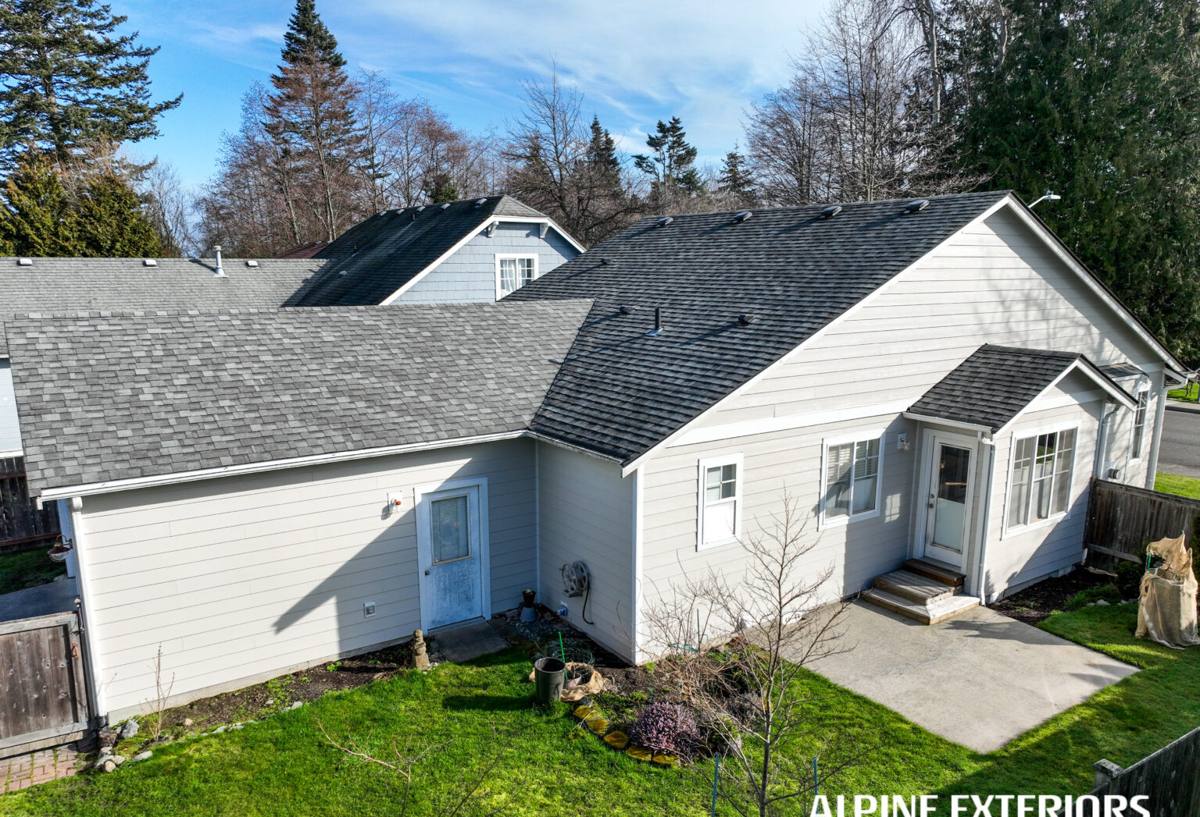
What Salt Air and Driving Rain Actually Do to a House
Salt Air
Airborne salt is corrosive to metal fasteners, flashing, and hardware, and it accelerates the breakdown of many paint films and coatings. Over years, homes closer to the water tend to show more chalking, fading, and finish failure on their south- and west-facing walls — the sides that catch both sun and prevailing wind — than homes set back from the shoreline. It's a slow process, but it's constant, and it doesn't take a storm to do the damage. Just ordinary days near the water add up.
Driving Rain
Rain that comes in sideways during a windstorm behaves differently than rain falling straight down. It gets pushed under lap siding, behind poorly sealed trim boards, and into any gap where two materials meet. On a peninsula with open exposure like March Point, driving rain is a regular event, not a once-a-year storm. Siding systems and flashing details that work fine in a sheltered inland yard can fail here simply because they were never tested against wind-driven water at this frequency.
Moss and Prolonged Dampness
Western Washington's long, cool, wet stretches from fall through spring give moss and algae months to establish themselves on north-facing walls, roof valleys, and anywhere shade keeps a surface from drying out. Moss holds moisture against the material underneath it, and on wood-based products that moisture exposure is what eventually leads to swelling, softening, and rot — usually starting at butt joints, board edges, and anywhere paint has worn thin.
Why We Install Only James Hardie Fiber Cement Siding
We made a decision, as a company, to install James Hardie fiber cement siding exclusively — no vinyl, no LP SmartSide, no Cemplank or Allura fiber cement, no primed spruce or cedar. That's not a marketing position; it's the product of watching how different siding materials actually perform in Skagit County's marine climate over time.
Vinyl siding is inexpensive and low-maintenance in mild climates, but it's a petroleum-based product that can warp or distort in sustained heat reflection and become brittle in cold snaps, and its seams and panels rely on lap joints that aren't sealed the way fiber cement can be detailed. Wood-based composite sidings like LP SmartSide use engineered wood strand technology with a resin-saturated overlay, which is a real improvement over old-fashioned wood siding — but it's still wood at its core, and wood-based products are more sensitive to sustained moisture exposure than cement-based ones, particularly at cut edges and fastener penetrations that aren't perfectly sealed. Primed spruce and cedar are traditional and attractive, but they require an ongoing paint and caulk maintenance schedule to keep water out, and in a climate with this much rain and humidity, that maintenance window shrinks fast.
James Hardie fiber cement is cement, sand, and cellulose fiber — it doesn't absorb water the way wood does, it won't warp from heat, and it's non-combustible, which matters given wildfire smoke seasons have become a real consideration even here on the water. Hardie's ColorPlus factory finish is baked on under controlled conditions rather than field-applied, which gives it better adhesion and UV resistance than site-applied paint, and it's backed by a real transferable warranty. For a peninsula environment that combines salt air, wind-driven rain, and long damp seasons, it's the material that holds up with the least maintenance burden over the life of the house.
James Hardie Product Lines We Work With
| Product | Best Use | Why It Fits This Area |
|---|---|---|
| HardiePlank lap siding | Primary wall siding | Available in HZ5 formulation engineered for Pacific Northwest moisture and temperature cycling |
| HardiePanel vertical siding | Accent walls, gables, modern facades | Fewer horizontal seams for water to work into on exposed elevations |
| HardieTrim boards | Corners, window and door trim, fascia | Resists the swelling and softening that wood trim shows at joints and end cuts |
| HardieSoffit panels | Eaves and overhangs | Holds up in the shaded, damp conditions where moss and mildew take hold fastest |
Roofing, Windows, and Decks for the Same Exposure
Siding is only part of a house's defense against this climate, and we treat the rest of the exterior with the same logic.
Roofing
A roof on the water side of March Point deals with wind uplift, moss growth in shaded valleys, and driving rain testing every flashing detail around vents, chimneys, and roof-to-wall transitions. We check flashing and underlayment condition as carefully as the shingles themselves, because most roof leaks in this area start at a flashing failure, not a worn-out shingle field.
Windows
Older windows lose their seal over time, and once that happens they let both air and water infiltrate around the frame — a bigger problem on a windy peninsula than in a sheltered inland lot. Replacement windows with properly flashed and sealed installation cut down on drafts, condensation, and the slow water intrusion that damages framing you can't see.
Decks
Decks facing the water get more direct rain, more UV, and more freeze-thaw cycling on fasteners and ledger connections than decks tucked under tree cover. Ledger board flashing and proper drainage behind and beneath the deck surface matter as much as the decking material itself for a structure that's going to sit out in this exposure for decades.
What a Correct Installation Looks Like
Fiber cement siding performs the way it's engineered to only when it's installed to manufacturer spec. In a high-exposure area like March Point, the installation details matter even more than usual:
- Proper weather-resistive barrier and flashing at every window, door, and penetration before siding goes on
- Correct fastener spacing, type, and depth — Hardie is specific about this, and shortcuts show up as cracking or fastener pop years later
- Adequate clearance between siding and grade, decks, and roof lines to prevent wicking moisture
- Sealed and back-primed cut edges wherever field cuts expose the raw material
- Rainscreen or drainage plane detailing on walls with the heaviest wind-driven rain exposure
- Trim and joint caulking rated for exterior, UV, and marine-air exposure
Skip any one of these steps and even the best siding material on the market will underperform. This is where a crew's experience with this specific stretch of coastline matters — knowing which walls need extra attention before a problem ever shows up.
Why a Local Crew Matters Here
A contractor based elsewhere in the Puget Sound region can absolutely install siding correctly, but there's real value in a crew that works Skagit County's coastal exposures regularly. We see which elevations fail first, which flashing details hold up over a full winter of driving rain, and how quickly moss reestablishes on a north wall after a cleaning. That pattern recognition comes from doing this work up and down the same stretch of coastline year after year, not from a general specification sheet. It also means faster response for warranty questions, follow-up service, or simply someone who already knows the area's building conditions when you call.
Planning an Exterior Project in March Point
Whether you're dealing with siding that's showing its age, a roof that's due for attention, windows that let in more draft than they used to, or a deck that needs to be built to handle water-side exposure, the starting point is the same: an honest look at what your specific house is facing and a plan that matches the materials to the exposure. That's true whether you're replacing one wall or doing a full exterior overhaul.
If you're weighing options for a home in March Point or elsewhere in the Anacortes area, we're happy to take a look and walk you through what we'd recommend and why — no pressure, no obligation. Reach out using the form below to schedule a free estimate.