 Anacortes Siding
 Exterior Contracting for Skyline, Anacortes
Skyline sits close enough to the water that homes there live with the same weather patterns that shape all of Fidalgo Island: salt-laden air off Rosario Strait, wind-driven rain that doesn't fall straight down, and a wet season that stretches long enough to give moss and algae a real foothold on roofs, siding, and decking. We provide siding, roofing, window, and deck services to homeowners in this area, and because we work here regularly, we see the same handful of problems show up on house after house. That repetition is useful — it means we're not guessing at what your home needs, we're applying what we already know about how this specific corner of Skagit County treats a building envelope.
What Makes This Area Different
Anacortes and its surrounding neighborhoods, including Skyline, get more direct exposure to marine air than inland Skagit County towns like Mount Vernon or Sedro-Woolley. That matters for exterior materials in a few concrete ways: metal fasteners and flashing corrode faster if they're not the right grade, painted wood surfaces chalk and fade quicker under salt exposure, and anything that holds moisture against a wall — old caulk joints, failed paint film, cupped lap siding — becomes a foothold for rot sooner than it would forty miles inland. None of this is dramatic on its own. It's slow, cumulative wear, which is exactly why it gets ignored until a homeowner is looking at a much bigger repair than they expected.
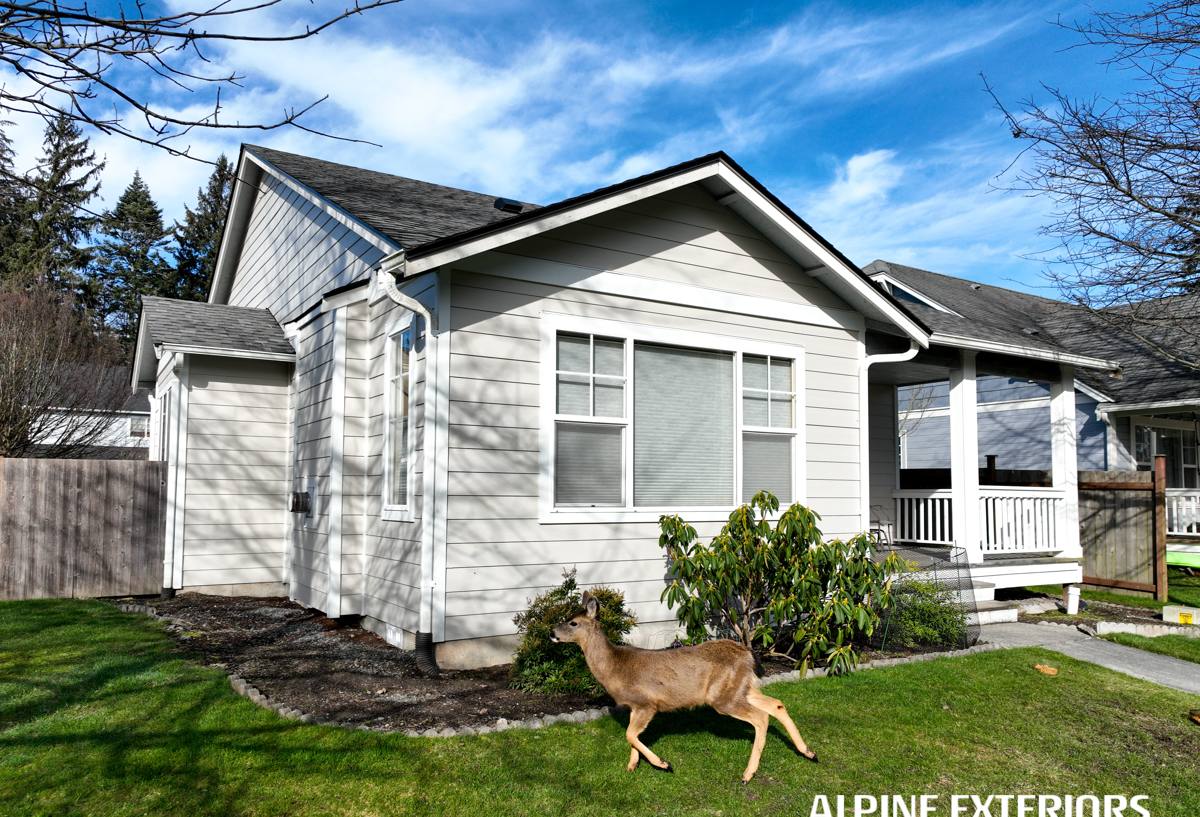
Siding: Built for Wind-Driven Rain and Salt Air
The biggest siding failures we see in this area aren't from a single storm — they're from years of moisture finding small gaps that wind-driven rain can push water into, gaps that would stay dry in a calmer climate. Lap siding with failing caulk, undersized or missing kick-out flashing at roof-to-wall intersections, and butt joints that were never properly sealed all become entry points. Over time that moisture gets behind the siding and starts working on the sheathing and framing, which is a far more expensive problem than the siding itself.
This is the core reason we install James Hardie fiber cement siding exclusively and don't offer vinyl, LP SmartSide, Cemplank, Allura, or unprimed wood siding like cedar or spruce. Each of those products has real strengths, but for this specific climate — persistent moisture, salt exposure, and a long season where surfaces rarely get to fully dry out — we've found the trade-offs work against homeowners here:
- Vinyl expands and contracts with temperature swings and can warp or crack in the kind of wind gusts that come off the water; it also can't be painted to refresh a look without specialized paint.
- LP SmartSide and other engineered wood products are wood-based, which means the cut edges and any moisture intrusion point are more vulnerable to rot than a cement-based product, even with factory treatment.
- Unprimed or minimally primed wood siding (cedar, spruce) needs disciplined, recurring maintenance — repainting, caulking, and moisture monitoring — that most homeowners don't keep up with, and in a marine climate the consequences of falling behind show up faster.
James Hardie fiber cement is non-combustible, doesn't swell or rot from moisture the way wood-based products can, and comes with a factory-applied ColorPlus finish that holds color and resists the fading that salt air accelerates on field-painted surfaces. Hardie also engineers specific product lines (HZ5, for example) for exactly this kind of climate zone, which matters more than it sounds — the product was designed with places like ours in mind, not adapted after the fact.
Common Siding Repairs We See in This Area
| Issue | Typical Cause | Why It Matters Here |
|---|---|---|
| Soft or delaminating siding at the bottom courses | Splashback, poor grading, missing drip edge | Constant dampness near the ground line accelerates rot in wood-based products |
| Corroded fasteners or flashing | Non-marine-grade metal used originally | Salt air corrodes standard steel and some aluminum faster than inland installs |
| Cracked or gapped caulk joints | UV and temperature cycling, age | Opens a path for wind-driven rain to get behind the cladding |
| Moss and algae staining | Shaded, moisture-retentive surfaces | Long wet season gives growth more time to establish and hold moisture |
Roofing: Standing Up to a Long Wet Season
Roofs in Skyline deal with the same driving rain as siding, but they also take the brunt of moss growth, which is one of the most underestimated causes of roof damage in this part of Washington. Moss doesn't just look bad — its root structure lifts shingle edges and holds water against the roof deck, which shortens the life of the roofing material and can lead to deck rot underneath if it's left unaddressed for years. Shaded, north-facing slopes and roofs under tree cover are especially prone to it.
We handle roof installation and repair with attention to the details that matter most in this climate: proper underlayment for a wet season that can stretch for months, correctly lapped and sealed flashing at valleys, chimneys, and wall intersections, and adequate attic ventilation so moisture doesn't condense from the inside and undermine the roof deck from below. A roof that looks fine from the ground can still be failing at these connection points, which is why we look closely at them rather than just at the field of the roof.
Windows: Sealing Against Wind and Moisture
Older or failing windows are a common source of hidden moisture problems in coastal homes. Beyond energy loss, a window with degraded seals or flashing lets wind-driven rain track down into the wall cavity, where it can sit against framing that isn't designed to handle sustained dampness. We install replacement windows with attention to proper flashing integration with the surrounding siding, not just the window unit itself — a well-made window installed with poor flashing detail will still leak.
Decks: Built for Wet Ground and Constant Moisture
Decks in this area face a different but related challenge: they're horizontal surfaces that collect standing water, fallen debris, and moss, and many are built close to grade where ground moisture adds to the problem. Ledger board connections, joist hangers, and any wood-to-wood contact points are where we see the most deterioration, since those are the spots that hold moisture the longest between rains. We build and repair decks with proper flashing at the ledger, adequate spacing for drainage and airflow, and fasteners rated for the kind of sustained moisture exposure this climate delivers.
Why a Local Crew Matters Here
A crew that mostly works drier, inland projects can still do competent work, but they may not default to the details that matter most in a marine environment — the right fastener grade, the right flashing sequence at a roof-to-wall transition, the right expectations for how quickly moss will return without some management. Working regularly in Anacortes and the surrounding Skagit County communities means we're applying the same judgment call after call, not relearning the climate on your house.
That local pattern-recognition is also why we can usually tell fairly quickly, from a short walk around a home, whether an issue is cosmetic or something that needs to be opened up and looked at more closely.
Signs Your Skyline Home May Need an Exterior Inspection
- Visible moss or dark streaking on the roof, especially on shaded slopes
- Soft spots, bubbling, or dark staining on siding near the ground or under windows
- Gaps or cracking in caulk joints at trim, corners, or window edges
- Drafts, fogging, or difficulty operating older windows
- Soft or spongy decking, especially near the ledger board or support posts
- Rust streaks below metal flashing or fasteners
How We Approach a Project
For most projects, the process starts with a walk-around inspection so we can see the actual condition of the siding, roof, windows, or deck in question, not just quote off a photo or a phone description. From there we talk through what's actually needed versus what can reasonably wait, give an honest assessment of the scope, and provide a clear estimate before any work begins. We don't push replacement when a targeted repair will genuinely hold up, but we're also direct when we see a problem that's likely to get worse — particularly moisture intrusion, which rarely improves on its own.
Cost Factors to Expect
| Factor | How It Affects Scope |
|---|---|
| Extent of existing moisture damage | Hidden rot behind siding or under roofing adds repair scope beyond the visible surface |
| Home size and wall/roof complexity | More corners, valleys, and transitions mean more flashing detail and labor |
| Accessibility | Steep roof pitch, tight lot lines, or limited equipment access can affect labor time |
| Material selection | Siding profile, roofing type, and window grade all shift material cost |
| Current condition of trim, flashing, and substrate | Replacing failed flashing or sheathing alongside new siding or roofing is more efficient than doing it later as a separate job |
If you're noticing moss buildup, aging siding, a roof that's due for attention, or windows that no longer seal the way they should, we're happy to take a look and walk you through your options. Reach out for a free, no-pressure estimate — there's a form below to get started.