 Anacortes Siding
 Roofing in Skyline: A Different Set of Problems Than Inland Washington
Skyline sits close enough to the water that homes here deal with a combination most inland Skagit County roofs never see: salt-laden air off Fidalgo Bay and the Guemes Channel, wind-driven rain that gets pushed sideways under poorly sealed edges, and a moss season that can run eight months out of the year in shaded, north-facing sections of a roof. None of these things are dramatic on their own. What they do is work slowly, and by the time a homeowner notices a problem, the underlying decking or fasteners have usually been compromised for a while.
A roof replacement in Skyline isn't just "put new shingles on." It's an opportunity to correct whatever the original roof got wrong for this specific environment — often ventilation, underlayment choice, or flashing details that were fine for a drier climate but aren't holding up here.
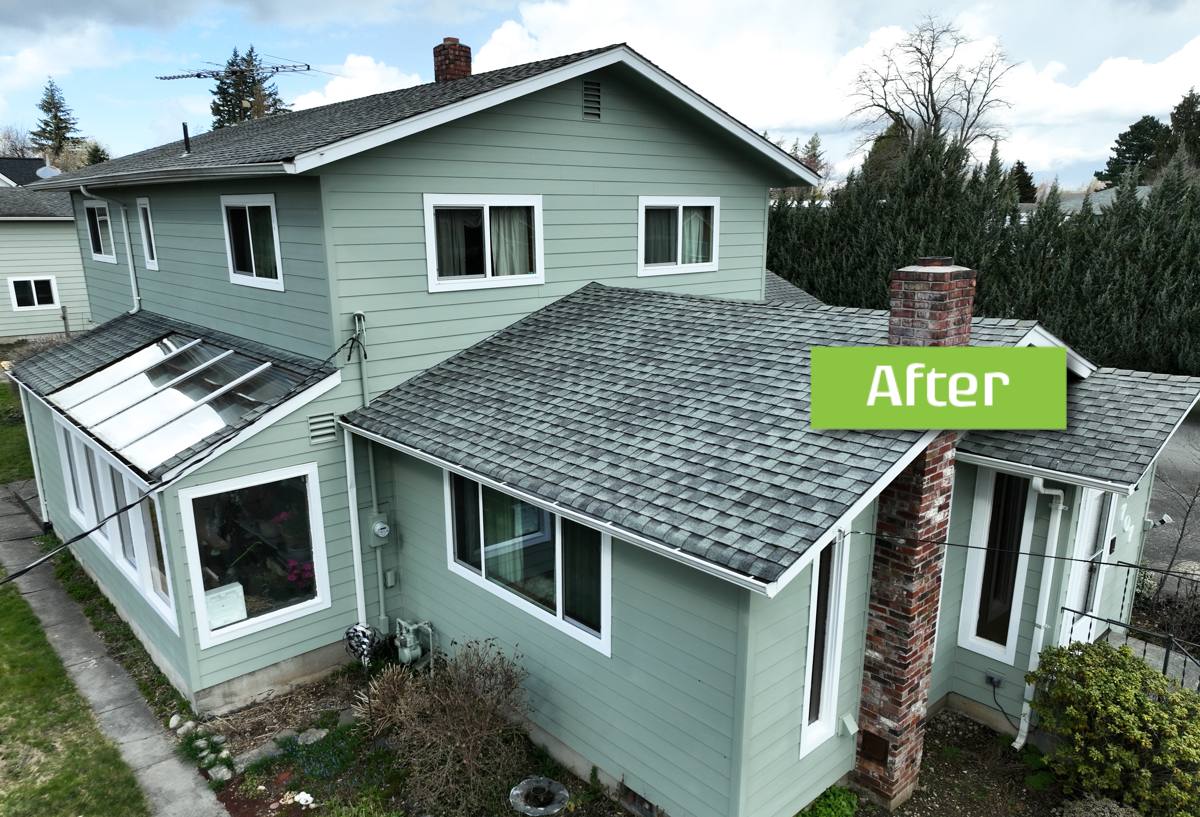
What Salt Air, Rain, and Moss Actually Do to a Roof
Salt Air
Salt in the air accelerates corrosion on exposed metal — nail heads, flashing, gutter fasteners, and any exposed screws on ridge vents or accessories. Once corrosion starts on a fastener, water finds a path around it, even if the surrounding shingle looks fine. This is why fastener and flashing material choice matters more in Skyline than it would twenty miles inland.
Driving Rain
Anacortes gets weather off the water, and that means rain that doesn't always fall straight down. Wind-driven rain pushes moisture up under shingle tabs, into poorly lapped step flashing, and through any gap in the underlayment at valleys and penetrations. A roof that's watertight in a calm downpour can still leak in a Skyline windstorm if the underlayment and flashing details weren't built for lateral water movement.
Moss
Moss thrives in the shaded, moisture-holding sections of a roof — typically the north slope, areas under overhanging trees, and anywhere debris collects. It's not just cosmetic. Moss holds water against the roofing material far longer than bare shingle would, and as it grows, it lifts shingle edges and works its way under the surface. Left unchecked over several seasons, moss growth shortens the usable life of a roof by years.
Signs a Skyline Roof Is Due for Replacement, Not Another Repair
- Granule loss heavy enough that you're finding grit in gutters every time it rains
- Moss regrowth within a season or two of cleaning, even after treatment
- Soft or spongy spots underfoot when walked, indicating decking damage
- Rust staining running down from flashing, vents, or metal valleys
- Daylight visible through the roof deck from inside the attic
- Multiple past repairs in different areas rather than one isolated issue
- Shingles curling, cracking, or losing their seal along the tab lines
- Interior ceiling stains that reappear after repairs, suggesting the leak source was never fully located
One or two of these on their own might mean a repair is enough. Several at once, especially on a roof already past the middle of its expected lifespan, usually means the money is better spent on a full replacement than on chasing leaks year after year.
What a Correct Roof Replacement Involves Here
The visible shingle layer is the part everyone sees, but it's not the part that determines how long the roof lasts in this climate. A properly done replacement addresses the whole system:
Tear-Off and Deck Inspection
Full tear-off lets us see the actual condition of the roof deck — something that can't be assessed from a re-roof over old material. Any decking softened by long-term moisture intrusion gets replaced before anything new goes down, because new roofing over compromised decking just hides the problem for a while.
Underlayment Suited to Wind-Driven Rain
Given how much of Skyline's weather comes in sideways off the water, underlayment choice matters. Self-adhered membrane at eaves, valleys, and penetrations gives a second line of defense in exactly the spots where driving rain and ice-adjacent conditions cause the most trouble.
Corrosion-Resistant Flashing and Fasteners
In a salt-air environment, we spec metal that's built to resist corrosion rather than standard-grade material that might be fine elsewhere in the county. This applies to step flashing, valley metal, drip edge, and fasteners alike — the places where a roof most often fails first aren't the shingle field, they're the metal details.
Ventilation That Matches the Home
Poor attic ventilation traps moisture, which speeds up deck rot and gives moss and mildew a head start from the underside as well as the top. Balanced intake and exhaust ventilation is part of a correct replacement, not an optional upgrade.
Roofing Material Comparison for the Skyline Climate
| Material | How It Handles Salt Air & Rain | Moss Resistance | Typical Lifespan |
|---|---|---|---|
| Architectural Asphalt Shingle | Good with proper flashing and fasteners; standard choice for the area | Moderate — benefits from algae-resistant granules | 25-30 years |
| Standing Seam Metal | Excellent when using marine-grade or coated panels and fasteners | High — sheds moisture quickly, little surface for moss to grip | 40-50+ years |
| Synthetic/Composite Shingle | Good; resists moisture absorption better than wood-based products | Moderate to High | 30-40 years |
| Cedar Shake | Requires diligent maintenance in wet, salt-air conditions | Low without regular treatment | 20-25 years with upkeep |
We don't push cedar shake for homes this close to the water unless the homeowner understands and is willing to keep up with the maintenance it needs — the combination of moisture retention and organic material makes it a higher-upkeep choice in this specific microclimate, not because the product is bad, but because Skyline's conditions are demanding on it.
Our Roof Replacement Process
- On-site inspection — we assess the current roof, attic ventilation, and any visible trouble spots before quoting anything.
- Written estimate — material options, scope of work, and pricing laid out clearly, no surprise add-ons buried in fine print.
- Tear-off and deck check — full removal of old material, decking repaired or replaced as needed.
- Underlayment and flashing install — self-adhered membrane at vulnerable areas, corrosion-resistant metal throughout.
- Roofing material installation — installed to manufacturer spec, with attention to the wind-driven rain conditions common here.
- Ventilation check and adjustment — confirming intake and exhaust are balanced for the home's attic space.
- Final walkthrough — cleanup, debris check (including magnet sweep for stray fasteners), and a review of the finished work with the homeowner.
Why a Crew That Already Works Skyline Matters
A roofing crew that regularly works this neighborhood already knows which slopes tend to hold moss the longest, which older homes commonly have underbuilt flashing from a prior remodel, and how the wind comes off the water during a fall storm. That's not something you get from a generic estimate — it comes from being on these roofs season after season.
It also means faster response if something needs attention after the fact. A local crew isn't driving in from across the county for a warranty check or a post-storm inspection.
Cost Factors for a Skyline Roof Replacement
| Factor | Why It Affects Price |
|---|---|
| Roof size and pitch | More surface area and steeper pitches increase labor time and safety requirements |
| Decking condition | Rotted or soft decking found during tear-off requires replacement before new roofing goes down |
| Material choice | Metal and composite products cost more upfront than asphalt but last considerably longer |
| Number of penetrations and valleys | Chimneys, skylights, and complex valleys all require additional flashing work |
| Access and site conditions | Tree cover, steep lots, or limited driveway access can affect equipment and labor time |
We give a firm, itemized estimate before any work starts — general ranges without seeing the actual roof aren't useful to a homeowner trying to budget accurately.
Maintaining a New Roof in This Climate
- Have gutters cleaned at least twice a year to prevent water backing up under the roof edge
- Address moss growth early with gentle treatment rather than letting it establish
- Trim back overhanging branches that keep sections of the roof shaded and damp
- Schedule a visual inspection after major windstorms, especially ones coming off the water
- Keep an eye on flashing around chimneys and vents, since these are the first spots to show wear
A well-built roof still benefits from a little seasonal attention — it's a lot cheaper than dealing with a slow leak that's gone unnoticed for a year.
If your Skyline-area roof is showing its age or you're just not sure whether repair or replacement makes more sense, we're happy to take a look and give you a straight answer. Use the form below to request a free, no-pressure estimate.