 Anacortes Siding
 Building Decks for Bow's Coastal Climate
Bow sits in the low, water-adjacent country of Skagit County, tucked between farmland and the salt water of Samish Bay. That location is part of what makes it a beautiful place to build outdoor living space — and part of what makes deck building here different from a deck built twenty miles inland. Homes in Bow deal with salt-laden air off the bay, driving rain that comes in sideways during winter storms, and a moss season that can stretch from October into May. A deck built with generic, one-size-fits-all methods will show its age fast in this environment. A deck built with Bow's conditions in mind will still be solid and safe a couple of decades from now.
This page covers what we actually do differently for a deck build in Bow: the material choices, the fasteners, the drainage details, and the maintenance habits that hold up against salt air and constant moisture.
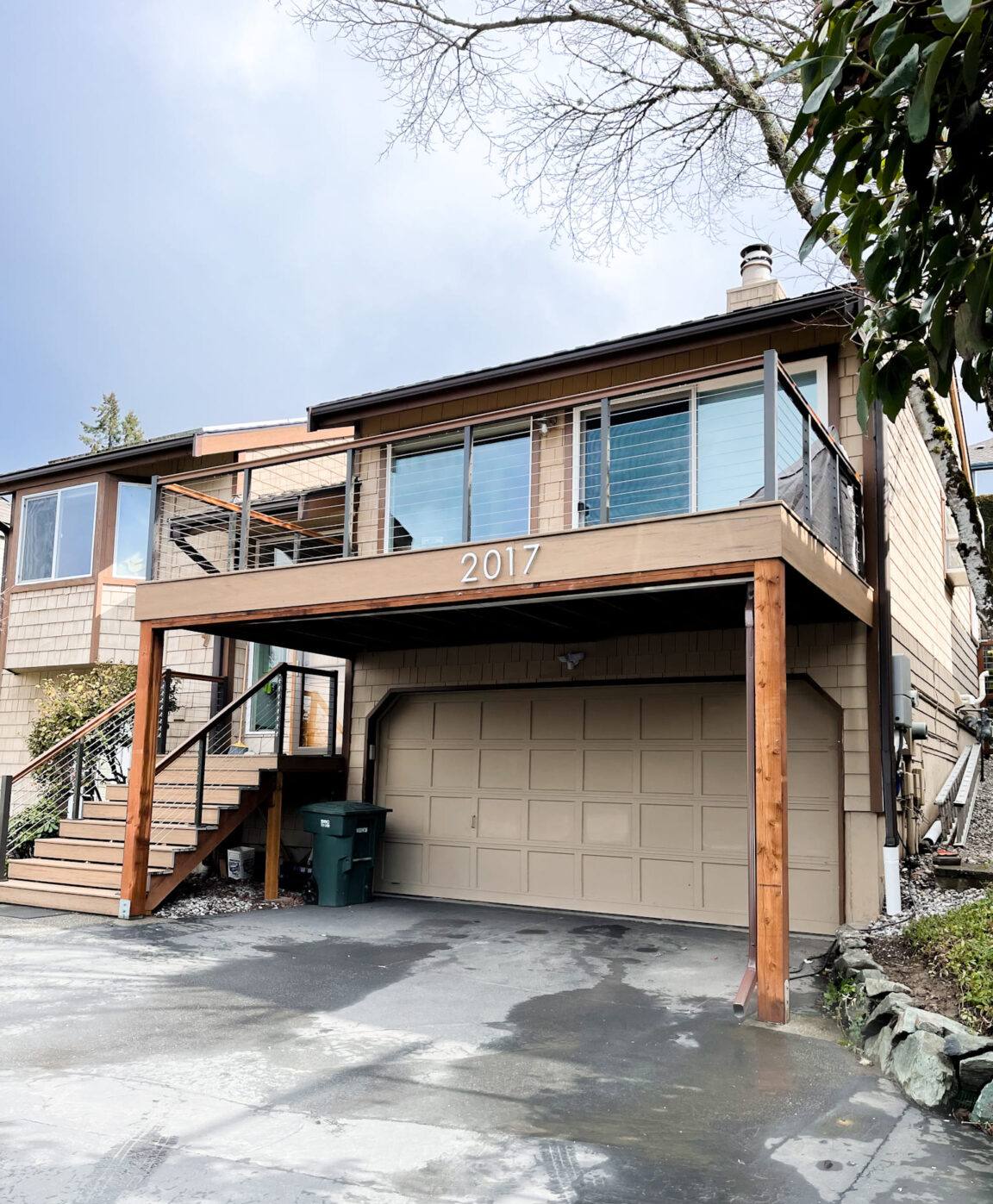
What Bow's Climate Does to an Ordinary Deck
Three things drive almost every deck problem we see in this area, and they compound each other.
Salt Air
Proximity to Samish Bay means airborne salt reaches structures more than it would further inland. Salt accelerates corrosion in anything metal — fasteners, joist hangers, railing brackets — and it can pit and dull finishes on lower-grade hardware over time. It's not dramatic or sudden; it's a slow process that shows up as rust streaks, loosening connections, and finish failure years before it should happen.
Driving Rain
Weather moving in off the water tends to arrive with wind behind it, which pushes rain sideways into ledger connections, stair stringers, and any horizontal surface that isn't sloped to shed water. Standing water on deck boards, in post bases, or against a house ledger is where rot starts — not from rain falling straight down, but from rain that gets driven and pooled.
Moss and Sustained Dampness
Skagit County's wet season is long, and shaded or north-facing decks in Bow can stay damp for days at a stretch. Moss and algae need exactly that kind of sustained moisture to take hold. Once established, moss holds water against the wood surface, turns boards slick and unsafe underfoot, and accelerates decay in wood decking.
Getting the Foundation and Framing Right
Everything above ground depends on what's below it. In this area we pay close attention to:
- Footing depth and drainage — footings need to sit below frost depth and on soil that drains, not in a pocket that holds water against the concrete.
- Ledger flashing — where a deck attaches to the house, proper flashing and a small gap or drainage plane keeps driven rain from getting behind the ledger board and into the wall framing. This is one of the most common failure points on older decks we're asked to repair or replace.
- Joist protection — a self-adhering flashing tape over the top of each joist sheds water off the wood before it reaches the fastener holes, which is where rot typically starts.
- Post bases — posts set in ground-contact conditions need bases that keep the wood off the concrete and off standing water, not buried directly in it.
None of this is visible once the deck is finished, which is exactly why it matters — it's the part of the job that determines whether the deck is still sound in fifteen years or needs structural repair in five.
Choosing Decking Material for a Bow Property
There's no single "best" decking material for every home — it depends on budget, sun exposure, how shaded the site is, and how much upkeep you want to take on. Here's how the common options actually perform in this climate:
| Material | Moss/Moisture Behavior | Salt Air Durability | Maintenance |
|---|---|---|---|
| Pressure-treated fir/pine | Absorbs moisture readily; needs a breathable finish to shed water | Fine if fasteners and hardware are corrosion-resistant | Annual cleaning and periodic re-sealing |
| Cedar | Naturally more rot-resistant; still needs finish maintenance in shaded spots | Good; performs well near salt water | Re-oil or re-stain every 1-2 years |
| Composite decking | Doesn't absorb water like wood; some early composite products trapped moisture and grew mold — modern capped composites shed water better | Excellent; no wood fibers to rot | Occasional wash-down; no staining |
| PVC decking | Fully moisture-resistant surface; best option for consistently shaded or damp areas | Excellent | Lowest; soap and water |
On shaded lots or decks tucked under tree cover — common on the wooded lots around Bow — we lean homeowners toward composite or PVC decking, or cedar with a real maintenance commitment. On open, sun-exposed sites, quality pressure-treated lumber with proper finishing is a perfectly reasonable and more affordable choice.
Why We're Selective About Certain Products
Not every composite or PVC product on the market handles Pacific Northwest moisture the same way. Some budget composite boards from years past had a reputation for trapping moisture at the core rather than shedding it, which led to swelling and mold growth in shaded, damp installations — a real problem in a climate like this one. Our standard is to use decking products with a track record of performing in wet coastal climates and a manufacturer warranty that actually reflects that performance, rather than the cheapest board on the shelf. We're happy to walk through specific brand options and their warranty terms during your estimate.
Fasteners and Hardware — Where Salt Air Does Its Damage
This is the detail that separates a deck that ages gracefully from one that starts rusting and loosening within a few winters. For any deck build in Bow, we use stainless steel or high-grade coated fasteners and structural hardware rated for coastal/corrosive environments, not standard galvanized hardware sized for inland use. Joist hangers, structural screws, and railing post hardware all see the same salt exposure as the visible decking, even though they're hidden — and hidden corrosion is the kind that fails without warning.
Railings, Stairs, and Code Requirements
Skagit County follows the Washington State building code for residential decks, which sets minimum requirements for guardrail height, baluster spacing, and stair construction on any deck above a certain height off grade. Beyond meeting code, we build railing systems with hardware and fasteners that match the same corrosion-resistance standard as the rest of the structure — a railing post that loosens because of rusted-out hardware is a safety issue, not just a maintenance nuisance. If your project needs a permit, we handle that as part of the process rather than leaving it to the homeowner to sort out.
Our Deck Building Process
- On-site assessment — we look at sun exposure, shade patterns, drainage on the lot, and how exposed the site is to wind and moisture off the bay.
- Material and layout discussion — honest recommendations based on your budget, how much maintenance you want to do, and how the site actually behaves in winter.
- Permitting — we prepare and submit what's required for the scope of the project.
- Foundation and framing — footings, ledger flashing, joist protection, and corrosion-resistant hardware, done to hold up in this climate, not just pass inspection.
- Decking, railing, and finish work — installed and, where applicable, sealed or finished before we walk you through care going forward.
- Final walkthrough — we show you exactly what maintenance the deck needs and when, so there are no surprises down the road.
Keeping a Bow Deck in Good Shape Year-Round
A well-built deck in this climate still needs some seasonal attention. A short list of what actually matters:
- Sweep leaves and debris off the deck surface regularly in fall — trapped organic matter is what feeds moss growth.
- Rinse salt residue and grime off the surface periodically, especially on decks with more direct exposure to open water.
- Check that drainage gaps between boards stay clear so water isn't pooling underneath.
- Inspect railing posts and stair connections once a year for any looseness — an early sign of hardware corrosion.
- Re-oil or re-stain wood decking on the schedule appropriate to the finish product used — don't wait until it's visibly gray and dry.
- Treat visible moss promptly with a deck-safe cleaner rather than letting it spread through a wet season.
Why Hire a Crew That Already Works in Bow
A contractor who mostly builds decks in drier inland climates can still build a structurally sound deck — but they may not default to salt-air-rated hardware, they may not think about ledger flashing the same way, and they may not warn you which decking products struggle in shaded, damp Skagit County conditions. A crew that already works this area brings that knowledge in from the start, instead of learning it from a callback five years later. We've seen what holds up around Bow and what doesn't, and we build accordingly the first time.
Get a Free, No-Pressure Estimate
If you're planning a new deck, or replacing one that's showing its age from a few too many wet seasons, we're glad to come take a look and give you honest options for your property. There's no obligation — just a straightforward assessment and a clear estimate. Use the form below to get started.