 Anacortes Siding
 Moisture Is the Real Enemy — Not Just Rain
Most siding failures aren't caused by a single storm. They're caused by moisture that gets behind the siding and stays there, quietly, for months or years before anyone notices a problem. By the time paint is bubbling or a wall feels soft to the touch, the damage underneath is usually well established.
Understanding how that moisture gets in, why it lingers, and which materials actually resist it is the single most useful thing a homeowner can know before repainting, patching, or replacing siding. This page walks through the mechanics of moisture damage and what it means for houses in this part of Skagit County specifically.
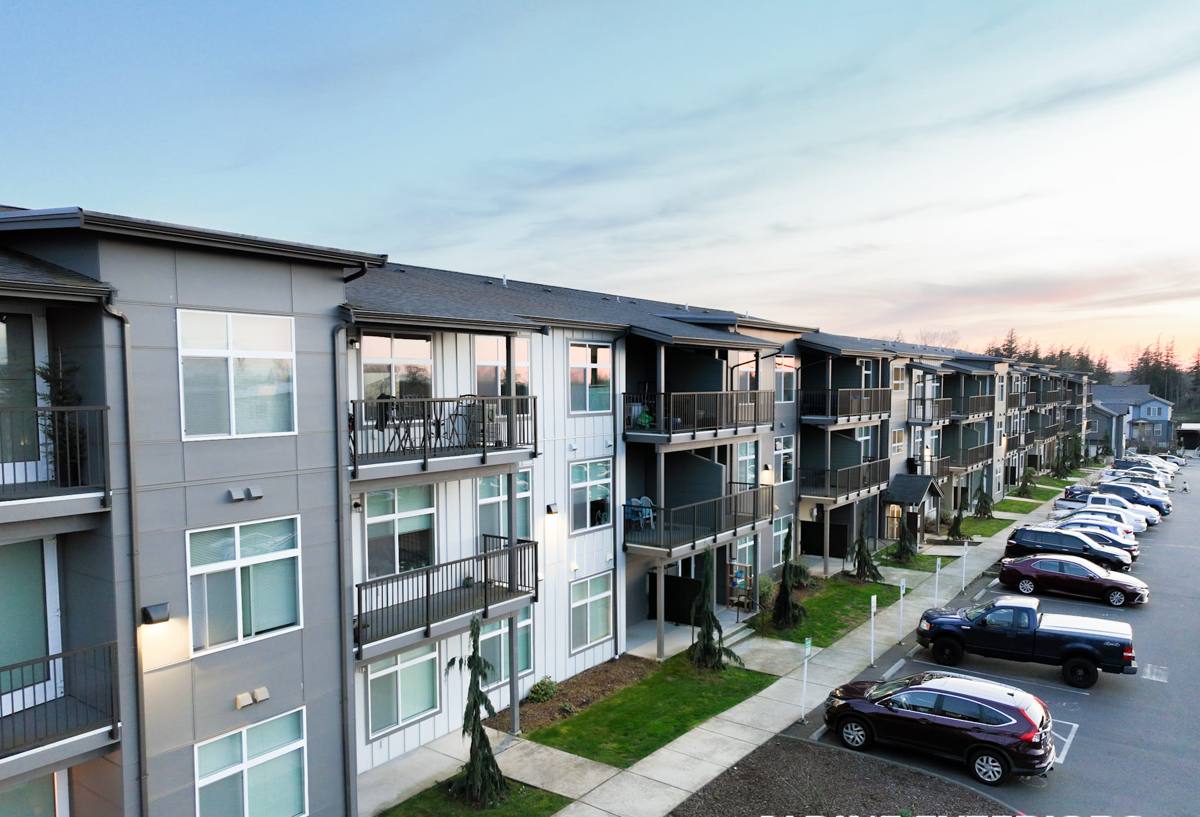
How Water Actually Gets Behind Siding
Siding itself is rarely the failure point. In almost every rot case we look at, water is finding its way in through one of a handful of predictable gaps:
- Failed caulk joints around windows, doors, and trim — caulk has a service life, and once it cracks or shrinks, it becomes a direct path for water instead of a barrier
- Nail and fastener penetrations that were sealed at installation but open up as the siding and framing expand and contract with temperature and moisture cycles
- Poor flashing details at windows, doors, decks, and roof-to-wall intersections — flashing is doing most of the real work of keeping water out, and it's often the first thing to be shortcut on a low-bid job
- End cuts and butt joints in lap siding that weren't primed or sealed on all six sides before installation
- Siding installed too close to grade, decks, or roof lines, where it stays wet longer than it should and can wick moisture up from splashback or standing water
None of these are dramatic. They're small, ordinary gaps — but water only needs one path in, and it has a lot of time to find it over the life of a house.
What Happens Once Moisture Gets Behind the Wall
Once water is behind the siding, what happens next depends heavily on what the siding and the substrate underneath are made of.
Wood-based products — solid wood, primed spruce, and engineered wood siding with an OSB or wood-fiber core — absorb moisture into their structure. Once that happens, the material swells, the fibers begin to break down, and given the wrong combination of moisture and time, wood-rot fungi take hold. This is a biological process, not just a cosmetic one: it needs sustained moisture and a food source (wood fiber), and once established it keeps consuming material even if the surface is later dried out and repainted. Left unaddressed, it will spread into sheathing, framing, and window bucks.
Fiber cement behaves differently. It's a mixture of cement, sand, and cellulose fibers — there's no organic wood fiber for rot fungi to feed on, and it doesn't swell or delaminate the way wood-based products can when it gets wet. That doesn't mean water behind fiber cement is harmless — trapped moisture can still damage framing, insulation, and interior finishes — but the siding material itself isn't the thing rotting away.
This distinction is the core reason we made the call to install only James Hardie fiber cement. We were tired of being the contractor called back in eight or ten years to explain why the bottom courses of a wood-based product were soft, delaminating, or growing fungus, when the underlying cause was a caulk joint or flashing detail that had simply reached the end of its service life.
Why Anacortes and Skagit County Are a Tough Environment for Siding
Coastal Skagit County puts siding through more than the average inland house sees:
Salt air. Proximity to Rosario Strait and the greater Salish Sea means airborne salt is a constant, low-level presence. Salt accelerates the breakdown of many finishes and fasteners, and it can worsen how quickly moisture is drawn into porous or absorbent materials.
Driving rain. Wind off the water doesn't just drop rain straight down — it drives it sideways into wall assemblies, working its way past standard laps and joints that would keep out a calmer, vertical rain. Homes on more exposed lots or higher ground around Anacortes take this especially hard.
A long moss and mildew season. The mild, wet stretch from fall through spring keeps north-facing walls, shaded siding, and anything under tree cover damp for extended periods. Moss and algae growth isn't just cosmetic — it holds moisture against the siding surface far longer than it would otherwise sit there, extending the window for damage to develop.
Put together, this climate rewards materials and installation details that shed water fast and don't hold onto moisture — and it punishes anything that depends on a perfect, unbroken paint film or caulk bead to stay dry.
How Common Siding Materials Compare on Moisture
| Material | How it responds to trapped moisture | Maintenance burden in this climate |
|---|---|---|
| Solid wood / primed spruce | Absorbs water, swells, and is vulnerable to rot fungi without diligent upkeep | High — repainting and caulk inspection on a tight cycle |
| Engineered wood (OSB-core products) | Core material can swell and break down if the factory seal is compromised at cuts, edges, or fasteners | Moderate to high — installation precision matters a great deal |
| Vinyl | Doesn't absorb water itself, but doesn't stop it either — moisture passes behind it to the weather barrier, and seams/laps can allow wind-driven rain through | Low surface maintenance, but offers little help against bulk water intrusion |
| James Hardie fiber cement | No organic wood fiber core to rot; factory ColorPlus finish resists moisture absorption at the surface | Low — periodic caulk/flashing checks, no repainting cycle with ColorPlus |
No siding material is completely maintenance-free, and no material can fix a bad flashing detail. But some materials give you a much wider margin for error when a caulk joint eventually fails or a fastener works loose — which, over a 20 or 30 year timeline, it will.
Warning Signs Worth Walking Your House For
Most rot damage is preventable if it's caught early. A short walk around the exterior once or twice a year, especially before and after the wet season, can catch problems while they're still cheap to fix.
- Soft or spongy spots when you press on siding, especially near the bottom courses and around windows
- Paint that's peeling, bubbling, or alligatoring in a localized area rather than uniformly across a wall
- Visible gaps or cracking in caulk joints at trim, windows, and doors
- Dark staining or streaking below joints, nail heads, or window sills
- Persistent moss or algae buildup on siding surfaces, particularly on north- and west-facing walls
- A musty smell or visible staining on interior walls that share an exterior wall with a suspect area
- Siding that's visibly warped, buckled, or separating at seams
Any one of these on its own might be minor. Several showing up in the same area, or on a house that's ten-plus years past its last full exterior service, is worth having a professional take a closer look.
What Correct Installation Looks Like, Regardless of Material
Material choice matters, but installation quality is what determines whether that material's moisture resistance is ever actually put to use. The details that matter most:
- Proper weather-resistive barrier (house wrap) installed and lapped correctly before siding goes on
- Correct flashing at every window, door, and penetration — installed to shed water down and out, not trap it
- Manufacturer-specified clearances from grade, roof lines, decks, and patios
- Fasteners installed at the correct spacing, depth, and location per manufacturer instructions — over-driven or under-driven nails are a common, invisible failure point
- All cut ends and edges sealed per the manufacturer's specification, not left exposed
This is also where a lot of the real cost difference between contractors shows up. It's entirely possible to install a premium material poorly, and equally possible to get real longevity out of a mid-tier material with meticulous flashing and caulking work. We standardized on one product specifically so our crews master one installation system in depth, rather than splitting attention across five different manufacturers' specs.
Why We Only Install James Hardie Fiber Cement
We don't install LP SmartSide, vinyl, Cemplank, Allura, primed spruce, or cedar. That's a deliberate standard, not a limitation of what we're capable of installing. It comes down to a combination of factors that matter specifically in a marine, moss-prone climate like ours:
- Fiber cement has no organic wood fiber for rot fungi to consume, removing the failure mode that causes most of the callbacks we've seen on wood-based siding over time
- The ColorPlus factory finish is baked on under controlled conditions, giving a more consistent, durable finish than field-applied paint and reducing the repainting burden that's especially heavy in a wet climate
- Hardie's HZ5 product line is engineered specifically for climates with significant moisture exposure, which fits the Pacific Northwest better than a one-size-fits-all product
- It's non-combustible, which matters for wildfire-adjacent insurance considerations even in a coastal county
- The warranty is a strong, transferable manufacturer warranty rather than a shorter or prorated one — meaningful if you ever sell the house
We're not saying every other product is unusable — plenty of houses around Anacortes have wood or engineered wood siding that's been well maintained for decades. We're saying that for the climate we work in, and the standard we want to put our name behind, fiber cement is the material that gives homeowners the widest margin for error over the decades a siding job needs to last.
Getting a Second Opinion on Your Siding
If you're seeing any of the warning signs above, or you're just due for a closer look at how your current siding is holding up, it's worth having someone walk the exterior with you before committing to a repaint, a patch job, or a full replacement. We're happy to come take a look, point out what we're seeing, and give you a straightforward estimate — no pressure, no hard sell. Reach out through the form below to schedule a free evaluation.