 Anacortes Siding
 Bow's Exterior Sits at the Intersection of Salt Air, Rain, and Shade
Bow doesn't get talked about as much as Anacortes or Mount Vernon, but anyone who's owned a home out here knows it has its own personality when it comes to weather. You're close enough to Samish Bay and the surrounding saltwater to catch salt-laden air on a regular basis, you're squarely inside the wet weather patterns that move through Skagit County off the water, and depending on where a property sits, you may have mature trees or hillside shade that keeps siding damp longer than it would be in a more exposed, sunnier spot. None of that is unusual for this part of Washington. But it does mean the exterior of a Bow home is working harder than people realize, year after year, whether or not it shows any obvious signs of it.
We work on homes throughout Anacortes and the surrounding Skagit County communities, and Bow comes with its own mix of rural properties, waterfront-adjacent lots, and homes tucked back among trees. The common thread is moisture. Salt air accelerates corrosion on fasteners and hardware. Driving rain off the water finds every gap in flashing and trim. And a long moss season — which in this part of the Pacific Northwest can really run most of the year — keeps organic growth established on north-facing walls, roof lines, and anywhere sun doesn't reach consistently. Siding, roofing, windows, and decks all take this on directly, and the materials and installation details matter more here than they would in a drier inland climate.
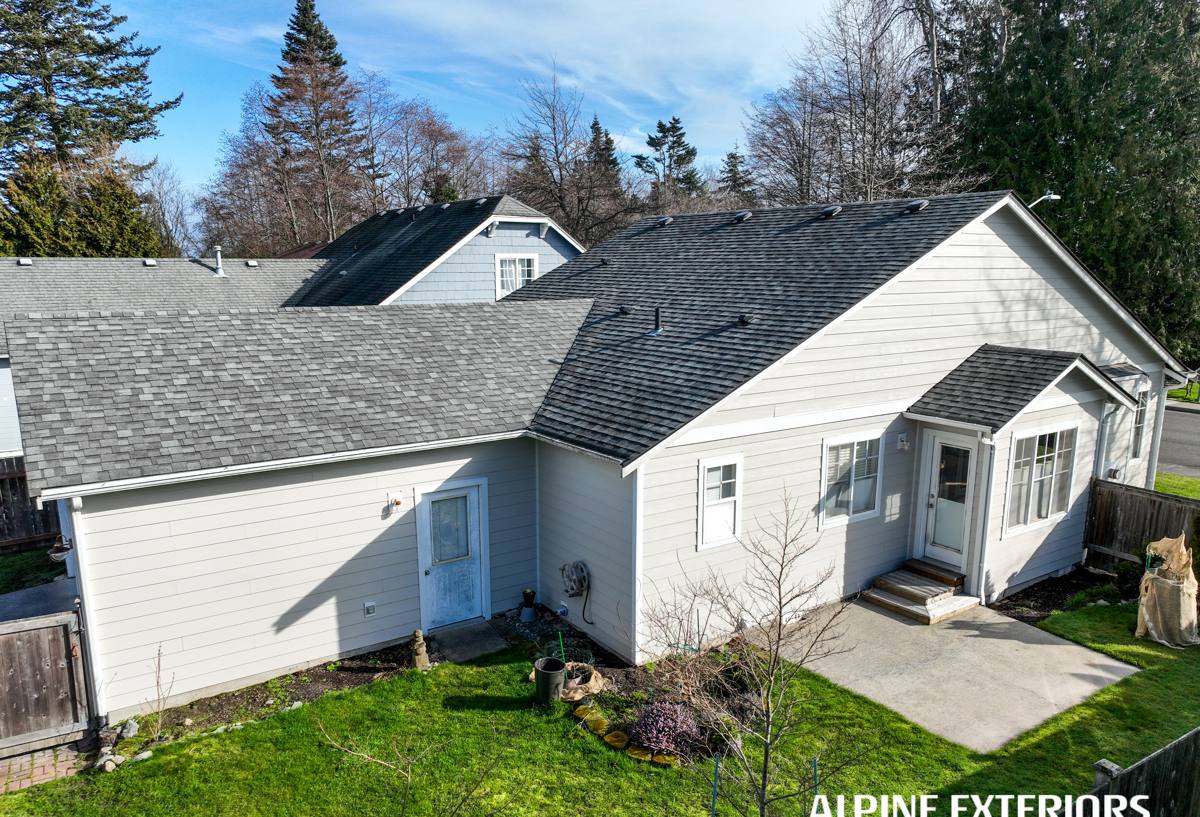
What Bow Homes Actually Face Over Time
Salt Air and Corrosion
Salt air doesn't just affect homes with a water view. It travels, and in Bow it's present in the ambient air more days than not. Over years, salt exposure accelerates the breakdown of unprotected fasteners, thin metal flashing, and lower-grade hardware. It also tends to find weaknesses in paint and coatings faster than a purely dry climate would, which is part of why we care so much about factory-applied finishes rather than field-painted siding.
Driving Rain and Wind-Driven Moisture
Rain in this part of Skagit County frequently comes in sideways off open water and farmland, not straight down. That matters because it pushes moisture into laps, seams, and trim details that a calmer rain event would never reach. Homes that look fine from the street can have moisture intrusion happening behind the cladding if the water-resistive barrier, flashing, and siding overlaps weren't detailed correctly during the original install.
A Long Moss and Algae Season
Shade, moisture, and mild temperatures are exactly what moss and algae need, and Bow has all three for a good chunk of the year. Roofs are the most visible casualty, but siding — especially on north-facing walls or under eaves and tree cover — collects the same growth. Organic growth on siding isn't just cosmetic; sustained moisture retention from moss and algae is one of the more common ways cheaper siding materials start to fail early.
Why We Only Install James Hardie Fiber Cement
We get asked fairly often why we don't carry vinyl, LP SmartSide, Cemplank, Allura, primed spruce, or cedar. It's not that these products don't have a place in the industry — it's that after years of installing and repairing exteriors in this climate, we standardized on one product line because it holds up the way we need it to for Skagit County conditions, and we'd rather stand behind one system we know inside and out than offer a menu of products with very different long-term outcomes.
What Sets Fiber Cement Apart Here
- Non-combustible: James Hardie siding is made from cement, sand, and cellulose fiber — it does not contribute fuel to a fire the way wood-based or foam-core products can.
- Moisture-resistant by composition: Fiber cement doesn't absorb and swell the way engineered wood or untreated wood products can when exposed to sustained wet conditions.
- Factory-applied ColorPlus finish: The color is baked on in a controlled factory environment, not brushed on at the job site, which gives a much more consistent, durable topcoat that resists fading and holds up better against salt air and UV.
- Climate-engineered HZ product lines: Hardie manufactures specific formulations for different climate zones, including versions engineered for wetter, more humid regions like ours.
- Strong transferable warranty: A meaningful, transferable warranty backs the product when it's installed to Hardie's specifications — something that matters if the home ever sells.
We're not going to tell you vinyl siding is junk or that cedar is a bad material — cedar is a beautiful, traditional material and vinyl has its place in lower-maintenance, budget-driven projects elsewhere. But for what our customers in Bow and the rest of Skagit County are dealing with — salt air, driving rain, and a moss season that doesn't really end — we've made fiber cement our standard, and we don't install anything else.
How We Approach a Siding Project in Bow
1. On-Site Assessment
We start by walking the property, looking at the existing siding condition, checking for moisture intrusion at trim, corners, and penetrations, and noting anything about the site — shade, wind exposure, proximity to water — that should influence the install approach.
2. Water-Resistive Barrier and Flashing First
The siding itself gets a lot of attention, but the water-resistive barrier and flashing details underneath are what actually keep a home dry. We install a continuous drainage plane and detail flashing at every window, door, and penetration before a single piece of Hardie board goes up.
3. Correct Fastening and Clearances
Hardie siding has specific fastener, nailing pattern, and clearance requirements — including ground clearance and gaps at trim — that are there specifically to manage moisture and prevent premature failure. Skipping these details is one of the most common ways fiber cement installs go wrong, and it's avoidable with a crew that installs this product exclusively rather than occasionally.
4. Finish Details
Trim, caulking, and touch-up paint (matched to the ColorPlus finish where field-cutting requires it) get handled last, so the finished exterior looks clean and performs the way it's designed to from day one.
Beyond Siding: Roofing, Windows, and Decks in Bow
Siding rarely fails in isolation — a roof leak, a failing window seal, or a rotting deck ledger board often shows up as a siding problem before anyone traces it back to the real source. Because we handle roofing, windows, and decks in addition to siding, we can look at a Bow property as one system rather than four separate trades that don't talk to each other.
| Exterior Component | Main Local Stressor | What We Look For |
|---|---|---|
| Siding | Salt air, driving rain, moss | Moisture behind cladding, failed caulk joints, organic growth patterns |
| Roofing | Moss, prolonged shade, wind-driven rain | Moss buildup, flashing condition at valleys and penetrations |
| Windows | Wind-driven rain, temperature swings | Failed seals, fogging between panes, flashing integration with siding |
| Decks | Standing moisture, ground contact, shade | Ledger board rot, fastener corrosion, surface wear |
When we're on-site for a siding estimate, we'll flag anything we notice with the roof, windows, or deck too — not to upsell unnecessarily, but because these systems are physically connected and a problem in one usually shows up as damage in another.
Why a Local Crew Matters in Bow
A lot of siding problems we get called out to fix didn't start as siding problems — they started as installation shortcuts taken by a crew that didn't understand the specific demands of this climate. A crew based somewhere drier, or one installing siding as a side offering rather than a specialty, is far more likely to miss the flashing detail or clearance that actually matters here. We work in Anacortes and throughout Skagit County regularly, which means we're not guessing about how salt air, driving rain, or a long moss season affects an install — we see the results of good and bad installations on a routine basis, and we build every project around avoiding the failure points that are specific to this area.
Cost Factors Homeowners in Bow Should Know
We won't quote a number without seeing the property, but the broad factors that move a siding project's cost up or down are fairly consistent:
| Factor | Why It Matters |
|---|---|
| Existing siding removal | Tear-off and disposal adds labor, especially with old or damaged material |
| Moisture damage found underneath | Rotted sheathing or framing needs repair before new siding goes on |
| Home size and complexity | More corners, dormers, and trim details mean more labor and material |
| Siding profile and color | Lap width, texture, and ColorPlus color selection affect material cost |
| Site access | Trees, slopes, and tight lot lines can affect staging and labor time |
A Simple Checklist Before You Commit to a Siding Project
- Ask what siding material the contractor actually installs, and why — not just what they can order.
- Confirm whether a water-resistive barrier and flashing plan is included, not just the visible siding.
- Ask how they handle existing moisture damage if it's found once old siding comes off.
- Get clarity on the warranty — both the manufacturer's and the contractor's workmanship warranty.
- Ask whether they've worked in your specific area and understand its climate patterns.
What to Expect When You Reach Out
If you're in Bow and thinking about siding, roofing, windows, or a deck, the first step is simple: we come look at the property, talk through what we're seeing, and give you a straightforward estimate. There's no pressure and no scripted upsell — just an honest read on the condition of your exterior and what it would take to get it performing the way it should for the long haul, in a climate that doesn't cut any corners.