 Anacortes Siding
 West Anacortes Sits Right at the Edge of the Weather
Homes in West Anacortes face a combination of exposures that a lot of Western Washington neighborhoods don't have to deal with all at once. You're close to the water — whether that's Guemes Channel, Rosario Strait, or the broader reach of Puget Sound depending on exactly where a house sits — which means salt-laden air is a constant, not an occasional thing. Add in the long stretch of driving rain that comes through Skagit County from fall through spring, plus the shade and dampness that a lot of lots here get from mature trees and marine fog, and you've got a recipe for a long moss season that can run most of the year on north-facing walls and rooflines.
None of this makes West Anacortes a bad place to own a home. It just means the exterior of the house has to be chosen and installed with that specific combination of salt, rain, and moss in mind — not with a generic "it rains in the Northwest" mindset. That's the lens we use on every job in this part of town.
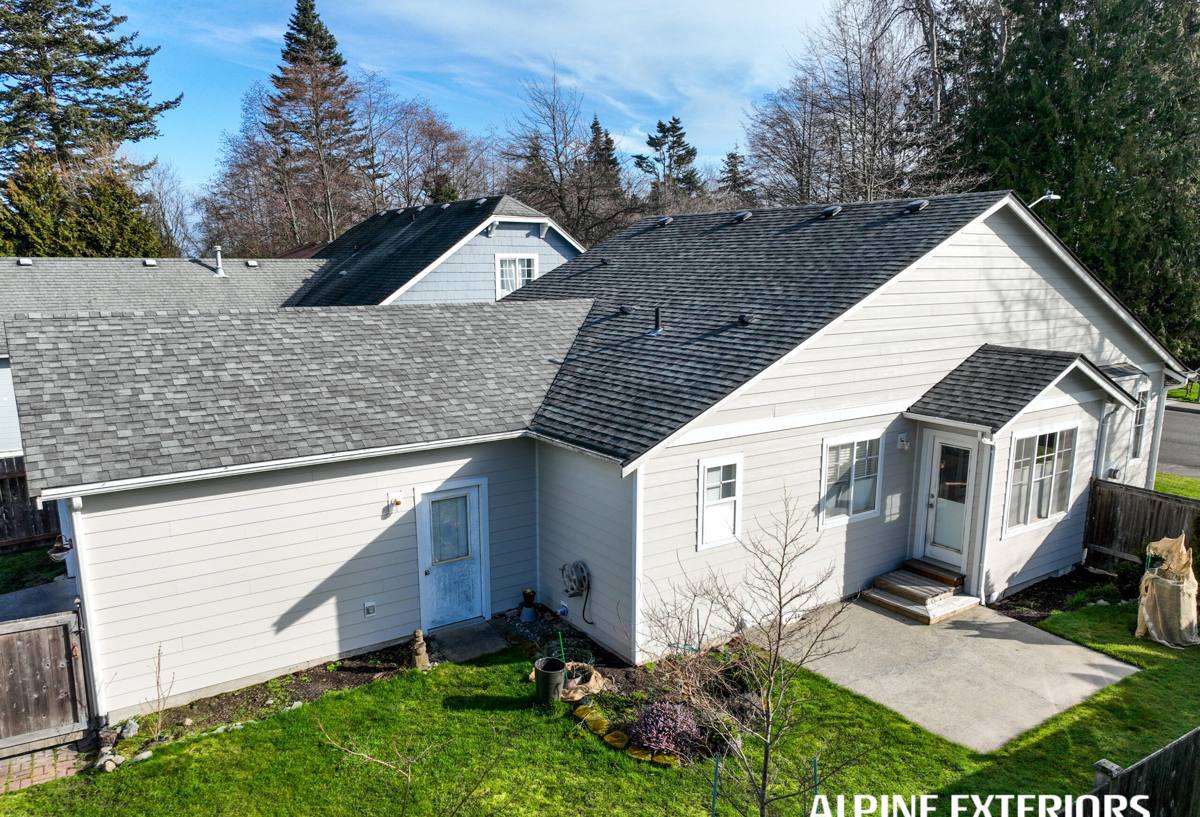
What Salt Air, Rain, and Moss Actually Do to a House
Salt Air
Airborne salt doesn't just sit on the surface of your siding — it works on anything metal it touches. Fasteners, flashing, and hardware that aren't rated for coastal exposure can start corroding years before they would inland. Salt also accelerates the breakdown of some paint films and can leave a dull, chalky residue on certain siding materials faster than in a drier climate.
Driving Rain
Wind-driven rain doesn't fall straight down — it gets pushed sideways into seams, laps, and trim joints. If a siding system doesn't have a proper drainage plane behind it, that water finds its way to the sheathing and framing, and you don't usually find out until there's a soft spot or a stain on an interior wall.
Moss and Algae
Constant dampness plus shade equals moss and algae, and it's not just a cosmetic problem. Moss holds moisture against a surface far longer than open air would, which is exactly the condition that lets rot start on wood-based products and lets mildew take hold on lower-quality coatings.
Why We Install Only James Hardie Fiber Cement Siding Here
We made a decision a while back to stop installing several products that are common in this region — vinyl, LP SmartSide, cedar, and primed spruce among them — and to install James Hardie fiber cement exclusively. That's not a marketing angle. It's because, house after house, the products we stopped installing show the same weaknesses in exactly the conditions West Anacortes has in abundance: moisture-driven swelling or rot at cut edges and seams, paint and coating failure years ahead of schedule, and maintenance demands that homeowners weren't told about up front.
James Hardie fiber cement is non-combustible, dimensionally stable when it gets wet, and comes from the factory with a baked-on ColorPlus finish that holds color and resists the kind of surface breakdown that lets moss and algae grip on. Hardie also engineers specific product lines — its HZ5 and HZ10 designations — for different climate zones, which matters in a region where "Pacific Northwest" covers everything from dry high desert to salt-air coastline.
How Hardie Compares to What We Used to Install
| Factor | James Hardie Fiber Cement | Vinyl | Wood / LP SmartSide |
|---|---|---|---|
| Moisture behavior | Dimensionally stable, engineered for wet climates | Doesn't rot, but can warp and gap, letting water behind it | Absorbs moisture at cut edges/seams; rot risk if coating fails |
| Salt air exposure | Resists surface breakdown; factory finish holds up | Can fade and become brittle over time | Coatings degrade faster near salt air, requiring earlier repainting |
| Moss/algae resistance | Smooth factory finish resists buildup better than raw or textured wood | Resists moss itself but seams and channels can trap debris and moisture | Textured surfaces and wood grain hold moisture, feeding growth |
| Fire rating | Non-combustible | Combustible | Combustible |
| Typical maintenance | Periodic wash, repaint on much longer cycle | Low, but replacement of cracked/faded panels is common | Regular repainting and edge sealing to prevent rot |
What Correct Installation Looks Like in This Climate
Fiber cement siding is only as good as the installation behind it, and that's especially true a few blocks from saltwater. A few things we treat as non-negotiable on every West Anacortes project:
- A drainage plane (weather-resistant barrier plus a rainscreen gap) so any water that gets past the siding has somewhere to go besides your sheathing
- Corrosion-resistant fasteners rated for coastal exposure, not standard interior-grade hardware
- Flashing at every window, door, and roofline intersection, lapped correctly with the water-resistive barrier
- Proper clearance between the bottom of the siding and grade, decks, or roof surfaces so splash-back and standing water don't sit against the board
- Factory-cut and factory-primed edges kept intact wherever possible, with any field cuts sealed per Hardie's installation requirements
Skip any one of these steps and you can end up with a house wearing a great product that still fails early — which is exactly the kind of half-measure we're trying to avoid by controlling the whole job ourselves rather than subcontracting it out piecemeal.
Siding Doesn't Work in Isolation — Roofing, Windows, and Decks Matter Too
Roofing
A roof that's holding moss or shedding granules faster than it should is often feeding moisture problems down the wall below it. Roof condition and siding condition are connected, especially on shaded, north-facing sections of a lot.
Windows
Old or poorly flashed windows are one of the most common paths for wind-driven rain to get behind an otherwise sound wall. When we're already opening up a wall for siding work, it's often the right time to address window flashing or replacement rather than resealing around a failing unit.
Decks
Decks close to the house take the same salt-air and rain exposure as the siding, and a deck with rot or failing ledger flashing can push moisture directly into the wall it's attached to. We look at decks as part of the whole exterior picture, not a separate project.
What a Typical West Anacortes Project Looks Like
Every house is different, but most siding projects in this area follow a similar sequence: an on-site inspection that includes checking for hidden moisture damage in the existing wall assembly, removal of the old siding, an assessment of the sheathing underneath (and repair if needed before anything new goes on), installation of the weather barrier and rainscreen, then the Hardie siding, trim, and finish work. We walk homeowners through what we find at each stage — if there's rot or moisture damage behind the old siding, you'll know about it and understand the options before we move forward, not after the fact.
Why a Local Crew Matters More Than It Might Seem
A crew that works Skagit County regularly knows which walls in a given neighborhood tend to hold moisture longest, which permitting steps the City of Anacortes and county require, and how to plan a job around the wet season instead of getting caught by it. That local familiarity shows up in small decisions — where to add extra flashing, how much rainscreen gap to use on a particularly exposed wall, when to recommend a broader inspection rather than a patch job — that a crew unfamiliar with this specific stretch of coastline might not think to make.
It also matters for warranty follow-through. James Hardie's product warranty is strong, but it's paired with an installer's workmanship, and a local company that's still around next year (and the year after) is the one that actually stands behind that combination if a question comes up down the road.
A Simple Maintenance Checklist for West Anacortes Homeowners
- Rinse siding, especially shaded or north-facing walls, once or twice a year to keep salt residue and moss spores from building up
- Keep gutters clear so overflow isn't running down the face of the siding
- Trim back vegetation and tree cover that keeps a wall damp and shaded longer than necessary
- Check caulking and flashing around windows and doors annually for gaps or cracking
- Have any dark streaking, soft spots, or bubbling paint looked at promptly rather than waiting — small moisture issues are far cheaper to fix early
If you're noticing moss buildup, tired paint, or just want a second opinion on the condition of your siding, roofing, windows, or deck, we're happy to take a look. Reach out for a free, no-pressure estimate using the form below.