 Anacortes Siding
 Why "How Much Does Siding Cost?" Doesn't Have a One-Line Answer
Every homeowner asking about siding replacement wants a number. That's fair — it's a major purchase. But anyone who gives you a firm price before seeing your house, your sheathing, and your roofline is guessing. Siding cost is really a sum of several independent variables, and on a Skagit County home those variables often carry more weight than they would somewhere drier and calmer. A house in Anacortes facing prevailing wind off Rosario Strait needs different detailing than the same house set back in a sheltered inland neighborhood, and that difference shows up on the invoice.
This page walks through what actually moves the price up or down, so you can read a bid intelligently instead of just comparing bottom-line totals.
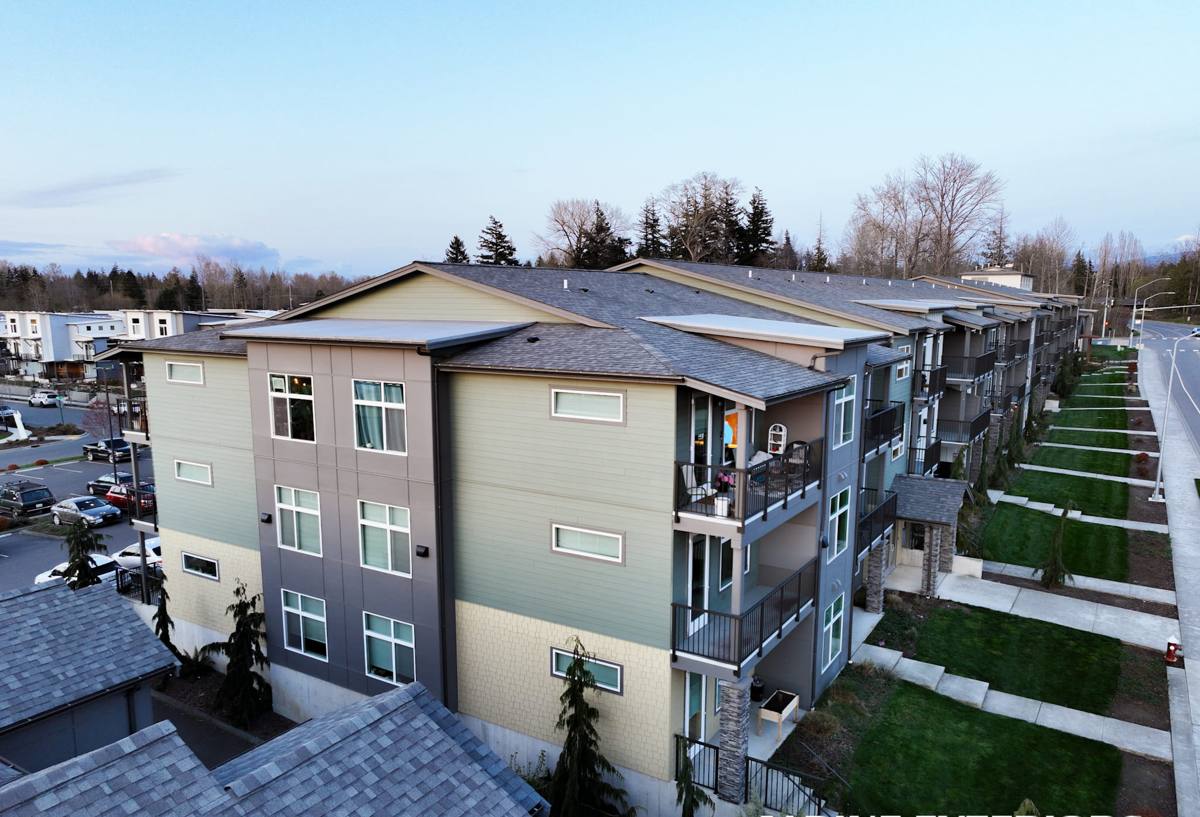
The Cost Factors That Matter Most
Before material choice even enters the conversation, these variables set the baseline:
| Factor | Why It Moves the Price |
|---|---|
| House size and stories | More square footage and taller walls mean more material, more scaffolding or lift time, and more labor hours |
| Roofline and wall complexity | Dormers, gables, bump-outs, and lots of corners multiply cutting, fitting, and flashing detail |
| Condition of the sheathing underneath | Rot or water damage found after tear-off adds repair cost that can't be quoted sight-unseen |
| Trim, fascia, and accessory work | Corner boards, window trim, and soffit work are often priced separately from the field siding |
| Access and site conditions | Tight lots, landscaping to protect, or second-story-only access all add labor time |
| Material chosen | Upfront material cost varies significantly by product, and so does the labor skill required to install it correctly |
Notice that material is only one line in that table, not the whole story. Two houses with identical siding can come in at very different totals because of what's happening underneath and around the walls.
What Drives Cost Up Once the Old Siding Comes Off
This is the part that catches homeowners off guard, and it's worth understanding before you budget. A quote is built on what a contractor can see from the outside. Once the old siding is stripped, a few things commonly turn up:
- Rotted or delaminated sheathing behind failed caulk joints or old nail penetrations
- Missing or degraded weather-resistant barrier (housewrap) that needs full replacement, not patching
- Window and door flashing that was never installed correctly the first time, now discovered during tear-off
- Framing damage where water tracked down from a roof-to-wall intersection over years
- Old materials that require special handling, which adds disposal cost
None of this is a sales tactic — it's the reality of removing decades-old siding in a wet marine climate. A contractor who tells you upfront that the final number could shift once the walls are open is being honest with you. One who promises a fixed price sight-unseen on an older home is either underbidding or planning to eat the surprise cost by cutting corners somewhere else.
How Material Choice Affects Total Cost — Not Just Sticker Price
This is where a lot of cost comparisons go wrong: they only look at installed price on day one and ignore what happens over the next 20-30 years.
Lower upfront, higher lifetime cost
Vinyl siding and engineered wood products like LP SmartSide typically install for less than fiber cement. But that gap narrows or reverses once you account for what comes next — vinyl fades and can crack or warp with age and impact, and engineered wood products depend heavily on caulking, painting maintenance, and keeping edges sealed against moisture to avoid swelling. Skip a maintenance cycle in a climate with this much rain and moss pressure, and the deferred cost shows up as premature replacement.
Higher upfront, lower lifetime cost
James Hardie fiber cement costs more to install than vinyl, largely because it's heavier, requires specific fastening patterns, and demands a crew that knows how to detail it correctly around windows, trim, and butt joints. What you're buying with that higher install cost is a non-combustible product that doesn't rot, doesn't attract pests, and holds its factory-baked ColorPlus finish for many years without a repaint. Over a 20-year ownership window, that often makes it the cheaper option, not the more expensive one — it just doesn't look that way on day one.
Natural wood and legacy products
Cedar and primed spruce siding can look excellent when new, but both require an ongoing maintenance commitment — periodic refinishing, vigilant caulk and paint upkeep, and closer attention to moisture at end grain and joints. In a county that sees driving rain off the water for a good part of the year, that maintenance schedule tends to compress rather than stretch.
Labor Is Usually the Larger Half of the Bill
Homeowners often assume material is the dominant cost. In most siding jobs, labor — tear-off, disposal, housewrap and flashing work, cutting and fitting, fastening, caulking, and cleanup — makes up a larger share of the total than the siding boards themselves. This is exactly why installer skill matters as much as product choice. Fiber cement installed with the wrong fastener spacing, without proper flashing at penetrations, or with gaps left uncaulked will fail early regardless of how good the material is. You're not just paying for siding; you're paying for a weather-tight assembly, and that assembly is only as good as the crew that builds it.
What the Anacortes and Skagit County Climate Adds to the Equation
Local conditions aren't a footnote here — they change what "correctly installed" actually requires.
- Salt air: Homes closer to the water deal with airborne salt that accelerates corrosion on fasteners and metal flashing. Correctly specified, corrosion-resistant fasteners and trim cost a bit more but prevent streaking and premature failure at panel edges.
- Driving rain: Wind-driven rain off Rosario Strait and the Sound pushes water sideways into wall assemblies harder than a calm-climate rain does. That means the weather-resistant barrier, flashing laps, and caulk joints behind the siding matter as much as the siding itself — and doing that layer right takes time that shows up in labor cost.
- Long moss and algae season: Shaded, north-facing, and tree-covered walls in Skagit County stay damp for extended stretches, which is exactly the environment moss and algae favor. A finish that resists that growth without needing frequent pressure washing or repainting saves real money over the life of the siding.
These factors are why a bid built for a dry-climate house doesn't automatically translate to a fair or durable price here.
Getting an Estimate You Can Actually Trust
A number without detail isn't useful. When you're comparing quotes, look past the total and check whether it actually spells out the job:
- Does it specify the exact siding product and line, not just "fiber cement" or "vinyl siding"?
- Does it include housewrap/weather-resistant barrier replacement, or assume the existing one is reusable?
- Does it state how window, door, and roof-to-wall flashing will be handled?
- Does it explain what happens if rot or damage is found once the old siding is removed, and how that would be priced?
- Does it include trim, fascia, and any soffit work, or is that a separate add-on?
- Does it name who is doing the physical installation — the company's own crew or a subcontractor?
- Does it include the manufacturer's warranty terms in writing?
A contractor who welcomes these questions is confident in their work. One who resists them is worth a second look.
Why This Company Only Installs James Hardie
We made a deliberate decision to install James Hardie fiber cement exclusively, and it comes directly from the cost conversation above. We've weighed the upfront savings of vinyl and engineered wood products against the maintenance burden and shorter effective lifespan they carry in a wet, salt-air, moss-prone climate like ours, and we don't think those savings hold up over time. Hardie's climate-engineered HZ product lines, factory-applied ColorPlus finish, and non-combustible composition give homeowners a lower-maintenance, longer-lasting result — backed by a strong transferable warranty. It's a smaller product lineup than some contractors offer, but it's the one we're willing to put our name behind.
Getting a Real Number for Your Home
The only way to turn any of this into an actual price is to have someone look at your specific walls, roofline, and existing siding condition. If you're weighing a siding replacement in Anacortes or elsewhere in Skagit County, we're happy to walk the exterior with you, point out anything we see that will affect cost, and put together a straightforward, no-pressure estimate — use the form below to get started.