 Anacortes Siding
 Siding Built for the Skagit Valley Climate
Sedro-Woolley sits in the Skagit Valley, tucked between the Cascade foothills and the tidal flats near Anacortes and the San Juan Islands. That geography gives the area its own weather personality: heavy fall and winter rain funneled up the valley, damp air that lingers into late spring, and enough shade and moisture on north-facing walls to keep moss and algae established most of the year. Homes closer to the water pick up salt-laden air on top of that, and even inland in Sedro-Woolley, the same wet, marine-influenced weather pattern that soaks Anacortes rolls through — just with a bit less direct salt spray and a bit more fog off the river bottoms.
Siding in this part of Skagit County isn't cosmetic. It's the layer standing between a house's framing and months of standing moisture, wind-driven rain, and the freeze-thaw cycles that show up on the colder valley mornings. Products that work fine in a dry climate can struggle here, and the installation details that get skipped in easier climates tend to surface as real problems within a few years in Sedro-Woolley.
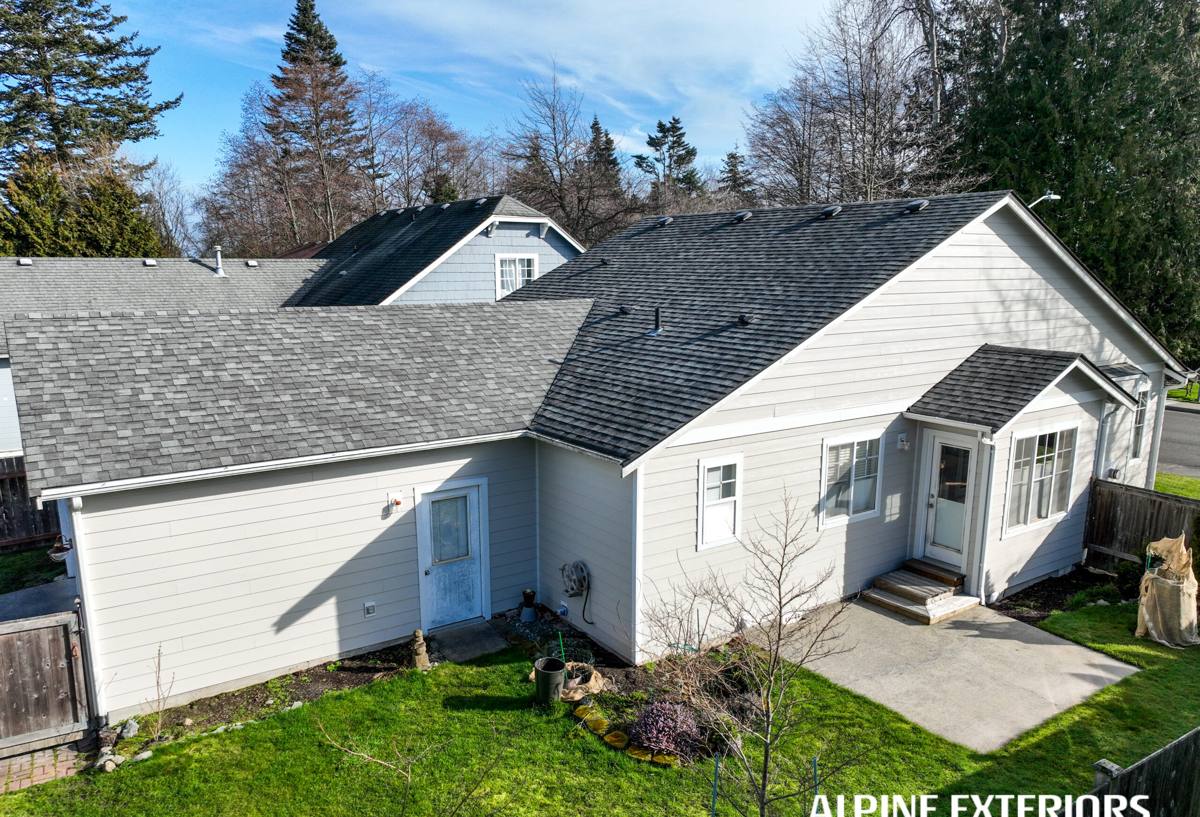
What Sedro-Woolley Homes Face Year-Round
Driving Rain and Wind-Loaded Walls
Storms coming up the valley don't just fall straight down — wind pushes rain sideways into wall assemblies, especially on the west and south exposures of a home. Siding seams, butt joints, and penetrations around windows and doors take the brunt of this. Any gap in flashing or caulking becomes a path for water to get behind the cladding, where it can sit against sheathing that never fully dries out between storms.
Moss, Algae, and Prolonged Dampness
Shaded siding and roof surfaces in Sedro-Woolley can stay damp for days after a storm passes. That extended moisture window is exactly what moss and algae need to take hold. On wood-based siding products, sustained dampness also feeds rot at the cellular level, even when the surface paint looks intact.
Temperature Swings and Material Movement
The valley sees more temperature swing than the immediate coastline — colder winter mornings, warmer summer afternoons. Siding materials expand and contract with those swings, and products that aren't dimensionally stable can develop gaps, cupping, or fastener issues over time.
Why We Install Only James Hardie Fiber Cement
We made a decision to install one siding system: James Hardie fiber cement. We don't offer vinyl, LP SmartSide, Cemplank, Allura, primed spruce, or cedar, and that's a deliberate standard, not a lack of options. Each of those alternatives has real strengths, but each also comes with a trade-off — moisture sensitivity, combustibility, maintenance burden, or a warranty structure that doesn't hold up as well over decades of Skagit Valley weather. Fiber cement is engineered specifically to resist the things that damage siding here: moisture absorption, pest activity, and UV breakdown.
What Makes Hardie's System Different
- Climate-engineered HZ5 formulation — Hardie's HZ5 product line is formulated for the Pacific Northwest's wet, temperate weather, which matters for a valley climate like Sedro-Woolley's.
- Non-combustible core — fiber cement doesn't contribute fuel to a fire the way wood-based products can, which is a meaningful consideration as wildfire smoke seasons have become more common east of the Cascades and occasionally affect air quality here.
- ColorPlus factory finish — the color is baked on in a controlled factory environment rather than field-painted, which produces a more consistent, longer-lasting finish than most on-site paint jobs.
- Dimensional stability — fiber cement doesn't swell and shrink with moisture and temperature the way wood or wood-composite products can, which matters given the valley's swing between soaked winters and warm, dry summer stretches.
- Strong transferable warranty — Hardie's warranty coverage is a major reason homeowners lean toward it when they're planning to stay in the home long-term or want that value protected at resale.
None of this means other products are worthless — cedar has real appeal, vinyl is inexpensive, LP SmartSide has improved over the years. But we install exteriors for a living in a climate that punishes shortcuts, and fiber cement is the product we're willing to warranty our workmanship against.
How Our Siding Installation Process Works
Fiber cement performs as well as its installation. A well-made board installed poorly will still fail early, so our process is built around the details that actually determine how the siding holds up in Sedro-Woolley's weather.
- On-site assessment. We look at your home's exposure — which walls take the most wind-driven rain, where shade keeps surfaces damp longest, and the condition of the sheathing underneath the existing siding.
- Moisture barrier and flashing. A correctly lapped weather-resistant barrier and properly integrated flashing around every window, door, and penetration is what actually keeps water out — the siding itself is the second line of defense, not the first.
- Proper fastening and clearances. Hardie specifies fastener spacing, gapping, and ground clearance for a reason; skipping those specs is the single most common cause of premature siding failure we see on homes we're asked to fix.
- Joint and seam treatment. Butt joints and trim intersections get sealed and detailed to shed water rather than trap it.
- Final inspection and cleanup. We walk the finished exterior before we consider the job done, checking reveal consistency, caulking, and trim lines.
Beyond Siding: Roofing, Windows, and Decks
Siding doesn't work in isolation — it's one piece of a home's exterior envelope. We also handle roofing, window replacement, and deck construction, because these systems interact directly with each other. A roof with a failing drip edge can send water straight down behind new siding. Old, poorly sealed windows undercut even a well-installed siding job around every opening. And a deck ledger board attached without proper flashing is one of the more common sources of hidden rot on homes throughout Skagit County.
For a Sedro-Woolley homeowner planning an exterior project, that means we can look at the whole envelope — roof, walls, windows, and any attached deck structures — rather than treating siding as a standalone item and missing a related problem next door to it.
Comparing Common Siding Materials
| Material | Moisture Resistance | Maintenance | Fire Resistance | Typical Lifespan |
|---|---|---|---|---|
| James Hardie Fiber Cement | High — engineered for wet climates | Low — factory finish, occasional wash | Non-combustible | 30-50+ years with proper install |
| Vinyl | Moderate — seams can trap moisture | Low, but can crack or warp over time | Combustible, can deform in heat | 20-30 years |
| LP SmartSide / Wood Composite | Moderate — engineered but still wood-based | Moderate — needs periodic caulk/paint upkeep | Combustible | 20-30 years |
| Cedar | Lower in sustained damp conditions | High — regular staining or sealing needed | Combustible | 15-30 years, install-dependent |
| Primed Spruce | Lower — prone to swelling if finish is compromised | High — repaint cycles required | Combustible | 10-20 years |
These figures are general industry ranges, not guarantees — actual performance always depends on exposure, maintenance, and installation quality. They're meant to illustrate why we standardized on one product rather than to make blanket claims about every manufacturer's line.
Signs Your Sedro-Woolley Home May Need Siding Attention
- Persistent moss or dark staining on siding that doesn't get direct sun, especially on north- and west-facing walls
- Soft or spongy spots when you press on siding near the bottom of walls or around window trim
- Visible cupping, warping, or separated seams on wood-based siding
- Paint that's peeling or bubbling in patches rather than fading evenly
- A musty smell in a room along an exterior wall, which can point to moisture getting in behind the siding
- Siding that flexes or feels hollow when tapped, which can indicate rotted sheathing underneath
Catching these early usually means a repair; catching them late usually means a full replacement. If you're seeing more than one of these signs, it's worth having someone look at the wall assembly, not just the surface.
What Drives Siding Project Cost
| Factor | How It Affects Cost |
|---|---|
| Home size and wall complexity | More square footage and more corners, gables, or trim details increase labor |
| Removal of existing siding | Tear-off and disposal of old material adds cost versus new construction |
| Sheathing or framing repair | Rot discovered once old siding comes off may need addressing before new siding goes on |
| Siding profile and trim selection | Wider plank exposures, board-and-batten accents, and custom trim add material and labor |
| Access and site conditions | Steep lots, tight side yards, or multi-story walls affect equipment and labor time |
We won't quote a number without seeing the home, but these are the variables that move a project up or down in price, and they're worth understanding before you compare estimates from different contractors.
Why a Local Skagit County Crew Matters
A contractor who works Skagit County regularly knows how differently wind and rain behave on a Sedro-Woolley valley lot compared to an Anacortes waterfront property, and details installation accordingly — flashing details, ventilation gaps, and fastening choices don't need to be re-explained or re-learned on each job. Being local also means we're available for warranty follow-up and honest answers about what a home actually needs, without a sales pitch attached to it.
If you're weighing a siding project — or roofing, windows, or a deck — in Sedro-Woolley, we're happy to take a look and give you a straightforward assessment. Fill out the form below for a free, no-pressure estimate.