 Anacortes Siding
 Windows Built for Edison's Specific Climate
Edison sits close enough to the water that salt-laden air is a daily fact of life, not an occasional nuisance. Combine that with the driving rain that comes off Samish Bay and the Sound, plus the long, damp Skagit County stretch from fall through spring when moss and mildew take hold on anything that stays wet too long, and you have one of the more demanding window environments in western Washington. Windows here don't just need to look good — they need to shed water fast, resist corrosion at every metal component, and keep performing after years of freeze-thaw cycles and wind-driven moisture pushing against the frame.
A window that's rated fine for a dry inland climate can fail early in Edison. Seals degrade faster in salt air, aluminum hardware pits and corrodes, and any gap in the flashing or sealant becomes an entry point for moisture that doesn't get a chance to dry out before the next storm rolls through. We treat every custom window job in Edison as a coastal-adjacent installation, not a generic replacement.
What "Custom" Actually Means for a Window Job
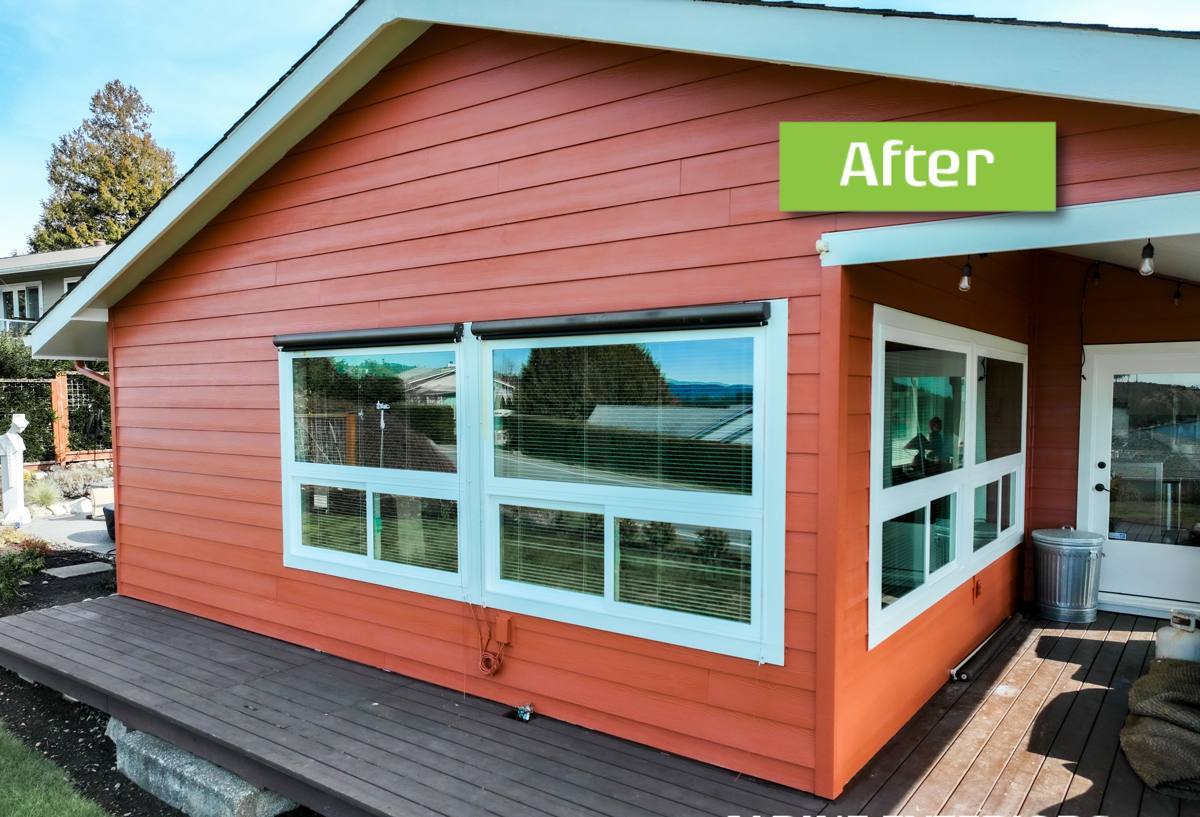
Custom windows aren't just windows cut to a non-standard size, though that's part of it. On older Skagit County homes especially, openings are rarely perfectly square or uniform, and a true custom approach accounts for that instead of forcing a standard unit into an opening that's slightly out of level or plumb. Custom also means choosing the right combination of frame material, glazing package, hardware, and trim for the specific wall it's going into — a window facing prevailing wind and rain off the water needs different detailing than one tucked on a sheltered side of the same house.
Where custom decisions matter most
- Frame material and finish — matched to sun exposure and moisture load on that wall
- Glazing package — clear, low-E, or specialty coatings depending on orientation
- Flashing and sealant detailing — the part that actually keeps water out over time
- Sizing and shape — for openings on older or non-standard construction
- Hardware — corrosion-resistant components near salt air exposure
Homes we commonly work on
Edison has a mix of older farmhouses on the flats, smaller cottages, and newer construction closer to town. Older homes often still have their original single-pane wood windows, sometimes with storm windows added later as a stopgap. Newer homes may have builder-grade vinyl units that were adequate at installation but weren't necessarily specified for this level of coastal exposure. Both situations call for a different custom approach, and we evaluate the home in front of us rather than applying a one-size answer.
Common Problems We See on Edison Windows
The same handful of issues show up again and again on homes in this area, almost always tracing back to age, moisture, or a combination of both:
- Fogged or failed double-pane glass — the seal between panes has broken and moisture has gotten between them; this can't be fixed, only replaced
- Swollen or rotted wood sashes — especially on original wood windows that have absorbed moisture over decades
- Sticking or hard-to-operate sashes — frame movement from moisture cycling, or paint and grime buildup in the tracks
- Corroded hardware — latches, cranks, and hinges that have pitted or seized from salt exposure
- Drafts and cold spots — failed weatherstripping or gaps that developed as the frame and wall settled
- Moss or black mildew staining around the frame exterior, a sign that water isn't draining away from the window properly
Any one of these can usually be addressed on its own, but when we see two or three showing up together on the same window, it's often more cost-effective in the long run to replace than to keep patching.
Choosing the Right Frame Material for This Climate
There's no single "best" window material for every home — it depends on the home's age, style, budget, and how directly exposed that wall is to weather off the water. Here's how the common options actually compare for a coastal Skagit County property like those in and around Edison:
| Material | Salt Air / Moisture Resistance | Maintenance | Best Fit |
|---|---|---|---|
| Vinyl | Good — won't corrode or rot | Low; occasional cleaning | Budget-conscious replacements, newer construction |
| Fiberglass | Very good — dimensionally stable, resists warping | Low | Homes wanting long-term performance and paintable finish |
| Wood (clad exterior) | Good on the clad side; interior wood still needs care | Moderate — interior finish upkeep | Historic or traditional-style homes wanting a wood interior look |
| Solid wood (uncladded) | Poor without diligent upkeep in this climate | High — repainting, sealing, ongoing rot watch | Strict historic preservation cases only |
| Aluminum | Poor unless marine-grade and well finished | Moderate to high | Rarely our recommendation for this specific climate |
We don't push one material on every job. If a homeowner wants to preserve the wood-window look of an older Edison farmhouse, we'll talk through what that upkeep actually looks like honestly, rather than pretending it's maintenance-free. If the priority is get-it-right-and-move-on, fiberglass or a quality vinyl system usually makes more sense.
Glazing and Energy Performance for the Pacific Northwest
Glass selection matters as much as the frame. In this climate, we're less worried about extreme heat and more focused on keeping interior warmth in, cutting down on condensation, and reducing the drone of wind and rain noise that comes with living close to open water.
What we typically recommend
- Double-pane, low-E glass with argon fill as the standard baseline for most Edison homes — a solid balance of performance and cost
- Triple-pane for homes with more direct wind and weather exposure, or where owners want the lowest possible heat loss and street/water noise
- Warm-edge spacers to cut down on condensation forming at the edge of the glass during cold, damp mornings
- Tempered glass where code requires it — near doors, low sills, and other hazard locations
Condensation on the inside of a window is usually a sign of a healthy, tight seal doing its job during a cold snap — it's condensation between the panes that signals a failed seal and a window that needs replacing.
Our Installation Process
Getting a custom window right is as much about the installation as the product itself. A quality window installed poorly will leak and fail early; a mid-range window installed correctly will often outperform it.
- On-site measurement and assessment — we check the opening, sill condition, and any existing water damage before recommending anything
- Material and glazing selection — walked through with the homeowner, including honest trade-offs between options
- Removal of the old window — done carefully to check the condition of the framing and sheathing underneath
- Repair of any hidden rot or damage found during removal, before the new window ever goes in
- Proper flashing and sealing — the step that determines whether the window stays watertight for years or starts leaking in the first bad storm
- Installation, leveling, and insulation around the frame
- Interior and exterior trim work to finish the job cleanly
- Final walkthrough — operation check on every window, sightlines, and cleanup
Skipping the flashing and sealing step, or rushing it, is the single most common reason window installations fail early in a climate like this. We don't shortcut it.
Maintaining Custom Windows in a Marine, Moss-Prone Climate
Even the best window benefits from a little seasonal attention here. A short checklist goes a long way toward getting the full lifespan out of a custom installation:
- Rinse salt residue and grime off exterior frames and glass a few times a year, especially after storms
- Check and clear weep holes (the small drainage openings at the base of the frame) so water doesn't pool
- Wipe down and lightly lubricate hardware — latches, cranks, hinges — to prevent corrosion from taking hold
- Inspect exterior caulking and sealant annually and touch up before gaps widen
- Remove moss or algae buildup around frames and sills promptly rather than letting it sit against the material
- Watch for soft spots in exterior trim or sills, a sign moisture is getting behind the surface
Why Local Experience in Edison and Skagit County Matters
Window work here isn't the same job as window work in a dry climate on the other side of the mountains, and it isn't quite the same as inland Skagit County either. A crew that regularly works properties near the water understands how far to size the flashing overlaps, which sealants actually hold up under sustained salt exposure, and how local wind patterns push rain into places a standard installation manual doesn't account for. That experience shows up in details — the pitch of a sill, the choice of sealant, the extra care around an exposed corner — that aren't visible on install day but decide whether the window is still performing correctly ten years from now.
We also know the practical side: permitting expectations for the area, what inspectors here typically look for, and how to sequence work around the wetter months so a home isn't left with an open wall during a stretch of driving rain.
Get a Straightforward Estimate
If you're dealing with foggy glass, a sticking sash, drafts, or you're just planning ahead for a home in Edison, we're happy to take a look and give you an honest read on what your windows actually need — no pressure, no upsell. Fill out the form below and we'll set up a time to come take a look.