 Anacortes Siding
 Skyline's Exposure Is Different From a Typical Anacortes Lot
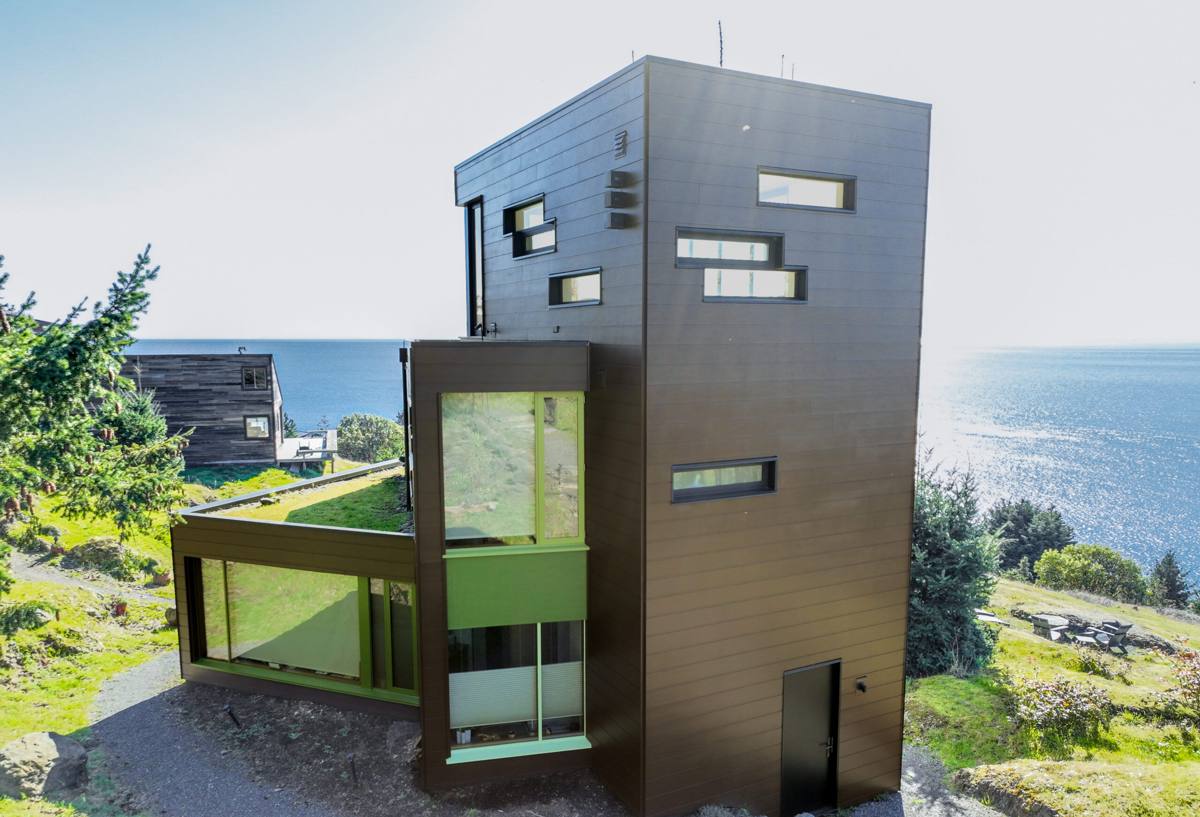
Homes in the Skyline area sit close to open water on Fidalgo Island, which means they take wind and moisture straight off the strait with little to break it up. That exposure changes what siding has to survive here compared to a house tucked into town or set back in the trees. Salt-laden air accelerates corrosion on fasteners and trim, wind-driven rain finds every gap in a poorly flashed wall, and the shade and dampness that come with our Pacific Northwest winters keep moss and algae active for most of the year. Skagit County's marine climate isn't unusual for the region, but a waterfront-facing lot in Skyline sees a more concentrated version of it than most inland neighborhoods.
None of that is a reason to panic about your siding — it's a reason to be specific about what you install and how it goes on. A product that performs fine in a sheltered subdivision can struggle on an exposed slope facing the water, and a rushed installation that would get away with minor flaws elsewhere tends to get found out fast in Skyline.
What Salt Air, Rain, and Moss Actually Do to Siding
It helps to separate the three stressors, because they attack a wall in different ways:
- Salt air is corrosive to exposed metal — nails, screws, flashing, and trim fasteners degrade faster near the water than they do a few miles inland.
- Driving rain doesn't just fall, it gets pushed sideways and upward under exposure, which means seams, laps, and penetrations (hose bibs, vents, light fixtures) take more water than a calm-weather rain event would suggest.
- Moss and algae take hold wherever moisture lingers — north-facing walls, shaded corners, and anywhere siding stays damp between rain events. Over years, moss holds water against the surface longer than it would otherwise sit there.
Any siding material can be damaged by one of these on its own. The problem in Skyline is that homes deal with all three, more or less continuously, for much of the year.
Why We Install James Hardie Here — Not as a Sales Line, as an Engineering Answer
We only install James Hardie fiber cement siding, and on a site like Skyline that's not a marketing preference — it's the material that holds up to the specific combination of conditions this location produces. Fiber cement is non-combustible and dimensionally stable, meaning it doesn't swell, cup, or rot the way wood-based products can when they take on repeated moisture. It doesn't provide the organic material that mold and some algae feed on the way wood fiber or wood-based composite siding can. And it holds a factory-applied finish far longer under UV and salt exposure than field-applied paint typically does.
James Hardie also engineers specific product lines for different climate zones, which matters more here than in a mild inland location.
HZ5 Engineering and Why It's the Right Call for This Area
James Hardie's HZ5 product line is engineered for regions that see freeze-thaw cycles combined with damp, wet weather — which describes Western Washington's marine climate well, including the Skagit County coastline. HZ5 panels are formulated to resist moisture-related damage in exactly these conditions, as opposed to HZ10 products engineered for hot, humid southern climates where the failure modes are different. Specifying the correct HZ line for the region is a basic step, but it's one that gets skipped by installers who order generic stock rather than region-appropriate product.
What a Correct Installation Actually Involves
The siding panel is only one part of the system. On an exposed Skyline lot, the details around it decide whether the wall performs for twenty-plus years or starts showing problems in five.
| Component | Why It Matters on an Exposed Lot |
|---|---|
| Weather-resistive barrier | A continuous, correctly lapped barrier behind the siding is the last line of defense if wind-driven rain gets past the cladding — critical on a wall facing open water. |
| Flashing at penetrations | Every vent, light, and hose bib is a potential entry point; proper flashing and sealant keep driving rain from tracking behind the panel. |
| Fastener choice | Corrosion-resistant fasteners, installed per manufacturer spec, matter more here than in a sheltered inland location where salt exposure isn't a factor. |
| Clearance and gaps | Correct clearance from grade, roofing, and decks keeps siding from sitting in standing water or splash-back, which is where moss and algae get their start. |
| Joint and seam treatment | Properly caulked and back-primed cut edges keep water from wicking into the panel core at seams — the most common place fiber cement fails when installed carelessly. |
Skip any one of these and the siding itself can be a perfectly good product installed in a way that shortens its life. This is where the difference between a fast crew and a careful one actually shows up.
Our Process for a Skyline Home
- Site walk and exposure assessment. We look at which walls take the most direct wind and rain, where moss is already established, and where past water damage shows up around trim, corners, or the roofline.
- Tear-off and substrate check. Removing the old siding lets us inspect the sheathing underneath for rot or hidden moisture damage before anything new goes on — covering up a wet wall is the single most common shortcut that causes callbacks.
- Weather barrier and flashing detail. We install and lap the barrier correctly and flash every penetration before a single piece of siding goes up.
- Hardie installation to manufacturer spec. Correct nailing pattern, clearances, and fastener type for HZ5 product, installed with the gaps and seams treated as specified.
- Trim, caulking, and final detail. The finish details — corners, trim boards, and caulked joints — are what keep water out at the seams for the long run.
- Walkthrough. We go over the finished work with the homeowner before calling the job done.
Living With Hardie Siding in a Moss-Prone Neighborhood
James Hardie siding doesn't eliminate the need for basic upkeep — no siding does — but it changes what that upkeep looks like. Because the ColorPlus factory finish resists fading and doesn't require repainting on the same schedule as field-painted wood or composite siding, most of what a Skyline homeowner needs to do is simple exterior housekeeping:
- Rinse siding periodically, especially on shaded north-facing walls where moss and algae take hold first.
- Keep gutters clear so overflow doesn't run down the wall face and keep it damp longer than necessary.
- Trim back vegetation that shades siding or holds moisture against it.
- Check caulked joints and trim every year or two and have any cracked or failed caulk redone before winter rains set in.
This is meaningfully less demanding than the maintenance schedule a wood-based or field-painted product needs in the same location, which matters when a home is exposed to this much weather for most of the year.
What We Don't Install Here, and Why
We don't install vinyl, LP SmartSide, Cemplank, Allura, primed spruce, or cedar siding, including on Skyline homes where the exposure makes the trade-offs sharper than usual. Vinyl can warp and become brittle under sustained UV and temperature swings, and its seams are a weak point for wind-driven rain to exploit. Wood-based composite and solid wood products are more sensitive to sustained moisture exposure than fiber cement, and a site that stays damp for much of the year is not where that sensitivity works in a homeowner's favor. These aren't universally bad products — they can be reasonable choices in the right setting — but on a lot like this, we've standardized on the material that holds up best to the conditions, and that's James Hardie.
Why Hiring a Crew That Already Works This Area Matters
Anacortes and the surrounding Skagit County coastline aren't a uniform climate — a lot facing open water behaves differently than one a half-mile inland, and a crew that hasn't worked exposed sites before can underestimate what the flashing and fastener details need to be. A crew that already installs in Skyline has seen where water tends to get in on homes like these, knows which walls take the worst of the weather, and doesn't have to guess at the right HZ product line or installation detail for the site. That local track record is worth more than a lower bid from a crew unfamiliar with what this stretch of coastline actually does to a house over time.
Questions to Ask Any Contractor Before You Hire
- Which James Hardie product line and HZ rating are you specifying, and why that one for this site?
- Will you inspect the sheathing for moisture damage before installing new siding?
- What's your plan for flashing around windows, vents, and other penetrations?
- What fastener type will you use, and is it rated for a coastal environment?
- Can you walk me through your clearance and gap details at grade, roofline, and decks?
A contractor who can answer these clearly, without hedging, is one who's done this work on homes like yours before.
If you'd like a straightforward look at what your Skyline home needs and what it would cost to do the job right, we're glad to walk the property with you and put together a free, no-pressure estimate — just fill out the form below.