 Anacortes Siding
 Decks in Skyline Take a Different Kind of Beating
Skyline sits up and out toward the water, which is exactly why homeowners bought there — and exactly why the decks take more abuse than a deck tucked into a sheltered Anacortes yard. Elevated, view-oriented homes catch more wind, more direct rain, and more salt-laden air off the water than homes set back in town. A deck built to a generic spec, or one that's just getting routine sun-and-rain wear elsewhere in Skagit County, often doesn't hold up the same way here. We've repaired enough decks in this part of Anacortes to know the failure points aren't random — they show up in the same spots, for the same reasons, year after year.
This page is about deck repair specifically — not full replacement, not a new build. Most decks we look at in Skyline don't need to be torn out. They need the right sections opened up, the right materials put back, and the right flashing and fastening done correctly so the repair actually outlasts the next few wet seasons.
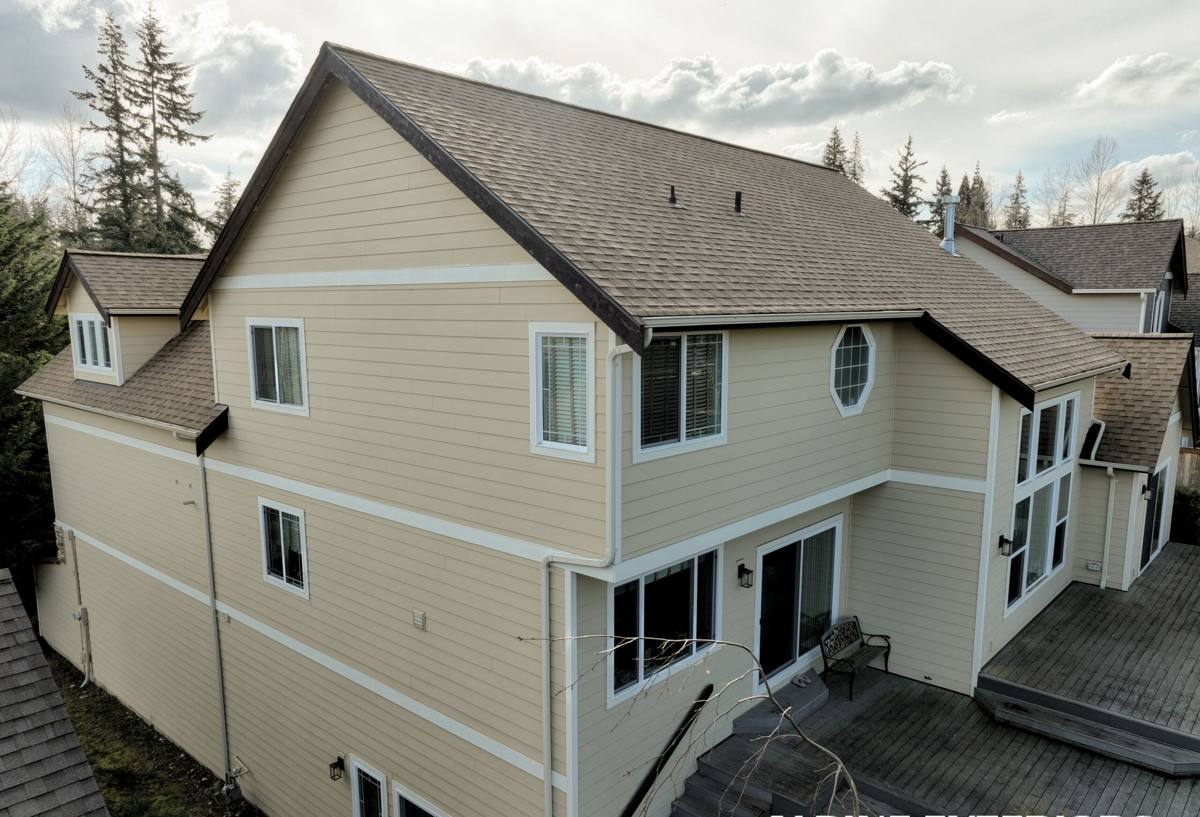
What Salt Air, Driving Rain, and Moss Season Actually Do
Salt Air and Metal Fasteners
Salt in the air accelerates corrosion on anything metal — nails, screws, joist hangers, bolts, and railing hardware. Standard fasteners that would last for years inland can start rusting and weakening well ahead of schedule this close to the water. Once a fastener corrodes, it loses grip, and a loose fastener means movement, and movement means the wood around it starts wearing too. This is one of the most common repair calls we get: hardware that's failed long before the wood around it actually needed to go.
Driving Rain and End-Grain
Anacortes gets a lot of sideways rain off the Sound, and elevated Skyline lots catch more of it than a sheltered yard would. Rain that drives in at an angle finds every gap — around ledger boards, at post bases, along stair stringers, and especially into end-grain (the cut ends of boards), which soak up water far faster than a flat face ever will. Left alone, that moisture doesn't just sit on the surface. It works into the wood fiber, and that's where rot starts.
Moss Season and Slip Hazards
Skagit County's long wet season means moss and algae get a real foothold on any deck surface that stays shaded or doesn't dry out between rains. Beyond looking bad, a mossy deck surface is a slip hazard, and moss holds moisture against the wood or composite surface longer than bare boards would, which speeds up wear underneath. Decks with heavy tree cover or a north-facing side see this worse than open, sun-exposed sections.
Signs Your Skyline Deck Needs Repair
Most homeowners call us after noticing one obvious problem, but a proper inspection usually turns up a few more. Here's what we check for and what you can look for yourself before calling:
- Soft, spongy, or springy spots underfoot — usually rot in the decking or the framing below it
- Boards that have cupped, split, or pulled away from their fasteners
- Rust streaks bleeding out around nail or screw heads
- A ledger board (where the deck attaches to the house) that looks dark, swollen, or has gaps at the flashing
- Railings or posts that wiggle more than they should when pushed
- Stairs that feel uneven, bouncy, or have visible gaps between stringer and tread
- Persistent moss or black staining that keeps coming back within weeks of cleaning
- Gaps or separation where the deck meets the house siding or trim
Any one of these on its own might be a minor fix. Several together — especially anything involving the ledger board or framing — is worth a real inspection before it turns into a bigger, more expensive problem.
Repair or Replace? How We Actually Make That Call
Nobody wants to pay for a full deck rebuild when a repair would do, and nobody wants a "repair" that's really just patching over a structural problem. We look at the framing first, because that tells us what's realistic.
| Factor | Usually Repairable | Usually Needs Replacement |
|---|---|---|
| Framing and joists | Solid to the touch, no soft spots, isolated damage near one area | Widespread soft or crumbling wood, sagging across multiple joists |
| Ledger board | Sound wood, flashing just needs correcting or resealing | Rotted ledger, water has been getting behind it for a long time |
| Decking surface | A handful of bad boards mixed in with sound ones | Most boards cupped, splitting, or worn thin across the whole deck |
| Posts and railings | Loose connections, minor surface wear | Rotted post bases, railings that fail a solid push test |
| Age and prior work | Deck is reasonably recent or was well-built originally | Old deck built without proper flashing or ledger attachment from the start |
The honest answer is that a lot of what looks like "the whole deck is bad" is actually a framing problem in one section combined with cosmetic wear everywhere else. We'll tell you plainly which category your deck falls into — we don't have any reason to talk you into a full rebuild if a targeted repair will genuinely hold up.
What a Correct Deck Repair Actually Involves
Ledger Board and Flashing
This is the single most important connection on any deck — it's where the deck ties into your house, and it's the number one spot we find hidden water damage in this area. A correct repair means pulling back enough siding or trim to check the flashing behind the ledger, not just caulking over the visible gap. Flashing that's missing, rusted through, or installed backward will keep letting water in no matter how good the surface repair looks.
Framing and Joists
Any joist or beam we find soft or compromised gets sistered (reinforced alongside a new piece of lumber) or replaced outright — we don't leave weakened framing under new decking just because it's hidden. This is also where we check joist hangers and connectors for corrosion, since salt air hits these fasteners hard even when the wood around them still looks fine.
Fasteners and Hardware
We use fasteners and hardware rated for coastal and treated-lumber exposure — stainless or heavy hot-dip galvanized, not the light-duty coated screws that show rust streaks within a season or two out here. This matters more in Skyline than it does further inland, and it's a detail that's easy to skip if a crew isn't used to building for this exposure.
Decking Surface and Railings
Individual boards get replaced to match the existing material as closely as possible, with attention to proper gapping so water can drain instead of pooling between boards. Railing posts get checked for solid attachment at the base — a railing can look fine on top and still be dangerously loose where the post meets the frame.
Our Deck Repair Process
- On-site inspection. We walk the whole deck, check under it where access allows, test the ledger and framing, and identify every problem area — not just the one you called about.
- Clear explanation and estimate. You get a plain-language rundown of what's actually wrong, what's cosmetic versus structural, and a written estimate before any work starts.
- Demo of the affected areas only. We open up what needs to be opened up — ledger, framing, decking, railings — without tearing into sections that are still sound.
- Structural correction first. Framing, flashing, and ledger issues get fixed before anything cosmetic goes back on. This is the part that determines whether the repair lasts.
- Rebuild the surface and hardware. New boards, fasteners, and hardware go in matched to the existing deck and rated for this climate.
- Final walkthrough. We check the deck with you, point out anything you should keep an eye on, and answer questions before we consider the job done.
Material Choices for a Skyline Repair
What we use to repair a section usually matches what's already there, but it's worth understanding the trade-offs if you're deciding how to move forward.
| Material | Strengths in This Climate | Trade-offs |
|---|---|---|
| Pressure-treated lumber | Affordable, widely available, easy to match to existing framing and decking | Needs regular sealing/staining to perform well against driving rain and salt air |
| Cedar | Naturally rot-resistant, ages well, common on Skagit County decks | Softer surface, still benefits from periodic finish maintenance |
| Composite decking | Resists moisture and moss buildup better than wood; low maintenance | Higher upfront cost; framing underneath still needs to be real, properly flashed wood |
| Fasteners/hardware | Stainless or hot-dip galvanized resist salt-air corrosion | Costs more than standard coated fasteners, but the alternative is repeat repairs |
Whatever the surface material, the framing, flashing, and fasteners underneath matter more to how long a repair lasts. A composite deck surface over poorly flashed framing will still fail — it'll just take a little longer to show it.
Maintenance That Extends the Life of a Skyline Deck
A good repair buys you years, but a little seasonal attention buys you more. This is the short list we give homeowners after a repair:
- Rinse or sweep off moss and debris regularly through the wet months, especially on shaded or north-facing sections
- Check and re-seal or re-stain wood decking on the schedule the product calls for — salt air and rain shorten the useful life of most finishes
- Keep gutters and downspouts clear so runoff isn't dumping extra water directly onto or near the deck
- Do a quick railing push-test and a walk-the-boards check once or twice a year
- Watch for gaps or discoloration where the deck meets the house — that's the ledger area, and it's worth catching early
Why Hiring a Crew That Already Works Skyline Matters
A deck repair that looks fine going in can still fail in two years if the crew doing it doesn't understand the exposure this part of Anacortes gets. We've worked enough homes in this area to know which fasteners hold up, where water actually gets in on an elevated, wind-exposed deck, and which repairs are cosmetic patches versus real fixes. That's not something you can tell from a quick estimate — it comes from having done the work here before and having gone back to see what held up and what didn't.
We also know Skagit County's building requirements and what a proper ledger and railing attachment needs to look like, so a repair we do isn't just cosmetic — it's built to actually hold.
If you've got a soft spot, a wobbly railing, a ledger board you're not sure about, or a deck that just isn't drying out and clearing moss like it used to, we're happy to take a look. Reach out for a free, no-pressure estimate using the form below, and we'll give you a straight answer on what your deck actually needs.