 Anacortes Siding
 Decks Built for Oak Harbor's Weather, Not Just Its View
A deck in this part of the Puget Sound region does a lot of work. It's where people actually spend time outdoors, but it also sits directly in the path of salt-laden air, wind-driven rain, and the long gray stretch of moss season that runs from fall through spring. A deck that isn't built with that reality in mind will look fine for a year or two and then start showing problems — soft spots, rusted fasteners, slick green boards, and rot hiding where you can't see it. We build and replace decks for homeowners in the Oak Harbor area with that climate as the starting assumption, not an afterthought.
This page is specifically about custom deck construction and replacement for this area. It's not a general "decks are great" pitch — it's what actually matters when you're building something that has to survive marine air and wet winters for the next 20-plus years.
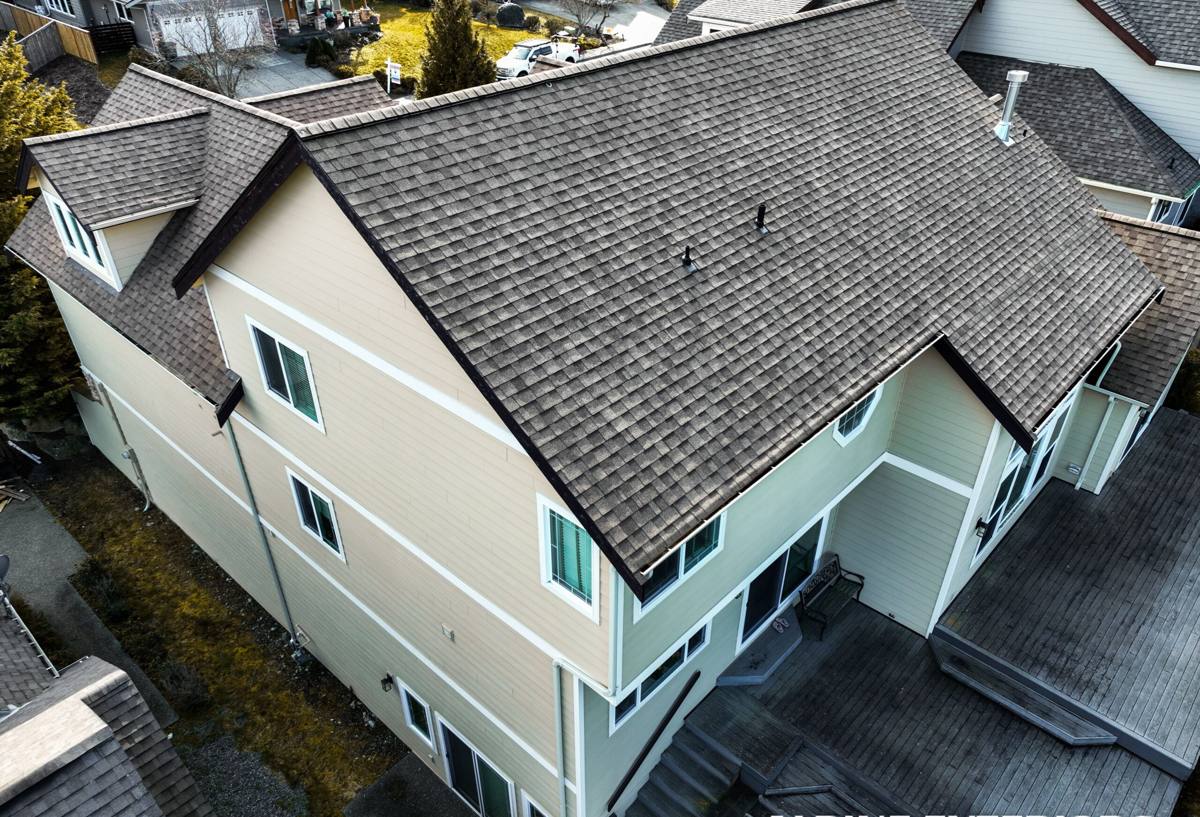
What Salt Air and Moisture Actually Do to a Deck
Homes near the water deal with a slower, quieter kind of wear than homes further inland. It's worth understanding before you decide on materials or design.
Fasteners and Hardware
Standard fasteners corrode faster in salt-influenced air. Screws, joist hangers, and structural connectors that aren't rated for coastal or ACQ-treated lumber exposure can start rusting within a few seasons, staining the decking around them and weakening the connection long before the boards themselves fail. This is one of the most common corner-cutting mistakes we see on older decks in this area.
Wood Decay and Moss
Wood decks here rarely fail because of one big storm. They fail because moisture sits in end grain, fastener holes, and the gaps between boards through months of drizzle and low sun angle, and fungal decay gets a head start it never loses. Moss and algae add to the problem — they hold moisture against the wood surface and turn stairs and low-traffic areas into a slip hazard, especially on north-facing decks that don't get much direct sun to dry out.
Composite and Vinyl Behavior
Composite and PVC decking don't rot, but they aren't immune to this climate either. Cheaper composite boards can still trap moisture in poorly ventilated framing below, and some early-generation composites are more prone to surface mold in shaded, damp conditions than people expect. Material choice matters, but so does how the whole system is built underneath.
Choosing a Decking Material That Makes Sense Here
There isn't one "best" decking material — there's a best fit for your budget, how much upkeep you're willing to do, and how exposed the deck is to weather. Here's how the common options actually compare in a marine climate like this one.
| Material | Moisture/Salt Resistance | Maintenance | Typical Lifespan | Relative Cost |
|---|---|---|---|---|
| Pressure-treated pine | Good if sealed and maintained | Annual cleaning, periodic staining/sealing | 15-20 years | Lowest |
| Cedar | Naturally decay-resistant, but softer | Regular sealing to hold color and resist checking | 15-25 years | Moderate |
| Capped composite | Excellent — sealed cap resists moisture and staining | Occasional washing, no sealing/staining | 25-30+ years | Higher |
| PVC/vinyl decking | Excellent — fully synthetic, no organic material to decay | Occasional washing | 25-30+ years | Highest |
For a lot of Oak Harbor homeowners, the honest trade-off comes down to this: wood costs less upfront but asks for consistent maintenance to hold up against the moss and moisture cycle, while composite and PVC cost more initially but largely remove that maintenance burden. We'll walk through which fits your situation and budget rather than pushing one product line.
What a Properly Built Deck Requires in This Climate
Framing and Ledger Attachment
The ledger board — where the deck attaches to the house — is the single most important connection on the whole structure, and it's also the most common point of failure when it's done wrong. It needs correct flashing that sheds water away from the house framing, proper fastener spacing, and hardware rated for the exposure. We treat this connection as non-negotiable regardless of what decking material sits on top.
Footings and Drainage
Footings need to sit below frost depth and on stable, well-draining soil. In areas with heavier clay or poor drainage, water can pool around posts and footings over a wet winter, which is exactly the condition that undermines a deck's structure over time. We grade and design footing placement around how water actually moves through your yard, not just where it's easiest to dig.
Fasteners, Flashing, and Ventilation
We use fasteners and structural hardware rated for the moisture and salt exposure typical of this area, install flashing at every point where decking meets the house or a vertical surface, and make sure there's enough airflow beneath the deck so framing can dry out between rain events instead of staying damp for weeks at a time.
Design Choices Worth Thinking Through
Beyond materials and structure, a few design decisions have an outsized effect on how well a deck holds up and how much you'll actually use it.
- Board orientation and gapping — spacing that's too tight traps debris and moisture; too wide feels unfinished and can be a hazard for small items or heels.
- Railing and guardrail height — required by code once a deck reaches a certain height off grade, and worth getting right the first time rather than retrofitting.
- Sun and wind exposure — a deck that's shaded most of the day will hold moss and moisture longer than one with more sun exposure; we factor that into material recommendations, not just layout.
- Covered vs. open sections — a partial roof or pergola over part of the deck can meaningfully cut down on how much rain and debris the boards see year-round.
- Stair and landing placement — these see the most foot traffic and the most water; they deserve the same attention as the main deck surface, not an afterthought.
Our Process, Start to Finish
We keep the process straightforward because a deck project shouldn't feel like a mystery.
- On-site assessment — we look at your existing deck (if replacing one), the site conditions, drainage, and sun/wind exposure specific to your property.
- Design and material discussion — we talk through layout, decking material, railing style, and budget honestly, including trade-offs between options.
- Written estimate — a clear scope of work and price before anything is scheduled, no vague allowances.
- Permitting — we handle the permit process where required so you're not left figuring out local requirements on your own.
- Construction — framing, footings, ledger attachment, and decking installed to the standard the climate here actually demands.
- Final walkthrough — we go over the finished deck with you, including care and maintenance guidance specific to the material you chose.
Maintenance That Actually Protects the Deck You Paid For
Even the best-built deck needs some seasonal attention in a climate with this much moss and rain. This isn't a sales list — it's genuinely what keeps a deck performing for its full lifespan.
- Sweep off leaves, needles, and debris regularly, especially in fall — trapped organic matter holds moisture against the surface.
- Rinse or lightly scrub moss and algae off boards and stairs before they build up, particularly on shaded sections.
- Check and re-seal wood decking on the schedule appropriate to that product, not just "when it looks dry."
- Inspect fasteners and hardware annually for rust staining or loosening, especially near the ledger and stairs.
- Keep gutters and downspouts near the deck clear so runoff isn't dumping directly onto or under the structure.
- Confirm under-deck ventilation isn't blocked by stored items, landscaping, or debris buildup over time.
Permits and Local Requirements
Most new deck construction and many deck replacements require a building permit, particularly when structural framing, footings, or railings are involved. Requirements around guardrail height, stair geometry, and footing depth are there for real safety reasons, not just paperwork. We handle the permitting side of the job as part of the process so you're not left navigating it alone, and we build to the code that applies to your specific property.
Why Work With a Crew That Already Builds Decks in This Area
A deck contractor who mainly works inland doesn't always plan for what salt air, driving rain, and a long moss season do to fasteners, wood, and drainage over time. A crew that's already familiar with this stretch of coastline knows to spec corrosion-resistant hardware without being asked, grade footings around how water moves through wet-winter soil, and recommend materials based on how much shade and moisture a specific site actually gets. That local familiarity shows up in the details that don't get noticed until years later — the ones that decide whether a deck needs major repair at year eight or is still solid at year twenty-five.
If you're planning a new deck or need to replace one that's showing its age, we're happy to take a look and walk you through honest options for your property. Reach out for a free, no-pressure estimate using the form below.