 Anacortes Siding
 Burlington's Climate Is Hard on Decks
Burlington sits back from the water in the Skagit Valley, but it still gets the same marine weather system that soaks the rest of Skagit County. Moisture-laden air moves up from Skagit Bay and Puget Sound, driving rain settles into every seam and fastener hole, and a moss season that can run eight or nine months out of the year coats anything that doesn't get direct sun. Add in cooler, wetter shoulder seasons and decks here take a beating that dry-climate builders never have to think about.
A deck built for a drier region, or built without enough attention to drainage and flashing, will show problems in Burlington years before it would somewhere else. That's not a knock on the homeowner — it's just what this climate does to wood, fasteners, and connections that aren't detailed for it.
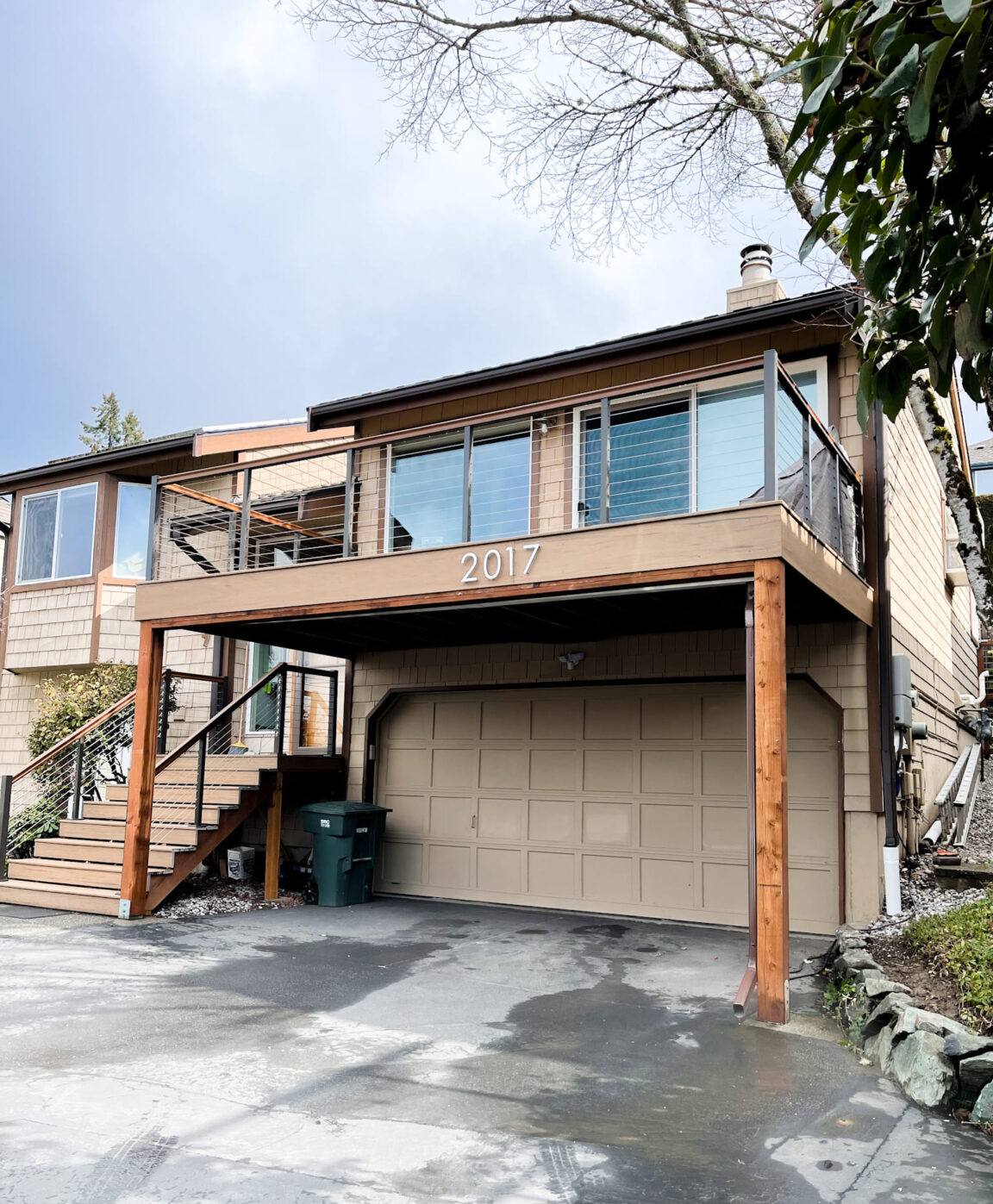
Signs Your Burlington Deck Needs Repair, Not Just a Wash
Some deck issues are cosmetic and some are structural. Knowing the difference matters before you spend money on the wrong fix. Walk your deck and check for these:
- Soft, spongy, or springy spots in the decking boards when you walk across them
- Dark staining or streaking around fasteners, especially near the house band board
- Gaps opening up where the deck meets the house, or where stairs meet the ground
- Rust streaks bleeding out of screw heads, joist hangers, or bolts
- Railings or guardrails that flex, wobble, or feel loose when you lean on them
- Moss or algae buildup that stays damp for days after rain, not just overnight
- Visible daylight or gapping between the ledger board and the house wall
- Posts that look solid at eye level but feel soft when you press a screwdriver into the base
Any one of these can be minor on its own. Several at once usually means water has been getting into the structure for a while.
What's Actually Failing: The Problems We Find Most Often
Ledger Board and Rim Joist Rot
The ledger board — where the deck bolts into the house — is the single most common failure point we find on repair calls. If it wasn't flashed correctly when the deck was built, water works its way behind it every time it rains and never fully dries out between storms. By the time staining shows up on the siding above the deck, the wood behind it has often been wet for years.
Rusted or Failing Fasteners
Screws, nails, and joist hangers that weren't rated for exterior or coastal-adjacent exposure corrode from the inside out. You'll see the rust bleed before the fastener actually lets go, which is why we treat rust streaks as an early warning sign rather than something to just clean off.
Post Bases and Footings
Wood posts that sit directly on concrete, or in contact with soil that stays damp for months, wick moisture up from the base. The top of the post can look fine while the bottom eighteen inches has gone soft. This is a structural issue, not cosmetic, and it's one of the reasons we check post bases on every repair visit even if that wasn't the original complaint.
Moss, Algae, and Surface Deterioration
On top of the structural issues, moss and algae hold moisture against the decking surface itself, which accelerates checking, splintering, and slip hazards on stairs and walking surfaces. It's rarely the only problem on an older deck, but it's usually the most visible one.
Repair or Replace? How We Make That Call
Not every deck problem means starting over, and not every deck is worth patching. We look at where the damage is, how much of the structure it affects, and what the deck is built on before recommending either direction.
| Factor | Usually Repairable | Usually Needs Replacement |
|---|---|---|
| Decking boards | A few boards soft or split, framing underneath solid | Most boards failing across the whole surface |
| Ledger board | Localized rot caught early, house framing unaffected | Widespread rot reaching into house rim joist or wall framing |
| Posts and footings | One or two posts affected, footings sound | Multiple posts soft, footings undersized or cracked |
| Railings | Loose connections, isolated post rot | System doesn't meet current guardrail spacing or height code |
| Age of structure | Under 15 years, built with adequate flashing | Original construction lacked flashing or proper ledger attachment |
When the framing is sound, targeted repair is almost always the more honest recommendation — it costs less and the deck keeps its useful life. When the rot has reached the ledger connection to the house or multiple structural posts, patching around it just delays a bigger problem, and we'll tell you that directly.
What a Correct Deck Repair Involves
A repair that actually holds up in this climate goes past swapping out the boards you can see. We open up the area around any rot to confirm how far it's traveled, because surface damage rarely tells the whole story. That means checking the ledger flashing, inspecting joist hangers for rust and undersizing, and confirming post bases and footings are still doing their job before anything gets closed back up.
Where flashing is missing or was installed wrong the first time, we correct it as part of the repair — there's no point replacing rotted wood and leaving the same water path in place. Fasteners get upgraded to corrosion-resistant hardware rated for exterior exposure, not whatever was on the shelf when the deck was originally built. And any guardrail or stair work gets brought up to current code spacing while we're in there, since that's a safety issue, not a preference.
Our Process for Burlington Deck Repairs
- On-site inspection — we check decking, framing, ledger, posts, footings, and railings, not just the spot you called about
- Honest scope — you get a clear explanation of what's structural versus cosmetic, and what repair versus replacement would each involve
- Written estimate — a straightforward breakdown before any work starts, no surprise add-ons mid-project
- Repair work — rot removed back to solid wood, flashing corrected where needed, hardware upgraded, structure reassembled to current standards
- Final walk-through — we test railings, check stair stringers, and confirm drainage is directing water away from the structure before we call it done
Materials and Fasteners We Use
For framing repairs, we match or upgrade to pressure-treated lumber rated for ground or structural exterior contact, since standard treated lumber isn't always rated for the connections that take the most moisture. For decking surfaces, homeowners in this area typically choose between cedar, which looks great but needs regular maintenance to handle the moss and moisture cycle, and composite decking, which costs more up front but resists the rot and staining issues that come with our wet seasons.
Fasteners are where a lot of older decks fail, so we use stainless steel or hot-dip galvanized hardware rated for exterior and ground-contact exposure rather than standard coated screws. It costs a little more, but replacing rusted fasteners twice costs a lot more than doing it right once.
Why a Crew That Already Works Burlington Matters
Deck repair done wrong in this climate doesn't just look bad — it fails again within a few years because the underlying moisture problem was never solved. A crew that works Skagit County regularly knows to check the ledger flashing first, knows which fastener grade actually holds up here, and isn't guessing at how much rot travel to expect once we open a wall up. That's the difference between a repair that lasts and one that's a temporary patch.
We also know what local permitting expects for structural deck work and guardrail code, so repairs that touch the structure or railings get done to a standard that holds up to inspection, not just to the eye.
Keeping Your Repaired Deck Lasting
Once repairs are done, a little seasonal upkeep goes a long way in this climate. Sweep debris off the surface before it traps moisture, keep gutters and downspouts clear so water isn't dumping near the deck footings, and treat or reseal wood surfaces on the schedule the material calls for rather than waiting until moss takes hold again. Catching a soft board or a rust streak early is a five-minute fix; ignoring it for another wet season usually isn't.
If you're noticing any of the warning signs above, or it's just been a long time since anyone looked underneath your deck, we're happy to come take a look. Estimates are free, there's no pressure, and you'll get a straight answer about what your deck actually needs — use the form below to get started.