 Anacortes Siding
 Asphalt Shingle Roofing Built for Sedro-Woolley's Climate
Sedro-Woolley sits in the Skagit River valley, close enough to the Salish Sea to catch salt-tinged marine air and far enough into the foothills to sit under heavy tree cover for much of the year. That combination is hard on a roof. An asphalt shingle roof that's installed correctly and maintained on schedule can handle this environment for decades. One that's installed with shortcuts, or ignored once it's up, will show problems years before it should. This page covers what asphalt shingle roofing actually needs to hold up in Sedro-Woolley, what a correct installation looks like, and how we approach the work here.
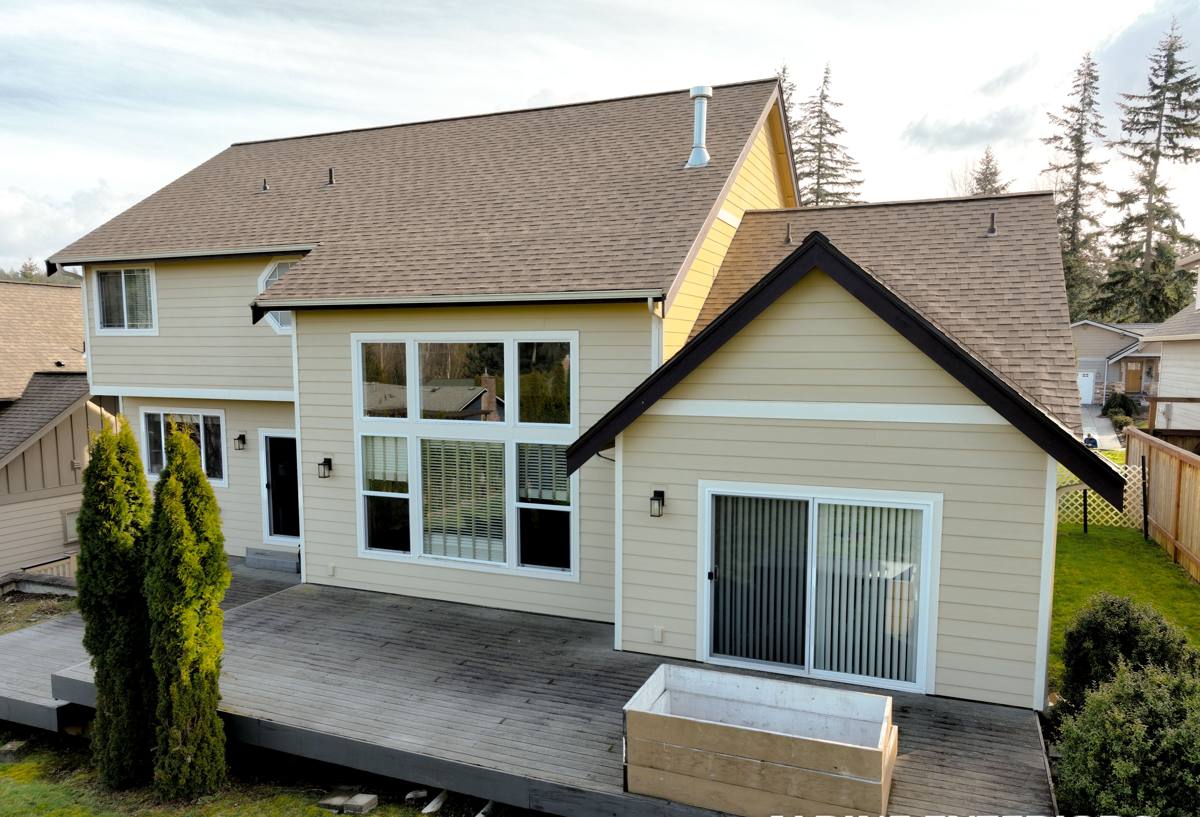
What This Climate Does to an Asphalt Shingle Roof
Three things wear on roofs in this part of Skagit County more than almost anywhere else in the state:
- Driving rain. Winter storms here don't just fall straight down — wind pushes rain sideways under shingle tabs, into fastener holes, and along flashing edges. A roof that's fine in a light rain can leak in a wind-driven one if the underlayment and flashing details weren't done right.
- Salt-carrying marine air. Air moving inland off the Salish Sea carries a fine salt content that accelerates corrosion on exposed metal — nails, flashing, vent boots, and gutter hardware. Standard fasteners and thin-gauge flashing degrade faster here than in a dry inland climate.
- A long moss season. Cool, damp shade from mature trees and short winter daylight hours mean moss and algae have months to establish themselves on north-facing slopes and anywhere debris collects. Left alone, moss lifts shingle edges and holds moisture against the roof deck year-round.
None of this means asphalt shingles are the wrong choice for Sedro-Woolley — they're the most common roofing material in Skagit County for good reason. It means the installation details and the maintenance schedule matter more here than they would in a milder, drier climate.
What a Correct Asphalt Shingle Installation Involves
A shingle roof is a system, not just a layer of shingles nailed to plywood. Skipping any piece of the system is where leaks start, usually two or three winters after the roof went up — long after the shortcut is out of sight.
Deck inspection and prep
Before anything new goes down, the roof deck underneath needs to be checked for soft spots, delamination, and rot — especially around old vent penetrations and valleys where water has been sitting the longest. Any compromised sheathing gets replaced, not covered over.
Underlayment and ice-and-water protection
A synthetic underlayment goes down as the roof's real waterproof layer beneath the shingles. In valleys, around chimneys and skylights, and along eaves, we use self-adhering ice-and-water shield — a step that matters more here than in drier parts of the state because those are exactly the spots where driving rain and pooling water find their way in.
Flashing and fasteners
Step flashing at walls, counterflashing at chimneys, and corrosion-resistant fasteners are non-negotiable in a marine-influenced climate. Cheap or reused flashing is one of the most common causes of a "mystery leak" on an otherwise good roof.
Nailing pattern and shingle exposure
Manufacturer-specified nailing patterns exist because they've been wind-tested. Sedro-Woolley gets its share of winter windstorms, and a shingle that's hand-nailed off-pattern or overdriven is the first one to lift or blow off.
Ventilation
Balanced intake and exhaust ventilation keeps the attic dry and temperature-stable, which protects both the shingles from the underside and the deck from trapped moisture. This gets its own section below because it's commonly overlooked.
Choosing the Right Shingle for This Climate
Asphalt shingles come in a few basic tiers. The right one depends on your roof's exposure, how long you plan to be in the home, and how much upfront cost you want to weigh against long-term durability.
| Shingle Type | Typical Lifespan | Wind Resistance | Best Fit |
|---|---|---|---|
| 3-tab | Shorter end of the range | Lower | Budget-conscious projects, secondary structures |
| Architectural / laminate | Mid-to-long range | Higher, thicker construction | Most Sedro-Woolley homes — the standard recommendation |
| Premium / designer | Longer end of the range | Highest available in asphalt | Steep-slope, highly visible roofs, or homeowners prioritizing longevity |
For most homes in this area, we point people toward architectural (laminate) shingles. They're heavier, they shed driving rain better than a flat 3-tab profile, and most carry algae-resistant granule treatments — worth having given how long moss and algae have to work on a roof here. 3-tab shingles still have their place on a tight budget or a low-visibility structure, but we're upfront that they'll need attention sooner in this climate.
Ventilation and Moisture Control Matter as Much as the Shingles
A shingle roof fails from the inside as often as it fails from weather hitting the surface. Without enough intake ventilation at the eaves and exhaust at the ridge, humid indoor air gets trapped in the attic, condenses against the cold underside of the roof deck, and slowly rots sheathing and rafters from below — invisible until it isn't. In a climate as damp as Sedro-Woolley's, an under-ventilated attic is one of the more common causes of premature roof failure we see, and it's rarely obvious from the ground. Part of our process on every roofing job is checking existing ventilation and correcting it if it's inadequate, not just replacing what's on top.
Moss, Algae, and Debris: Ongoing Maintenance
Even a well-installed roof needs upkeep in this environment. The maintenance items that matter most here:
- Clearing needles, leaves, and moss buildup from valleys and north-facing slopes, ideally before the wet season sets in
- Keeping gutters and downspouts clear so water isn't backing up under the eave line
- Trimming back overhanging branches to reduce shade, debris, and abrasion on the shingle surface
- Treating moss growth appropriately rather than scraping or pressure-washing it, which can strip protective granules and shorten shingle life
- A periodic visual check of flashing points — chimneys, vent boots, skylights — since these are where small leaks start
None of this is difficult, but it's easy to let slide, and moss especially does its damage slowly and quietly. A roof that gets this basic attention every year or two will consistently outlast one that doesn't.
Signs Your Roof Needs Repair or Replacement
Homeowners in Sedro-Woolley usually catch roof problems in one of two ways: a visible leak inside, or a visual red flag from outside. Worth checking for:
- Granules collecting in gutters or at downspout outlets — a sign shingles are wearing down
- Shingles that are curling, cracking, or visibly lifting at the edges
- Dark streaking or thick moss coverage, especially on shaded slopes
- Soft spots or sagging when walking the attic or viewing the roofline from the ground
- Daylight visible through the roof deck from inside the attic
- Water stains on interior ceilings, especially near chimneys, skylights, or exterior walls
- Missing shingles or exposed fasteners after a windstorm
Any one of these is worth a look before the next wet season. Catching a flashing or ventilation issue early is a repair; ignoring it for a year or two often turns it into a full section of deck replacement.
Our Process for Sedro-Woolley Roofing Projects
We treat every roof here the same practical way: inspect first, be honest about what's actually needed, and don't cut corners on the parts that don't show. That generally looks like:
- An on-site inspection of the existing roof, deck, flashing, and ventilation — not just a look from the driveway
- A clear explanation of what's failing, what's still sound, and what your realistic options are, including repair versus full replacement
- A written estimate that spells out materials, scope, and timeline before any work starts
- Tear-off and deck repair where needed, done before new material goes down — never over existing damage
- Full installation of underlayment, ice-and-water protection, flashing, ventilation corrections, and shingles to manufacturer specification
- A final walkthrough so you know exactly what was done and what maintenance to expect going forward
Why a Crew That Already Works Sedro-Woolley Matters
Roofing crews that mostly work drier, inland climates tend to build to a generic standard — and generic standards leave gaps in a place like this. A crew that regularly works Sedro-Woolley and the surrounding Skagit County area already knows which details can't be skipped: the extra ice-and-water coverage in valleys, corrosion-resistant fasteners for the marine air, ventilation that accounts for a long wet season, and a maintenance conversation that actually mentions moss instead of treating it as an afterthought. That familiarity shows up in fewer callbacks and a roof that behaves the way it's supposed to through its first few real Skagit County winters, not just on a clear day during the walkthrough.
If your roof is showing wear, due for replacement, or you just want an honest read on its condition, we're glad to take a look. Use the form below to request a free, no-pressure estimate.