 Anacortes Siding
 Windows Built for the Skyline Exposure
Skyline sits up on the bluff, which is exactly why people bought there — the views are worth it. But that same exposure means homes in this part of Anacortes take a harder hit from weather than houses tucked into town or down along the flats. Wind comes off the water with salt in it, rain drives sideways more often than it falls straight down, and the tree cover that shades other neighborhoods gives way here to more open, wind-scoured lots. Windows are one of the first things on a house to show that wear, and one of the most expensive things to get wrong.
This page is about custom window work specifically for Skyline homes — not a general product pitch. If you live up here, you already know your house doesn't weather quite like a house three miles inland. We build our recommendations around that.
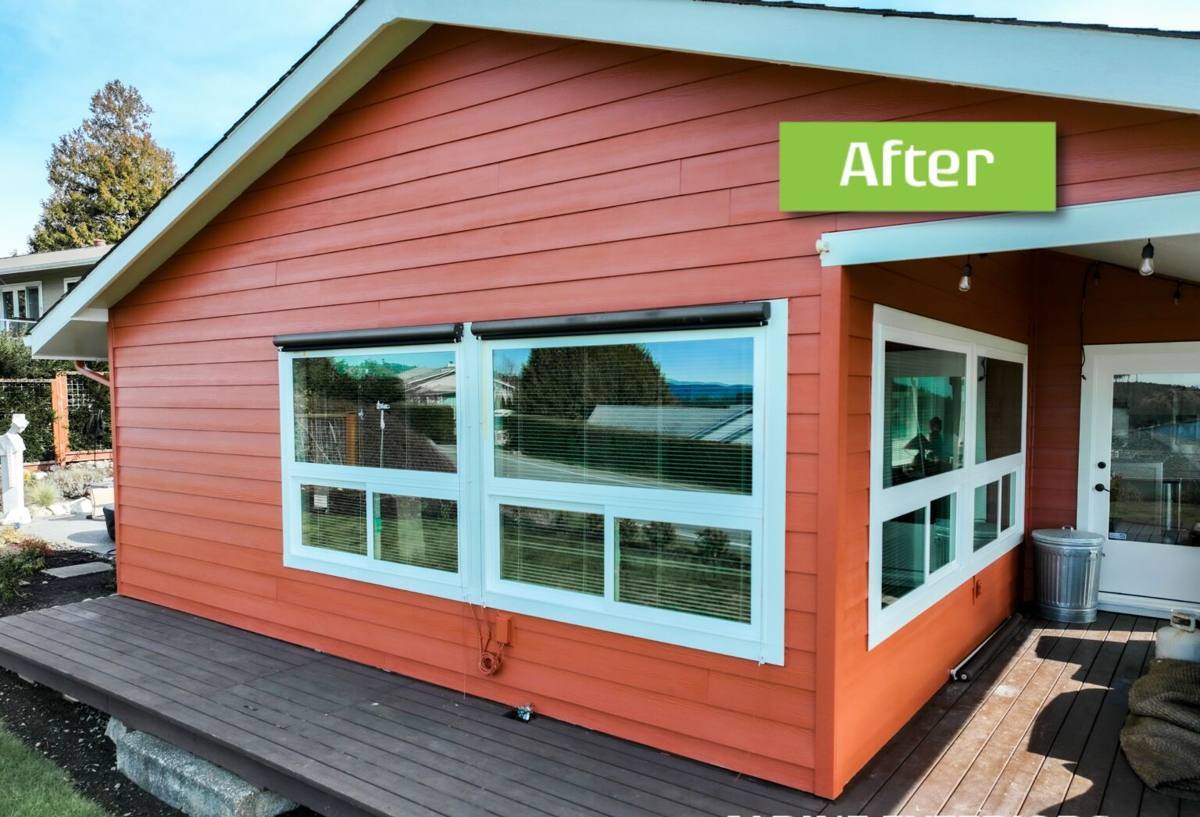
What Salt Air, Driving Rain, and Moss Season Actually Do
Three things define the Skyline climate load on a window, and they compound each other over a Skagit County winter.
Salt Air
Airborne salt from the Sound settles on everything, including window hardware, aluminum trim, and any exposed fasteners. Over years it accelerates corrosion on lower-grade metal components — hinges, cranks, and cladding fasteners — well before the glass or frame itself would normally need attention. It's slow, so it's easy to miss until a window won't latch cleanly or a locking arm seizes up.
Driving Rain
Bluff-top exposure means wind-driven rain hits window assemblies at an angle, not straight on. That matters because a lot of window failures aren't glass failures — they're flashing and sealant failures where wind pressure pushes water sideways and upward into gaps that would never see water on a calmer site. A window that performs fine on a sheltered lot can leak on a Skyline lot if the installation detail wasn't built for that wind-driven load.
Moss Season
Anacortes gets a long wet season, and moss doesn't just grow on roofs — it colonizes window sills, trim, and anywhere moisture sits without drying out. Once moss and the organic debris it holds get established against wood trim or under a poorly sealed sill, they hold moisture against the surface for weeks at a time. That's how rot starts on window frames that otherwise look fine from a distance.
Signs a Skyline Home Needs Window Attention
Most homeowners don't think about their windows until something is visibly wrong, but the early signs are usually smaller and easier to catch during a normal walk around the house.
- Sills or lower corners of wood trim that feel soft or spongy when pressed
- Visible moss or dark staining building up on sills, especially north- and west-facing windows
- Hardware that's stiff, corroded, or won't latch flush anymore
- Condensation building up between panes on double-glazed units — a sign the seal has failed
- Drafts you can feel at the frame edge during a windy south or southwest storm
- Paint that's bubbling or peeling specifically around the window opening, not the wall generally
- Visible daylight or gaps around the frame from outside
Any one of these on its own isn't an emergency. Several of them together, especially on the weather-facing side of a Skyline home, usually means it's worth a look before the next wet season.
What a Correct Installation Actually Involves
Custom windows fail less often because of the window unit itself and more often because of how the opening was prepped and flashed. This is where a bluff-exposed home needs more attention than a sheltered one, not less.
Opening Prep
Before a new window goes in, the rough opening gets checked for existing rot, verified square and level, and cleared of any old, failed sealant or flashing tape that could trap moisture behind the new unit. Skipping this step is the single most common reason a "new" window still leaks two winters later — the frame is new, but the water path behind it was never fixed.
Flashing and Weather Barrier Integration
The flashing has to shed water down and out, layered correctly with the house wrap so nothing is taped in a way that channels water into the wall cavity. On wind-exposed elevations we pay particular attention to head flashing and end dams, since that's where sideways-driven rain finds its way in on a standard installation that wasn't built for this kind of wind load.
Sealant and Fastener Choice
Given the salt air, we use fasteners and hardware rated for coastal exposure rather than standard-grade components that corrode faster here than they would on an inland install. Sealants are chosen for UV and moisture performance over the long term, not just a clean finish on install day.
Insulation and Air Sealing
The gap between the window frame and the rough opening gets properly insulated and air-sealed — not stuffed with fiberglass, which settles and leaves gaps, but sealed in a way that stays put and doesn't compress over time.
Material and Glass Choices That Make Sense for This Site
There's no single "best" window material — the right choice depends on how exposed your particular elevation is and how much upkeep you want to take on.
| Frame Material | How It Handles This Climate | Upkeep |
|---|---|---|
| Vinyl | Doesn't corrode or rot; handles moisture and salt air well | Low — occasional cleaning |
| Fiberglass | Very stable in temperature swings and wind load; strong moisture resistance | Low |
| Wood (clad exterior) | Good look, but exterior cladding must stay intact to protect the wood core from moss and moisture intrusion | Moderate to higher — watch cladding seams |
| Aluminum | Strong but more prone to corrosion pitting under sustained salt exposure unless properly coated | Moderate |
On glass, double-pane with a low-E coating is the practical baseline for this area — it cuts heat loss during our long wet-season stretch and helps with the glare off the water on clear days. Argon-filled units add a bit more performance for a modest cost increase. Triple-pane is worth discussing on the most wind-exposed sides of a Skyline lot, but it's not something every window on the house needs — we'll tell you honestly where it earns its cost and where it doesn't.
Our Process, Start to Finish
- On-site assessment: We look at each opening individually, not just the house as a whole — exposure varies window to window even on the same wall.
- Honest scope: We tell you which windows genuinely need replacement now, which can wait, and which just need resealing or hardware service.
- Product selection: We walk through frame and glass options against your budget and how exposed that specific opening is.
- Removal and opening inspection: Old units come out carefully so we can check the framing underneath before anything new goes in.
- Correct installation: Flashing, sealing, insulation, and hardware done to the standard this site actually requires.
- Final walkthrough: We check operation, seal lines, and finish work with you before calling the job done.
What Drives the Cost
Every Skyline home is different, so we won't quote a number without seeing the openings, but these are the factors that actually move the price.
| Factor | Why It Matters |
|---|---|
| Frame material | Vinyl and fiberglass generally cost less upfront than clad wood; wood adds a finish-and-maintenance factor |
| Number of openings | Whole-house replacement typically has a better per-window cost than a handful done separately |
| Existing rot or framing damage | Any rebuild work behind the old window adds labor before the new unit even goes in |
| Window size and configuration | Large picture windows and specialty shapes cost more than standard operable sizes |
| Glass package | Low-E, argon fill, and triple-pane each step the price up incrementally |
| Exposure of that elevation | Wind-facing sides may need upgraded flashing detail and hardware, adding modest labor |
Why It Matters That We Already Work Skyline
A crew that mostly installs windows on sheltered, inland lots will build to a general standard — and that standard is often fine for those houses. It's not always enough for a bluff-top Skyline home taking direct wind-driven rain off the Sound. Knowing which elevations on this specific neighborhood take the worst of it, how fast moss establishes on a north-facing sill here versus a south one, and which hardware actually holds up against the salt air over years rather than months — that's the kind of thing you only know from having done the work here repeatedly, not from a manufacturer's install manual.
We also know this stretch of Skagit County's permitting and code expectations for window replacement, so there are no surprises partway through the job.
Maintenance That Actually Extends the Life of the Job
A correct installation only stays correct if it's looked after. For Skyline homes specifically, we recommend:
- Rinsing sills and hardware periodically to clear salt buildup, especially on wind-facing sides
- Clearing moss and organic debris off sills and trim before it has a chance to hold moisture
- Checking exterior caulk lines once a year for cracking, particularly after the first winter
- Operating hardware occasionally through the off-season so cranks and latches don't seize
- Watching paint or clad finish near the frame for early bubbling, which usually means water is getting in somewhere
None of this takes long, and it's far cheaper than dealing with rot or a failed seal down the road.
Get a Straight Answer on Your Windows
If you're not sure whether your Skyline home's windows need replacement, resealing, or nothing at all right now, we'll come take a look and tell you honestly what we see. Estimates are free, there's no pressure, and you'll get a clear picture of what your specific exposure calls for — use the form below to get started.