 Anacortes Siding
 Building New in March Point: Why Window Choices Made Now Matter for Decades
March Point sits close enough to the water and to Fidalgo Bay that new-construction homes here face a different set of conditions than a build twenty miles inland. If you're framing a new home or working with a builder on a spec house in this area, the windows you choose and how they're installed during rough-in will shape how much maintenance that house needs for the next thirty years. Get it right at new construction and you get decades of quiet performance. Get it wrong and you're chasing leaks, fogged glass, and rotting trim within a decade — problems that are far more expensive to fix once siding, trim, and interior finishes are already closed up around the window.
We work new-construction window installs in and around Anacortes regularly, and March Point jobs come with a specific set of considerations tied to exposure, moisture, and the way Skagit County's weather moves through the seasons. This page covers what we actually look at on a March Point new-build, not generic window-buying advice.
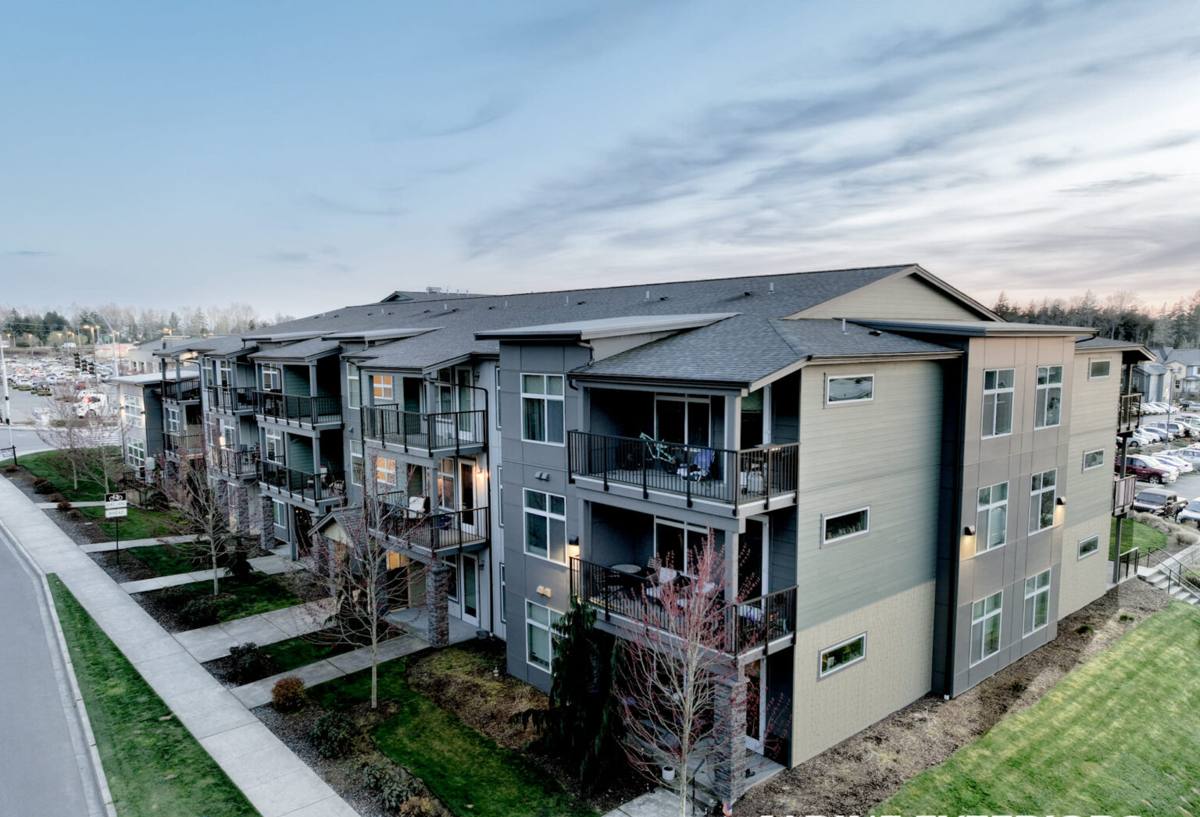
What March Point's Climate Actually Does to a New Window Install
Three conditions drive almost every decision we make on a new-construction window job in this area:
Salt Air
Proximity to saltwater accelerates corrosion on anything metal — hinges, cranks, screws, flashing, and lesser-grade hardware all degrade faster here than they would in a dry inland climate. On a new build, this matters most in the hardware and fastener selection, since those components are far easier to spec correctly up front than to replace after the siding is on.
Driving Rain
Storms coming off the Sound don't just fall straight down — wind-driven rain hits window openings at an angle, which means flashing and sealant details that would be adequate in a calmer climate aren't enough here. Water finds the smallest gap in a nailing flange or a poorly lapped house wrap, and on new construction that gap gets sealed inside the wall assembly where nobody sees it until there's a stain on the drywall years later.
Moss and Sustained Moisture Season
Skagit County's long wet stretch keeps north-facing and shaded surfaces damp for months at a time. On window installs, this shows up as moss and mildew building up in sill tracks, on exterior trim, and in any spot where water is slow to drain or dry. A new-construction install that doesn't account for drainage and airflow around the window is setting up a moss and rot problem before the house is even a year old.
What a Correct New-Construction Window Install Actually Involves
New-construction windows go in before the exterior finish, which is both an advantage and a responsibility. The advantage is that we have full access to the rough opening, the water-resistive barrier, and the sheathing — nothing is hidden yet. The responsibility is that whatever we do here gets buried under siding and trim, so it has to be right the first time.
A correct install, in order, looks like this:
- Rough opening check — squareness, level sill, and correct sizing before the window ever touches the opening.
- Sill pan flashing installed first, sloped to drain water outward, not into the wall cavity.
- Window set, shimmed level and plumb, and fastened per the manufacturer's schedule — not a generic pattern.
- Side and head flashing integrated with the water-resistive barrier in the correct shingle-lap order, so water is always directed down and out, never trapped behind a layer.
- Head flashing with a drip cap detail, critical given how much wind-driven rain this area sees.
- Sealant used only where it belongs — good flashing does the water management; sealant is a backup, not the primary defense.
- Interior air sealing at the rough opening, which affects both energy performance and condensation control.
Skip or rush any one of these steps and the window itself can be a premium product and still fail early. Most of the window callbacks we see in this region trace back to flashing sequence errors, not defective glass or hardware.
Choosing Materials for This Exposure
Frame material matters more on a coastal-influenced build than it does further inland. Here's how the common options hold up under March Point conditions specifically:
| Frame Material | Salt Air Behavior | Moisture / Moss Resistance | Maintenance Load |
|---|---|---|---|
| Vinyl | Won't corrode; hardware quality varies by manufacturer | Good — non-porous, resists moss growth on frame | Low |
| Fiberglass | Excellent — inert to salt exposure | Very good, dimensionally stable in wet swings | Low |
| Aluminum-clad wood | Cladding protects wood but seams need monitoring | Good if seals hold; wood core vulnerable if breached | Moderate |
| Bare wood | Poor without diligent upkeep — hardware corrodes, wood swells | Requires regular refinishing to resist moss and rot | High |
We don't push homeowners toward a single "correct" answer here — a well-detailed wood window can perform fine in this climate if the owner is committed to maintaining the finish. What we do insist on is being honest about that maintenance burden up front, rather than letting a homeowner discover it five years in when the sill starts showing rot at the corners.
Glass and Performance Considerations
For new construction in this region, we typically recommend dual-pane, low-E glass as a baseline, with the specific coating and gas fill chosen based on the home's orientation. South and west-facing openings that get more direct sun benefit from a different low-E package than shaded north-facing walls, which are more about heat retention than solar control. This isn't a place to guess — it's worth spending a few minutes with your window supplier's glass package options before locking in an order for a whole house.
How the Process Works With a Builder or Owner-Builder on a March Point Job
New-construction window work almost always involves coordinating with a general contractor's schedule, so our process is built around fitting into that timeline cleanly rather than becoming the bottleneck.
- Rough opening walkthrough before window order is finalized, catching sizing or framing issues while they're still cheap to fix.
- Confirming the water-resistive barrier and flashing plan matches the siding system going on afterward — window flashing has to integrate with what comes next, not just stand on its own.
- Scheduling install for a dry weather window whenever possible, since setting windows into an open sheathing wall during a heavy rain event invites exactly the kind of moisture intrusion we're trying to prevent.
- Photo documentation of flashing and sealing steps before they're covered by siding, so there's a record of what's behind the finish if any question comes up later.
- Final walkthrough with the builder or owner to confirm operation, hardware function, and that every opening is square and sealed correctly.
We work with a lot of the same builders repeatedly around Anacortes, and that familiarity helps — everyone already knows how flashing sequencing and siding tie-in are supposed to work on these jobs, which cuts down on the back-and-forth that slows other projects down.
Common Mistakes We See on New-Construction Window Jobs
Most window problems on new builds in this area aren't caused by the window itself. They're installation sequencing errors that are invisible until the siding comes off years later. The most common ones:
- Flashing installed in the wrong order, so water gets directed behind the barrier instead of over it.
- Sill pans skipped or improvised with sealant alone, which fails long before proper flashing would.
- Fasteners that aren't corrosion-resistant enough for this exposure, leading to staining and hardware failure years down the line.
- Gaps around the rough opening left unsealed on the interior side, causing condensation and energy loss even when the exterior is watertight.
- Window openings sized or framed out of square, forcing the window to be installed under stress, which shortens the life of seals and operating hardware.
Maintenance a New Window Actually Needs in This Climate
Even a correctly installed window benefits from some seasonal attention, especially given the moss and moisture season this part of Skagit County gets. A short annual routine keeps a new-construction window performing the way it should for the long haul:
| Task | Frequency | Why It Matters Here |
|---|---|---|
| Clear debris and moss from sill tracks and weep holes | Twice yearly, more on shaded elevations | Blocked weep holes trap water against the frame |
| Inspect exterior caulk lines for cracking | Annually | Driving rain finds even hairline gaps over time |
| Lubricate hardware and check for corrosion | Annually | Salt air accelerates hardware wear |
| Check for condensation between panes | Ongoing / as noticed | Early sign of a failed seal |
None of this is heavy work, but it's worth doing on a schedule rather than waiting for a problem to show up.
Why Hiring a Crew That Already Works March Point Matters
A window installer who mainly works drier, inland conditions can still do competent work, but they're often applying a general-purpose approach to a site that doesn't forgive general-purpose flashing details. A crew that already works this specific stretch of Skagit County — the exposure March Point gets off the water, the way wind-driven rain hits certain elevations harder than others, the pace at which moss builds up on shaded sills — brings judgment calls to the job that come from having seen how installs in this exact area hold up five and ten years later, not just from a manufacturer's install guide.
That local experience shows up in small decisions: which elevations get extra flashing attention, which hardware grades are worth the upcharge here versus not, and where sealant is doing real work versus just looking finished. None of that is exotic knowledge, but it only comes from doing this work in this place, repeatedly.
What to Ask Before Hiring for a New-Construction Window Job
If you're vetting contractors for a March Point build, a few questions separate a crew that understands this climate from one that's just installing windows the same way everywhere:
- Do you install sill pan flashing on every opening, or only when asked?
- How do you sequence flashing with the water-resistive barrier and siding system we're using?
- What fastener and hardware grade do you spec for coastal-exposure sites?
- Can you walk me through how you'd handle a north-facing, shaded elevation differently from a south-facing one?
- Do you document flashing details with photos before they're covered by siding?
A contractor who can answer these specifically, rather than generically, is usually one who's done this work enough times in this exact climate to have opinions about it.
Get a Free Estimate for Your March Point Build
If you're framing a new home in March Point or working with a builder who needs a window subcontractor who already understands this site's exposure, we're glad to walk the plans or the framed opening and put together a straightforward, no-pressure estimate. Use the form below to get started.