 Anacortes Siding
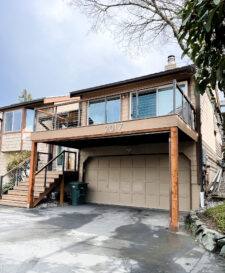
 Skyline sits up on the bluff on the west side of Anacortes, and any deck built there has to deal with more than a typical backyard project. Homes up on that bluff catch wind and rain coming straight off the water, along with the salt-laden air that goes with it, and the same damp, shaded conditions that grow moss on roofs and siding around here work just as hard on an exposed deck. We build decks throughout Skagit County, and a Skyline lot is one of the more demanding sites we work on — the framing, the hardware, and the decking surface all need to be chosen and installed with that exposure in mind, not picked off a generic materials list that was never tested against this kind of weather.
What a Skyline Deck Is Up Against
A deck on a bluff lot takes weather differently than one tucked into a sheltered, tree-lined yard farther inland. Wind off the water drives rain sideways into ledger connections, railing posts, and any joint where two materials meet. Salt carried in that same air accelerates corrosion on fasteners and structural hardware faster than it would a few miles inland. And the region's long stretch of mild, wet months gives moss and algae plenty of time to establish themselves on any decking surface that stays shaded or doesn't dry out between rains.
Moisture and Wood Decay
Wood-framed decks are vulnerable to rot wherever water collects and doesn't drain or dry out — end grain, fastener holes, and the top of joists where decking boards sit flush against them are the usual failure points. On an exposed bluff lot, repeated wet-dry cycling through the wet season speeds this up. Framing lumber that isn't rated for ground contact or sustained exposure, or that's missing joist protection, tends to show soft spots and decay well before a homeowner expects it to.
Fastener and Hardware Corrosion
Standard fasteners and connectors corrode faster in salt-influenced air than most homeowners expect. On a Skyline deck, that shows up as rust streaking down decking boards, seized or weakened structural screws, and joist hangers that lose strength well before the wood around them fails. This is one of the most common shortcuts we see on older or budget-built decks in this area — the decking material looks fine, but the hardware holding it together underneath has quietly been failing for years.
Moss, Algae, and Slippery Surfaces
Shaded sections of a deck, or any deck under mature trees, hold moisture long enough for moss and algae to take hold, which is both a maintenance headache and a real slip hazard on stairs and walking surfaces. Bluff-facing decks that get more open exposure to sun and wind tend to dry out faster and see less of this, but they trade that for more direct UV exposure and wind-driven rain, so the climate challenge doesn't disappear — it just shows up differently depending on how the deck sits relative to the water and tree cover.
Decking Material Options for a Skyline Deck
There's no single right answer for every deck — budget, how much upkeep you want to take on, and how long you plan to stay in the home all factor into the decision. What matters is understanding how each material actually behaves in this specific climate before you choose.
| Material | Moisture & Salt Behavior | Typical Maintenance | Realistic Lifespan Here |
|---|---|---|---|
| Pressure-treated wood | Resists rot reasonably well when properly sealed; end grain and fastener holes are vulnerable points | Higher; needs periodic cleaning and re-sealing or staining | 10-15 years before major repair or replacement |
| Cedar | Naturally moisture- and insect-resistant but softer and less durable under sustained coastal weathering | Higher; regular finish maintenance to prevent graying and checking | 10-20 years depending on upkeep |
| Composite decking | Won't rot; some earlier-generation boards were prone to surface mold in persistently damp, shaded spots | Low; occasional washing | 25-30 years |
| PVC / capped composite | Fully moisture-resistant, doesn't absorb water, holds up well against salt exposure | Low; occasional washing | 25-30+ years |
Pressure-treated wood is the lowest up-front cost and remains a reasonable choice for homeowners who don't mind the maintenance schedule, but it's the material that demands the most attention on an exposed lot like Skyline. Composite and capped composite decking cost more initially but hold up with far less upkeep against the combination of salt air, driving rain, and shade this neighborhood sees. We'll walk you through the real trade-offs for your specific lot rather than steering you toward whichever product is easiest to sell.
What's Underneath Matters More Than the Decking Surface
The decking boards are what you see and walk on, but the structure underneath them is what determines whether the deck is actually safe and how long it lasts. This is where we see the biggest gap between a deck that's built to hold up in this climate and one that isn't.
Ledger Attachment and Flashing
Where a deck attaches to the house, the ledger board and its flashing are doing critical work keeping water out of the wall behind it. On a wind-exposed bluff lot, a poorly flashed ledger connection is one of the most common sources of hidden water damage — not to the deck itself, but to the wall framing and siding behind it. This detail has to be done correctly the first time, because problems here often go unnoticed until there's already rot in the house wall.
Footings and Post Bases
Footings need to be sized and set to local frost depth and soil conditions, and post bases need to keep the post end off the ground and away from standing water. On a sloped or bluff-adjacent lot, footing placement also has to account for drainage and grading so water isn't channeled toward the structure.
Fasteners and Structural Hardware
Given how much salt air accelerates corrosion here, we use fasteners and structural connectors rated for coastal or exterior exposure rather than standard hardware. It costs more up front and makes no visible difference on install day, but it's the difference between hardware that's still sound in fifteen years and hardware that's already rusting and losing strength in five.
Deck Design Choices That Matter on an Exposed Bluff Lot
Beyond materials, a handful of design decisions matter more on a Skyline-type lot than they would on a sheltered inland property. Railings and any taller structural elements need to be built to handle real wind load, not just the minimum most decks see. Decking board spacing and orientation affect how quickly water drains and how fast the surface dries between rains, which directly affects moss growth and slip risk. And where a deck sits relative to sun, wind, and existing tree cover changes which problems you'll actually deal with — more open exposure means more UV and wind-driven rain, more shade means more moisture retention and moss. We look at each of these factors on your specific lot rather than applying one generic layout to every job.
Our Deck Building Process
Every deck we build in Skyline follows the same core process, adjusted for the specific site and what the homeowner wants:
- Site evaluation and design — we look at sun and wind exposure, drainage, tree cover, and how the deck will connect to the house before recommending materials or layout
- Permitting — we handle the permit application and any plan requirements with the local building department so you don't have to navigate that process yourself
- Footings and framing — footings are set to proper depth, framing lumber and hardware are chosen for this climate, and the ledger connection is flashed correctly before anything else goes on
- Decking installation — boards are installed with attention to spacing and drainage, using fasteners appropriate for the material and this environment
- Railings and finishing — railings, stairs, and any trim work are completed to code, with hardware and finish details matched to the rest of the structure
- Final walkthrough and inspection — we review the finished deck with you and coordinate any required final inspection before calling the job complete
We don't skip steps to save time, because the steps that are easiest to shortcut — ledger flashing, footing depth, fastener grade — are exactly the ones that determine whether a deck holds up through Skagit County winters or starts showing problems within a few years.
Permits and Code Requirements
Most deck construction in this area requires a building permit, particularly for any deck attached to the house or built above a certain height off the ground. Permitted work means the framing, footings, guardrail heights, and stair details get inspected against current code rather than just built to whatever a crew decides looks right. We handle the permitting process as part of the job, including scheduling any required inspections, so you're not left trying to interpret local requirements on your own. If you're not sure whether a specific project on your property needs a permit, that's a reasonable first question to ask before any work starts.
What a Correctly Built Skyline Deck Includes
- Footings set to proper depth for local soil and frost conditions, with post bases that keep wood off the ground
- A ledger connection flashed to keep water out of the house wall behind it, not just caulked and left
- Framing lumber and joist protection rated for sustained moisture exposure
- Corrosion-resistant fasteners and structural hardware suited to salt-influenced coastal air
- Decking board spacing and orientation that allows water to drain and surfaces to dry between rains
- Railings and guardrails built to current code height and load requirements, not just what looks sufficient
- A permit pulled and inspections completed, with documentation you can point to if you ever sell the home
Maintenance Reality by Material
Whatever material you choose, a Skyline deck needs a maintenance plan that accounts for this climate rather than a generic one. Wood decking needs periodic cleaning to keep moss and algae from establishing themselves, along with resealing or staining on a schedule that's honestly shorter here than it would be in a drier climate — skipping a season or two of maintenance on wood decking in this environment tends to show up fast. Composite and PVC decking need far less attention, generally just occasional washing to keep organic buildup from taking hold in shaded areas, but they're not entirely maintenance-free, and hardware and structural connections underneath any decking material still need periodic inspection regardless of what's on top. We're happy to walk through what a realistic maintenance schedule looks like for whichever material you choose before you commit to one.
Why a Crew That Already Works Skyline Matters
A crew that's built decks across this part of Anacortes through multiple wet seasons knows how wind, salt air, and shade actually behave on real bluff-adjacent properties, not just how a product performs on paper. That experience shows up in practical decisions — how a specific lot's wind exposure should factor into railing construction, how much drainage a shaded section of decking actually needs to avoid a moss problem, and which hardware grade is worth the extra cost on a given job. It also means understanding the difference between a Skyline lot and a more sheltered inland property, and not applying the same approach to both without thinking it through.
If you're planning a new deck or need to replace one that's showing its age in Skyline, we're glad to take a look and give you a straightforward read on what your property actually needs. Reach out using the form below to schedule a free, no-pressure estimate.