 Anacortes Siding
 Skyline's Setting Puts Extra Demands on a Home's Siding
Skyline sits on some of the more exposed ground in Anacortes. Many homes here are on elevated, water-facing lots that catch wind other neighborhoods on Fidalgo Island rarely see, and that wind carries a steady dose of salt air off the water. Combine that with Skagit County's long, wet fall-through-spring stretch and the shaded, slow-drying north and west walls common on view-oriented lots, and you have a set of conditions that will find every weakness in a siding system over time.
None of this means Skyline is a hard place to keep a home looking good. It means the siding material and the installation details have to be matched to the site. A product or a fastening detail that holds up fine in a drier, more sheltered part of the county can fail early here — not because it's a bad product everywhere, but because it's the wrong fit for this exposure.
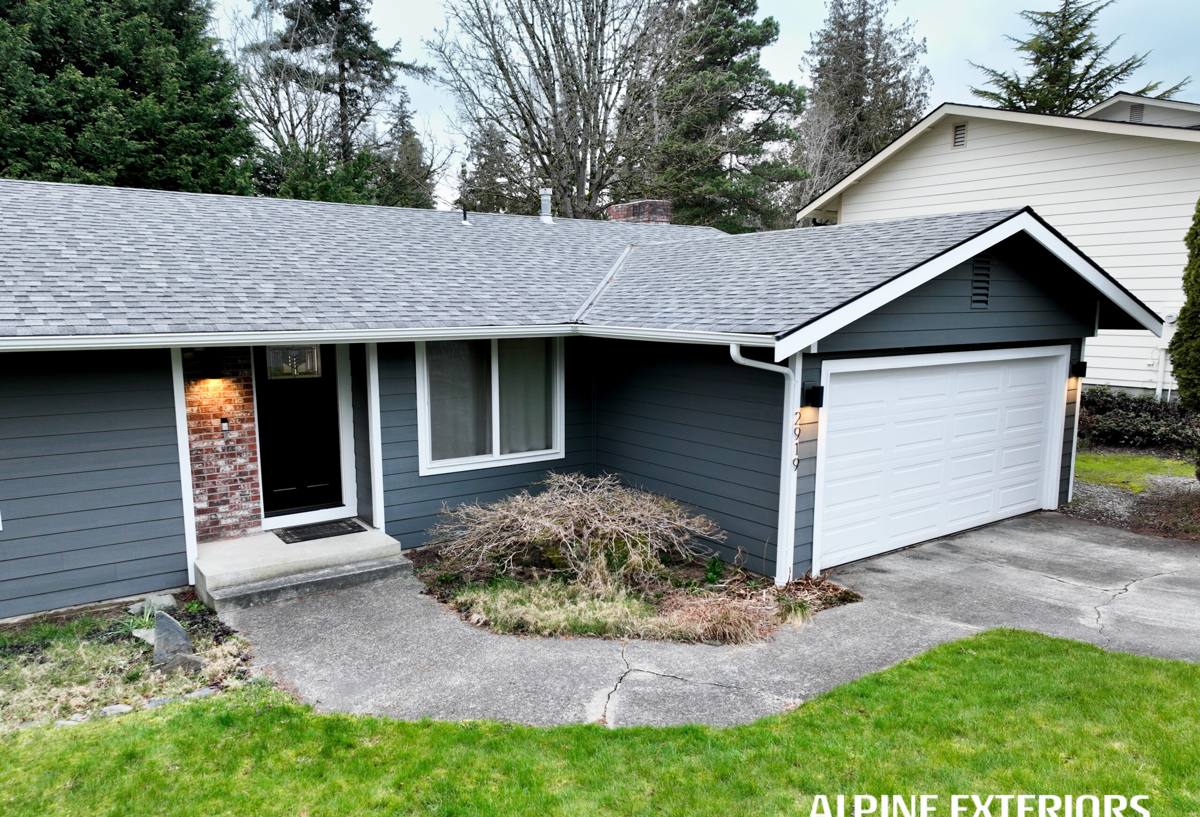
What Salt Air, Wind-Driven Rain, and Moss Actually Do to Siding
Salt Air and Corrosion
Airborne salt is corrosive to exposed metal — fasteners, flashing, and trim hardware in particular. On a standard siding job with the wrong fastener spec, corrosion starts at the nail heads and works outward, leading to rust streaking, loosened boards, and eventually water intrusion at the fastener holes. Skyline's wind exposure means salt-laden air reaches walls that would be sheltered in a more inland part of town.
Wind-Driven Rain
Rain that falls straight down is easy for any siding system to shed. Rain that's being pushed sideways by wind off the water behaves differently — it gets forced up under laps, into butt joints, and around penetrations like hose bibs and light fixtures. On exposed elevations, this is the single biggest driver of hidden moisture damage behind siding, and it's why lap spacing, caulking discipline, and the drainage plane behind the siding matter more here than on a sheltered lot.
Moss and Sustained Dampness
Western Washington's moss season runs long, and shaded, slow-drying walls are where it takes hold first. Moss and algae growth themselves aren't usually what damages siding directly — the problem is what they trap. A mossy surface holds moisture against the siding far longer than a clean one, which accelerates rot in wood-based products and stresses the paint or finish on anything that isn't factory-cured.
What a Correct Siding Installation Involves
A siding job that's going to hold up on an exposed Skyline lot is built in layers, and most of what protects the home long-term is invisible once the siding is up.
The Weather-Resistive Barrier and Drainage Plane
Underneath the siding, a continuous weather-resistive barrier has to be installed with properly lapped and sealed seams, and every penetration — windows, doors, vents, fixtures — needs to be flashed so water is directed out, not trapped in. On wind-exposed walls we pay particular attention to how laps are shingled relative to the prevailing weather, since a barrier installed "backwards" relative to wind-driven rain defeats its own purpose.
Fastening and Trim Details
Fastener type, length, and placement all matter more in a corrosive, wind-exposed environment. Undersized or improperly coated fasteners are one of the most common early-failure points we see when re-siding homes in coastal Skagit County neighborhoods. Trim details around windows, corners, and roof-to-wall intersections also need consistent kerfing, flashing, and sealant — these are the spots wind-driven rain finds first.
Ventilation and Gaps
Siding needs a way to dry out after it gets wet. Proper gapping at the bottom of walls, at penetrations, and behind the siding itself lets moisture escape instead of sitting against the substrate. This is especially important on shaded elevations where moss and slow drying are already working against the wall.
Why We Install Only James Hardie Fiber Cement
We standardized on James Hardie fiber cement siding for every job we take on, including Skyline homes, and we don't install vinyl, LP SmartSide, Cemplank, Allura, primed spruce, or cedar. That's not a marketing position — it's a decision based on what actually holds up under this region's specific combination of salt air, wind-driven rain, and moss.
HardieZone HZ5 for This Climate
James Hardie engineers its products by climate zone, and the Pacific Northwest's marine climate falls under the HardieZone HZ5 designation — formulated for regions with moderate freeze-thaw cycling and sustained moisture exposure rather than extreme heat or hard freezes. That's a meaningfully different product than what's sold in the desert Southwest or the upper Midwest, and it's part of why we don't treat siding as a one-size-fits-all material.
Non-Combustible and Factory-Finished
Fiber cement is non-combustible, which matters more every year as wildfire smoke and ember exposure become a regional concern even in wetter counties. Just as important for Skyline specifically, Hardie's ColorPlus finish is baked on at the factory under controlled conditions, rather than field-applied paint that has to cure properly on-site in variable weather. A factory finish holds color and resists the fading and moisture-related failure that field-applied coatings are more prone to in a damp climate.
What We're Trading Off Against
Being honest about it: vinyl is cheaper and lighter to install, cedar has a natural look some homeowners love, and LP SmartSide is easier to cut and handle on site. Fiber cement is heavier, requires specific blades and fastening practices, and costs more up front than vinyl. We accept those trade-offs because, installed correctly, Hardie's combination of moisture resistance, non-combustibility, and a factory finish designed for this exact climate zone outperforms the alternatives over the life of the siding — particularly on an exposed lot like the ones common in Skyline.
How Siding Materials Compare in Skyline's Conditions
| Material | Salt Air / Moisture Resistance | Moss & Algae Resistance | Maintenance Required |
|---|---|---|---|
| James Hardie Fiber Cement | Strong — non-combustible, engineered for marine climates | Good with proper drainage detailing | Low — factory finish, periodic washing |
| Vinyl Siding | Resists rot but can warp and fade under sun/wind cycling | Moderate — moss grows on any surface that stays damp | Low, but seams and laps can loosen over time |
| Cedar / Wood Siding | Vulnerable — absorbs moisture, prone to rot at exposed points | Poor — organic material moss and algae readily colonize | High — regular refinishing and moisture monitoring |
| LP SmartSide / Engineered Wood | Moderate — engineered core resists rot but relies on edge sealing | Moderate to poor depending on finish and drainage | Moderate — finish and caulked joints need monitoring |
Our Installation Process for Skyline Homes
Every home is different, but the sequence we follow is consistent:
- On-site assessment of the home's exposure — which walls take direct wind and rain, which stay shaded and slow-drying, and where the existing siding or trim is already showing stress.
- Removal of existing siding and inspection of the sheathing underneath for hidden moisture damage, since this is often the first time a homeowner learns what's actually been happening behind the old siding.
- Repair of any damaged sheathing or framing before anything new goes on — covering up a moisture problem is not an option we'll take.
- Installation of a continuous weather-resistive barrier with flashing at every window, door, and penetration, sequenced to shed wind-driven rain.
- Installation of James Hardie siding and trim to manufacturer fastening specifications, adjusted for the wind exposure of each elevation.
- Final walk-through covering caulking, trim details, and touch-up so the finished product is consistent on every side of the home.
What Drives Cost on a Skyline Siding Job
We don't publish fixed prices because every home's size, condition, and complexity are different, but the main cost factors are predictable:
| Factor | Why It Affects Cost |
|---|---|
| Extent of hidden sheathing damage | Rot or moisture damage found during tear-off has to be repaired before new siding goes on |
| Home size and wall complexity | More corners, dormers, and roof-to-wall intersections mean more flashing and trim labor |
| Siding profile chosen | Lap width, shingle-style panels, and trim board options carry different material and labor costs |
| Access and site conditions | Elevated or tight lots common in Skyline can affect staging and equipment access |
| Existing material removal | Full tear-off of old siding versus a simpler recover situation changes labor scope |
Signs Your Skyline Home's Siding Needs Attention
- Soft spots, bubbling, or visible warping anywhere on the siding surface
- Persistent moss or algae staining that returns quickly after cleaning
- Rust streaking near fasteners, trim, or corner boards
- Paint or finish that's peeling, chalking, or fading unevenly between elevations
- Gaps opening up at butt joints, corners, or where siding meets trim
- Interior signs like musty smells or discoloration on walls that back up to exterior siding
Any one of these on its own isn't necessarily an emergency, but on an exposed lot they tend to compound quickly once moisture finds a way in.
Why It Matters to Hire a Crew That Already Works This Neighborhood
Siding installation isn't uniform across Anacortes. A crew used to sheltered, inland lots can do solid work and still miss the details that matter on a wind-exposed, water-facing property — how laps should be oriented against the prevailing weather, where extra flashing attention pays off, and which elevations are going to take the brunt of a winter storm. Working in Skyline and similar exposed Skagit County settings regularly means those judgment calls become second nature rather than something learned the hard way on your home. It also means showing up already familiar with the kind of wind, moisture, and access conditions specific to these lots, rather than treating every job as a blank slate.
Get a Free, No-Pressure Estimate
If your Skyline home's siding is showing wear, or you're planning ahead for a replacement, we're happy to take a look and give you an honest assessment — no pressure, no obligation. Fill out the form below to schedule a free estimate.