 Anacortes Siding
 Guemes Island sits just across the water from Anacortes, reachable only by ferry, and that separation shapes almost everything about how exterior work gets done there — including something as ordinary as a siding repair. Homes on the island face the same salt air, driving rain, and long moss season that the rest of Skagit County deals with, but often with more direct water exposure and less shelter, since many Guemes properties sit close to the shoreline or back up against heavy tree cover with little in between. We repair siding on Guemes Island regularly, and the job looks a little different than a repair in town, both in what the climate does to the material and in how we plan and stage the work.
What the Island Climate Does to Siding
Guemes Island is surrounded by water on all sides, which means siding here takes on salt-laden air more consistently than homes further inland. Salt accelerates corrosion on fasteners, flashing, and any trim hardware that isn't rated for coastal exposure, and it speeds up the breakdown of coatings and caulking long before a homeowner notices anything wrong with the siding itself. Add in wind-driven rain coming off open water with few windbreaks, and joints, seams, and butt ends that would stay dry on a sheltered lot end up taking on moisture repeatedly through the wet season.
The island's tree cover adds a second problem. A lot of Guemes properties are wooded or partially shaded, and shade plus near-constant moisture is exactly what moss and algae need to take hold. Once moss establishes on north- or east-facing siding, it holds water against the surface long after the rest of the house has dried out, and that sustained dampness is what eventually leads to soft spots, coating failure, or rot behind poorly sealed joints.
Signs of Weather Damage We See Most Often on Guemes Island Homes
- Moss or algae staining on shaded siding, especially north-facing walls and anything under mature trees
- Caulking that's cracked, shrunk, or pulled away at trim joints and butt seams
- Soft or spongy siding near the bottom courses, around window sills, or wherever water tends to collect and sit
- Corroded or rust-streaked fasteners and flashing, particularly on older installations
- Paint or coating that's chalking, peeling, or fading unevenly from salt and UV exposure
- Visible gaps or warping where boards have swelled and shrunk repeatedly with the wet-dry cycle
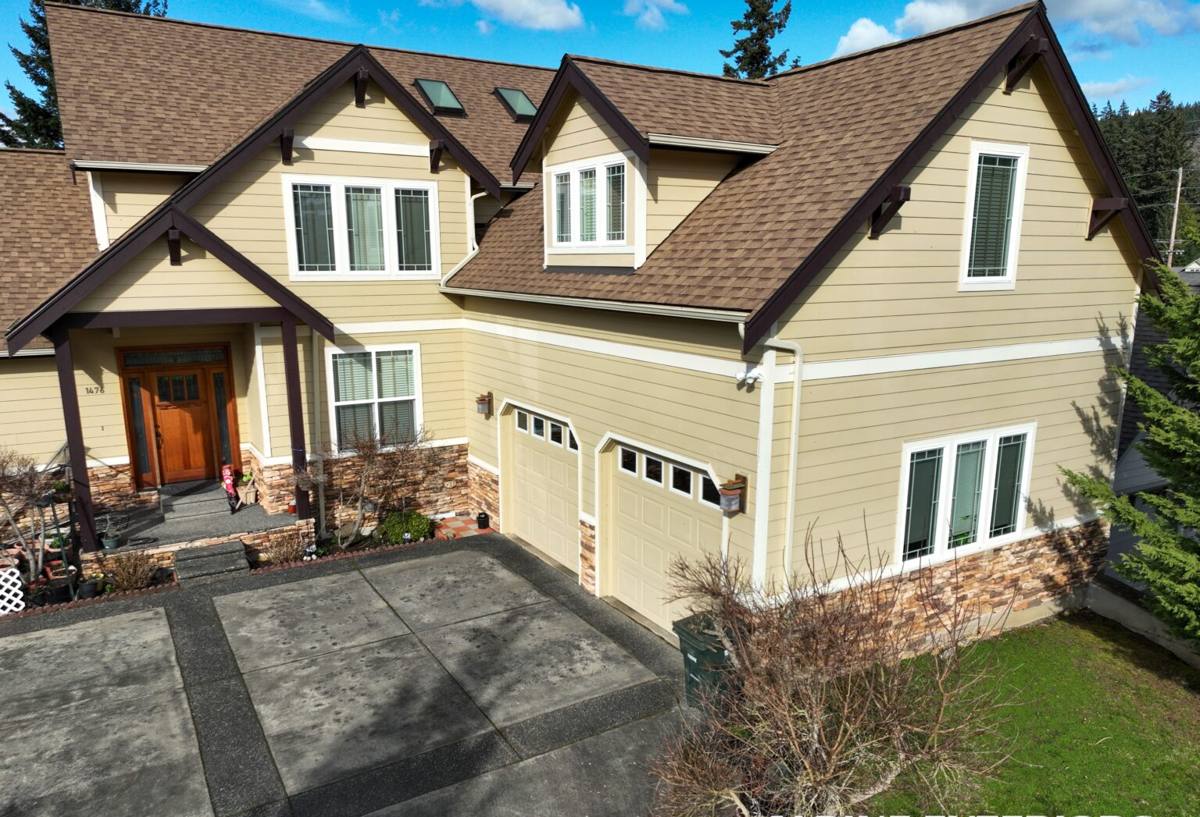
Repair or Replace? How We Make the Call
Not every damaged section needs full replacement, and not every problem is fixable with a patch. The honest answer depends on how far the damage has spread and what's happening behind the siding, not just what's visible on the surface. We open up questionable areas before we quote anything, because moisture problems on an island property tend to be more extensive than they look from the ground.
| Factor | Points Toward Repair | Points Toward Replacement |
|---|---|---|
| Extent of damage | Isolated to a few boards or one wall section | Spread across multiple walls or elevations |
| Underlying sheathing | Dry, solid wood behind the siding | Soft, discolored, or rotted sheathing found on inspection |
| Age of existing siding | Relatively recent install with a clear cause of localized damage | Older siding nearing the end of its service life overall |
| Cause of the damage | A one-time event — impact damage, a failed sealant joint | Systemic moisture intrusion from repeated wind-driven rain |
| Color and profile match | Product and finish still available to match closely | Discontinued color or profile that won't blend in |
If the framing and sheathing underneath are sound, a targeted repair is usually the right call — it's faster, less disruptive, and costs a fraction of a full re-side. If we find rot working its way into the structure, patching over it just buys a little time before the same problem resurfaces, and we'll tell you that directly rather than sell you a repair we don't think will hold.
What a Correct Siding Repair Actually Involves
A repair that's done right addresses the cause of the damage, not just the symptom. That starts with removing the damaged boards and checking the water-resistive barrier and sheathing behind them for hidden moisture or soft spots — skipping this step is how a "repair" turns into a callback a year later. Any compromised sheathing gets replaced before new siding goes back up, because covering a wet or rotted substrate with new material doesn't solve anything; it just hides it for a while.
From there, correct flashing and fastening matter as much as the siding itself. Butt joints, corners, and anywhere siding meets a window, door, or trim board are the places water finds its way in, so we pay close attention to how new sections integrate with the existing weather barrier and flashing details. Fasteners get matched to the coastal exposure the island sees — corrosion-resistant hardware isn't optional here, since standard fasteners can start rusting and staining the siding within a few seasons of salt air exposure.
What We Check and Address on Every Repair
- Condition of the sheathing and water-resistive barrier behind the damaged siding
- Whether the original installation left proper clearance at the ground, roofline, and any horizontal trim
- Flashing at window and door openings adjacent to the repair area
- Fastener type and spacing, upgraded to corrosion-resistant hardware where needed
- Caulking and sealant at all new joints, using products rated for sustained wet exposure
- Color and texture match between new and existing siding, including how it will weather over time
Getting Crews and Materials to an Island Job
Every siding repair on Guemes Island starts with logistics that a mainland job doesn't have to think about. There's no lumber yard or siding supplier on the island, so materials, tools, and fasteners get sourced and staged in Anacortes ahead of time and brought over on the ferry. That means the scoping and material-matching work has to happen before the crew ever steps off the boat — showing up short a board or the wrong trim profile costs an entire day, not a quick run to the store.
Ferry capacity and scheduling also shape how we sequence the work. We plan repair jobs to minimize the number of crossings needed, which means being thorough during the initial inspection so we're not discovering a second problem mid-job that requires another trip for materials. Weather plays a bigger role too — wind and sea conditions that wouldn't affect a mainland schedule can affect ferry service, so we build a little flexibility into the timeline rather than promising a same-day turnaround we can't control.
Why We Repair Exclusively With James Hardie Fiber Cement
We install and repair with one siding product: James Hardie fiber cement. That matters on a repair job specifically, because patching a damaged wall with a different material than what's already there — or with a product that weathers differently — almost always looks wrong within a season or two, even if the initial match seems close. Hardie's ColorPlus factory finish is engineered for consistent, long-term color performance, which gives us the best shot at a repair that blends in rather than standing out as an obvious patch.
Hardie's fiber cement is also non-combustible and dimensionally stable, so it doesn't expand, contract, or warp with the wet-dry cycling that's constant on an island property. For homes with direct water exposure, we typically recommend Hardie's HZ10 climate-engineered product line, formulated for the wetter, harsher conditions common to western Washington's marine environment. It's backed by a strong transferable warranty, which is worth something to owners of vacation or second homes on the island who may sell down the road. We don't repair siding with vinyl, LP SmartSide, Cemplank, Allura, primed spruce, or cedar — not because those products have no merit anywhere, but because we've made a standard around what actually holds up in this specific climate, and we want every repair we do to match the performance of the material around it.
Our Process for a Guemes Island Siding Repair
- Initial inspection and photos, either in person or in coordination with the homeowner, to scope the extent of damage before scheduling a crossing
- A written estimate that separates what's a straightforward patch from anything that may require opening up the wall to check for hidden moisture
- Material sourcing and color matching handled in Anacortes ahead of the job, so everything needed is staged before the crew departs
- On-site repair: removal of damaged siding, inspection and correction of sheathing and flashing issues, installation of new Hardie siding and trim
- Final sealing, fastening, and a walk-through with the homeowner or a photo report if the owner isn't on the island at the time
Why Hire a Crew That Already Works Guemes Island
A contractor who hasn't worked on the island before is learning the ferry schedule, the material logistics, and the exposure patterns on your dime. We've done enough repair work on Guemes Island to know that a shoreline-facing wall and a tree-shaded wall on the same house can be dealing with completely different problems — one from wind-driven rain, the other from moss and trapped moisture — and that changes how we scope and price the job before we ever pick up a pry bar. It also means fewer surprises: we know to check for corroded fasteners on older homes, we know which trim details tend to fail first in this exposure, and we don't need a second trip to figure out what materials to bring.
For homeowners who split time between the island and elsewhere, that experience matters even more. We can scope a repair, provide a clear estimate, and complete the work with minimal back-and-forth, communicating by photo and phone when the owner isn't on-site to walk the property in person.
Get an Honest Read on Your Siding
If you're seeing moss buildup, cracked caulking, soft spots, or fading on your Guemes Island home's siding, we're glad to take a look and give you a straight answer about whether it's a repair or something bigger. Reach out for a free, no-pressure estimate — we'll walk through what your home's exposure is actually dealing with and what it would take to fix it right.