 Anacortes Siding
 Roofing in Conway's Delta Climate
Conway sits low in the Skagit River delta, close enough to Puget Sound and the estuary that roofs here deal with a different mix of weather than homes further inland. Salt-tinged air drifts in off the water, driving rain comes through sideways during winter storms, and the damp, shaded pockets around the delta stay wet long after a storm has passed. Add in a moss season that can run from fall through spring, and you have a climate that is hard on roofing materials that weren't installed with this specific area in mind.
A new roof installation in Conway isn't just about picking a shingle color and nailing it down. It's about choosing materials and installation details that hold up to salt exposure, shed water fast in a downpour, and don't give moss a foothold to work into. That's the standard we build every roof to here.
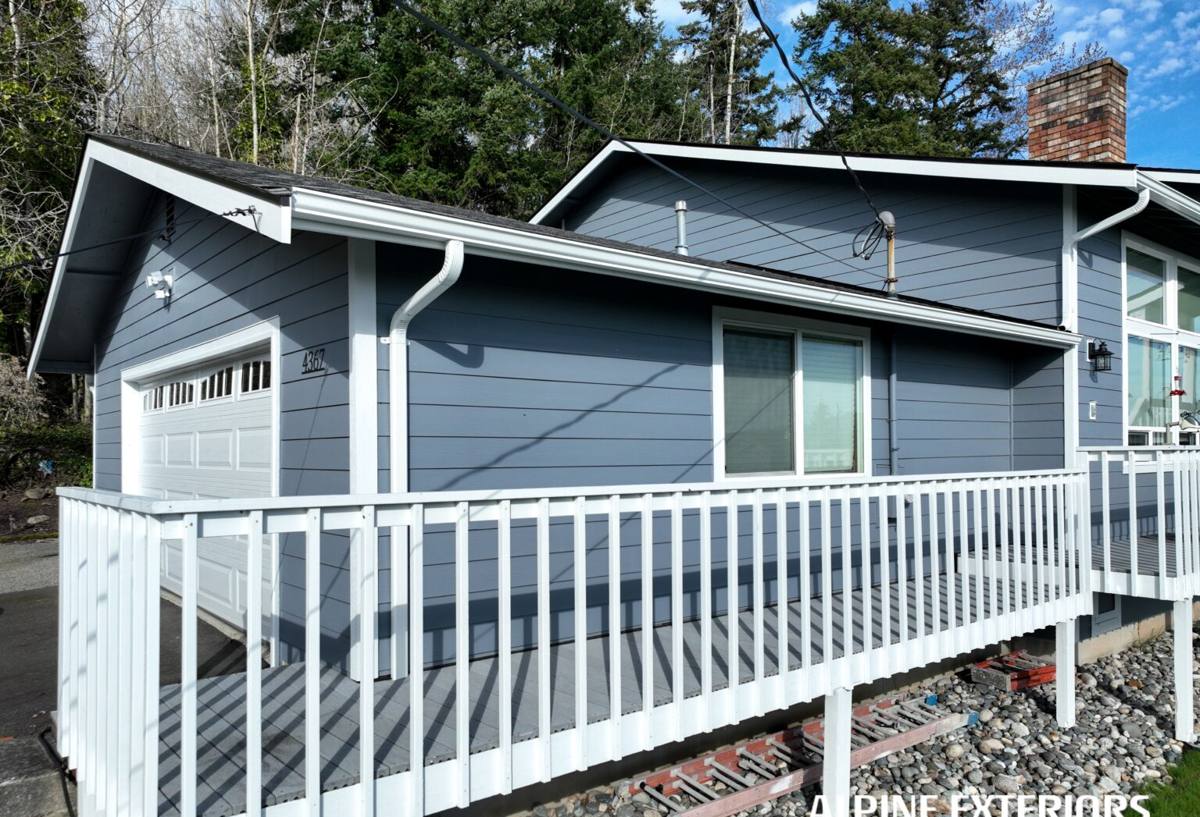
Why Conway Homes Wear Out Roofs Differently Than Other Areas
Homes just a few miles inland from Conway, or up on higher, drier ground, simply don't see the same roofing wear. A few things stack up against Conway roofs specifically:
- Salt air corrosion — metal flashing, fasteners, and vent components corrode faster near the Sound and the tidal reaches of the Skagit than they do further inland.
- Standing moisture in low areas — the delta's flat terrain and higher water table mean less evaporation and airflow around homes, so roof surfaces and attic spaces tend to stay damp longer after rain.
- Wind-driven rain — storms moving through the delta often push rain sideways rather than straight down, which stresses flashing, underlayment laps, and any gaps in a roof's edge details.
- Extended moss season — shaded, damp conditions let moss establish on north-facing slopes and low-slope sections earlier in the fall and hang on later into spring than in drier parts of Skagit County.
None of these are dealbreakers for a roof — they're just conditions a correctly installed roof needs to be built to handle.
Signs a Conway Home Needs a New Roof, Not Another Repair
Roof repairs make sense for isolated damage. A new roof installation makes sense when the whole system is nearing the end of its service life or when damage has spread past the point where patching it makes financial sense. Common signs we see on Conway roofs include:
- Granule loss heavy enough that shingles look patchy or bald in sun-exposed areas
- Moss establishing itself in the shingle mat rather than just sitting on the surface — a sign it's already lifting tabs and holding moisture against the roof deck
- Soft or spongy spots underfoot, usually a sign the decking underneath has taken on moisture
- Staining or damp spots on interior ceilings, especially near exterior walls or valleys
- Curling, cracking, or cupping shingles, particularly on south- and west-facing slopes that take the brunt of sun and wind
- Rusted or failing metal flashing around chimneys, vents, and roof-to-wall transitions
If a roof is showing two or more of these at once, it's usually more cost-effective to replace than to keep chasing repairs.
What a Correct New Roof Installation Involves
A roof is a system, not just a layer of shingles. Skipping or shortcutting any one part of that system is where most roof failures in this climate start. A proper installation covers:
Tear-Off and Deck Inspection
Old roofing comes off completely so the deck underneath can be inspected. In a damp climate like Conway's, this step matters — soft, rotted, or delaminated sheathing has to be found and replaced before anything new goes down, or the new roof will be sitting on a compromised base from day one.
Underlayment and Ice/Water Protection
A synthetic underlayment layer goes down first, with self-adhered ice-and-water membrane at eaves, valleys, and other vulnerable spots. This is one of the most important defenses against wind-driven rain, since it protects the deck even if wind pushes water up under the shingle tabs.
Flashing
Flashing around chimneys, skylights, sidewalls, and vent penetrations is where the majority of roof leaks actually originate — not the field of the roof itself. Given the salt air near Conway, we favor corrosion-resistant flashing materials and proper step-flashing technique over caulk-and-hope shortcuts.
Field Installation
Shingles or panels go down with correct nailing patterns and exposure, following manufacturer specs exactly — installation errors here are one of the fastest ways to void a warranty and shorten a roof's real-world lifespan.
Ventilation
Proper intake and exhaust ventilation keeps the attic space dry and temperature-balanced, which matters enormously in a climate where moisture is already working against the roof from the outside.
Ridge, Trim, and Cleanup
Ridge caps, drip edge, and any trim details get finished out, and the property gets cleared of old material, nails, and debris before we call the job done.
Choosing the Right Roofing Material for Conway
There's no single "best" roofing material — the right choice depends on budget, how long you plan to own the home, and how much long-term maintenance you're willing to do. Here's how the common options stack up for a delta-climate home like those in Conway:
| Material | Typical Lifespan | How It Handles Salt Air & Moss | Maintenance |
|---|---|---|---|
| Architectural asphalt shingle | 25–30 years | Good with proper ventilation and algae-resistant granules; needs periodic moss treatment | Low to moderate |
| Standing seam metal | 40–50+ years | Excellent water shedding; requires marine-grade or coated fasteners near salt air | Low |
| Cedar shake | 20–30 years with upkeep | Attractive but moisture-sensitive; needs consistent treatment in a damp climate | High |
| Composite/synthetic shingle | 30–50 years | Resists moisture and algae well; consistent performance in wet climates | Low |
For most Conway homes, a quality architectural asphalt shingle with algae-resistant granules or a standing seam metal roof offers the best balance of upfront cost and long-term performance against this area's specific conditions. We'll walk through the honest trade-offs for your specific home and budget rather than pushing one product for everyone.
A Note on Cedar Shake in This Climate
Cedar shake has real visual appeal, but it's the material most sensitive to the exact conditions Conway deals with — sustained moisture and shaded, slow-drying areas. It can be a good choice on a home with excellent sun exposure and airflow, and a poor choice on a shaded, low lot. We'll tell you honestly which situation your home falls into rather than just quoting what's asked for.
Our New Roof Installation Process
- On-site inspection and estimate — we walk the roof and attic, note the deck condition, ventilation setup, and any problem areas specific to your property.
- Material selection — we go over options and honest trade-offs based on your home's exposure, budget, and how long you plan to stay in it.
- Scheduling around weather — in the delta, we plan tear-off and dry-in around forecasted rain windows so your home is never left exposed longer than necessary.
- Tear-off and deck repair — old roofing comes off, deck damage is identified and repaired before moving forward.
- Installation — underlayment, flashing, field material, and ventilation are installed to manufacturer and code specifications.
- Final walkthrough — we inspect the finished roof with you, cover warranty details, and clean the property of debris and fasteners.
Ventilation, Moisture, and Moss: Building In Long-Term Prevention
A new roof is a chance to fix the conditions that shortened the last one's life, not just replace what was there. In Conway specifically, that usually means paying close attention to:
- Balanced attic ventilation so moisture-laden air isn't trapped against the underside of the roof deck
- Algae- and moss-resistant shingle granules on shaded or north-facing slopes where moss tends to establish first
- Corrosion-resistant fasteners and flashing given the salt content in the air this close to the Sound and the delta
- Clean, correctly pitched valleys that shed heavy rain fast instead of letting water pool or back up
These details cost little to get right at installation time and are expensive to retrofit later, which is why they're built into every new roof we install rather than offered as an upsell.
What New Roof Installation Typically Costs
Every roof is different, but homeowners in this area generally see costs shaped by these factors:
| Factor | How It Affects Cost |
|---|---|
| Roof size and number of stories | More square footage and steeper access raise labor cost |
| Roof complexity (valleys, dormers, penetrations) | More flashing detail work means more labor time |
| Material chosen | Asphalt is typically the most budget-friendly; metal and composite cost more upfront but last longer |
| Deck condition | Rotted or soft sheathing found during tear-off adds repair cost |
| Ventilation upgrades | Adding or correcting intake/exhaust vents adds modest cost but pays off in roof longevity |
We give a firm, itemized estimate after seeing the actual roof — not a ballpark quoted over the phone — so you know exactly what you're paying for and why.
Why Hiring a Crew That Already Works Conway Matters
Roofing crews who mainly work drier, inland areas don't always account for what a delta climate does to a roof over time. A crew familiar with Conway and the surrounding low-lying Skagit County communities knows which slopes tend to hold moss, which details matter most against wind-driven rain off the water, and how to sequence a tear-off around this area's weather patterns so your home isn't sitting exposed. That local familiarity shows up in fewer callbacks and a roof that's actually built for the conditions it has to survive, not just a generic install.
Questions Worth Asking Before You Hire a Roofing Contractor
- Are you licensed and insured to work in Washington State, and can you provide proof?
- Will you inspect and repair the roof deck if damage is found, or is that handled as a separate charge later?
- What underlayment and ice-and-water protection do you use, and where specifically will it be installed?
- How do you handle ventilation — will you inspect and correct the existing setup, or just replace what's there?
- What's covered under both the material warranty and your workmanship warranty, and for how long?
- How do you plan around weather during tear-off so my home isn't left exposed?
If your roof is showing its age or you're planning ahead before the next storm season, we're happy to take a look and give you a straightforward, no-pressure estimate. Fill out the form below to get started.