 Anacortes Siding
 Why La Conner Siding Wears Differently Than Inland Homes
La Conner sits right on the water, and that changes what siding has to deal with compared to a home even a few miles inland in Skagit County. Salt-laden air moves off the channel and settles on exterior surfaces daily, not just during storms. Combine that with the long, wet Pacific Northwest winter and the shoulder seasons that stay damp well into what should be dry months, and you have a climate that is genuinely harder on siding than most of the country ever sees.
Three things drive most of the siding failures we see on La Conner homes: salt air accelerating corrosion of fasteners and metal trim, driving rain that gets pushed sideways into laps and seams instead of just running down a flat wall, and a moss and algae season that can run eight or nine months out of the year in shaded, north-facing, or tree-covered areas. None of these are dramatic on their own, but stacked together over a decade or two, they find every weakness in a siding system — especially the seams, the caulk joints, and any spot where water can get behind the cladding and stay there.
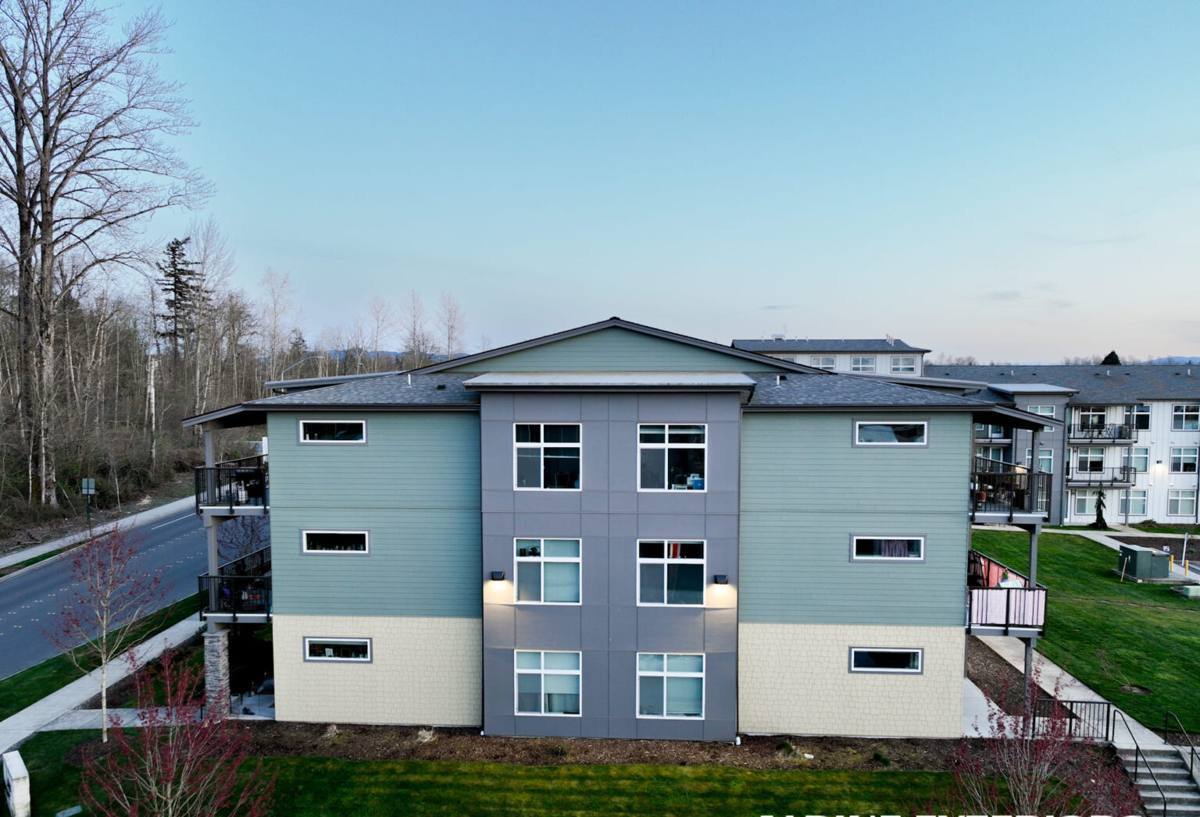
Signs a La Conner Home Needs Siding Replacement
Repair makes sense for isolated damage. Replacement becomes the right call once the underlying material or water management system has been compromised in more than a spot or two. Here's what we look for during an inspection:
- Soft or spongy spots when you press on the siding, especially near the bottom courses or under windows
- Paint that's failing repeatedly in the same spots even after repainting — usually a sign of moisture cycling behind the material
- Persistent black or green streaking that comes back within a season or two of cleaning
- Visible warping, buckling, or cupping of individual boards or panels
- Cracked or missing caulk at butt joints, corners, and trim that hasn't been addressed in years
- Rust staining running down from nail heads or metal flashing
- Rot in trim boards, corner boards, or the bottom edge of the siding near grade
- An interior wall that feels damp, smells musty, or shows staining near an exterior wall
Any one of these might be a repair. Several of them together, especially on a home more than 20-25 years old, usually points to a water-resistive barrier or original installation that's reached the end of its useful life — and that's a replacement conversation, not a patch job.
What a Correct Siding Replacement Actually Involves
Siding replacement is not just swapping old boards for new ones. The material you choose matters, but the assembly behind it matters just as much, especially in a climate that pushes rain sideways and keeps humidity high for months at a time.
Tear-Off and Inspection
We remove the old siding and trim down to the sheathing, then stop and actually look at what's underneath before installing anything new. This is where hidden rot, compromised sheathing, or a failed original water barrier gets found — and it's the single most important step in the whole job, because covering up a problem with new siding just delays the same failure by another decade.
Water-Resistive Barrier and Flashing
A properly lapped water-resistive barrier, correctly integrated flashing at every window, door, and roof-to-wall intersection, and a drainage plane behind the siding are what actually keep a La Conner home dry — the siding itself is really the second line of defense, not the first. This is the part of the job that's invisible once it's done but determines whether the assembly performs for 30+ years or fails again in ten.
Siding Installation
Proper fastener placement, correct nail penetration into framing (not just sheathing), factory-specified gaps at butt joints and corners for expansion, and consistent reveal lines. Corrosion-resistant fasteners matter more here than in a drier inland climate — this is one of the areas where salt air punishes shortcuts fastest.
Trim, Caulking, and Finish
Trim boards, corner treatments, and caulk joints are finished to shed water, not trap it. We don't caulk over gaps that should have proper flashing instead — caulk is a finishing detail, not a substitute for correct water management.
Why We Install Only James Hardie Fiber Cement
We made a decision a while back to standardize on James Hardie fiber cement siding and not install vinyl, LP SmartSide, or other fiber cement brands. That's not a marketing position — it's because in a climate like Skagit County's, the products people usually choose to save money or simplify installation tend to show their weaknesses fastest in exactly the conditions La Conner homes deal with: sustained moisture exposure, salt air, and heavy seasonal moss and algae growth.
Vinyl expands and contracts significantly with temperature swings and can warp or crack over time, and it doesn't stand up to physical impact the way fiber cement does. Engineered wood products like LP SmartSide perform well when installation and maintenance are done exactly to spec, but they're wood-based and more sensitive to sustained moisture exposure than fiber cement — a real concern in a marine climate where wet weeks stretch into wet months. James Hardie fiber cement is inorganic, non-combustible, and engineered specifically for high-moisture climates. That's the trade-off we're not willing to make on behalf of a homeowner who's paying for a siding job to last.
James Hardie Product Lines Built for This Climate
James Hardie doesn't make one generic siding product — its HardieZone system is engineered by climate. Coastal Washington, including Skagit County and La Conner, falls into the HZ5 zone, which means the boards installed here are formulated for cold, wet, high-moisture conditions rather than the hot, dry formulation used in the Southwest.
| Product | Best Use | Why It Fits La Conner |
|---|---|---|
| HardiePlank Lap Siding | Primary wall cladding | Most common choice; factory-engineered for HZ5 moisture and freeze-thaw cycling |
| HardiePanel Vertical Siding | Accent walls, gables, modern facades | Clean vertical lines with the same moisture-resistant core |
| HardieTrim Boards | Corners, window/door trim, fascia | Matches the siding's durability so trim doesn't become the weak point |
| ColorPlus Factory Finish | All exposed surfaces | Baked-on finish resists the fading and peeling that field-applied paint struggles with in salt air |
ColorPlus finish deserves its own mention: because it's applied and cured in a factory setting rather than painted on-site, it holds color and resists the chalking and peeling that salt air and UV exposure accelerate on field-painted surfaces. For a waterfront-adjacent town like La Conner, that's a meaningful difference over the life of the siding, not just a convenience.
What Drives the Cost of a Siding Replacement
Every home is different, but the same handful of factors move the price up or down on nearly every job we quote in this area:
| Factor | Why It Matters |
|---|---|
| Extent of hidden damage | Rot or compromised sheathing found during tear-off adds repair scope before new siding goes on |
| Home size and wall complexity | More corners, dormers, and cutouts mean more labor and material waste |
| Siding profile and trim detail | Wider reveals, board-and-batten accents, or extensive trim work add time |
| Story height and access | Multi-story or steep-site homes require more staging and safety setup |
| Existing water barrier condition | A failed original barrier means replacing it, not just siding over it |
| Color and finish selection | Standard ColorPlus colors versus custom or premium finishes |
We don't publish a flat per-square-foot number because these variables genuinely change the scope from house to house — which is exactly why we walk every La Conner property in person before quoting.
Our Process From Estimate to Finished Job
- On-site inspection and assessment, including checking for hidden moisture or rot behind existing siding where accessible
- A written estimate that spells out material, scope, and what we found during inspection — no surprises added mid-job without a conversation first
- Scheduling that accounts for Skagit County's wet season, so tear-off and dry-in happen with a real weather window
- Tear-off, sheathing inspection, and repair of any compromised framing or sheathing before anything new goes up
- Water-resistive barrier and flashing installation at every penetration and transition
- James Hardie siding, trim, and finish installation to manufacturer spec
- Final walkthrough with the homeowner before we consider the job done
Why It Matters to Hire a Crew That Already Works in La Conner
Siding installation isn't identical everywhere, and a crew that mostly works drier inland climates can make choices that are fine there but wrong for a home exposed to sustained salt air and driving rain off the water. Knowing where La Conner homes tend to take on moisture first, how much clearance to leave at grade given local drainage patterns, and which fastener and flashing details actually hold up here comes from doing this work in this specific area repeatedly — not from a generic installation manual. A crew that already understands Skagit County's climate isn't guessing at what "good enough" means for your house; they've seen what happens when it isn't.
Maintenance After Your New Siding Is Installed
James Hardie siding is genuinely low-maintenance compared to wood or vinyl, but "low-maintenance" doesn't mean "no maintenance," especially in a climate this wet. A periodic rinse to keep moss and algae from establishing on shaded or north-facing walls, an annual check of caulk joints at trim and penetrations, and prompt attention to any gutter or downspout issue that could dump water directly onto a wall section will keep the assembly performing the way it's designed to for decades. None of this is labor-intensive — it's the kind of thing that takes an hour or two a year and prevents the small problems that eventually become big ones.
If your La Conner home is showing signs of siding wear, or you're just ready to stop maintaining a product that keeps needing attention, we're happy to come take a look. A free, no-pressure estimate gets you a straight answer on what your home actually needs — fill out the form below to get started.