 Anacortes Siding
 Roofing for La Conner's Waterfront Conditions
La Conner sits low and close to the water along the Swinomish Channel, and that location shapes everything about how a roof ages here. Salt-laden air drifts in off the channel and Puget Sound year-round, driving rain comes in sideways during winter storms, and the combination of shade, moisture, and mild temperatures gives moss a long growing season that runs from fall well into spring. An asphalt shingle roof that would hold up fine in a drier inland town can wear out faster here if it wasn't installed with these specific conditions in mind.
We work throughout Anacortes and the surrounding Skagit County communities, and La Conner comes with its own set of quirks — older homes closer to the water, tree cover that keeps roofs damp longer, and a historic character to the town that means roofing work often needs to look right, not just perform well. This page covers what an asphalt shingle roof actually needs to hold up in La Conner, and how we approach the job.
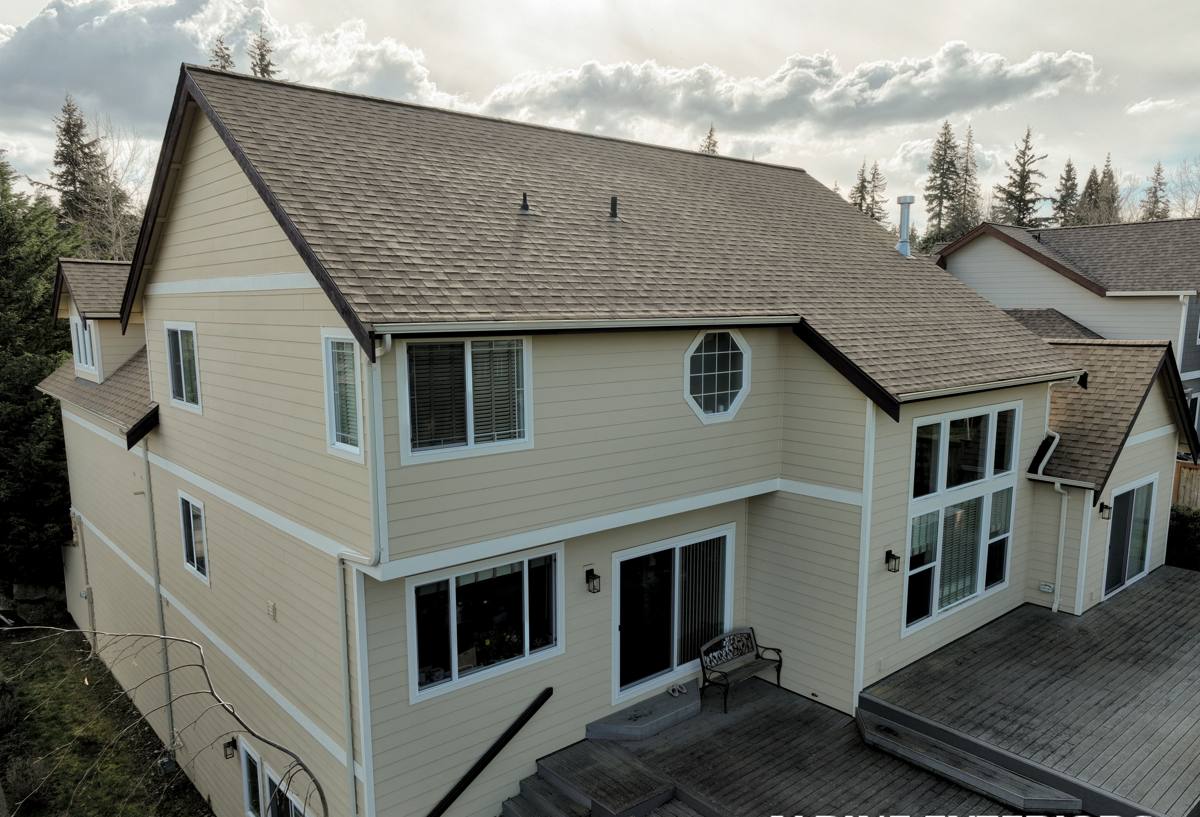
What the Salt Air and Rain Actually Do to a Roof
Salt air is corrosive to exposed metal. Roofing nails, staples, and flashing that aren't rated for coastal exposure can rust and lose their grip years before a standard warranty period ends. Once fasteners weaken, shingles start to lift in wind, and lifted shingles are the single fastest way a roof develops a leak — wind gets underneath, works the tab loose, and the next hard rain finds its way in.
Driving rain adds a second problem: wind-blown water doesn't just fall straight down, it pushes sideways and upward under shingle edges, especially around eaves, valleys, and anywhere two roof planes meet. A roof built for calmer, drier climates sometimes skips extra protection in these spots because it's rarely needed. Skip it here and you're relying entirely on the shingles themselves holding a perfect seal, which they won't do forever.
Then there's moss. Shaded, moisture-retaining roof sections in La Conner can stay damp for days after a storm, which is exactly what moss needs to establish. Once moss takes hold, it holds water directly against the shingle surface, works its way under tab edges as it grows, and accelerates granule loss. A roof with moss left unmanaged for a few seasons will typically show wear well ahead of its expected lifespan.
Why This Matters More Than the Shingle Brand
Homeowners often ask which shingle brand is best. The honest answer is that the brand matters less than the installation details underneath it. Two roofs with the same shingle can perform very differently depending on the underlayment, flashing, fastening, and ventilation choices made during installation. In a climate like La Conner's, those details are where roofs succeed or fail.
What a Correctly Installed Asphalt Shingle Roof Needs Here
Ice and Water Shield at Vulnerable Areas
Self-adhering waterproof membrane belongs at eaves, in valleys, around chimneys and skylights, and anywhere roof planes intersect — the spots where wind-driven rain is most likely to get pushed backward under the shingle line. This is inexpensive insurance against the single most common cause of coastal roof leaks, and it's not optional in our approach.
Corrosion-Resistant Fasteners and Flashing
We use fasteners and flashing suited to coastal exposure rather than the minimum-grade hardware that's fine inland but shortens roof life near salt air. This is a small cost difference at installation time and a significant difference in how long the roof holds together.
Proper Attic Ventilation
A roof deck that can't breathe stays damp longer, which feeds moss growth from underneath and can rot sheathing over time. Balanced intake and exhaust ventilation keeps the underside of the roof drier, which helps both the shingles and the deck last longer — and it's frequently overlooked on older La Conner homes where ventilation was never brought up to current standards.
Correct Nailing and Sealing
Every manufacturer specifies a nailing pattern and placement for their shingles, and it's tied directly to wind and warranty performance. Rushed or incorrect nailing is one of the most common causes of premature shingle lift we see on roofs that are otherwise in reasonable shape.
Signs a La Conner Roof Needs Attention
Because moss and moisture work slowly, many homeowners don't notice a problem until it shows up as an interior stain. Catching these signs earlier saves money:
- Moss growing on north-facing or shaded slopes, especially in mats rather than light green film
- Granules collecting in gutters or at the base of downspouts
- Shingle tabs that look curled, cupped, or lifted at the edges
- Dark streaking that doesn't wash off with rain (algae staining, different from moss)
- Rusty streaking near flashing or fasteners
- Soft spots or sagging when walked on (a sign of deck moisture damage)
- Daylight visible through the attic roof deck, or damp insulation below it
Our Asphalt Shingle Roofing Process
Whether the job is a full replacement or a repair, we follow the same sequence so nothing gets skipped:
- Roof inspection, including the attic side, to check deck condition and existing ventilation before quoting anything
- Full tear-off to bare deck on replacements — we don't layer new shingles over old ones, since that traps moisture and hides deck problems
- Deck repair or replacement of any soft, rotted, or delaminated sheathing found underneath
- Ice and water shield at eaves, valleys, and penetrations
- Synthetic underlayment across the full roof deck
- New flashing at chimneys, skylights, walls, and roof-to-roof transitions
- Shingle installation following manufacturer nailing specifications, adjusted for local wind exposure
- Ventilation check and correction where intake or exhaust is inadequate
- Final walkthrough and cleanup, including a magnetic nail sweep of the property
Choosing the Right Shingle for This Climate
Most manufacturers now offer several tiers of asphalt shingle, and the differences matter more in a damp, salt-air climate than in a dry one. Here's how the common options compare for a home in La Conner:
| Shingle Type | Moss and Algae Resistance | Wind Rating | Typical Lifespan Here |
|---|---|---|---|
| Standard 3-tab | Basic, no built-in resistance | Lower | Shorter, especially on shaded slopes |
| Standard architectural | Basic, no built-in resistance | Higher than 3-tab | Moderate |
| Algae-resistant architectural | Copper or zinc granules deter algae growth | Higher than 3-tab | Longest of the three, particularly on shaded or north-facing sections |
We generally recommend algae-resistant architectural shingles for La Conner homes, especially on slopes with tree cover or limited sun exposure. The upfront cost difference is modest compared to the extra years of service life and reduced moss maintenance over time.
Cost Factors for Asphalt Shingle Roofing in La Conner
Every roof is priced based on its own specifics, but these are the factors that move the number most:
| Factor | Why It Affects Cost |
|---|---|
| Roof size and number of planes | More material, more flashing, more labor hours |
| Deck condition | Rotted or soft sheathing requires repair before shingles go on |
| Roof pitch and access | Steeper or harder-to-access roofs take longer and need more safety setup |
| Existing layers | Removing old shingle layers adds tear-off time and disposal cost |
| Shingle tier chosen | Algae-resistant and higher-end architectural shingles cost more per square than basic options |
| Ventilation upgrades needed | Adding intake or exhaust vents where none exist is additional work |
We give a straightforward, itemized quote after seeing the roof in person — not a per-square guess over the phone.
Living With a Long Moss Season
Even a well-installed roof benefits from basic upkeep in a climate where moss has months to establish itself. A little routine attention goes a long way:
- Keep overhanging branches trimmed back to reduce shade and let roof surfaces dry faster
- Clean gutters at least twice a year so water isn't backing up under the roof edge
- Have visible moss removed gently rather than left to spread, using methods that won't strip granules
- Skip high-pressure washing, which can tear granules off the shingle surface and shorten its life
- Schedule a roof check after major windstorms, since lifted or cracked shingles are easiest to fix before the next rain
Why a Crew That Already Works in La Conner Makes a Difference
A roofer who works this area regularly already knows which slopes hold moss longest, where salt exposure hits hardest, and how older homes near the water tend to be built underneath their existing roof. That familiarity means fewer surprises once tear-off starts and a more accurate quote from the first visit. It also means we understand that many homes here sit in or near La Conner's historic district, where homeowners often want the finished roof to keep a traditional look rather than stand out with an unusually modern shingle profile — something we account for when discussing options.
Being based in Anacortes also means we're a short drive away for warranty follow-up or a quick look if something comes up after a storm, rather than a crew that has to travel in from out of the area.
If you're weighing a repair against a full replacement, or just want an honest read on how much life is left in your current roof, we're glad to take a look. Fill out the form below for a free, no-pressure estimate.