 Anacortes Siding
 Why Siding Repair Looks Different in La Conner
La Conner sits along the Swinomish Channel in Skagit County, close enough to saltwater that homes here take on salt-laden marine air as a matter of course. Add in wind-driven rain rolling off the water for much of the year and a moss season that can run from early fall well into spring on shaded or north-facing walls, and you get a climate that works on siding continuously, not just during the occasional storm. A lot of the homes in and around La Conner are also older construction, which means original siding, trim, and flashing details that were never designed around today's understanding of how a wall assembly should shed water.
That combination — coastal exposure, a wet climate, and an older housing stock — means siding repair here isn't just a cosmetic fix. Done right, it's about finding where water is actually getting in, correcting that path, and matching the repair to the rest of the wall so it performs as one system rather than a patch bolted onto an old problem. This page covers what that actually involves, how we decide between repairing and replacing, and why hiring a crew that already works in La Conner makes a real difference.
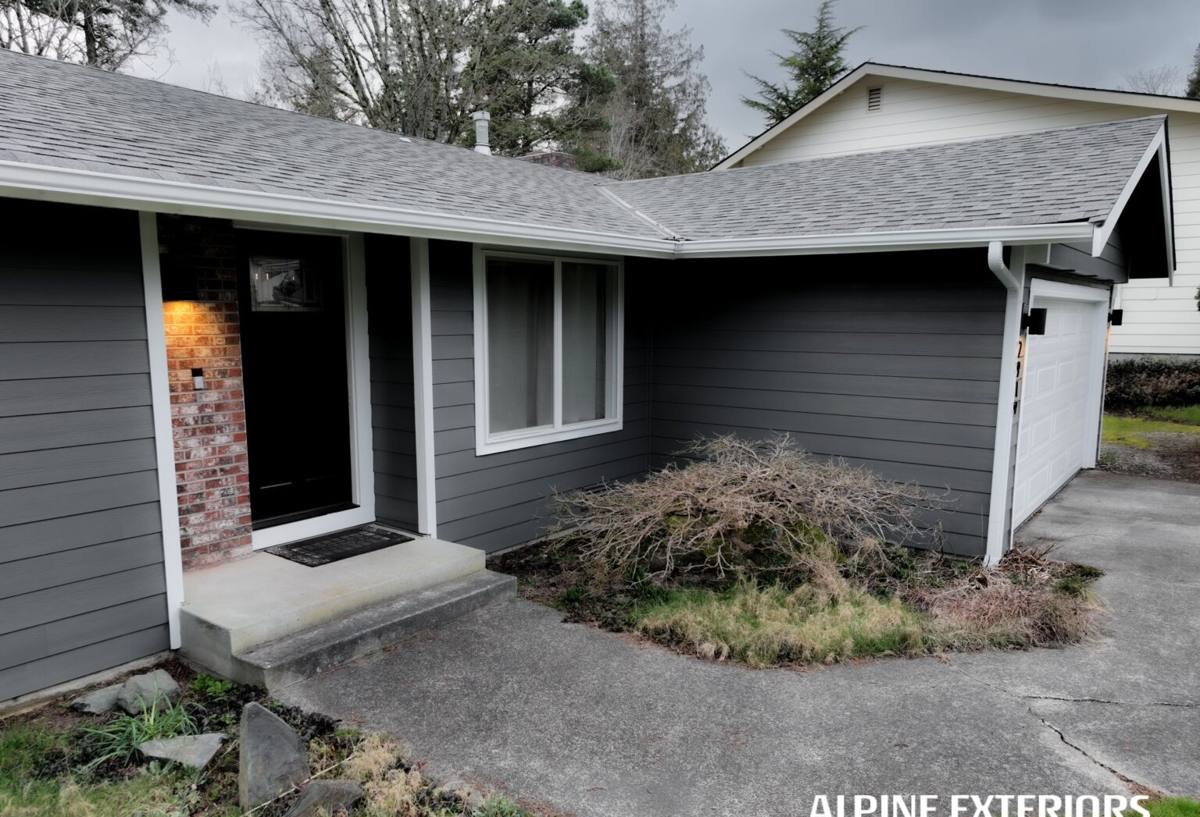
What This Climate Does to Siding
Salt Air and Fasteners
Salt-laden air settles on a house continuously in a waterfront town like La Conner, and it accelerates corrosion in fasteners, trim nails, and any exposed metal flashing long before that corrosion is visible from the ground. A fastener that's lost its grip to rust doesn't announce itself — it shows up later as a board that's started to pull loose, a seam that's opened up, or a section of trim that's begun to separate from the wall.
Driving Rain and Wall Assemblies
Wind-driven rain doesn't behave like ordinary rainfall. It gets pushed sideways into laps, joints, and butt seams instead of simply running down the face of the wall, which means the water-resistive barrier and flashing details behind the siding matter as much as the siding itself. A wall assembly that's sound in a calm, sheltered spot can still leak in La Conner because the water is arriving from the side, not just from above.
A Long Moss Season
Mild temperatures, shade from mature trees, and near-constant moisture add up to a moss and algae season that runs longer here than in drier parts of Skagit County. Moss holds water against the siding surface long after a storm has passed, and on porous or lightly finished materials that trapped moisture is exactly what starts breaking a wall assembly down from the outside in. North-facing walls and anything shaded by trees or a neighboring structure typically need more attention than sun-facing sides of the same house.
Signs Your Siding Needs Repair, Not Just a Repaint
Homeowners often reach for a paint job first, but paint doesn't fix a moisture problem underneath — it just hides it for a while. Watch for:
- Soft or spongy spots when you press on the siding, especially near the bottom courses or under windows
- Staining or dark streaking below seams, nail heads, or trim joints
- Paint that's bubbling, peeling, or failing faster than the rest of the wall
- Visible gaps opening up at butt joints, corners, or where siding meets trim
- Moss or algae that returns within a season or two of being cleaned off
- Nail pops, rust streaking from fasteners, or trim that's started to separate
- Warping, cupping, or bowing boards, which is common on wood-based siding that's taken on repeated moisture
- Caulk joints that have cracked, shrunk, or pulled away from the surface
Any one of these on its own might be minor. Several showing up in the same area of a wall usually means water has been getting behind the siding for a while, and the visible symptom is the last part of the problem to show up, not the first.
What a Correct Siding Repair Actually Involves
Diagnosing the Real Cause
A repair that just swaps out a damaged board without figuring out why it failed tends to fail again in the same spot, often faster the second time. Before we touch anything, we look at what's actually driving the damage — a failed flashing detail, a gap that's letting wind-driven rain behind the wall, a downspout dumping water against a corner, or a section that's simply been shaded and wet longer than the rest of the house.
Removing Only What's Actually Compromised
Once the cause is clear, we remove the damaged and surrounding sections carefully enough to check what's behind them — the water-resistive barrier, sheathing, and framing — rather than assuming the damage stopped exactly where it's visible from outside.
Correcting Flashing and Drainage, Not Just Replacing Boards
This is the step that actually determines whether a repair lasts. Flashing at windows, doors, and butt joints gets corrected or added where it was missing or improperly lapped, and any drainage path behind the siding gets restored so water that does get behind the surface has somewhere to go instead of sitting against the wall.
Matching the Finish
A repair should blend into the existing wall, not stand out as an obvious patch. That means matching board profile and reveal as closely as possible and, where a color match is needed, working with a finish that will hold up alongside the rest of the wall rather than weathering at a different rate.
Repair or Replace? How We Actually Make That Call
Not every siding problem calls for a full re-side, and not every repair is the more cost-effective long-term choice. The honest factors that drive this decision:
| Factor | Repair Usually Makes Sense | Replacement Usually Makes Sense |
|---|---|---|
| Extent of damage | Isolated to one wall, corner, or a few sections | Widespread across multiple walls or the whole house |
| Cause of the damage | A specific, fixable flashing or drainage issue | A systemic original installation flaw affecting most of the siding |
| Age and condition of remaining siding | Siding is otherwise sound and has useful life left | Siding is near the end of its practical service life |
| Material behind the damage | Sheathing and framing are dry and intact | Rot or moisture damage extends into the structure |
| Ability to match existing material | Existing product or profile is still available or close enough | Discontinued material makes a clean match impossible |
We'll give a straight read on which category a given house falls into, including when a repair is genuinely the right call rather than defaulting to whichever job is larger.
Why Material Still Matters on a Repair
We install James Hardie fiber cement exclusively on full siding jobs, and that standard shapes how we approach repairs too. When a repair section needs new material to blend into an existing wall — whether the home was originally sided in wood, vinyl, or fiber cement — we default to Hardie product wherever a reasonable match is achievable, because it holds up to this exact climate better than the alternatives we used to install.
Fiber cement doesn't swell, cup, or warp the way wood-based siding can when it repeatedly takes on moisture through a wet Skagit County winter, and Hardie's factory-applied ColorPlus finish resists fading and chalking far better than field-applied paint on a patched section. On a home where the original siding is failing in multiple spots, that durability difference is often the deciding factor in recommending a broader re-side over a series of repeated patch repairs that will keep needing redone.
When an exact match to existing non-Hardie siding is the priority for a small, isolated repair, we'll say so plainly and explain what the options and trade-offs actually are, rather than pushing a replacement that isn't yet necessary.
Our La Conner Siding Repair Process
- On-site inspection. We look at the damaged area and the surrounding wall, including what's happening at grade, near downspouts, and under any nearby trees or shade.
- Honest diagnosis. We identify the actual cause of the damage, not just the visible symptom, and check behind the siding where needed to see how far it extends.
- Clear scope and estimate. We explain what we found in plain terms and lay out a repair scope, including whether repair or partial replacement is the better call and why.
- Correct repair work. Flashing, drainage, and fastening get addressed as standard practice, not as an upsell, before the finish work happens.
- Finish and cleanup. Repaired sections are matched as closely as possible to the surrounding siding, and the site is left clean.
What Influences the Cost of a Repair
| Factor | Why It Matters |
|---|---|
| How far the damage extends behind the surface | Hidden rot or moisture damage in sheathing or framing adds real labor beyond the visible patch |
| Accessibility of the affected wall | Waterfront lots, multi-story sections, or tight side yards can add setup and access time |
| Whether the existing material can be matched | Discontinued profiles or colors may require a wider repair area to blend in cleanly |
| Flashing and drainage corrections needed | Fixing the actual water path, not just the board, is what makes a repair last |
| Repainting or refinishing scope | Blending a patch into weathered original paint sometimes means refinishing a broader section |
Why Hiring a Crew That Already Works in La Conner Matters
La Conner is a small, distinct pocket of Skagit County, and the exterior work here has its own patterns — waterfront and near-waterfront lots facing the channel, older homes with original flashing details that no longer meet current best practice, and shade patterns from mature trees and tight lot lines that keep certain walls wet longer than others. A crew that mostly works drier, inland parts of the county can still do competent work, but familiarity with exactly how salt air, wind-driven rain, and moss behave on this stretch of the channel shows up in the details — where extra flashing gets added, which walls get flagged for closer inspection, and how a repair estimate accounts for problems that aren't visible yet.
That familiarity also means a more accurate estimate the first time, with less back-and-forth once work is underway, because the inspection already accounts for how this specific climate and this specific kind of housing stock actually behave.
A Few Things to Ask Before Hiring for Siding Repair
- Ask what they think is actually causing the damage, not just what they plan to replace
- Ask whether they'll check behind the siding for hidden moisture damage before quoting a fixed scope
- Ask what material they'll use for the repair section and how it will hold up next to the existing siding
- Confirm current Washington contractor licensing and active insurance
- Get a clear, written scope of work before anything is signed
If you've got a section of siding that's staining, gapping, or gone soft to the touch, we're glad to take a look and give you an honest read on what it actually needs — repair, partial replacement, or just an eye kept on it. Reach out below for a free, no-pressure estimate.