 Anacortes Siding
 Roofing La Conner Homes: A Different Job Than Roofing Inland
La Conner sits right on the Swinomish Channel, a few minutes from Anacortes, and that waterfront location changes what a roof has to deal with year-round. Homes here take on salt-laden air off the water, long stretches of driving rain through fall and winter, and a moss season that can run eight months or more thanks to shade, moisture, and mild temperatures. A roof replacement done for a house in Mount Vernon or a drier inland town doesn't automatically hold up the same way on a La Conner roof, and we've seen the difference in tear-offs where the wrong assumptions were made the first time around.
This page walks through what actually matters for a correct roof replacement on a La Conner home: what the climate does to roofing materials over time, what a properly done job includes step by step, and why it's worth hiring a crew that already understands this stretch of Skagit County instead of learning it on your roof.
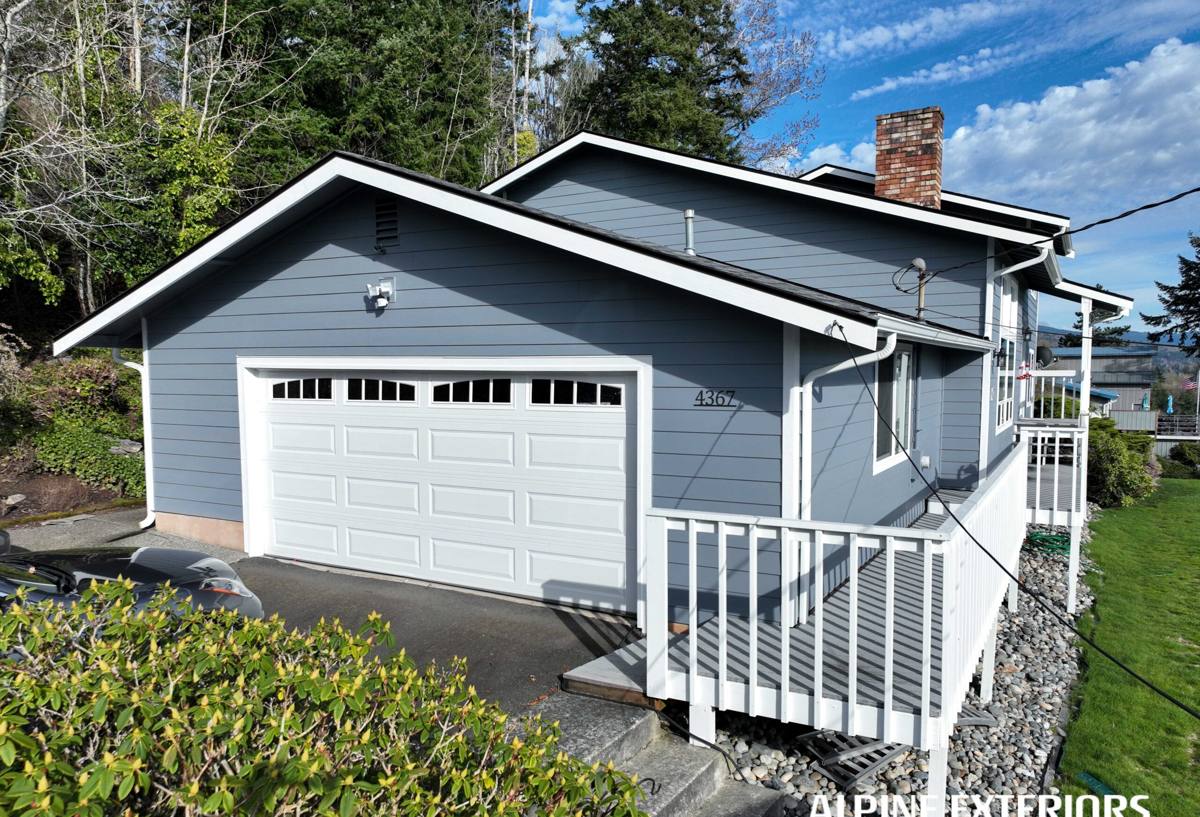
What Salt Air, Rain, and Moss Actually Do to a Roof
Salt Air and Metal Fasteners
Airborne salt from the channel and the broader Puget Sound accelerates corrosion on exposed metal — nail heads, flashing, gutter hardware, and exposed screws on lower-grade metal roofing. Standard electro-galvanized fasteners can start showing rust streaks years before they would inland. On a correctly done roof replacement, every fastener and flashing component should be rated for coastal exposure, not just whatever ships standard with the shingle bundle.
Driving Rain and Wind-Driven Water
Rain here doesn't just fall straight down. Wind off the water pushes it sideways and up under laps, edges, and around penetrations like vent pipes and chimneys. A roof that only relies on shingle overlap to keep water out will eventually leak at the vulnerable points — valleys, wall-to-roof transitions, and low-slope sections. Underlayment choice and flashing detail matter more here than in calmer inland microclimates.
Moss, Algae, and a Long Growing Season
Shade from mature trees, consistent moisture, and mild year-round temperatures give moss and algae a long window to establish themselves on north-facing slopes and anywhere debris collects. Moss isn't just cosmetic — it holds moisture against the roof surface, lifts shingle edges as it grows, and shortens the life of the roofing material underneath it. Any replacement roof in this area needs a real moss-prevention strategy built in from day one, not treated as an afterthought.
What a Correct Roof Replacement Includes
A roof replacement is more than pulling off old shingles and nailing down new ones. Done right, it addresses everything underneath the surface layer that actually determines how long the roof lasts in this climate.
- Full tear-off to bare decking — no roofing over existing layers, which traps moisture and hides deck damage
- Deck inspection and repair of any soft, delaminated, or water-stained sheathing before anything new goes down
- Ice-and-water shield at eaves, valleys, and around penetrations, extended further up-roof than code minimum in high-exposure spots
- Synthetic underlayment across the full field for a second line of defense against wind-driven rain
- Corrosion-resistant flashing and fasteners at every valley, wall intersection, chimney, and vent
- Balanced intake and exhaust ventilation so moisture doesn't get trapped in the attic space
- Moss-resistant or copper/zinc-strip protection on shaded slopes where regrowth is likely
- Gutter and drip edge work so water is actually carried away from the fascia and siding, not just off the roof edge
Skip any one of these and you haven't shortened the job — you've just moved the failure point a few years down the road, usually to somewhere harder and more expensive to fix than if it had been handled during the original replacement.
Choosing Roofing Materials for This Climate
There's no single "best" roofing material for every La Conner home — it depends on the slope, the amount of shade, budget, and how long you plan to own the house. What matters is understanding the honest trade-offs for a marine, moss-prone climate.
| Material | Moss/Algae Resistance | Salt Air Durability | Typical Lifespan Here |
|---|---|---|---|
| Standard 3-tab asphalt shingle | Low — needs treatment or regular cleaning | Fair with coastal-rated fasteners | 15-20 years |
| Architectural (laminate) shingle, algae-resistant | Good — copper granules slow regrowth | Good | 25-30 years |
| Standing-seam metal | Very good — moss struggles to grip smooth panels | Very good with proper coating and fastener spec | 40-plus years |
| Composite/synthetic shake | Good | Good | 30-40 years |
Algae-resistant architectural shingles are the most common upgrade we recommend for La Conner homes because they close the gap on moss resistance without the full cost jump to metal. Metal roofing is a strong long-term option, especially on simpler rooflines, but the upfront cost and the need for a crew experienced in coastal-grade metal detailing (seams, fastener spacing, thermal movement) matter more than the material spec sheet alone.
Why We're Cautious About Wood Shake Near the Water
Traditional wood shake can look great on the right home, but it holds moisture longer than composite alternatives and needs consistent maintenance to resist moss and rot in a climate this wet. We'll still install it if that's what a homeowner wants and the roof design supports it, but we're upfront that the maintenance schedule and moisture behavior are real ongoing costs — not a one-time decision.
Our Roof Replacement Process
The process itself isn't unique to La Conner, but the details we pay attention to at each step are shaped by what we've learned working roofs in this specific area.
- On-site inspection and estimate — we look at the deck condition, ventilation, flashing points, and shade pattern before quoting anything
- Material selection — walking through the honest trade-offs above based on your roof's exposure and your budget
- Tear-off and disposal — full removal, with the deck exposed for inspection the same day
- Deck repair — replacing any damaged sheathing before underlayment goes down
- Underlayment and flashing installation — ice-and-water shield, synthetic underlayment, and all new flashing
- Ventilation check and correction — confirming intake and exhaust are balanced for the attic's actual size
- Roofing material installation — installed to manufacturer spec, with attention to fastener corrosion rating
- Final walk-through — reviewing the finished roof and cleanup with the homeowner before we consider the job done
Ventilation: The Part Homeowners Don't See
Attic ventilation gets overlooked because it's invisible once the roof is finished, but in a moisture-heavy climate like this one, poor ventilation is one of the fastest ways to shorten a new roof's life. Trapped moist air condenses on the underside of the deck, which can lead to rot, mold, and premature failure of the roofing material from underneath — the opposite direction most homeowners are watching. Correct ventilation balances intake (usually at the soffit or eave) with exhaust (ridge vents, box vents, or power vents), sized to the attic's actual square footage rather than a generic rule of thumb. We check this on every replacement, not just when a homeowner asks.
Keeping Moss Off a New Roof
Moss prevention is a combination of material choice, roof design, and simple maintenance habits. A new roof gives you the best starting point, but keeping it that way takes a little ongoing attention, especially on shaded slopes.
- Choose algae-resistant shingles or a smooth metal surface on north-facing or heavily shaded slopes
- Keep overhanging branches trimmed back to let light and air reach the roof surface
- Clear gutters and valleys each fall before the heavy rain sets in, so debris doesn't hold moisture against the roof
- Consider zinc or copper control strips near the ridge on slopes with a history of moss
- Have the roof looked at every couple of years rather than waiting for a visible problem
Cost Factors for a La Conner Roof Replacement
Every roof is different, and we don't publish blanket pricing because roof size, pitch, layer count, and material choice all move the number significantly. That said, these are the factors that most affect what a replacement actually costs in this area.
| Factor | Why It Matters Here |
|---|---|
| Roof pitch and complexity | Steeper, multi-plane roofs take longer and require more safety setup and flashing work |
| Deck condition | Moisture-related rot from long-term moss or leaks means more sheathing replacement |
| Material choice | Algae-resistant shingle, composite, and metal carry different material and labor costs |
| Access and site conditions | Waterfront lots, tree cover, and tight lot lines can affect staging and disposal logistics |
| Ventilation corrections | Adding or upgrading intake/exhaust vents is worth doing during the tear-off, not after |
Getting an accurate number always starts with an in-person look at the roof — anything quoted sight unseen is a guess, not an estimate.
Why a Crew That Already Works La Conner Matters
A roof replacement crew that mostly works drier, inland neighborhoods can still do competent work, but they're often applying general best practices rather than lessons learned from this specific stretch of Skagit County. A crew that's already worked roofs in and around La Conner knows which slopes tend to hold moss, which fastener grades actually hold up against salt air over time, and where wind-driven rain causes problems that a textbook installation might miss. That local pattern recognition is the difference between a roof that's technically installed correctly and one that's installed correctly for this specific climate.
It also matters for accountability. A crew based nearby is easier to reach if something needs a follow-up look after the first hard winter storm, and they have a reputation in the area worth protecting — which tends to show up in the quality of the work.
Get a Straight Answer on Your Roof
If your La Conner home's roof is showing granule loss, moss buildup, or you're just past its expected lifespan, it's worth getting a professional opinion before a small problem becomes a deck-level repair. We offer free, no-pressure estimates — come take a look, ask questions, and get honest recommendations for your specific roof. Use the form below to get started.