 Anacortes Siding
 Windows Built for La Conner's Waterfront Climate
La Conner sits right on the Swinomish Channel, and that waterfront location shapes everything about how windows perform there. Salt-laden air moves off the water and settles on siding, trim, and window hardware year-round. Combine that with Skagit County's long, wet winters and the moss season that follows, and you have a climate that is genuinely harder on windows than most inland neighborhoods around Anacortes. Wood sashes swell and stick. Aluminum hardware pits and corrodes faster than it should. Caulk lines that would last a decade elsewhere start failing in five or six years near the channel.
None of this means La Conner homes need exotic solutions. It means the installation details that get skipped elsewhere — flashing sequence, sealant choice, drainage behind the trim — actually matter here, and skipping them shows up as a problem within a few winters instead of a few decades.
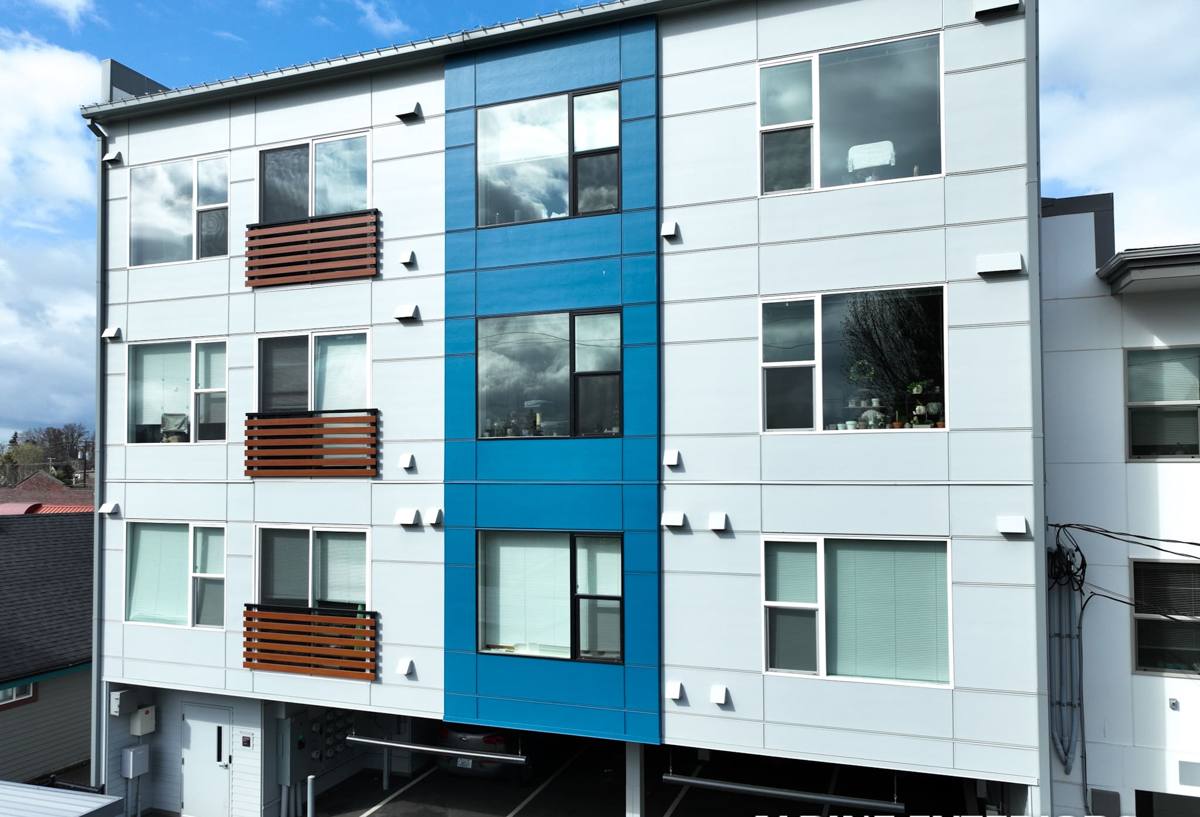
What Correct Window Installation Actually Involves
A window installation is judged on what you can't see once the trim goes back on. The window unit itself is only part of the job. The rest is how it's tied into the wall so water has nowhere to go but back outside.
The Non-Negotiables
- Removing the old window down to the rough opening and checking the sheathing and framing underneath for rot before anything new goes in
- Installing a proper sill pan so any water that gets past the window has a way out, rather than sitting on bare wood
- Flashing the opening in the correct shingle-lap order — sill, jambs, then head — so water sheds down and out at every layer
- Using a sealant and flashing tape rated for the temperature range and UV exposure our marine climate actually delivers, not whatever is cheapest at the counter
- Shimming and fastening the unit so it's square and doesn't bind, since a racked window fails its seals early no matter how good the window is
- Insulating the gap between the window frame and rough opening without overpacking it, which can bow the frame
Skip any one of these steps and the window can look fine for a year or two while moisture works quietly behind the trim. That's the failure pattern we get called out to fix most often — not a bad window, but a window that was never properly tied into the wall.
Where La Conner Homes Run Into Trouble
La Conner has a mix of older, established homes and newer construction, and each type tends to develop its own set of window issues near the water.
Older Homes
Many older homes in and around La Conner still have original or early-replacement wood windows. These can be handsome and are often worth preserving where the frame and casing are sound, but original glazing and weatherstripping rarely hold up to decades of salt air and driving rain. The most common issues we find are failed glazing putty, swollen sashes that no longer seat tight, and hidden rot at the sill where water has been getting behind old caulk for years.
Newer Homes
Newer construction isn't automatically immune. Vinyl and aluminum windows installed without proper flashing or with builder-grade caulk as the only water management often show staining, fogged double-pane glass, or soft trim within ten to fifteen years — much sooner than the window's rated lifespan would suggest. The window itself usually isn't the weak point; the installation is.
Choosing the Right Window for This Climate
There's no single "best" window material for every home — it depends on your budget, your home's style, and how much upkeep you want to take on. Here's how the common options compare for a waterfront-adjacent climate like La Conner's.
| Material | Salt Air & Moisture Behavior | Maintenance | Typical Trade-Off |
|---|---|---|---|
| Vinyl | Won't corrode or rot; performs consistently in salt air | Low — occasional cleaning | Fewer color/finish options than wood or clad |
| Fiberglass | Very stable in temperature swings; strong resistance to moisture and salt exposure | Low | Higher upfront cost than vinyl |
| Wood-clad | Exterior clad layer protects the wood if installed and sealed correctly | Moderate — clad exterior, but interior wood still needs occasional attention | More installation-sensitive; a poor seal lets moisture reach the wood core |
| Aluminum | Prone to pitting and corrosion in direct salt air over time | Higher — hardware and finish need more frequent attention | We generally steer waterfront clients toward other materials for this reason |
For most La Conner homes, we recommend vinyl or fiberglass for straightforward, low-maintenance performance, and wood-clad when a homeowner wants to preserve a specific historic or architectural look and is willing to keep up with the interior finish. We're honest about that trade-off up front rather than selling a look that creates maintenance headaches later.
If Your Home Has Historic Character
Some homes in La Conner have an older, historic look worth preserving from the street. If that's the case for your property, we'll talk through window styles and grille patterns that keep the original character while using modern glazing and weatherstripping behind the scenes. If your property falls within any local historic guidelines, we'll flag that early so there are no surprises — we'd rather confirm requirements up front than have a homeowner deal with them after the fact.
Our Installation Process
- On-site assessment. We look at your existing windows, check for rot or moisture damage around the openings, and measure for accurate ordering.
- Material and style selection. We walk through window types, glass packages, and grille or trim options that fit your home and budget, with straightforward talk about what performs well this close to the water.
- Removal and opening inspection. Old windows come out, and we inspect the sheathing and framing before anything new goes in. If we find rot, we tell you before we cover it back up, not after.
- Sill pan and flashing. Every opening gets a proper sill pan and shingle-lapped flashing sequence, regardless of what was there before.
- Window setting and sealing. The unit is shimmed square, fastened per manufacturer specs, insulated, and sealed with weather-rated materials suited to our climate.
- Interior and exterior trim. Trim is reinstalled or replaced to match your home, with attention to keeping water shedding away from the new seals.
- Final walkthrough. We check operation on every window — smooth opening, tight seal, square reveal — before we call the job done.
Cost Factors to Understand Before You Budget
Window installation pricing varies by home, but a few factors consistently move the number more than homeowners expect.
| Factor | Why It Matters |
|---|---|
| Retrofit vs. full-frame replacement | Retrofit reuses the existing frame and is faster; full-frame replaces everything back to the rough opening and is needed when there's rot or the frame is out of square |
| Hidden rot or water damage | Common in older La Conner homes near the water; discovered during removal, so it can't always be quoted until the opening is opened up |
| Window material and glass package | Vinyl, fiberglass, and wood-clad carry different price points, and upgraded glazing for noise or energy performance adds cost |
| Number and size of openings | Larger or specialty-shaped windows (bay, picture, custom) cost more to fabricate and install than standard sizes |
| Trim and siding tie-in | Matching existing trim profiles or repairing siding disturbed during the swap adds labor |
We give a written, itemized estimate before any work starts, so you know exactly what you're paying for and why — no vague lump-sum numbers.
Why Hire a Crew That Already Works in La Conner
Window installation done wrong in a mild inland climate might not cause problems for years. Done wrong here, with salt air, driving rain off the channel, and moss season working on every exterior surface, the mistakes show up fast. A crew that regularly works La Conner and the surrounding Anacortes area already knows what to check for on the older housing stock, what flashing details actually hold up against this exposure, and which materials are worth the extra cost versus which ones just look good on a spec sheet.
That local experience also means fewer surprises during the job. We've seen what's typically behind the walls of homes from different eras in this area, so when we open up an opening, we generally know what we're dealing with — and we're not guessing at solutions on a climate we don't normally build for.
Keeping New Windows Performing Long-Term
A correct installation is most of the battle, but a little homeowner attention keeps windows performing for their full lifespan in this environment.
- Rinse salt residue and debris off exterior frames and tracks a couple of times a year, especially after storms
- Check exterior caulk lines annually for cracking or separation and have any gaps resealed promptly
- Keep gutters and downspouts clear so water isn't sheeting down past window heads
- Clean moss and organic buildup off nearby siding and trim before it holds moisture against the window opening
- Operate each window a few times a season, even ones you rarely use, so hardware doesn't seize
- Address any interior condensation or musty smell near a window right away — it's often the earliest sign of a seal problem
If you're weighing window replacement for a La Conner home, we're glad to take a look and give you a straight, no-pressure estimate — what your windows actually need, what it will cost, and why. Use the form below to get started.