 Anacortes Siding
 Oak Harbor Roofs Work Harder Than Most
Homes on this stretch of water take a different kind of beating than roofs further inland. Oak Harbor sits on Whidbey Island, connected to Anacortes and the rest of Skagit County by the Deception Pass bridge, and that exposure to open water means wind, salt air, and near-constant moisture are part of daily life for a roof, not occasional stress events. A storm that would barely register on a roof in a sheltered valley can lift shingles, drive water sideways under flashing, and knock loose material that's already been weakened by months of salt and damp.
Storm damage repair here isn't just about patching what broke during the last windstorm. It's about recognizing that the roof was probably already compromised before the storm hit — by corrosion, by moss, by UV and salt breaking down the granules on shingles — and that the storm just exposed it. A repair that only addresses the visible hole or the missing shingles, without accounting for what let the damage happen, tends to fail again at the next blow.
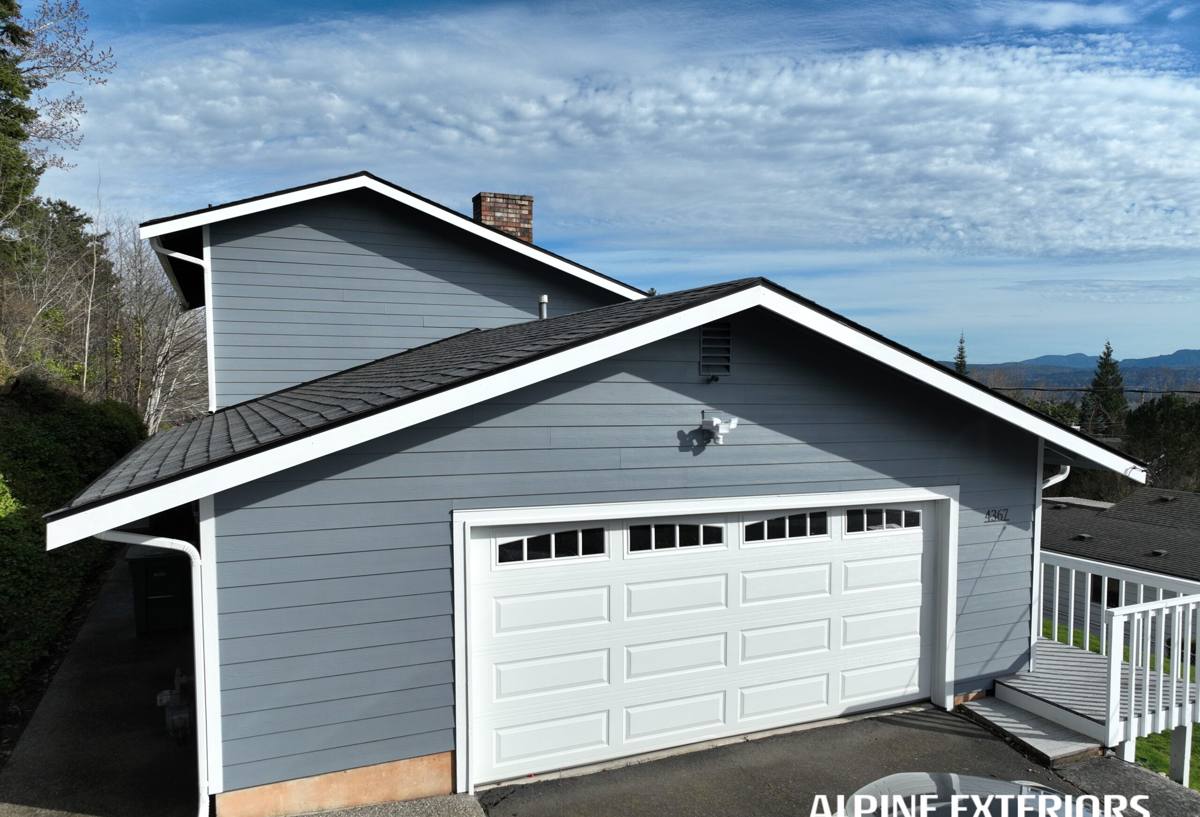
What Storm Damage Actually Looks Like Here
Wind Uplift and Lifted Shingles
Sustained wind off the water gets under the tab edge of a shingle and works it loose, especially on older roofs where the sealant strip has already dried out from years of sun and salt exposure. Once a few shingles lift, the ones around them lose wind resistance too, and a small area of damage can spread across a whole slope over a couple of storm seasons.
Wind-Driven Rain Intrusion
Rain that comes in sideways doesn't behave like rain falling straight down. It gets pushed up under shingle laps, into vent flashing, and around chimney and skylight step flashing that would shed a normal rain just fine. This is why interior water stains often show up days after a storm, not during it — the water is working its way through underlayment and sheathing before it ever reaches drywall.
Debris and Impact Damage
Fir and cedar limbs come down in windstorms, and even a glancing hit can crack a shingle, dent a metal vent cap, or knock a section of ridge cap loose. Impact damage is usually easy to spot. The bigger risk is the debris nobody sees — small branches or needles that wedge into a valley and hold water against the roof deck long after the storm has passed.
The Damage You Don't See From the Ground
Salt Air and Fastener Corrosion
Standard galvanized fasteners and flashing hold up fine in drier, inland parts of Washington. Closer to the water, that same galvanizing wears through faster, and once it does, rust takes over. A corroded nail head or a flashing seam eaten thin by salt air will fail quietly — no dramatic tear, just a slow loss of grip or a hairline gap that lets water in during the next storm.
Moss and the Long Wet Season
Skagit County's long, mild, wet stretch of the year is close to ideal moss-growing weather, and moss doesn't just look bad. It holds moisture against the shingle surface for weeks at a time, works its way under tab edges as it grows, and physically lifts shingles apart. A roof with heavy moss going into storm season is a roof that's already lost some of its wind resistance before the wind even shows up.
What a Correct Storm Repair Involves
Fixing storm damage properly means inspecting more than the obvious problem area. A thorough inspection after a storm covers:
- The full roof surface, not just the slope facing the direction the storm came from
- Flashing around every penetration — chimneys, vents, skylights — since these fail before open field shingles usually do
- Valleys and any spot where debris or moss could be trapping water
- Fastener condition, especially on roofs older than 10-15 years near the water
- The underlayment and decking beneath any lifted or missing shingles, checked for soft spots or existing water damage
- Gutters and downspouts, since storm debris and moss runoff clog these fast and back water up under the eave edge
- Attic or interior ceiling areas below any suspected leak point, checked for staining or damp insulation
Skipping any of these steps is how a "repair" ends up being a return visit six months later for a leak that was never actually fixed, just covered over.
Material Choices That Actually Hold Up Here
Not every roofing material and fastener performs the same way this close to salt water. Some of this comes down to upfront cost, and some comes down to long-term maintenance the homeowner will be doing regardless of what we install.
| Component | Standard Option | Coastal-Grade Option | Why It Matters in Oak Harbor |
|---|---|---|---|
| Fasteners | Electro-galvanized nails | Hot-dip galvanized or stainless | Standard coatings wear through faster in salt air, leading to early rust and loosened shingles |
| Flashing | Painted steel | Aluminum or heavier-gauge coated steel | Holds up longer against salt exposure at valleys, chimneys, and vent penetrations |
| Shingles | Standard architectural | Algae-resistant (copper-granule) architectural | Slows moss and algae growth during the long wet season, though it doesn't eliminate the need for cleaning |
| Underlayment | Standard felt | Synthetic or ice-and-water shield at eaves/valleys | Adds a real backup layer against wind-driven rain that gets past the shingle surface |
We'll walk through which of these makes sense for your specific roof and budget — it's rarely an all-or-nothing decision. A localized repair near the water might only need upgraded flashing and fasteners at the repair area, while a roof nearing the end of its life might be a better candidate for a full re-cover with algae-resistant shingles from the start.
How the Repair Process Works
- Immediate assessment. If there's active leaking or a hole in the roof, our first priority is stopping water intrusion — tarping exposed areas so the damage doesn't spread while repairs are scheduled.
- Full inspection. We walk the roof (weather permitting) and document damage with photos, covering everything on the checklist above, not just the area you called about.
- Written scope and estimate. You get a clear breakdown of what's damaged, what needs replacing versus repairing, and why — no vague line items.
- Insurance coordination. If you're filing a claim, we can meet your adjuster on-site and provide documentation that matches what they need to see.
- Repair work. We match materials as closely as possible to your existing roof, or upgrade specific components (fasteners, flashing) where the original materials clearly contributed to the failure.
- Final walkthrough. We show you what was done and where, and flag anything else on the roof worth keeping an eye on before it becomes its own storm damage claim.
Working With Your Insurance Claim
Most homeowners insurance policies in Washington cover sudden storm damage — wind, falling debris, wind-driven rain intrusion — but they typically don't cover damage that's really the result of long-term neglect, like a roof that failed because moss had been left to grow unchecked for years. This is exactly why the inspection matters: an adjuster wants to see that the damage traces to a specific storm event, and clear documentation with photos and a written scope helps that claim move faster and get approved for what it should cover. We're not a public adjuster and won't promise a claim outcome, but we can document what we find honestly and thoroughly, which is what actually helps your case.
Why Hire a Crew That Already Works This Area
Storm damage repair isn't the place to learn a region's quirks on your dime. A crew that regularly works Oak Harbor and the rest of the Anacortes area already knows which fastener and flashing upgrades are worth the extra cost this close to the water, how aggressively moss needs to be managed given the local wet season, and how quickly wind-driven rain finds its way into flashing that would be fine somewhere drier. That familiarity means fewer surprises during the inspection and a repair scope that accounts for the real conditions your roof deals with every year — not a generic fix pulled from a checklist written for a different climate.
It also means faster response. After a significant windstorm, demand for tarping and emergency repairs spikes across the whole region, and a local crew already scheduling in Oak Harbor can usually get to you faster than a company dispatching from further away.
Keeping Your Roof Ahead of the Next Storm
Between storm seasons, the most useful thing a homeowner here can do is keep moss growth under control, keep gutters clear of needles and debris, and get an occasional visual check of flashing points rather than waiting for a leak to show up inside the house. None of this is complicated or expensive on its own, but skipped consistently over a few years, it's exactly what turns a moderate windstorm into an emergency repair call.
If a recent storm has left you with missing shingles, a leak, or just some uncertainty about what shape your roof is really in, we're glad to take a look. We offer free, no-pressure estimates — reach out through the form below and we'll get a time on the calendar.