 Anacortes Siding
 Old Town Anacortes Puts Siding Through More Than Most Neighborhoods
Old Town Anacortes sits close to the water, in one of the original platted sections of the city, and its housing stock reflects that age. A lot of these homes were built well before modern weather barriers, rainscreen gaps, or engineered siding existed. That combination — older wall assemblies plus a waterfront location in Skagit County — means the siding on these homes is doing more work than siding on a newer subdivision a few miles inland.
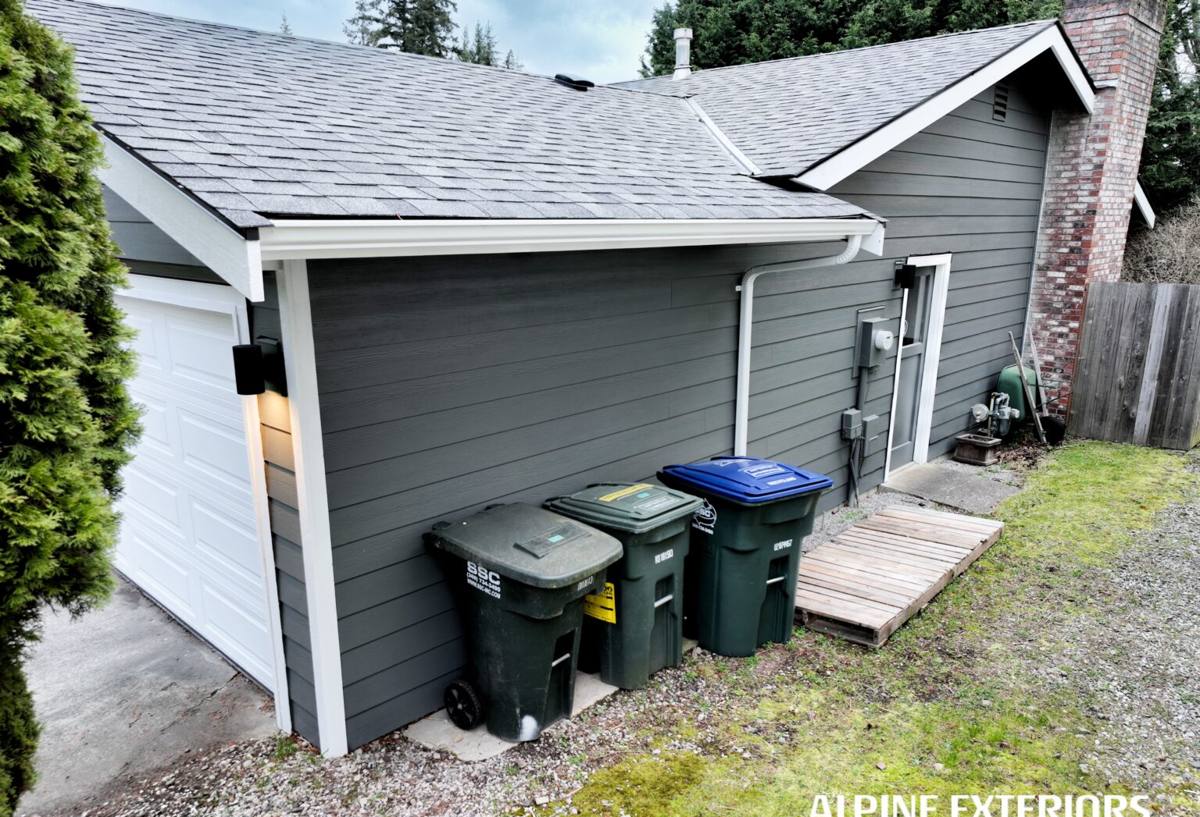
We work on siding across Anacortes and the surrounding area, and Old Town jobs tend to follow a pattern: homeowners come to us after noticing paint failure, soft spots near the bottom courses, or siding that just looks tired years before it should. Almost always, the root cause traces back to the same three things — salt air, driving rain, and a moss season that runs longer here than it does even a short drive inland.
What Salt Air, Rain, and Moss Actually Do to Siding
Each of these factors attacks siding differently, and understanding the mechanism matters when you're deciding what to put back on the wall.
Salt Air
Proximity to Fidalgo Bay and the surrounding waterways means airborne salt settles on exterior surfaces year-round. Salt is hygroscopic — it pulls moisture out of the air and holds it against whatever it's sitting on. On a painted wood or engineered wood surface, that means the paint film stays damp longer between rain events, which accelerates peeling, chalking, and the breakdown of the substrate underneath.
Driving Rain
Anacortes gets weather off the water, and it doesn't always fall straight down. Wind-driven rain finds horizontal laps, butt joints, and trim intersections that a calmer climate would never test. Siding systems that rely on caulk alone to keep water out, rather than proper flashing and drainage, tend to fail at these exact joints first.
Moss and Sustained Dampness
Mature trees and a long wet season mean moss and algae get a foothold on north-facing and shaded walls and stay there for months. Moss holds moisture against the siding surface far longer than open air ever would, which is exactly the condition that causes wood-based products to swell, delaminate, or rot at the edges over time.
None of these conditions are unique to Old Town Anacortes, but the combination — waterfront salt exposure, an older tree canopy, and homes built before modern moisture-management details were standard — shows up here more concentrated than in most parts of Skagit County.
Why We Install Only James Hardie Fiber Cement
We don't install vinyl, LP SmartSide, Cemplank, Allura, primed spruce, or cedar. That's not a marketing position — it's a standard we set because of exactly the conditions described above. Vinyl expands and contracts with temperature swings and can warp or bow with age, primed wood and spruce products need consistent repainting and are the first to show moisture damage, and cedar looks excellent when new but demands ongoing maintenance and is combustible. Every one of those products can perform reasonably well somewhere. In a salt-air, high-rain, long-moss-season environment, none of them hold up as consistently as fiber cement over the long run.
James Hardie siding is fiber cement — sand, cement, and cellulose fibers formed under pressure. It doesn't absorb water the way wood-based products do, it doesn't rot, and it's non-combustible, which matters given how dry and fire-prone summers have become even in typically damp parts of Washington. Hardie also builds its HZ5 product line specifically for climates like ours, with engineering aimed at moisture and temperature cycling rather than a one-size-fits-all national product.
Matching Hardie's Product Lines to Old Town's Older Homes
Old Town Anacortes has a mix of architectural styles, and part of doing this job right is matching the siding profile to the house rather than defaulting to one look for every project.
- HardiePlank lap siding — the standard choice for most homes here, available in several exposure widths and smooth or cedar-textured finishes, works well on classic and craftsman-influenced homes alike.
- HardieShingle siding — staggered or straight-edge panels that replicate a shingled look, a good fit for period homes in the neighborhood that originally had shingle or shake siding and where the owner wants to keep that character.
- HardieTrim boards — used around windows, corners, and fascia to match the fiber cement performance of the field siding instead of mixing in wood trim that will weather at a different rate.
- ColorPlus factory finish — a baked-on finish that resists fading and chalking from UV and salt exposure far better than field-applied paint, and it comes with its own finish warranty separate from the substrate warranty.
Choosing the wrong profile for a home's style is a cosmetic mistake that's expensive to undo later. We walk every Old Town estimate through this decision before we talk about anything else.
What Correct Installation Actually Looks Like Here
James Hardie siding performs the way it's engineered to only when it's installed to spec, and in a coastal, high-rain environment the details matter more than usual. A correct job on an older Old Town home typically involves:
Assessing and Repairing What's Underneath
On homes this age, we don't just cover over the existing wall. Old siding comes off, sheathing gets inspected, and any rot or moisture damage found underneath gets repaired before anything new goes up. Installing new siding over a compromised wall just hides the problem — it doesn't fix it.
A Proper Drainage Plane
A weather-resistant barrier and a drainage gap behind the siding give any moisture that does get past the surface a way to escape instead of sitting against the wall. This is one of the details older homes in this neighborhood were never built with, and it's one of the most important upgrades a re-side provides.
Correct Clearance and Flashing
Bottom-of-wall clearance from grade, decks, and roof lines, along with proper flashing at every window, door, and horizontal trim intersection, keeps wind-driven rain from finding its way behind the siding at the joints where it's most likely to try.
Manufacturer-Spec Fastening and Caulking
Fastener placement, spacing, and caulking at butt joints all follow James Hardie's published installation specifications. This isn't optional detail work — installing off-spec is one of the most common ways a Hardie warranty claim gets denied later.
What Drives Cost on an Old Town Siding Project
Every home is different, but these are the factors that most often move the number up or down on an older, waterfront-adjacent home.
| Factor | Why It Matters |
|---|---|
| Condition of existing sheathing | Rot or moisture damage found during tear-off means repair work before new siding can go up |
| Home size and story height | More square footage and taller walls mean more material, more labor, and more staging/scaffolding time |
| Siding profile chosen | Lap siding, shingle siding, and panel systems carry different material and labor costs |
| Trim and detail complexity | Older homes often have more windows, dormers, and architectural detail than newer construction |
| Access and site conditions | Mature landscaping, narrow lots, and proximity to neighboring structures affect how quickly a crew can work |
We don't quote a job until we've actually looked at the walls. A number based on square footage alone, without knowing what's underneath the existing siding, isn't a real estimate.
Our Process, Start to Finish
- On-site inspection — we look at the current siding, check for soft spots and moisture damage, and talk through your goals for the project.
- Written estimate — a clear scope of work and price based on what we actually find, not a generic per-square-foot guess.
- Tear-off and sheathing repair — old siding comes off, and any damaged sheathing or framing gets addressed before moving forward.
- Weather barrier and drainage gap installation — the moisture-management layer that older homes in this area were never originally built with.
- Hardie installation to manufacturer spec — correct fastening, clearances, and flashing at every joint and penetration.
- Final walkthrough — we go over the finished job with you before we consider it done.
What to Ask Before Hiring Anyone for This Job
- Do they pull the required permit through the City of Anacortes, or ask you to skip it?
- Do they inspect and repair sheathing, or just install over whatever is already there?
- Are they factory-certified to install James Hardie products, and can they explain what that certification actually covers?
- Do they include a drainage gap and proper weather barrier, or rely on caulk alone?
- Will they put the scope of work, materials, and warranty terms in writing before starting?
Why Local Experience in Old Town Anacortes Matters
A crew that has actually worked on homes in this neighborhood knows what to expect before they pull the first board off the wall — where moisture damage tends to hide on a waterfront-adjacent, tree-shaded lot, which walls take the worst of the wind-driven rain, and how to sequence a job around the older framing and trim details common to homes of this era. That experience shows up in fewer surprises mid-project and a finished result that's built for the conditions this specific neighborhood deals with, not a generic install done the same way everywhere in Skagit County.
If your Old Town Anacortes home needs new siding, or you're not sure whether what's on the walls now is doing its job, we're happy to take a look and give you a straightforward, no-pressure estimate. There's no obligation — just an honest read on what your home needs.