 Anacortes Siding
 Metal Roofing Built for Oak Harbor's Coastal Climate
Homes in the Oak Harbor area deal with a specific combination of weather that most roofing crews from outside the region don't think about until it's already caused a problem. Salt-laden air off the water, long stretches of driving rain, and a moss season that can run most of the year all put steady pressure on a roof. We work throughout the Anacortes and Skagit County area, and Oak Harbor's coastal exposure across the water is part of the same weather pattern we deal with every week. A roof that's a good fit for a drier inland climate is not automatically a good fit here, and that matters most when you're choosing a roofing material meant to last decades.
Metal roofing has become a popular choice for homeowners in this area for good reason, but "metal roofing" covers a range of products and installation approaches, and not all of them perform the same way once salt air and standing moisture get involved. This page covers what actually matters for a metal roof going on a home in the Oak Harbor area: what the climate does to a roof over time, what a correctly installed metal roof looks like, and what our process involves from first inspection to final walkthrough.
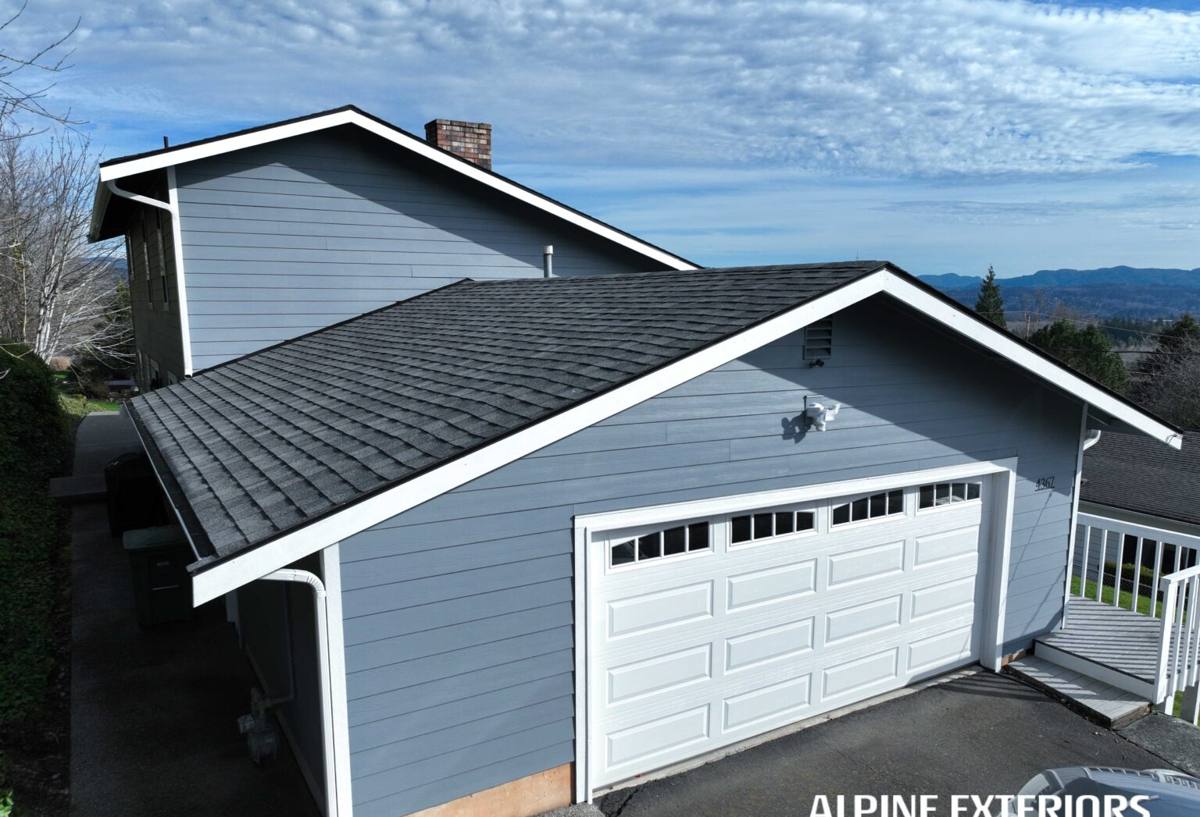
What Salt Air, Rain, and Moss Actually Do to a Roof
Salt Air and Corrosion
Coastal air carries fine salt particles that settle on every exterior surface, including your roof. On metal roofing, this matters because salt accelerates corrosion on fasteners, flashing, and any exposed cut edges where the protective coating has been compromised. It's not a fast process, but over years, untreated or mismatched metal components can start to rust well before the main roofing panels show any wear. The fix isn't complicated, but it does require using fasteners, flashing, and trim rated for coastal exposure rather than whatever is cheapest or most convenient.
Standing Water and Moss Growth
Anacortes and the surrounding islands get a lot of drizzle and light, sustained rain rather than short heavy downpours, and that pattern keeps roof surfaces damp for long stretches at a time. Combined with shade from mature trees, that dampness is exactly what moss and algae need to establish themselves. On composition shingles, moss roots work into the granules and shingle mat, gradually lifting edges and creating channels where water can get underneath. On a properly installed metal roof, there's no organic mat for moss to root into, and the smooth, sloped panel surface sheds water fast enough that moss has a much harder time gaining a foothold in the first place. It's not moss-proof — algae staining and buildup in valleys and against trim can still happen — but the underlying material isn't degrading the way shingle mat does.
Why Metal Roofing Holds Up Better in This Environment
For a home in a wet, coastal climate, metal roofing offers a few practical advantages over other common materials:
- Fast water shedding. The smooth panel surface and steep effective slope of most metal profiles move rain off the roof quickly instead of letting it sit and soak in.
- No organic material to break down. Unlike shingles, metal panels don't have a mat or granule layer that moss, algae, or moisture can slowly degrade.
- Strong wind and debris performance. Properly fastened metal panels handle wind-driven rain and storm debris better than lighter roofing materials, which matters during winter windstorms off the water.
- Long service life when installed correctly. A well-installed metal roof with quality coatings is one of the longest-lasting roofing options available, which reduces how often you're dealing with roof work at all.
- Lower maintenance burden over time. Fewer granules to lose, no shingle edges to lift, and less surface for moss to colonize means less routine upkeep.
None of that means metal roofing is maintenance-free or the automatic right choice for every home — roof pitch, existing structure, budget, and the look you want all factor in. But for homes exposed to salt air and heavy seasonal rain, it's a material that's genuinely built for the conditions rather than tolerating them.
Choosing the Right Metal Roofing System
"Metal roofing" isn't one product. The panel type you choose affects appearance, cost, and how the roof performs over time in this climate.
| Panel Type | How It's Fastened | Coastal Performance | Typical Use |
|---|---|---|---|
| Standing seam | Concealed clips, no exposed fasteners on the panel field | Best moisture and corrosion resistance; no exposed screw heads to fail over time | Full roof replacements, higher-end installs |
| Exposed-fastener panels | Screws driven through the panel face into the substrate | Solid performance if fasteners and washers are coastal-rated and re-checked periodically | Budget-conscious full replacements, outbuildings, shops |
| Metal shingles/shakes | Interlocking panels made to mimic shingle or shake appearance | Good water shedding with a more traditional look; more seams than standing seam | Homeowners wanting a metal roof that reads as a conventional roofline |
Exposed-fastener systems cost less up front, but every one of those fastener penetrations is a point where a washer can eventually harden, shrink, or corrode and start to leak. In a low-salt, dry climate that might take a very long time. In a coastal environment, we recommend factoring in periodic fastener inspection as part of ownership, or choosing standing seam where the budget allows, since it removes that failure point almost entirely.
What a Correct Metal Roof Installation Actually Involves
Underlayment
Metal panels are the visible layer, but the underlayment underneath is what protects the roof deck if wind-driven rain ever gets past the panels at a seam, penetration, or edge. In a climate like this, we use synthetic underlayment rated for high-moisture exposure, with self-adhered ice-and-water barrier at eaves, valleys, and any low-slope transitions where water is most likely to back up.
Fastening and Panel Layout
Fastener spacing, panel overlap, and clip type all affect how well a metal roof handles wind uplift and thermal movement — metal panels expand and contract with temperature swings, and a system that doesn't account for that will eventually work fasteners loose or oil-can (visible waviness) across the panel face. Correct installation means following the panel manufacturer's spacing and fastening specs exactly, not approximating them.
Flashing and Penetrations
Most metal roof leaks don't happen through the panels themselves — they happen at flashing details: chimneys, plumbing vents, skylights, and valleys. Each of these needs flashing designed for metal roofing specifically, properly lapped with the panels and sealed with materials rated for long-term outdoor exposure, not general-purpose caulk that will crack and shrink within a few years.
Ventilation
A metal roof installed over a poorly ventilated attic can trap moisture underneath, leading to condensation issues that have nothing to do with the roofing material itself and everything to do with airflow. Part of a correct installation is checking that intake and exhaust ventilation are adequate before the new roof goes on, not assuming the existing setup is fine.
Our Process for Oak Harbor Metal Roofing Projects
- Inspection and assessment. We look at the existing roof deck, ventilation, flashing points, and any moss or moisture damage before recommending anything.
- System recommendation. Based on your roof's slope, structure, and budget, we walk you through panel options and explain the honest trade-offs between them.
- Tear-off and deck prep. Old roofing material comes off, and we repair or replace any deck sections that have been compromised by past moisture intrusion.
- Underlayment and flashing installation. We install moisture barrier and flashing at every eave, valley, and penetration before a single metal panel goes down.
- Panel installation. Panels are installed to the manufacturer's fastening and spacing specifications, with attention to how the panels will handle thermal movement over time.
- Final walkthrough. We go over the finished roof with you, including what routine maintenance we recommend given your property's specific exposure and tree cover.
Keeping a Metal Roof Sound Through Moss Season
Metal roofing needs far less upkeep than shingles, but "less" isn't "none." A short annual routine goes a long way in this climate:
- Clear leaves, needles, and debris from valleys and around penetrations before the fall rains set in.
- Check gutters and downspouts for clogs so water isn't backing up against the roof edge.
- Look for algae or moss buildup in shaded valleys and low-slope sections, and remove it gently without pressure-washing the panel finish.
- Have exposed fasteners (on exposed-fastener systems) checked periodically for backed-out screws or worn washers.
- Watch for any staining on interior ceilings after major storms, which can be an early sign of a flashing issue rather than the panels themselves.
What Affects the Cost of a Metal Roof in This Area
| Factor | Why It Matters |
|---|---|
| Panel system chosen | Standing seam costs more than exposed-fastener panels due to material and labor complexity |
| Roof pitch and complexity | Steeper roofs, multiple valleys, and dormers all add labor time and flashing work |
| Existing deck condition | Moisture or moss damage found during tear-off may require deck repair before installation |
| Ventilation upgrades | Adding or correcting attic ventilation as part of the project affects both cost and long-term performance |
| Coastal-rated hardware | Corrosion-resistant fasteners and flashing cost more than standard-grade hardware but pay off in this climate |
We don't quote metal roofing off a square-footage number alone — an accurate estimate requires seeing the actual roof, its pitch, its penetrations, and its current condition.
Why Hire a Crew That Already Works the Oak Harbor Area
A roofing crew that mostly works drier, inland climates can still put on a technically sound roof, but they're less likely to think about coastal-rated fasteners as a default, or to catch early moss damage that a crew working this region every week would recognize immediately. We work throughout Anacortes, Skagit County, and the surrounding coastal communities, so decisions about underlayment, flashing materials, and hardware are based on what actually holds up here, not on general best practices written for a different climate. That local familiarity also means straightforward scheduling and a crew that isn't learning the region's weather patterns on your project.
If you're weighing a metal roof for your Oak Harbor-area home, we're happy to take a look and walk you through what your specific roof needs. Use the form below to request a free, no-pressure estimate.