 Anacortes Siding
 Asphalt Shingle Roofing Built for the Skagit Valley
Mount Vernon sits in the Skagit River valley, close enough to Puget Sound that homes here deal with a mix of salt-tinged marine air, long stretches of driving rain off the water, and the kind of shade and dampness that keeps roofs wet for days at a time. That combination is hard on any roofing material, but it's especially hard on a roof that wasn't installed with this climate in mind. An asphalt shingle roof put on the way it would be in a dry inland state won't hold up the same way out here.
We install and repair asphalt shingle roofs for homeowners throughout Mount Vernon and the surrounding Skagit Valley, and we build every roof around the conditions it actually has to survive — not a generic spec sheet. That means the right underlayment, the right ventilation, and shingle products chosen for moisture and moss resistance, not just looks.
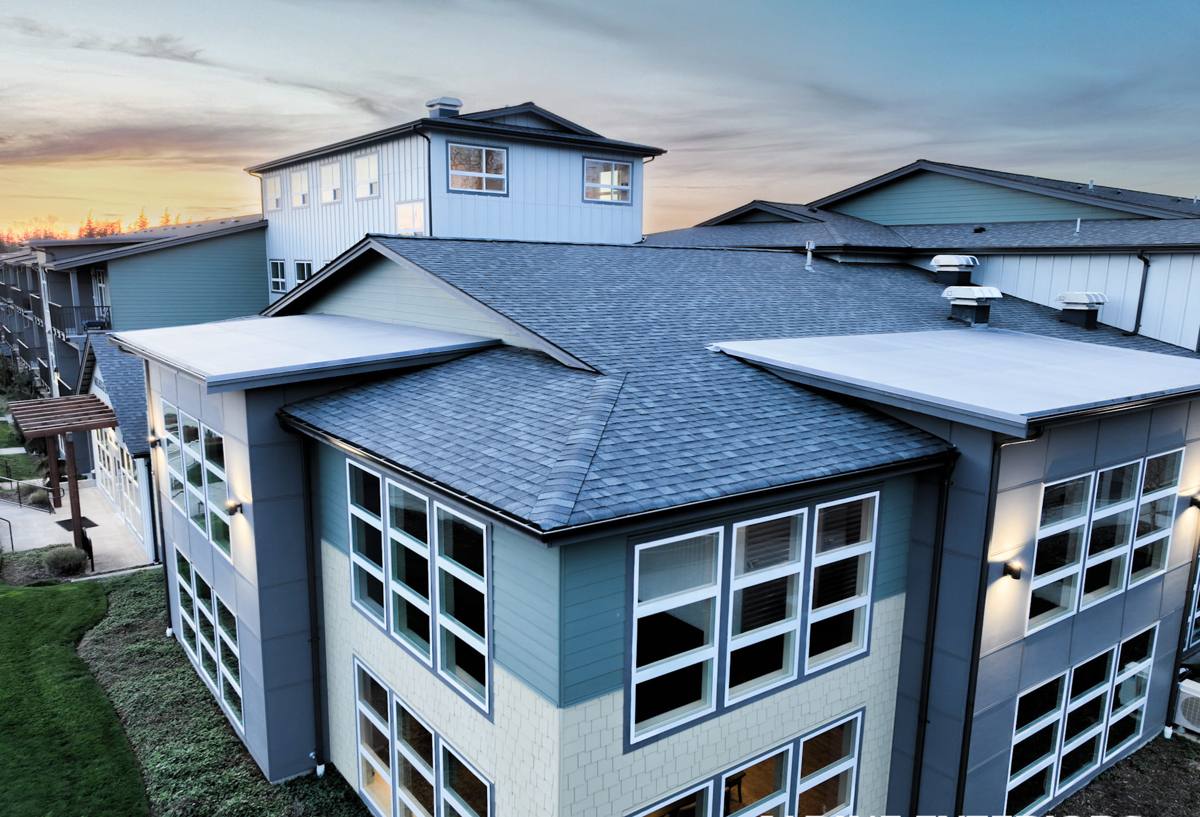
What Mount Vernon's Climate Does to a Roof
Driving Rain and Wind-Driven Moisture
Storms coming off Puget Sound don't just drop rain straight down — wind pushes it sideways, up under shingle tabs and into any gap in the flashing. A roof that's only "good enough" in calm weather will start leaking at valleys, chimney flashing, and eave edges the first time a real windstorm rolls through the valley.
Salt Air and Corrosion
Homes closer to the water pick up salt-laden air that accelerates corrosion on exposed metal — nail heads, flashing, vent caps, and gutter hardware all age faster here than they would inland. Cheap or under-coated fasteners and flashing are usually the first thing to fail, long before the shingles themselves wear out.
Moss, Algae, and Shade
Mount Vernon's tree cover and long wet season give moss and algae months at a time to get established on a north-facing slope or a roof that doesn't get much sun. Moss isn't just cosmetic — it holds moisture against the shingle surface, works its way under tabs, and can lift shingles enough for wind and rain to get underneath.
What a Correct Installation Actually Involves
A shingle roof is only as good as what's underneath it. Most premature failures we get called out to inspect aren't a bad shingle — they're a shortcut somewhere in the layers you can't see once the roof is finished.
Underlayment and Moisture Protection
We use synthetic underlayment across the full roof deck for a tougher, more consistent moisture barrier than old-style felt, and we install self-adhered ice-and-water membrane at eaves, valleys, and around every roof penetration — the spots where wind-driven rain and standing moisture cause the most trouble in this climate.
Ventilation That Matches the House
Balanced intake and exhaust ventilation keeps the attic dry and close to outside temperature. Without it, moisture from daily living gets trapped under the deck, which rots sheathing from below and can void a shingle warranty — a problem that shows up years later, not on installation day.
Flashing and Valleys
Chimneys, skylights, sidewalls, and valleys are where most leaks start. We use corrosion-resistant metal flashing sized and formed for each detail, not universal trim pieces stretched to fit, and we tie new flashing properly into existing siding or step flashing rather than caulking over gaps.
Choosing a Shingle for This Climate
Not every asphalt shingle product performs the same way under constant damp and moss pressure. We'll walk through what fits your roof, your budget, and how much shade and exposure your home actually gets — but here's the general trade-off between the common options.
| Shingle Type | Typical Lifespan | Moss/Algae Resistance | Best Fit |
|---|---|---|---|
| 3-tab (standard) | 15–20 years | Standard, needs regular upkeep | Budget-conscious re-roofs, low-slope simple roofs |
| Architectural/laminate | 25–30 years | Better; heavier profile sheds debris more easily | Most Mount Vernon homes — our most common install |
| Algae-resistant (AR) laminate | 25–30 years | Built-in copper/zinc granules resist streaking and moss growth | Shaded lots, north-facing slopes, tree-heavy properties |
| Impact-resistant | 30+ years | Good, thicker mat also resists moisture intrusion | Homes wanting maximum durability and possible insurance credit |
For most Mount Vernon properties with any tree coverage, we lean toward algae-resistant laminate shingles. The extra cost up front is modest compared to the labor of moss treatment and premature repair down the road.
Our Roofing Process
- Inspection and estimate. We check the existing roof, decking condition, ventilation, and any trouble spots — flashing, valleys, moss buildup — and give you a written estimate before any work starts.
- Tear-off. Old shingles, underlayment, and damaged flashing come off down to the deck so we can see the actual condition of the sheathing, not guess at it.
- Deck repair. Any soft, rotted, or delaminated sheathing gets replaced — this is common on older Skagit Valley homes where moisture has been getting in slowly for years.
- Underlayment and flashing. Synthetic underlayment, ice-and-water membrane at vulnerable areas, and new corrosion-resistant flashing go in before a single shingle is laid.
- Shingle installation. Shingles are installed to manufacturer nailing specs and local wind exposure, with attention to proper overlap and sealing at eaves and rakes.
- Ventilation check. Intake and exhaust venting is verified or upgraded so the attic can actually dry out between wet spells.
- Cleanup and final walkthrough. Job site cleared of debris and nails, and we walk the roof and the estimate with you so nothing's a surprise.
Living With a Shingle Roof in a Wet Climate
Even a correctly installed roof needs some upkeep in Skagit Valley conditions. The goal isn't constant maintenance — it's a short list of things done at the right time so small issues don't turn into deck repairs.
- Keep gutters and downspouts clear so water isn't backing up under the eave edge, especially during fall leaf drop and winter storms.
- Trim back overhanging branches to cut down shade and debris buildup, which slows moss growth significantly.
- Have moss treated (not power-washed, which can strip granules) as soon as it appears rather than after it's spread across a slope.
- Watch for granules collecting in gutters — a sign of shingle wear that's worth having looked at.
- Get a roof checked after any major windstorm, particularly if you notice a lifted or missing shingle.
- Schedule a professional look every couple of years, even without visible problems — small flashing or sealant issues are far cheaper to fix early.
Warning Signs Your Roof Needs Attention
Roof problems in this climate rarely show up as a dramatic leak first. They usually start quiet:
- Dark streaking or thick moss growth, particularly on shaded or north-facing slopes
- Shingle tabs curling, cracking, or looking noticeably thinner than the rest of the roof
- Granules accumulating in gutters or at downspout outlets
- Daylight visible through the attic roof deck, or damp insulation after a storm
- Soft spots when walking the roof, or sagging along a ridge or valley line
- Rusty streaks below flashing or vent stacks
Any one of these is worth a look before the next big storm season, not after.
What Affects the Cost
Every roof is different, but the same handful of factors drive most of the price difference between two roofs of similar size.
| Cost Factor | Why It Matters |
|---|---|
| Roof size and number of layers to remove | Tear-off labor and disposal scale directly with square footage and how many old layers are on the deck |
| Roof pitch and access | Steeper roofs and tight lot access take longer and require more safety setup |
| Deck condition | Rotted or delaminated sheathing found during tear-off adds material and labor to replace it properly |
| Shingle grade selected | 3-tab, standard laminate, algae-resistant, and impact-resistant products carry different material costs |
| Flashing and detail work | Chimneys, skylights, multiple valleys, and dormers all add labor beyond a simple gable roof |
| Ventilation upgrades | Adding or correcting intake/exhaust venting is a smaller cost during a re-roof than after |
We give a written, itemized estimate so you can see exactly what's driving the number — not a vague lump sum.
Why Hire a Crew That Already Works in Mount Vernon
A roofer who mostly works drier climates or unfamiliar territory will often default to a spec that's fine somewhere else but under-built for what a Skagit Valley winter throws at it. Working this area regularly means we already know which details matter here: where wind-driven rain tends to find weak points, how much ventilation a typical local attic actually needs, and which shingle products hold up against sustained moss pressure instead of just looking good on the sample board.
It also means straightforward scheduling around the wet season, a crew that shows up when we say we will, and a company you can actually reach if a question comes up after the job is done. We're not travelling in from out of the area for a one-off job — this is the region we work in every week.
Get a Straightforward Roofing Estimate
If your Mount Vernon home needs a new asphalt shingle roof, a repair, or just an honest inspection to see where things stand, we're glad to take a look. Fill out the form below for a free, no-pressure estimate — we'll tell you what we actually see, not what's easiest to sell.