 Anacortes Siding
 Why La Conner Windows Take More Punishment Than Most
La Conner sits right where the fresh water of the Skagit valley meets the salt water of the Swinomish Channel, and that combination shapes everything about how windows age here. The air carries salt off the water, the rain comes in sideways more often than it falls straight down, and the low, damp winters mean moss and mildew get a long head start on any surface that stays wet. Windows take the brunt of all three. A window that would last two decades in a dry inland climate can start failing at the seals in half that time out here if it wasn't built or installed with this climate in mind.
We're an Anacortes-based crew, and La Conner is close enough to home that it's part of our regular route, not a special trip. That matters more than it sounds like it should — we'll get to why later in this page.
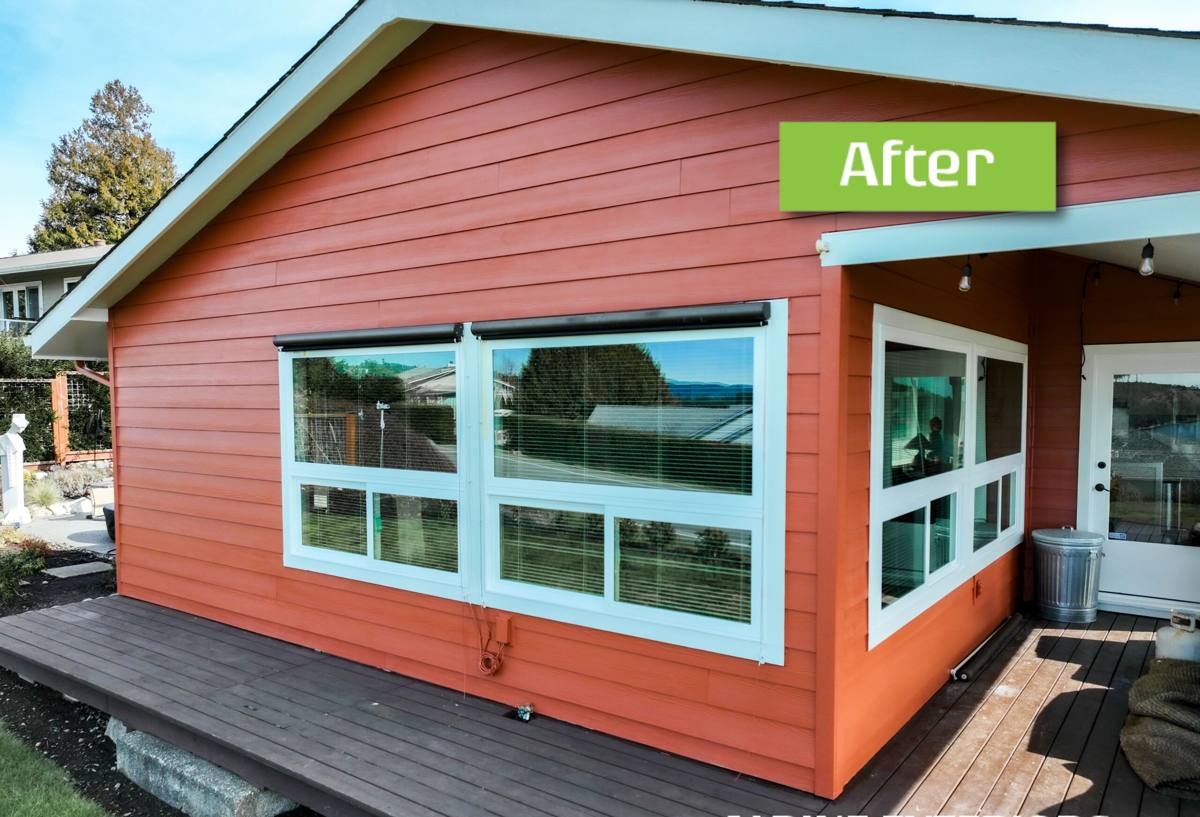
What "Energy-Efficient" Actually Has to Mean Here
Energy-efficient windows get marketed with a lot of numbers — U-factor, solar heat gain coefficient, condensation resistance — and most homeowners are told to just "look for Energy Star" and move on. That's not wrong, but in a marine climate like ours, some of those numbers matter more than others.
U-Factor Over Solar Heat Gain
Western Washington doesn't get the brutal summer sun that makes solar heat gain coefficient the priority in hotter climates. Here, the bigger cost driver is heat loss through the glass and frame during our long, cool, wet season. A lower U-factor — meaning less heat escapes through the window — does more for a La Conner heating bill than a window optimized to block summer sun that barely shows up.
Condensation Resistance
This one gets overlooked constantly, and it shouldn't be. High humidity plus temperature swings between a warm interior and cold, damp exterior is exactly the recipe for condensation on glass and, worse, inside the frame cavity where you can't see it. A window with a poor condensation resistance rating will fog, drip, and eventually feed mold growth at the sill — a much bigger problem than a slightly higher heating bill.
Gas Fill and Spacer Systems
Argon-filled double or triple pane glass with a warm-edge spacer (rather than an old-style aluminum spacer) holds its insulating value longer and resists the edge-of-glass condensation that aluminum spacers are known for. In a climate this damp, that detail is worth asking about specifically when you're comparing quotes.
Signs Your Current Windows Are Losing the Fight
Most homeowners don't replace windows until something forces the issue. Here's what we look for — and what you can check yourself before calling anyone.
- Condensation or fogging between the panes (a sign the seal has failed and the gas fill is gone)
- Visible moss, algae, or black staining building up on the sill or frame, especially on north- and west-facing walls
- Soft or discolored wood trim around the frame — often the first sign water is getting behind the window, not just sitting on top of it
- Noticeable draft when you hold a hand near the frame on a windy day
- Difficulty opening, closing, or locking — frames can swell or warp slightly with repeated wetting and drying
- A cold spot on the wall below the window in winter, which usually means the flashing or insulation around the frame has failed, not just the glass
Any one of these on its own isn't an emergency. Several together, especially with visible wood damage, usually means the window and the framing around it both need attention.
Frame Materials That Actually Hold Up in This Climate
Frame material matters as much as the glass package in a marine environment. Here's how the common options compare for a home in La Conner's climate specifically.
| Frame Material | How It Handles Salt Air & Moisture | Maintenance | Typical Lifespan Here |
|---|---|---|---|
| Vinyl | Doesn't corrode or rot; performs well in salt air with no coating to maintain | Low — occasional cleaning | 20-30 years |
| Fiberglass | Very stable dimensionally, resists moisture and corrosion, holds paint well if color changes are wanted later | Low | 30-40+ years |
| Aluminum | Conducts cold and can corrode faster near salt air unless it has a marine-grade finish | Moderate — finish needs monitoring | Varies widely with coating quality |
| Wood / Wood-Clad | Handles well when detailed and finished correctly, but exterior wood is the most exposed part to driving rain and rot over time | Highest — finish and caulk need regular upkeep | Depends heavily on maintenance |
We don't push one material on every job. Vinyl and fiberglass are our default recommendation for most La Conner homes because they ask the least of the homeowner over time, but a wood-clad window can be the right call on a home where the look matters more and the owner is committed to keeping up the exterior finish. What we won't do is install a window system in a way that hides a maintenance problem behind a nice-looking frame — the trade-offs should be clear before you decide, not discovered five years later.
What a Correct Installation Actually Involves
The window itself is maybe half the job. In a climate where wind-driven rain is normal, the installation detailing is what decides whether water stays out for the next 20 years or finds its way into the wall cavity in year three.
Flashing Comes First
Every opening gets flashed so that water is directed out and down, layered correctly with the weather-resistive barrier already on the wall — never just caulked and hoped for. This is the single most common point of failure we find when we're called out to fix a leak from someone else's install.
Sealing the Right Places, Not Every Place
Sealant belongs at specific points designed to shed water, not smeared around the entire perimeter as a catch-all. Over-sealing can actually trap moisture that gets in from elsewhere and give it nowhere to drain back out.
Shimming and Squaring
A window that isn't shimmed level and square will stress at the corners over time, which is where seals fail first. It also makes the window harder to operate and can void the manufacturer's warranty if it's out of spec.
Interior and Exterior Trim Detail
Trim gets set back correctly and any wood trim gets primed on all sides — including the back and cut ends — before it goes up. Skipping the back side of a trim board is a small shortcut that shows up as rot in a few wet seasons.
How Our Process Works
- Walkthrough and assessment — we look at every window being discussed, not just the ones you've noticed problems with, and check the condition of the surrounding trim and siding
- Honest recommendation — which windows need replacement now, which can wait, and which frame and glass package fits the exposure on that specific wall
- Written estimate — line-item pricing so you know what you're paying for materials versus labor
- Scheduling around the weather — we don't open up a wall assembly on a day the forecast says otherwise; a rushed install in the wrong conditions is how leaks start
- Installation — flashing, shimming, sealing, and trim done in the sequence that actually keeps water out
- Final walkthrough — we check operation, look, and finish with you before we consider the job done
What Drives the Cost
Every home is different, but the same handful of factors move the price up or down on most La Conner jobs.
| Factor | Why It Matters |
|---|---|
| Number of openings | Per-window cost drops somewhat with volume, but each opening still needs full flashing and sealing attention |
| Frame material | Vinyl is typically the most budget-friendly; fiberglass and wood-clad cost more upfront but shift the maintenance picture |
| Condition of the existing opening | Rot or damage found once the old window is out adds repair work before the new one can go in |
| Glass package | Upgraded low-e coatings, gas fill, and impact-resistant options all add cost but pay back differently depending on exposure |
| Story height and access | Second-story or hard-to-access openings take more time and setup |
We give a straight range during the walkthrough once we know what we're actually dealing with — we don't like quoting blind any more than you like receiving a blind quote.
Why It Matters That We Already Work in La Conner
A crew that only sees La Conner once won't necessarily know that a west-facing window here takes rain differently than one three miles inland, or that moss growth on a north wall isn't a sign of a bad window — it's just what happens on a north wall in Skagit County if nothing's been done about it in years. That's not a knock on any particular company; it's just what happens when a job is a one-off drive-by instead of part of a crew's regular territory.
Working this area regularly also means we're not guessing at permitting expectations or how the local building department wants window replacements documented, and we're not learning the area's weather patterns on your project. We're an Anacortes crew, so La Conner, the Swinomish Channel side of town, and the rest of Skagit County are places we already know, not places we're figuring out on your dime.
Get a Straight Answer on Your Windows
If your windows are fogging, drafting, sticking, or just past their useful life, we're happy to take a look and give you an honest read on what's actually needed — no pressure, no upsell on windows that don't need replacing yet. Use the form below to request a free estimate, and we'll walk through your home's specific exposure with you before recommending anything.