 Anacortes Siding
 Oak Harbor Windows Live in a Tougher Climate Than People Realize
Oak Harbor sits on the north end of Whidbey Island, across Deception Pass from our home base in Anacortes. It's a short drive for our crew, but the two towns share the same weather system that makes window work here different from window work forty miles inland: near-constant marine air off the Salish Sea, wind-driven rain that comes in sideways instead of straight down, and a wet season that stretches from fall through spring with barely a break. Add in the salt content carried on the air off Saratoga Passage and Puget Sound, and you've got conditions that are genuinely harder on window frames, seals, and sills than what a standard manufacturer spec sheet is written for.
None of that means Oak Harbor homes need exotic products. It means the installation details — flashing, sealant choice, frame material, and how the window is tied into the wall assembly — matter more here than they would somewhere dry. A window that's "fine" in Wenatchee can fail early in Oak Harbor if it's installed the same way.
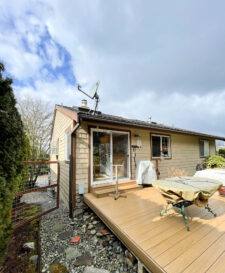
Signs an Oak Harbor Home Actually Needs Window Replacement
Not every old window needs to come out. Some just need new weatherstripping or a re-glaze. Here's what actually points to full replacement rather than a repair:
Drafts, Fogging, and Energy Loss
If you can feel air movement around a closed window during a windstorm, or the glass fogs between panes (a sign the seal has failed and the gas fill is gone), the unit is done. Single-pane wood windows original to older Oak Harbor homes are also simply undersized for this climate — they were built before double-pane became standard, and heating bills reflect it every winter.
Soft Wood, Staining, and Rot at the Sill
Wood-frame windows that sit low on a wall, under an eave with poor overhang, or on a west- or south-facing wall that takes the brunt of storms are the first to show rot. Press a screwdriver gently into the sill and lower corners — if it sinks in instead of resisting, water has been getting behind the frame for a while, and painting over it won't fix the underlying problem.
Salt Film, Pitting, and Hardware That Won't Operate
Aluminum-frame windows near the water can develop a chalky white corrosion (salt-driven oxidation) on the frame, and locks or cranks can seize from the same exposure. If a window won't latch fully or the crank grinds, that's often corrosion inside the hardware, not just dirt.
What a Correct Window Replacement Job Actually Involves
The window itself is maybe half the job. The other half — the part that decides whether it lasts 25 years or leaks in three — is how it's installed. In a coastal, high-rain area like Oak Harbor, we treat these steps as non-negotiable:
Removal and a Real Structural Check
Once the old window is out, the rough opening gets inspected, not just re-covered. Any soft or water-stained framing, sheathing, or sill plate gets cut out and replaced before anything new goes in. Installing a new window into a rotten opening just hides the problem for a few more years.
Flashing and Water Management, Not Just Caulk
Caulk is a backup, not a water barrier. A correct install uses flashing tape or a pan flashing at the sill, integrated with the home's weather-resistive barrier so that any water that does get behind the trim has a path to drain back out — not a place to pool. This is the single most common shortcut we see on older or poorly done replacements, and it's the one most responsible for hidden rot.
Sealing, Insulation, and Interior Finish
The gap between the window frame and the rough opening gets filled with low-expansion foam or backer rod and sealant — never packed tight with fiberglass insulation alone, which does nothing to stop air infiltration. Interior and exterior trim gets resealed and, where needed, repainted or recaulked to match.
Choosing a Frame Material for Coastal Whidbey Island Conditions
Frame material matters more here than the glass package in most cases, because the frame is what's exposed to salt air and rain year-round. Here's how the common options actually compare in this climate:
| Frame Material | How It Handles Salt Air & Moisture | Maintenance | Our Take |
|---|---|---|---|
| Vinyl | Won't corrode or rot; handles moisture well | Low — occasional cleaning | Solid, budget-friendly default for most Oak Harbor homes |
| Fiberglass | Excellent — very stable in wet, salty air, minimal expansion/contraction | Low | Best long-term performer near the water; higher upfront cost |
| Aluminum | Prone to oxidation and pitting near salt air over time | Moderate — needs periodic attention to hardware and finish | We're cautious recommending it this close to the water |
| Wood (clad or unclad) | Handles moisture poorly unless well-clad and maintained | High — repainting, caulking, sill checks | Fine for interior character; needs a durable exterior cladding here, not bare wood |
This isn't about one product being "bad" — it's about matching material to exposure. A wood window on a covered porch facing away from the weather can do fine for decades. The same window on an exposed, storm-facing wall in Oak Harbor is a different bet entirely.
How the Job Runs, Start to Finish
- Free on-site assessment. We walk the exterior, check each window's exposure and condition, and note anything the estimate needs to account for — rot, undersized openings, or trim work.
- Written estimate and product selection. You get a clear scope, frame material and glass options explained honestly, and a firm price before anything is scheduled.
- Scheduling around Whidbey weather. Window replacement is weather-dependent — we don't pull a window out of a wall with a storm on the way. We schedule with realistic buffer for Oak Harbor's rain patterns.
- Install, day of. One opening at a time stays exposed to the elements for as short a window as possible, with proper flashing and sealing at every step.
- Walkthrough and cleanup. We check operation on every window, clean up debris and packaging, and confirm you're satisfied before we call it done.
Why a Crew That Already Works Oak Harbor Is Worth Choosing
A contractor based well inland, quoting Oak Harbor as an occasional add-on trip, doesn't always price or plan around the realities of this specific stretch of coastline — the exposure differences between a downtown lot and a bluff-front property, the extra care flashing takes in a place that gets this much wind-driven rain, or the simple logistics of getting a crew and materials across Deception Pass reliably. We run this route regularly as part of serving Anacortes, Skagit County, and the surrounding islands, so Oak Harbor isn't a special trip — it's part of the normal service area, priced and scheduled like it.
Being a smaller, local operation also means the people who quote the job are the same people who show up to do it, and who'll be reachable afterward if a question comes up about how something was installed.
What Affects the Cost of Window Replacement in Oak Harbor
Every home is different, so we won't put a fake number on your project here — but these are the real factors that move the price up or down, and worth understanding before you get quotes:
| Factor | Why It Matters |
|---|---|
| Number of windows | Per-window cost typically drops on larger, whole-house jobs versus one or two at a time |
| Frame material | Vinyl is typically the most affordable; fiberglass costs more upfront but holds up longest near salt air |
| Glass package | Double-pane is standard; triple-pane or upgraded low-E coatings add cost but improve comfort and noise control |
| Condition of the rough opening | Rot repair, resized openings, or structural framing work add labor beyond a straightforward swap |
| Access and site conditions | Second-story windows, tight lot access, or extensive trim work all affect labor time |
We'll walk through all of this on-site and give you real numbers for your home, not a generic per-window average that doesn't account for your actual conditions.
Keeping New Windows Performing Through Oak Harbor's Wet Season
A properly installed window is largely maintenance-free, but a few habits go a long way in this climate:
- Rinse salt film off frames and glass periodically, especially on wind-exposed sides of the house
- Check and clear weep holes at the bottom of the frame each fall so water has somewhere to drain
- Keep an eye on caulk lines around trim — reseal small gaps before they become entry points for water
- Watch for moss or algae buildup on north-facing sills and trim during the long wet season, and clean it off before it holds moisture against the wood or paint
- Operate locks and cranks a few times a year even on windows you don't open often, so hardware doesn't seize
If you're weighing whether it's time to replace windows on an Oak Harbor home, we're happy to take a look and give you a straight answer — including telling you if a repair makes more sense than a full replacement. Reach out using the form below for a free, no-pressure estimate.