 Anacortes Siding
 Siding Built for Life on Fidalgo Island
Fidalgo Island sits at the edge of Skagit County where the Salish Sea meets the mainland, and that location shapes everything about how a home's exterior ages here. Homes on and around the island deal with a combination most inland Washington properties never see: salt-laden air rolling off the water, wind-driven rain that hits siding sideways instead of straight down, and a wet season long enough to grow moss on nearly any north-facing wall that doesn't get much sun. Siding that works fine in a drier, more sheltered part of the state can fail early here if it isn't chosen and installed with these conditions in mind.
We install James Hardie fiber cement siding exclusively, and on Fidalgo Island that's not a marketing preference — it's a response to what we've seen happen to other materials in this specific environment. This page walks through what the local climate actually does to siding, what a correct installation looks like, and how our process works for homeowners in this area.
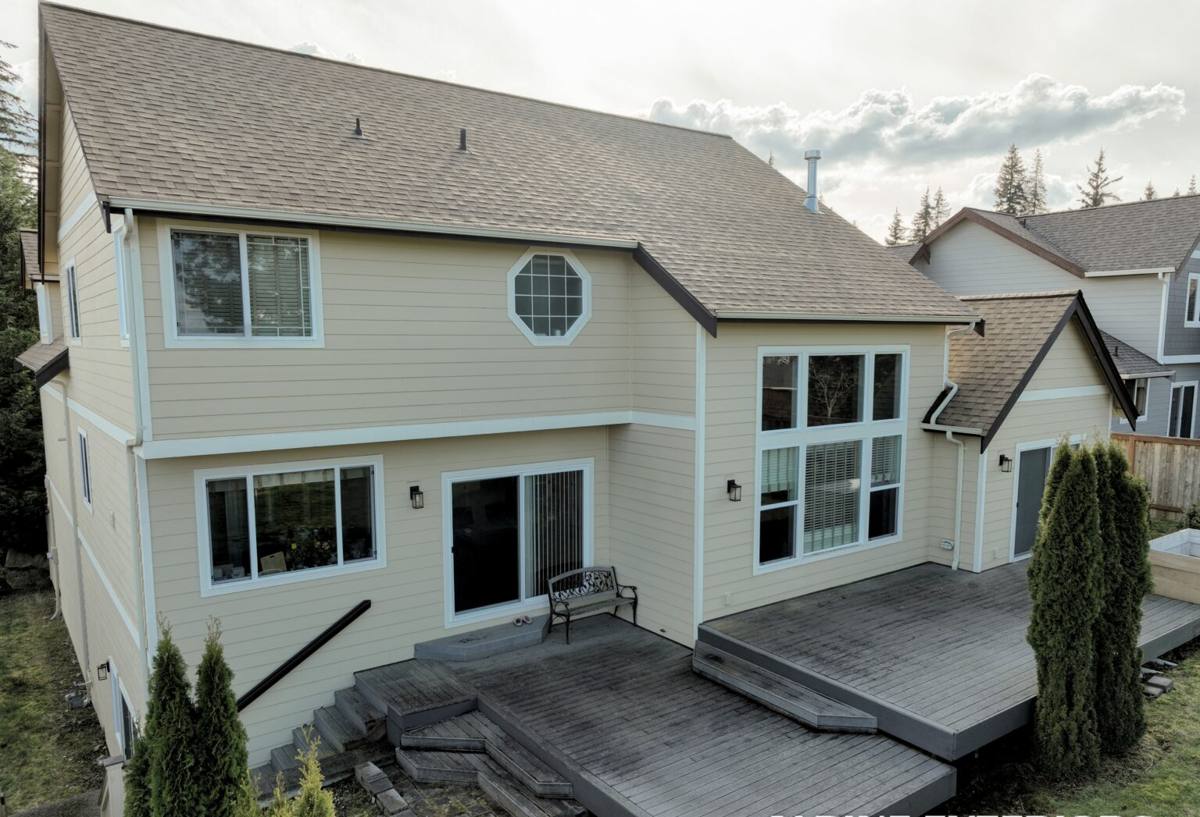
What Salt Air, Driving Rain, and Moss Actually Do
Salt Air
Airborne salt is corrosive to metal fasteners, flashing, and trim, and it accelerates the breakdown of lower-grade coatings on siding surfaces. Over years, salt exposure can pit unprotected metal components and cause paint and factory finishes to chalk, fade, or fail faster than the same products would inland. This isn't unique to Fidalgo Island — it's true anywhere close to saltwater — but it's a real factor for exterior material choices here that a lot of general contractor advice doesn't account for.
Driving Rain
Wind off the water doesn't just bring rain, it pushes it. Driving rain gets forced sideways and upward into laps, seams, and any gap in the water-resistive barrier behind the siding. A siding system depends on more than the face material to keep a house dry — it depends on correct overlaps, properly flashed penetrations, and a drainage plane that actually drains. Installation quality matters more here than in calmer, drier climates because the margin for error is smaller.
Moss Season
Skagit County's wet, mild winters and shaded north and east elevations create ideal conditions for moss and algae growth on exterior surfaces. Moss holds moisture against the siding face for extended periods, which is a problem for any material that can absorb water or swell when saturated. It's also a maintenance issue — moss-covered siding needs periodic cleaning, and how well a material tolerates that cleaning without damage is worth thinking about before you choose it.
Why We Standardized on James Hardie for This Environment
James Hardie fiber cement is composed of cement, sand, and cellulose fiber. It doesn't absorb and swell with moisture the way wood-based products can, and it's non-combustible, which matters given the dry-summer wildfire risk that still exists in parts of Western Washington despite the wet winters. Hardie's ColorPlus factory finish is baked on under controlled conditions and backed by a substantial finish warranty — that matters directly for salt air exposure, since a factory-cured finish holds up to UV and airborne salt better than field-applied paint typically does.
Hardie also makes climate-engineered product lines, including an HZ5 formulation designed for regions with more freeze-thaw cycling and moisture exposure. For a marine-influenced climate like Fidalgo Island's, using the product line actually engineered for wet, variable conditions — rather than a generic version — is part of doing the job right, not an upsell.
We don't install LP SmartSide, vinyl, Cemplank, Allura, primed spruce, or cedar. Each of those has legitimate uses elsewhere, but none of them combine non-combustible composition, a factory-cured finish warranty, and a track record in wet marine climates the way Hardie does. We'd rather install one product system correctly and stand behind it than offer five options and hope one holds up.
Comparing Siding Materials in a Marine Climate
| Material | Moisture Behavior | Salt Air / Coastal Durability | Combustibility |
|---|---|---|---|
| James Hardie Fiber Cement (HZ5) | Does not swell or rot; engineered for wet climates | Factory ColorPlus finish resists chalking and fade | Non-combustible |
| Vinyl | Doesn't absorb water but can warp with heat and UV cycling | Color can fade faster under coastal UV/salt exposure | Combustible, can melt/deform |
| Primed Spruce / Cedar | Absorbs moisture; prone to rot and moss retention | Requires frequent repainting near saltwater | Combustible |
| LP SmartSide (engineered wood) | Treated to resist moisture but still wood-based; edge sealing is critical | Field-applied finishes wear faster in salt air | Combustible |
What a Correct Installation Involves on Fidalgo Island
The siding panel itself is only part of the system. Given the driving rain this area gets, the details behind and around the panels are where most long-term failures actually start. A correct job includes:
- A continuous, properly lapped water-resistive barrier installed before any siding goes up
- Correct panel overlap and gapping per Hardie's published fastening and clearance specifications
- Flashing at every window, door, and penetration, integrated with the water-resistive barrier rather than just caulked over it
- Proper ground and roofline clearance so siding isn't sitting in standing water or constant splash-back
- Corrosion-resistant fasteners appropriate for a coastal-influenced environment
- Factory-cut and factory-primed panel edges wherever possible, since field-cut edges need to be sealed correctly to perform as designed
Skipping any of these doesn't show up as a problem on day one. It shows up two, five, or ten years later as trapped moisture, staining, or premature finish failure — usually in the exact places driving rain hits hardest, which on Fidalgo Island tends to be west- and south-facing walls exposed to weather coming off the water.
Our Process for Fidalgo Island Homes
1. On-Site Assessment
We walk the property and look at sun exposure, prevailing wind and rain direction, existing moss or moisture staining, and the condition of the current siding and trim. This tells us where extra attention to flashing and drainage will matter most on that specific home.
2. Removal and Sheathing Check
Old siding comes off and we inspect the sheathing underneath for rot or moisture damage before anything new goes up. Covering up a moisture problem instead of addressing it just guarantees a repeat failure under the new siding.
3. Water-Resistive Barrier and Flashing
This is the step that matters most in a driving-rain climate. We install and lap the barrier correctly and flash every opening before panels go on — not after.
4. Hardie Panel Installation
Panels are installed to Hardie's fastening, clearance, and overlap specifications, using the HZ5 product line suited to this region's moisture and freeze-thaw exposure.
5. Trim, Caulking, and Final Inspection
Trim and joints are sealed with exterior-grade sealant compatible with the ColorPlus finish, and we do a final walkthrough to confirm clearances, fastening, and flashing are all correct before we call the job done.
Maintenance Realities for This Climate
No siding is maintenance-free, but the maintenance burden differs a lot by material in a wet, salt-influenced climate. Hardie's factory finish reduces how often repainting is needed compared to field-finished wood products, and the material itself won't rot or swell if moss or algae does develop on shaded elevations. Homeowners on Fidalgo Island should still expect to periodically rinse pollen, moss spores, and salt residue off exterior surfaces, and to keep gutters and downspouts clear so water isn't sheeting down the siding face longer than necessary.
Homeowner Checklist: Signs Your Current Siding Is Struggling
- Persistent moss or dark staining on north- or east-facing walls that returns quickly after cleaning
- Soft or spongy spots when you press on the siding, especially near the bottom courses
- Paint or finish that's chalking, peeling, or fading unevenly, particularly on walls facing the water
- Visible gaps, warping, or panel separation at seams and corners
- Musty odors or interior moisture signs on exterior-facing walls
Why a Crew That Already Works Fidalgo Island Matters
Installation quality is what determines whether any siding system performs the way it's designed to, and that quality depends on crews who understand the specific conditions they're building for. A crew that regularly works Fidalgo Island and the surrounding Anacortes area already knows which elevations take the worst weather, how aggressive moss growth gets on shaded sides, and where driving rain tends to find weak points in a water-resistive barrier. That local familiarity translates into fewer callbacks and a siding system that's actually set up to handle the environment it's going into, rather than a generic installation approach applied without regard for where the house sits.
If you're weighing a siding replacement on Fidalgo Island or elsewhere in the Anacortes area, we're happy to take a look at your home, explain what we're seeing, and put together a straightforward estimate — no pressure, no hard sell. Use the form below to get started.