 Anacortes Siding
 Why Bow Roofs Need a Different Approach
Bow sits in that stretch of Skagit County where Samish Bay weather and open farmland wind meet head-on. Homes here take a steady diet of salt-laden air off the water, wind-driven rain that finds every weak seam, and a moss season that can run eight months out of the year under the fir and cedar canopy common to the area. A roofing material that performs fine in a drier inland climate can struggle here. Metal roofing, installed correctly, is one of the few systems that holds up to all three of those stresses at once — but "installed correctly" is doing a lot of work in that sentence, and it's where a lot of roofs in this area go wrong.
We work throughout Skagit County, including Bow, Edison, and the rural county roads around Highway 11 and Chuckanut, so we see how these roofs age in real conditions, not just how they look on install day.
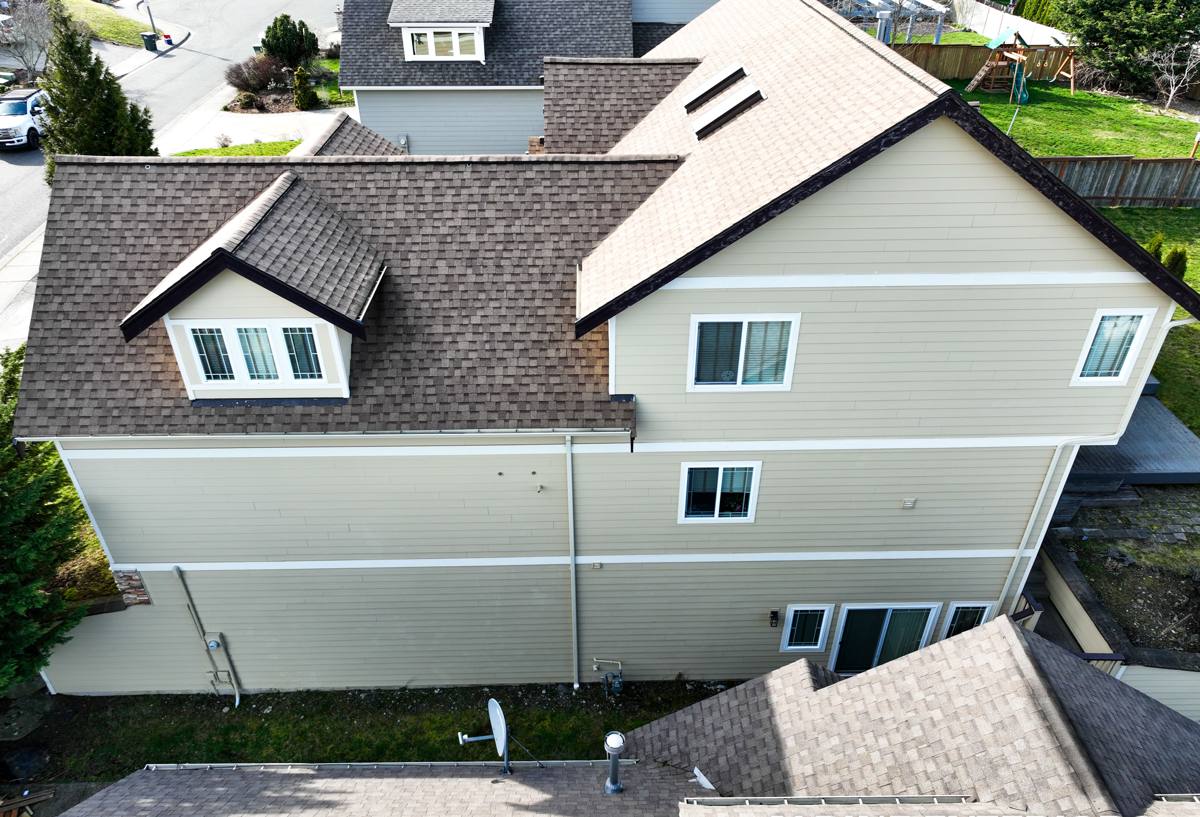
What Salt Air, Rain, and Moss Actually Do to a Roof
Salt Air and Coastal Moisture
Proximity to Samish Bay means airborne salt settles on every exterior surface, including the roof. On uncoated or poorly coated metal, that salt accelerates corrosion at cut edges, fastener heads, and any point where the protective coating has been scratched or thinned during installation. This is a materials and workmanship issue more than a "metal roofing doesn't work here" issue — the right coating system and careful handling during install make the difference between a roof that shrugs off decades of salt exposure and one that shows rust streaks in five years.
Driving Rain
Storms moving through this part of the county often bring rain sideways, not straight down. That matters because it pushes water into laps, seams, and penetrations that would stay dry in a calmer climate. A metal roof's water resistance depends almost entirely on how the panels are lapped, how fasteners are sealed, and how flashing is detailed at valleys, walls, and roof penetrations. Panel choice matters less here than installation discipline.
Moss and Organic Growth
Shade from surrounding trees, combined with long stretches of damp weather, gives moss and algae plenty of opportunity to establish themselves on a roof. On asphalt shingles, moss roots into the granule surface and holds moisture against the deck, which shortens the roof's life. Metal roofing gives moss almost nothing to grip, so growth stays on the surface where it can be rinsed off rather than working its way into the roofing material itself. This is one of the clearest practical advantages of metal roofing for wooded Bow lots.
What a Correct Metal Roofing Job Involves
Metal roofing is unforgiving of shortcuts in a way that shingle roofing sometimes isn't. A few missed details won't show up as a leak next week — they show up as a leak in three years, usually after the crew that installed it is long gone. A correct job includes:
- Full tear-off and deck inspection, replacing any soft or delaminated sheathing rather than roofing over it
- A synthetic underlayment rated for the panel type, lapped and sealed to shed wind-driven rain even if water ever gets past the panels
- Ice-and-water membrane at eaves, valleys, and low-slope transitions where standing water risk is highest
- Panel fastening and spacing that matches the manufacturer's wind and thermal-movement specifications, not a generalized pattern
- Properly formed and lapped flashing at every wall intersection, chimney, skylight, and vent penetration
- Closure strips and trim details at ridges and eaves to block wind-driven rain and pests without trapping moisture
- Fasteners and trim in a metal compatible with the panel to prevent galvanic corrosion, especially important given salt exposure near the bay
Every one of those items is invisible once the roof is finished. That's exactly why they matter — a roof that looks right on install day can still be built wrong underneath.
Panel Options and How They Perform in Bow's Climate
Not every metal roofing product is a good fit for coastal Skagit County conditions. Here's how the common options compare for a Bow property specifically.
| Panel Type | Salt Air Performance | Best Fit |
|---|---|---|
| Standing seam steel (Galvalume or aluminum-zinc coated) | Strong — concealed fasteners reduce corrosion entry points | Most Bow homes, especially those closer to the bay |
| Exposed-fastener steel panels | Adequate if fasteners and gaskets are maintained | Outbuildings, shops, budget-conscious projects |
| Aluminum panels | Excellent — naturally corrosion resistant, no rust risk | Properties with heavy direct salt exposure |
| Copper or specialty metals | Very good but high cost and specialized install | Accent roofs, porches, architectural features |
For most full roof replacements in the Bow area, we lean toward standing seam systems in a coastal-rated coating. The concealed fastener design removes the most common failure point — exposed screws working loose or corroding over time — which matters more here than in a drier, inland climate.
Cost Factors for a Bow Metal Roof
Pricing varies with roof complexity, access, and material choice, so we won't quote a number without seeing the property. What actually moves the price on a job like this:
| Factor | Why It Affects Cost |
|---|---|
| Roof pitch and complexity | Steep or multi-plane roofs take longer to flash correctly and require more safety setup |
| Panel and coating system | Coastal-rated coatings and heavier gauge steel or aluminum cost more upfront |
| Deck condition | Rot or delamination found during tear-off adds material and labor to repair before panels go on |
| Number of penetrations | Every chimney, vent, and skylight needs custom flashing, which adds labor |
| Tree cover and access | Rural Bow lots with mature trees sometimes need extra staging or debris management |
Metal roofing costs more upfront than asphalt shingles, but the calculus changes when you factor in a shingle roof's typical need for replacement roughly twice as often in this climate, plus the ongoing moss treatment and gutter clearing that shaded, damp roofs tend to require.
Our Process on a Bow Property
1. On-Site Assessment
We walk the roof and attic, not just the ground. Deck condition, ventilation, existing moss or moisture damage, and tree exposure all factor into the recommendation before we talk materials.
2. Straight Options, No Pressure
We'll lay out panel and coating options with honest trade-offs — cost, appearance, and maintenance — so the decision fits your budget and how long you plan to stay in the home.
3. Tear-Off and Deck Repair
Old roofing comes off, the deck gets inspected, and any soft or water-damaged sheathing is replaced before anything new goes down. This step gets skipped by crews trying to move fast, and it's the step that determines whether the new roof lasts.
4. Underlayment, Flashing, and Panel Installation
Full underlayment coverage, ice-and-water membrane where it's needed, and flashing details built for wind-driven rain, then panels installed to manufacturer spec.
5. Final Walkthrough
We review the finished roof with you, including how to spot early moss regrowth or debris buildup around valleys and gutters so small issues stay small.
Why a Crew That Already Works This Area Matters
A roofing crew that mostly works dry, inland jobs doesn't always think about wind-driven rain details or galvanic corrosion between dissimilar metals — those aren't problems they see often. A crew that regularly works Skagit County's coastal edge builds those details into every job by habit, not as an afterthought. That familiarity with local conditions — the bay's salt air, the rain patterns, the tree cover that feeds moss growth — shapes decisions from panel selection to flashing detail on every roof we install in Bow.
Licensing, insurance, and manufacturer training matter too. Ask any contractor bidding a metal roof for proof of manufacturer certification on the panel system they're proposing, and confirm they carry current WA state contractor licensing and liability insurance before signing anything.
Signs Your Current Roof Is Struggling With Bow's Climate
- Moss buildup that returns within a season of cleaning
- Rust streaks or stains at fastener heads or panel seams on an existing metal roof
- Granule loss or curling shingles, especially on north-facing or shaded slopes
- Water stains on interior ceilings after wind-driven storms specifically
- Gutters that fill with debris faster than they used to due to overhanging trees
If you're seeing any of these, it's worth having the roof looked at before a small issue becomes a deck repair.
If you're weighing a metal roof for a Bow property, we're happy to walk the roof, look at the attic, and give you honest options — no pressure, no obligation. Use the form below to request a free estimate.