 Anacortes Siding
 Roof Repair Built for Edison's Coastal Climate
Edison sits in the farmland and tidal-flat country of west Skagit County, close enough to Samish Bay and the open water around Anacortes that roofs here take a different kind of beating than roofs twenty miles inland. It's not one dramatic storm that does the damage — it's the steady grind of salt-laden air, wind-driven rain, and a moss season that runs longer than most homeowners realize. A roof repair done right in this area has to account for all three, not just patch the spot that's leaking today.
We work on homes throughout the Anacortes area, and Edison's mix of older farmhouses, newer rural builds, and outbuildings gives us a good cross-section of what this climate does to a roof over time. The patterns repeat: fasteners corrode faster near the water, moss gets a foothold under tree cover and in shaded valleys, and flashing details that would hold up fine in a drier climate start failing years ahead of schedule.
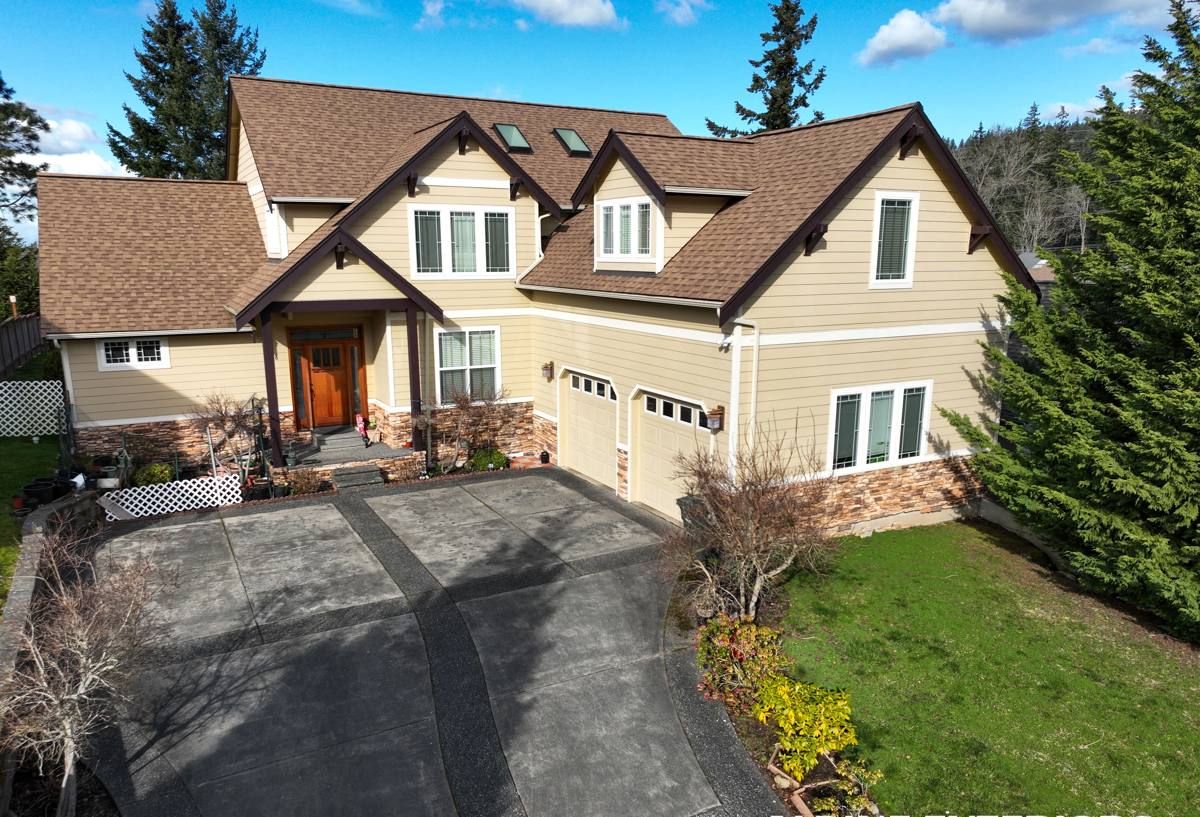
What Salt Air, Rain, and Moss Actually Do to a Roof
Salt Air and Corrosion
Airborne salt from Samish Bay and the broader Puget Sound doesn't just sit on the surface — it works into exposed metal fasteners, flashing seams, and gutter hardware. Galvanized nails and standard steel flashing corrode noticeably faster within a few miles of open water than they do further inland. Once a fastener starts rusting, it loses grip on the shingle or panel it's holding, and that's often where a small leak starts.
Driving Rain
Skagit County storms frequently come in with wind behind them, which means rain doesn't just fall straight down — it gets pushed sideways under shingle tabs, into open flashing laps, and through any gap that would stay dry in a calmer climate. Roof details that rely on gravity alone to shed water are more likely to leak here than in places with less wind-driven weather.
Moss and Moisture Retention
Edison's tree cover, cooler damp air, and long wet season give moss everything it needs. Moss holds moisture directly against the roofing material, which accelerates granule loss on asphalt shingles, promotes wood rot on cedar, and can lift shingle edges enough to let wind-driven rain underneath. A roof that looks fine from the ground can already have moss working under the surface at the ridges and in shaded north-facing slopes.
Signs a Repair Is Needed Now, Not Later
Roof problems in this climate rarely announce themselves clearly. Most homeowners notice a stain on a ceiling long after the actual failure point started letting water in. Here's what we tell Edison homeowners to watch for between inspections:
- Granules collecting in gutters or at downspout outlets — a sign of accelerated shingle wear
- Moss buildup along ridges, valleys, or the north-facing slope
- Rust streaking below metal flashing, vents, or exposed fasteners
- Curling, cracked, or lifted shingle tabs, especially on wind-exposed roof faces
- Soft or discolored spots on interior ceilings, particularly after a windy storm
- Daylight visible through the roof deck from inside an attic space
- Gutters pulling away from the fascia or sagging under debris weight
Any one of these can mean an isolated repair. Several at once, especially combined with a roof that's already 15-20 years old, usually means it's worth having us take an honest look at whether repair or replacement makes more financial sense.
Roof Repair vs. Roof Replacement
Not every roof problem needs a full replacement, and we don't push one when a targeted repair will hold up. The decision generally comes down to how localized the damage is and how much life is left in the rest of the roof.
| Situation | Usually Repair | Usually Replace |
|---|---|---|
| Single leak, isolated flashing failure | Yes | No |
| Moss damage limited to one slope | Yes | No |
| Widespread granule loss, roof over 20 years old | No | Yes |
| Multiple past repairs in different areas | No | Yes |
| Storm damage to a small section, rest of roof sound | Yes | No |
| Deck rot found under shingles during inspection | Depends on extent | Often, if widespread |
We'll walk you through which category your roof falls into and explain the reasoning, not just hand you an estimate for the bigger job.
Common Repairs We Handle Around Edison
| Problem | Typical Cause Here | What the Fix Involves |
|---|---|---|
| Leak at chimney or vent | Deteriorated or corroded flashing | Remove and rebuild the flashing detail with proper step and counter-flashing |
| Moss-damaged shingles | Shade, tree cover, prolonged dampness | Careful moss removal, damaged shingle replacement, zinc or copper strip installation to slow regrowth |
| Wind-lifted shingles | Exposed slopes facing open water or fields | Re-secure or replace lifted tabs, reseal exposed nail heads |
| Rusted fasteners and flashing | Salt air exposure | Replace with corrosion-resistant fasteners and coated or non-ferrous flashing |
| Soft or rotted decking | Long-term moisture intrusion under failed shingles | Cut out and replace affected decking before re-covering |
| Clogged or sagging gutters | Moss and debris buildup contributing to roof-edge moisture | Clear, resecure, or replace gutter sections tied into the roof edge |
How We Approach a Repair Visit
1. Inspection First
We look at the whole roof, not just the spot you called about. A leak at one location is sometimes fed by a failure point several feet away — water travels along the deck before it finds a way through the ceiling.
2. Straight Answer on Scope
We'll tell you plainly whether this is a contained repair or the first sign of something bigger. If the roof is nearing the end of its service life, we'd rather say so now than have you pay for repairs that won't hold.
3. Correct the Root Cause
Patching over a symptom without fixing what caused it just means a return visit. If moss caused the failure, we address drainage and shade contributors where we can, not just the damaged shingles.
4. Match Materials and Fasteners to the Climate
Given Edison's salt air exposure, we use corrosion-resistant fasteners and flashing rather than standard galvanized hardware wherever it matters for longevity, particularly on roof faces closest to open water.
5. Clean Job Site, Clear Documentation
We remove old material and debris, and we explain what we found and what we did — useful if you ever need it for insurance or future resale disclosures.
Materials We Use for Repairs in This Climate
For asphalt shingle roofs, we match repairs to the existing shingle line as closely as possible and prioritize proper flashing details over just sealing gaps with caulk or roofing cement, which tends to fail faster in this climate than a mechanically correct repair. For metal roofing, we focus on fastener condition and seam integrity, since that's typically where salt air causes the earliest problems. Where moss has been a recurring issue, we'll discuss zinc or copper strips as a preventive measure — they're not a cure-all, but they meaningfully slow regrowth on shaded slopes.
We don't push premium upgrades during a repair visit that the situation doesn't call for. If a straightforward, well-executed repair solves the problem, that's what we recommend.
What Affects Roof Repair Cost
| Factor | Why It Matters |
|---|---|
| Extent of decking damage | Rotted plywood or sheathing adds material and labor beyond surface repair |
| Roof pitch and access | Steeper or harder-to-reach roofs take longer and require more safety setup |
| Number of penetrations involved | Chimneys, vents, and skylights each add flashing complexity |
| Shingle or panel availability | Matching older or discontinued materials can affect cost and timeline |
| Extent of moss and organic growth | Heavier growth means more careful removal time to avoid damaging sound shingles |
Most contained repairs fall in a modest range, while jobs involving deck replacement or multiple problem areas cost more. We give a firm number after inspection — not a phone-estimate guess that changes once we're on the roof.
Why a Local Crew Matters for Edison Homes
A roofing crew that regularly works this stretch of Skagit County already knows which details fail first near the water, how aggressive moss gets under the tree cover common in this area, and which fastener and flashing choices actually hold up against the salt air rather than just meeting a minimum code spec. That familiarity shows up in fewer callbacks and repairs that are built for the conditions your roof actually faces, not generic conditions from a manual.
It also means a shorter wait when something needs attention after a windstorm, and a crew you can reach again in a few years if a different part of the roof needs a look — not a one-time visit from someone passing through the area.
If you're dealing with a leak, moss buildup, or storm damage on an Edison-area roof, we're glad to take a look and give you a straightforward assessment. Request a free, no-pressure estimate using the form below, and we'll walk the roof with you and explain exactly what we find.