 Anacortes Siding
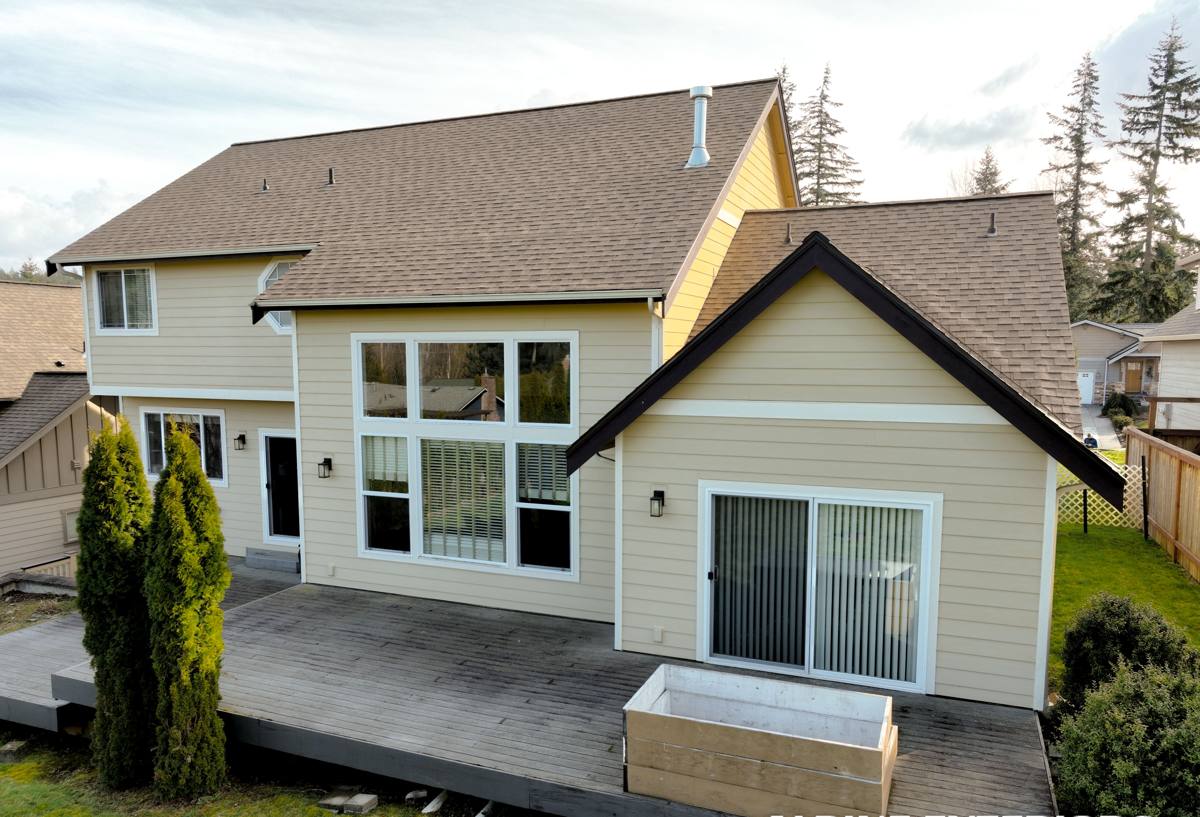
 Asphalt Shingle Roofing Built for Bow's Weather
Bow sits in that stretch of Skagit County where Puget Sound weather and farmland weather seem to collide. Homes here take on salt-laden air drifting off the water, long stretches of driving rain through fall and winter, and a moss season that can run most of the year on north-facing slopes. Asphalt shingle roofing is still the most practical, cost-effective choice for the great majority of Bow homes, but only when it's specified and installed with this specific climate in mind. A shingle roof built for a dry inland town will not perform the same way out here, even if the materials look identical on a shelf.
This page covers what a correctly built asphalt shingle roof looks like for a Bow property, what tends to go wrong when shortcuts get taken, and how we approach the job from first inspection to final cleanup.
Why the Local Climate Changes the Job
Salt Air and Metal Components
Proximity to the Sound and Samish Bay means airborne salt reaches roofs in Bow more than it does further inland in Skagit County. Salt air accelerates corrosion on unprotected metal — flashing, nail heads, vent stacks, and drip edge. It doesn't ruin a shingle roof on its own, but it does mean the metal components tied into that roof need to be corrosion-resistant, not just whatever was cheapest at the supply house.
Driving Rain and Wind-Driven Water
Rain in this part of Washington rarely falls straight down. Wind off the water pushes it sideways, which means water finds its way under shingle edges, around vents, and into valleys far more aggressively than a simple "shingle in a rainstorm" scenario. Underlayment coverage, valley treatment, and fastening pattern all matter more here than they would in a calmer climate.
Moss and Shade
Bow has plenty of tree cover and enough overcast, damp stretches to give moss everything it needs. Moss isn't just cosmetic — it holds moisture against the shingle surface, lifts shingle edges as it grows, and can work its way under tabs over time. North-facing roof planes and anything shaded by fir or cedar are the areas we watch closest.
What a Correctly Installed Shingle Roof Includes
A shingle roof is a system, not a single product. Skipping any one layer is where most premature failures start. On every Bow install we account for:
- Ice-and-water shield at eaves, valleys, and around penetrations — the areas most exposed to wind-driven rain and any winter freeze-thaw
- Synthetic underlayment across the full deck, not just felt paper, for a stronger secondary moisture barrier
- Corrosion-resistant flashing and fasteners given the salt air exposure this close to the water
- Proper nailing pattern matched to the shingle manufacturer's wind rating, not just "enough nails to hold it up"
- Balanced attic ventilation so moisture from inside the house isn't condensing against the underside of the deck
- Valley and penetration detailing built for sideways rain, not just vertical runoff
Any one of these done wrong won't show up as a leak in month one. It shows up two, five, or eight years later — usually during the wettest stretch of the year, which is exactly when it's hardest to diagnose and repair.
Roof Replacement vs. Repair: How We Decide
Not every roof in Bow needs full replacement, and we don't default to recommending one. The decision usually comes down to how much useful life is left in the underlayment and decking versus how much of the shingle surface is compromised.
| Situation | Typical Recommendation | Why |
|---|---|---|
| Isolated missing or damaged shingles, roof under 12-15 years old | Repair | Underlayment and deck are usually still sound; targeted fix is cost-effective |
| Granule loss, curling, or brittleness across large sections | Replacement | Shingles are past their protective life even if no active leak yet |
| Recurring leaks in the same area after prior repairs | Inspection first, then likely replacement of that section or full roof | Repeated failure usually points to an underlying underlayment or flashing issue, not the shingles themselves |
| Heavy moss coverage with lifted or damaged tabs underneath | Depends on extent — sectional or full replacement | Moss damage is often worse under the surface than it looks from the ground |
| Roof over 20-25 years old regardless of surface appearance | Replacement | Underlayment and fastener performance degrade even when shingles still look presentable |
We'll always tell you honestly which category your roof falls into. A repair that buys a homeowner a few more good years is a better outcome for everyone than an unnecessary full tear-off — but we'll also tell you plainly when a repair is just delaying an inevitable and more expensive failure.
Signs a Bow Homeowner Shouldn't Ignore
Because of how driving rain and moss interact with shingle roofs here, some warning signs are easy to miss until they've caused real damage. Worth checking for or having inspected:
- Granules collecting in gutters or at downspout outlets
- Shingle tabs that look lifted, curled, or cupped, especially on north or shaded slopes
- Dark streaking or moss growth concentrated in valleys or along shaded edges
- Daylight or staining visible in the attic near roof penetrations
- Soft spots in the decking felt when walking the roof (a sign moisture has already reached the wood)
- Rusty streaking around flashing or vent stacks
Any one of these on its own isn't necessarily an emergency, but they're worth a look before the next wet season rather than after.
Our Process, Start to Finish
1. On-Site Inspection
We walk the roof and the attic, not just the ground. Attic conditions tell us as much about a roof's real health as the shingle surface does — ventilation problems and moisture intrusion often show up there first.
2. Straight Answer on Repair vs. Replacement
You get our honest read on what the roof actually needs, including if the answer is "this can wait" or "a repair is the right call, not a full replacement."
3. Written Scope and Material Selection
If replacement or a larger repair is the right move, we lay out exactly what's being done — underlayment type, flashing material, ventilation changes if needed — so there's no ambiguity about what you're paying for.
4. Tear-Off and Deck Check
On full replacements, we remove existing roofing down to the deck and inspect it before anything new goes down. Damaged or soft decking gets addressed before a single new shingle is installed — covering over a compromised deck just hides a bigger problem.
5. Installation
Ice-and-water shield, underlayment, flashing, and shingles go on in that order, built to the manufacturer's specification for wind rating and warranty compliance — which matters in a wind-and-rain-exposed area like Bow.
6. Cleanup and Walkthrough
Magnetic sweep for nails, full site cleanup, and a walkthrough of the finished roof so you know exactly what was done and what maintenance, if any, to expect going forward.
Material Considerations for This Area
Not all asphalt shingles are built the same, and the right choice depends on the specific roof plane, sun exposure, and how much shade and moss risk it faces.
| Factor | Why It Matters in Bow |
|---|---|
| Algae-resistant (copper-infused) granules | Slows moss and algae growth on shaded, damp roof planes — a real factor here, not a marketing add-on |
| Wind rating | Wind-driven rain events call for a shingle and fastening pattern rated for the gusts this area actually sees |
| Shingle weight/thickness (architectural vs. 3-tab) | Heavier architectural shingles generally hold up better to repeated wet-dry cycling |
| Manufacturer warranty terms | Warranties are frequently voided by incorrect installation — the fine print matters as much as the shingle itself |
We don't push a single brand or product line as the answer for every roof. The right specification depends on the roof's exposure, pitch, and how much shade it sits under, and we'll walk through those trade-offs with you before you sign off on anything.
Maintenance That Actually Extends Roof Life
A well-installed shingle roof in Bow can still lose years of service life to neglect. A few habits make a real difference:
- Clear gutters and downspouts at least twice a year so water isn't backing up under eave shingles
- Have moss treated or removed before it works under shingle tabs, not after
- Trim back overhanging branches that keep sections of the roof shaded and damp longer than the rest
- Have the roof looked at after any major windstorm, even if nothing looks obviously wrong from the ground
Why Hire a Crew That Already Works in Bow
Roofing crews unfamiliar with this stretch of Skagit County sometimes treat Bow like any other Pacific Northwest town, which misses the specifics: the salt exposure from being this close to the water, the amount of shade many properties sit under, and how aggressively wind-driven rain behaves compared to more sheltered inland areas. We work throughout Anacortes and the surrounding Skagit County communities, which means the underlayment coverage, flashing materials, and ventilation decisions we make for a Bow roof are based on what we've actually seen hold up — and what we've seen fail — in this exact environment, not a generic install checklist.
If you're dealing with an aging roof, active leaks, heavy moss buildup, or just want an honest read on how much life your current shingles have left, we're happy to come take a look. Reach out through the form below for a free, no-pressure estimate — we'll give you a straight answer on repair versus replacement and what it would take to get your roof squared away for the seasons ahead.