 Anacortes Siding
 Decking Built for Burlington's Weather, Not Just Its Backyard
Burlington sits inland from Anacortes but still gets the full weather package that comes off the Salish Sea — long stretches of driving rain, damp air that lingers under trees and eaves, and a moss season that can run from fall through spring. A deck here isn't just outdoor furniture space. It's a structure that spends most of the year wet, shaded, or both. Composite decking handles that better than wood in most cases, but only when it's installed with this climate in mind. A composite deck installed the same way you'd install one in a dry inland climate will still trap moisture, grow moss in the grooves, and fail early — the board just fails slower and quieter than wood would.
This page is specifically about composite decking installation and replacement for homes in Burlington and the surrounding Skagit County area. If you're comparing decking materials in general, that's a broader conversation — here we're focused on what it takes to get composite decking right in this specific stretch of Washington.
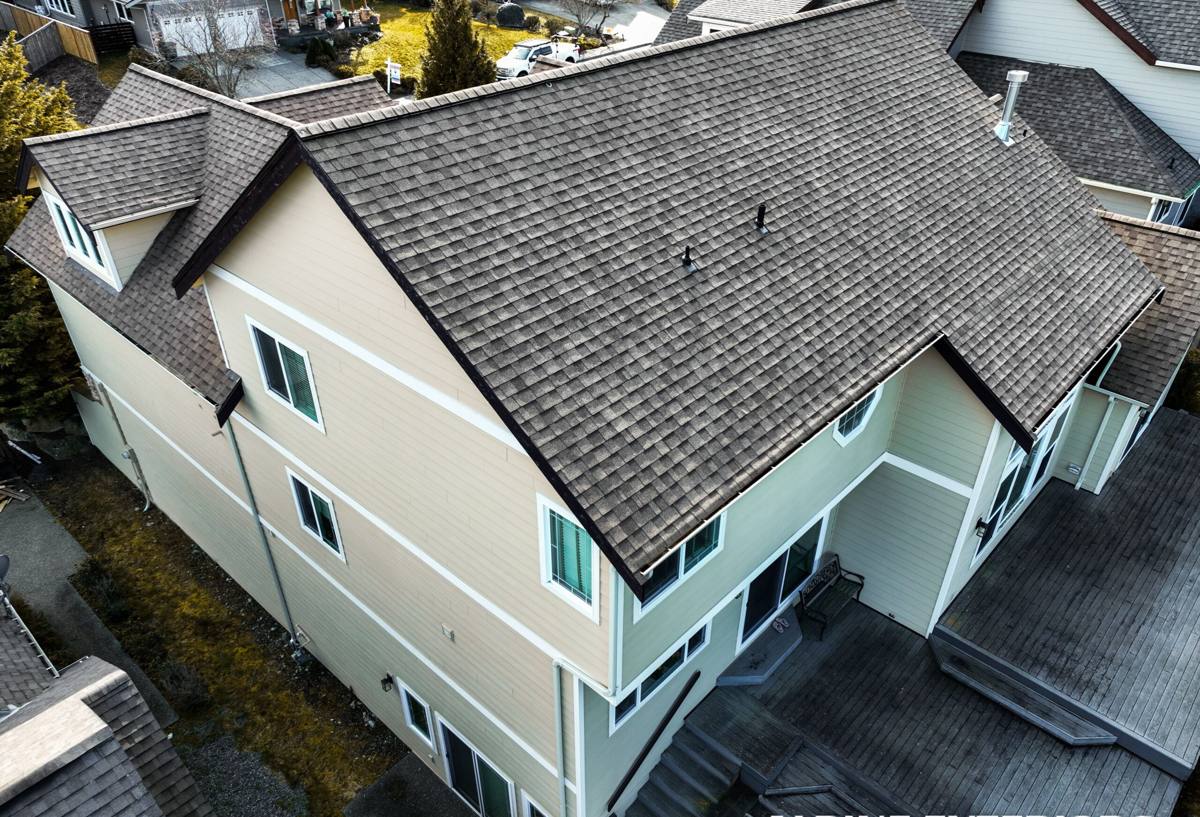
What Burlington's Climate Actually Does to a Deck
Moisture that doesn't leave
Skagit County's rain isn't just frequent, it's often driven sideways by wind, which means water gets pushed under railings, into end grain, and along ledger boards in ways that vertical rain wouldn't. Combined with shorter, cooler drying windows in fall and winter, moisture sits in a deck assembly for days at a time rather than evaporating in an afternoon.
Moss season is a real design constraint
Moss doesn't need standing water — it just needs shade, moisture, and a surface with enough texture to grab onto. Grooved composite boards, board gaps that are too tight, and decks built low to the ground with poor airflow all give moss exactly what it wants. A well-designed deck fights moss with spacing and airflow, not just a pressure wash every spring.
Salt air and fastener corrosion
Being close to Puget Sound waters means fasteners, brackets, and hidden hardware are exposed to a mild but constant salt-air element. Standard interior-grade screws and clips corrode faster here than the manufacturer's glossy brochure photos would suggest. This is one of the most common corners cut on cheap deck installs, and it's invisible until the hardware starts failing from underneath.
What a Correctly Installed Composite Deck Involves
Composite boards themselves are fairly forgiving compared to wood — they don't rot or splinter — but the assembly underneath and around them still has to be built for a wet climate. The board is only as good as what's holding it up.
- Joist spacing matched to the board: Composite boards flex more than wood over time; manufacturers specify tighter joist spacing than a typical wood deck, especially at angles or picture-frame borders.
- Proper ledger flashing: Where the deck attaches to the house, flashing has to shed water away from the wall assembly — this is the single most common source of hidden rot behind a deck ledger in our area.
- Corrosion-resistant, coastal-rated fasteners and hidden clips: Given the salt-air exposure, hardware needs to be rated for it, not just "exterior grade."
- Airflow underneath: Skirting, if used, needs venting. A sealed-off underdeck space traps humidity and becomes a moss and mildew incubator.
- Board gapping set for our climate, not the factory default: Manufacturer gap specs are a starting point; we adjust slightly for our wetter shoulder seasons so boards have somewhere to drain and dry.
- Ground clearance and drainage grading: Low decks over poor-draining soil hold moisture against the structure longer — grading and clearance matter as much as the decking material itself.
Structural checks before a single board goes down
On replacement projects especially, we check the ledger board, posts, and footings before assuming the existing substructure is worth reusing. Composite boards are heavier than wood, and an older frame built for a lighter, smaller deck sometimes needs reinforcement to carry the new material correctly and meet current code.
Choosing the Right Composite Board for This Climate
| Board Type | How It Handles Our Climate | Trade-off to Know |
|---|---|---|
| Capped composite (cap on all sides) | Best moisture and mold resistance; handles moss season well | Higher upfront cost than uncapped composite |
| Uncapped composite | More prone to surface moisture absorption and mildew staining in shaded, damp areas | Lower cost, but higher long-term maintenance in our climate |
| Grooved-edge boards | Clean look with hidden fasteners, but grooves can hold moisture and debris | Needs more frequent cleaning in moss season |
| Solid-edge / square-edge boards | Shed water and debris more easily, less moss buildup between boards | Fasteners are visible or face-screwed |
We don't push one brand or board line as universally "best" — the right choice depends on how shaded the site is, how much direct wind-driven rain it gets, and your maintenance expectations. What we won't do is install an uncapped, tightly grooved board in a fully shaded, low-airflow Burlington backyard and call it low-maintenance — that combination is a moss farm within a couple of seasons, regardless of brand.
Our Process for a Burlington Composite Deck
- Site visit and assessment: We look at sun exposure, drainage, existing structure (if replacing), and how the deck ties into the house.
- Design and board selection: Based on that assessment, we recommend board type, gapping, and substructure changes suited to the site — not just a catalog pick.
- Permit handling: Deck work in Skagit County jurisdictions typically requires permitting depending on size and height; we handle that paperwork rather than leaving it on you.
- Demo (if replacing): Old decking and any compromised framing is removed and hauled off.
- Framing and flashing: Ledger flashing, joist work, and hardware selection happen before any composite board is installed.
- Composite installation: Boards go down with correct spacing and fastening for the board type and our climate.
- Final walkthrough: We go over basic maintenance expectations specific to your site's sun and shade conditions before we consider the job done.
What Composite Decking Costs and Why It Varies
| Cost Factor | Why It Matters Here |
|---|---|
| Board tier (capped vs uncapped) | Capped boards cost more upfront but resist our wet, shaded conditions longer |
| Substructure condition | Replacement jobs on older wood-deck frames often need joist or footing upgrades to carry composite weight and meet current spacing specs |
| Deck size and height | Taller decks and multi-level layouts need more railing, stairs, and structural engineering |
| Site access | Tight side-yard access or sloped lots common in this area can add labor time |
| Railing and fastener hardware | Coastal-rated hardware costs more than standard exterior fasteners but avoids early corrosion |
We give a firm, itemized quote after the site visit rather than a phone estimate, because the substructure condition and site drainage — both invisible from a driveway conversation — genuinely change the scope.
Maintaining a Composite Deck Through a Skagit County Winter
Composite decking is lower-maintenance than wood, not maintenance-free — that distinction matters most during moss season. A few habits go a long way:
- Sweep debris off the deck regularly in fall; wet leaves left on composite boards are one of the fastest ways to get moss and staining started.
- Rinse the deck surface periodically through winter, especially in shaded areas that don't get direct sun to dry naturally.
- Keep gutters and downspouts near the deck clear so runoff isn't dumping extra water directly onto or under the structure.
- Check underdeck ventilation isn't blocked by stored items or overgrown landscaping — airflow is your main defense against moss and mildew.
- Address any moss as soon as it appears rather than waiting for spring cleaning — established moss is harder to remove without damaging the board surface.
Quick checklist before hiring anyone for a Burlington deck project
- Do they inspect the existing substructure before quoting a replacement, or just quote off square footage?
- Do they specify corrosion-resistant fasteners and hardware, or leave that detail vague?
- Do they address ledger flashing and moisture management, or only talk about the visible boards?
- Can they explain board gapping and airflow choices specific to your site's sun/shade exposure?
- Are they familiar with local permitting requirements for deck work in your jurisdiction?
Why Local Experience in Burlington Matters
A crew that already works decks around Burlington and the wider Anacortes area has seen firsthand which corners get cut on cheap installs and which ones actually cause callbacks two or three winters later — usually ledger flashing, fastener corrosion, and moss buildup in low-airflow spots. That's not something you learn from a manufacturer's install guide; it's something you learn from replacing other contractors' decks after a few Skagit County winters have had their way with them. We'd rather build it right the first time than get called back to explain why it failed early.
If you're considering composite decking for a home in Burlington, we're happy to take a look at your site, talk through board options for your specific sun and shade conditions, and give you a straightforward, no-pressure estimate. There's a form below — reach out and we'll set up a time to come take a look.