 Anacortes Siding
 Siding Repair Built for Conway's Climate
Conway sits low in the Skagit River delta, close enough to tidal water and open farmland that homes here take on a different kind of weather load than houses tucked up in town. Salt-tinged air drifts in off the bay, moisture sits low over the fields in the mornings, and wind-driven rain comes through with almost nothing to slow it down. Siding in this part of Skagit County isn't decorative — it's the one layer standing between your framing and a genuinely aggressive coastal-lowland climate.
When siding fails here, it's rarely one dramatic event. It's usually a slow accumulation: a compromised caulk joint that let moisture behind a panel two winters ago, a patch of moss that held dampness against the wall all spring, a section of trim that was never properly flashed. By the time it's visible from the ground, the damage underneath is often further along than it looks.
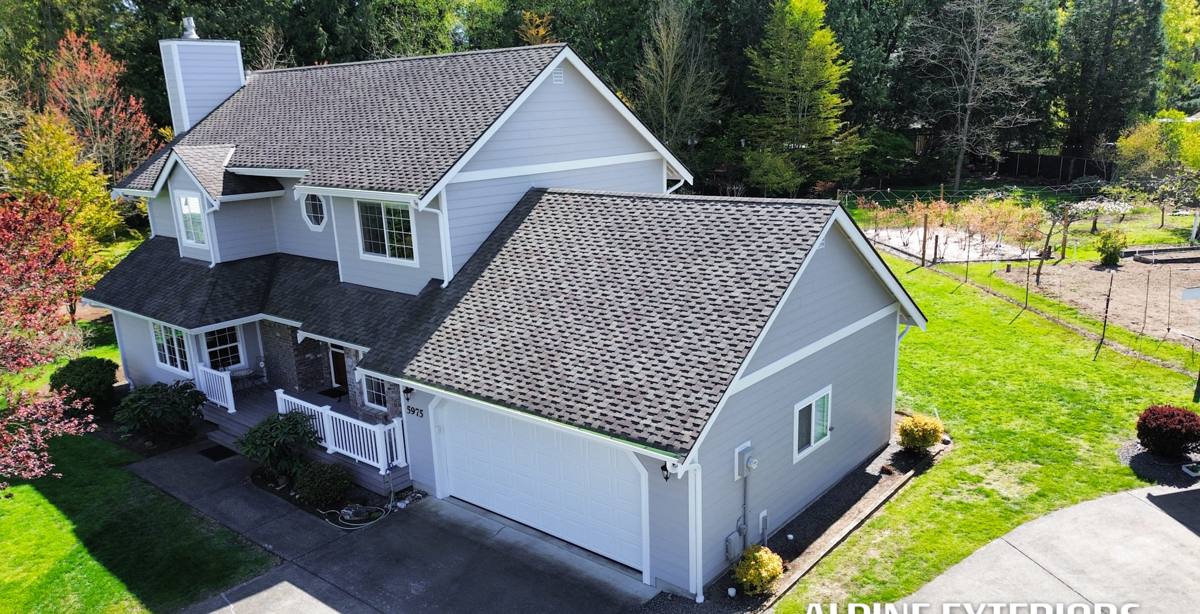
What Conway Homes Need From Their Siding
Every siding repair job we take on in Conway starts with the same question: what actually caused this? Patching the visible symptom without understanding the cause is how the same repair ends up back on the schedule two years later.
Salt Air and Corrosion
Airborne salt accelerates the breakdown of fasteners, caulking, and unprotected wood trim. It doesn't take direct ocean exposure — being a few miles inland in an open delta with regular onshore wind is enough to matter over a couple of decades. We check fastener condition and trim material as part of every repair, not just the siding panels themselves.
Driving Rain and Wind Exposure
Conway's flat, open terrain means storms don't lose much punch before they hit a wall. Wind-driven rain gets pushed sideways into seams, laps, and butt joints that would stay dry in a more sheltered location. Repairs that don't account for this — using standard caulk-and-cover fixes instead of proper flashing and lap technique — tend to fail again at the same spot.
Moss, Shade, and Standing Moisture
Low elevation, nearby water, and tree cover combine to give this area a long moss season — often close to year-round on north- and east-facing walls. Moss holds moisture directly against the siding surface far longer than open air would allow, which is a slow but steady path to rot in wood-based products and finish breakdown even in more moisture-resistant materials.
What a Correct Repair Actually Involves
A siding repair that holds up in Conway's climate is not just "replace the damaged board." It's a short diagnostic process followed by a repair that matches how water actually moves across a wall.
- Identify the actual water path — not just where damage is visible, but where moisture is getting in
- Check the condition of the water-resistive barrier and flashing behind the affected area
- Inspect adjacent framing and sheathing for soft spots, staining, or early rot before closing the wall back up
- Match replacement material and profile so the repair doesn't stand out or create a new weak seam
- Re-flash and re-lap joints correctly rather than relying on caulk as the primary seal
- Clear and treat moss or organic growth on and around the repair area before it's closed up
Skipping the diagnostic step is the single most common reason siding repairs don't last. A patch that looks fine from the driveway can be covering a wall assembly that's still wet underneath.
Why We Only Repair With James Hardie Fiber Cement
We install and repair exclusively with James Hardie fiber cement siding. We don't work with vinyl, LP SmartSide, Cemplank, Allura, primed spruce, or cedar — not because those products have no merit, but because in a climate like Conway's, the trade-offs stack up against homeowners over time.
Wood-based siding, even engineered products, depends on an intact factory coating and consistent maintenance to keep moisture out. In a moss-heavy, salt-air environment, that coating is under constant pressure, and a missed maintenance cycle can mean rot starting from the inside out. Vinyl handles moisture well on its own but moves with temperature swings, can crack in wind-driven debris impacts, and offers limited real repair options — damaged sections usually mean replacement, not repair, because discontinued colors and profiles are common.
James Hardie fiber cement is non-combustible, dimensionally stable, and engineered specifically for damp climates through its HZ5 product line — the version built for higher-moisture, marine-influenced regions like the Pacific Northwest coast. The factory-applied ColorPlus finish is baked on and warranted separately from the substrate, which matters when a repair needs to match existing siding without a visible color seam. It's also backed by a transferable warranty that holds real weight if you sell the home down the road.
| Factor | James Hardie Fiber Cement | Vinyl / Wood-Based Alternatives |
|---|---|---|
| Moisture behavior in salt air / high humidity | Engineered for it (HZ5 line) | Vinyl unaffected directly; wood-based products depend on coating integrity |
| Repair-ability of damaged sections | Sections replace cleanly, color-matched | Vinyl often discontinued profiles; wood-based can hide rot under coating |
| Moss resistance | Non-organic substrate, doesn't feed rot | Wood-based can rot under sustained moss contact |
| Fire rating | Non-combustible | Vinyl can deform/melt; wood-based is combustible |
| Warranty structure | Long-term, transferable | Varies widely, often prorated |
Our Process for a Conway Siding Repair
1. On-Site Assessment
We walk the exterior, identify every area of concern — not just the spot you called about — and check for related issues like flashing gaps, trim condition, and moss buildup nearby. Damage often clusters near roof-wall intersections, deck ledgers, and window trim in this climate.
2. Diagnosis Before Demo
Before pulling any siding, we explain what we think is happening and why. If we suspect moisture has reached the sheathing, we tell you before opening the wall, not after.
3. Repair to Spec, Not Just to Cover
Flashing gets corrected, not just patched over. Fastener spacing and lap technique follow James Hardie installation requirements, which are more specific than most general contractors realize — installation error is one of the most common causes of early siding failure, independent of the product itself.
4. Color and Profile Match
Because we work exclusively in James Hardie's product lines, we can typically match existing ColorPlus finishes and plank profiles closely, so a repair doesn't read as an obvious patch from the street.
5. Walkthrough
We show you what was found, what was fixed, and flag anything nearby worth watching — a section of trim that's a season or two from needing attention, for example — so there are no surprises later.
Signs a Conway Home May Need Siding Repair
- Soft or spongy spots when pressed near the base of walls or below windows
- Visible moss or persistent dark staining on north- or shade-facing walls
- Cracked, curling, or separating caulk at panel joints and trim edges
- Bubbling or peeling paint on wood trim near siding seams
- Musty smell or visible staining on interior walls that share an exterior wall
- Panels that feel loose or flex when pushed
None of these on their own mean a full re-side is needed. Most start as a contained repair — the key is catching them before a wet winter turns a small fix into a larger one.
What Repair Costs Depend On
There's no honest flat number for siding repair — it depends on how much of the wall assembly is affected, not just how much siding is visible. A few factors that move the range:
| Factor | Why It Matters |
|---|---|
| Extent of hidden moisture damage | Sheathing or framing repair adds real cost beyond surface siding |
| Access and wall height | Second-story or tight-clearance areas take more setup time |
| Color/profile match | Older ColorPlus runs may require closest-match rather than exact match |
| Flashing and trim condition | Correcting root-cause flashing issues adds labor but prevents repeat failure |
| Scope — spot repair vs. section replacement | A single panel is a different job than a full wall section |
We give a firm, itemized quote after the on-site assessment — no guessing over the phone, and no pressure to upsize a repair into a full re-side unless the wall assembly genuinely needs it.
Why Local Experience With This Area Matters
Conway's mix of low elevation, delta humidity, salt-tinged wind, and long moss season is a specific combination — not identical to what a crew sees working in a drier inland town or a more sheltered residential neighborhood. A crew that already works this part of Skagit County knows where moisture tends to concentrate on a wall, how aggressive the moss season really gets on shaded sides, and what flashing details actually hold up against sideways rain here versus what looks fine on paper.
That experience shows up in small decisions during a repair — where to extend the fix a foot further than the visible damage, which trim details are worth upgrading while the wall is already open, and which shortcuts are guaranteed to come back as a callback in a few years.
Get a Straight Answer on Your Siding
If you're seeing early signs of trouble on a Conway home — soft spots, persistent moss, failing caulk, or just siding that's due for a hard look after another wet Skagit County winter — we'll come out, assess it honestly, and tell you what it actually needs. No pressure, no inflated scope. Request a free estimate and we'll walk the exterior with you.